
BY JESS PEACOCK
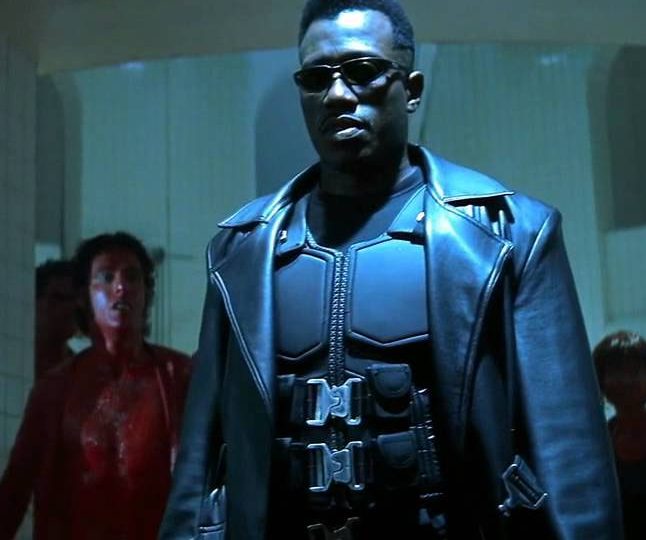
Today marks the 20th anniversary of the release of director Stephen Norrington’s film Blade, written by the ubiquitous (at one time, anyway) comic-to-screen oracle David Goyer, and starring Wesley Snipes as the eponymous dark superhero. It’s easy to overlook just how important Blade proved to be within popular culture. The film represented not only a stand-alone black superhero (with accompanying black director) a full two decades before Marvel’s record shattering Black Panther, was not only Marvel’s first successful cinematic outing for a solo comic adaptation a decade before Robert Downey Jr.’s Iron Man took flight, but Blade was Matrix-cool a full year before The Matrix itself. The aesthetics of the film, the look of Blade himself, the highly stylized and hyper-real martial arts battles, and the action set pieces (early in each film, both Blade and Trinity take very similar leaps from one rooftop to another) all represent a movie on the cusp of a cinematic revolution. Blade initiated a new wave of superhero films, showing Hollywood that there existed a hunger for a serious take on these mythic tales as long as the material and audience were afforded the proper respect.
In the end, though, Blade is a vampire movie, and Blade is one himself. Well, half of one. A vampire attacked Blade’s mother while he was still in the womb. As a result, Blade is born a half-breed of sorts, a vampire that can walk by day, blessed with all of the strengths of his kind but none of their weaknesses. Similar to Henry Sturges in the novel and film Abraham Lincoln: Vampire Hunter and Angelus from the television show Angel, Blade uses his position and privilege living within the dominant vampire culture to serve as an activist and advocate for humanity, seeking to overturn the hierarchical oppression the vampire embodies.
“Long story short: La Magra’s got some competition in the realm of blood lust.”
Speaking of oppression, the plot of the film is centered on a plan by the maniacal vampire Deacon Frost to resurrect the blood god La Magra and enslave the human race as a food source. This plot device foretold True Blood’s exploration of religious fundamentalism through the lens of the vampire found in the Sanguinista Movement – vampires who believe that following the edicts found within their Vampire Bible is the only one true way to exist, and who advocate for the formation of a tyrannical vampire theocracy, one set on subjugating the human race and converting them into chattel for the undead. Of course, it’s not too difficult a leap to make the connection between the religious zealotry of a Deacon Frost or the Sanguinista to the God raging within the theology of a Jonathan Edwards, Westboro Baptist Church, or even Franklin Graham – a God filled with unbridled wrath for the inhabitants of the terrestrial world who are required to appease the divine yet monstrous otherworldly force, one poised to unleash its omnipotent fury at a moment’s notice and held back in the Hebrew Bible only through ritual sacrifices of animal blood. Eventually this God demanded the sacramental scapegoating of Jesus of Nazareth, perhaps the most legendary act of filicide found in popular mythology. Subsequently, Christians are generally expected to relive this sacrifice through the act of communion, whereby they symbolically (or even literally, through the process of transubstantiation) drink the blood and eat the flesh of the demigod Jesus the Christ in order to appease the furious almighty deity so passionately worshipped by millions of Christians around the world.
Long story short: La Magra’s got some competition in the realm of blood lust.
Throughout Blade we are witness to the efforts of our anti-hero toward not succumbing to his vampire urges, meet his pseudo-father figure Abraham Whistler, and watch him kick a whole lot of vampire ass in adrenaline filled fight scenes that still work twenty years later. All told, Blade raked in over $130 million dollars against a budget that was under a third of that total, ensuring its place as one of the most successful vampire movies of all time, and all but ensured its hotly anticipated sequel.
After Stephen Norrington turned down the opportunity to direct the next installment, Mexican director Guillermo del Toro, who up to this point had made one American film, was offered the job. Today, with del Toro’s stunning portfolio of creative fantasy films to his directorial credit (and an Oscar win for The Shape of Water), this might seem like a relatively easy decision to make. However, in 2001 when Blade 2 was gearing up, del Toro was entirely unproven. Cronos (1993) and The Devil’s Backbone (2001) were low budget foreign movies, and Mimic (1997), the previously mentioned American film, was fraught with production issues and was a financial disappointment despite some decent reviews. In the end, Guillermo del Toro made Blade 2, and Blade 2 made Guillermo del Toro.
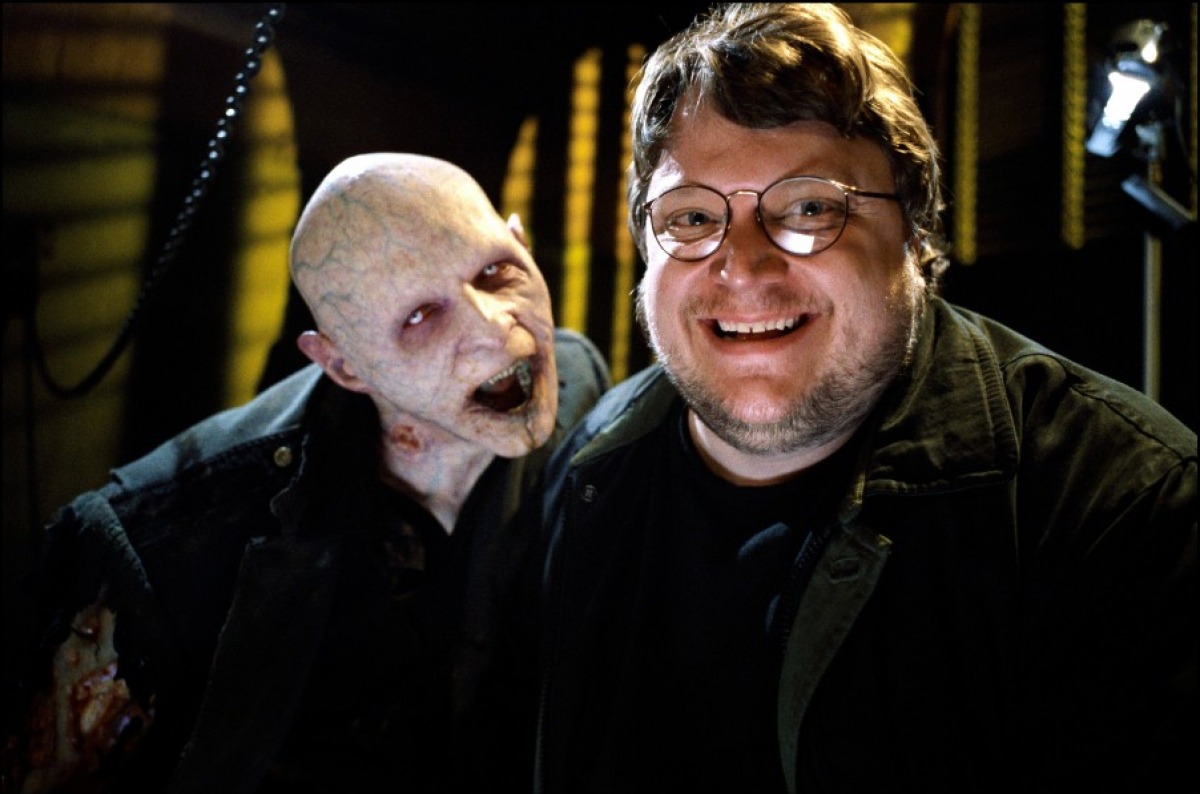
In some regard, I don’t think del Toro and returning screenwriter Goyer were making a sequel at all. Technically, yes, we are dealing with the mechanics and anatomy of a sequel. However, aside from the resurrection of Whistler (spoiler alert) at the outset of the movie, Blade 2 can be viewed entirely as a stand-alone film. Guillermo del Toro’s objective was far more ambitious than simply making a “part two.” The now prolific director set out to redefine the vampire for a new generation, to reconstitute their DNA into the frightening and horrible predators we all know them to be while avoiding the triteness of another derivative sequel. And in that regard, he succeeded wildly with the Reaper Strain, a twisted evolutionary leap for the existing vampire hierarchy found within the Blade universe. Formidable, hungry, and rapidly multiplying, the Reapers of Blade 2 are a danger to humans and vampires alike, forcing a tenuous truce between Blade and the undead world he has sworn to eradicate.
Blade 2 works on two distinct levels, the first being that of a thrilling comic book movie, complete with jaw dropping action set pieces and dazzling acrobatic camera moves. The second is that of a horror tale, the tension and scares ramping up as the Reaper Strain spreads uncontrollably beyond any reasonable containment methods. The ability to balance these two dynamics in one movie is an impressive achievement and one that del Toro handled expertly, enlarging the vampire mythos and setting the bar of the superhero movie to dizzying new heights as filmmaking entered the new millennium.
It all started, however, with Stephen Norrington’s edgy and visceral take on a Marvel character who found his start in the four-color comic panels of The Tomb of Dracula, found resonance through blood raves and stylized fight choreography to pulse-pounding techno music, and indelibly changed cinema and the perception of superhero properties for good.