
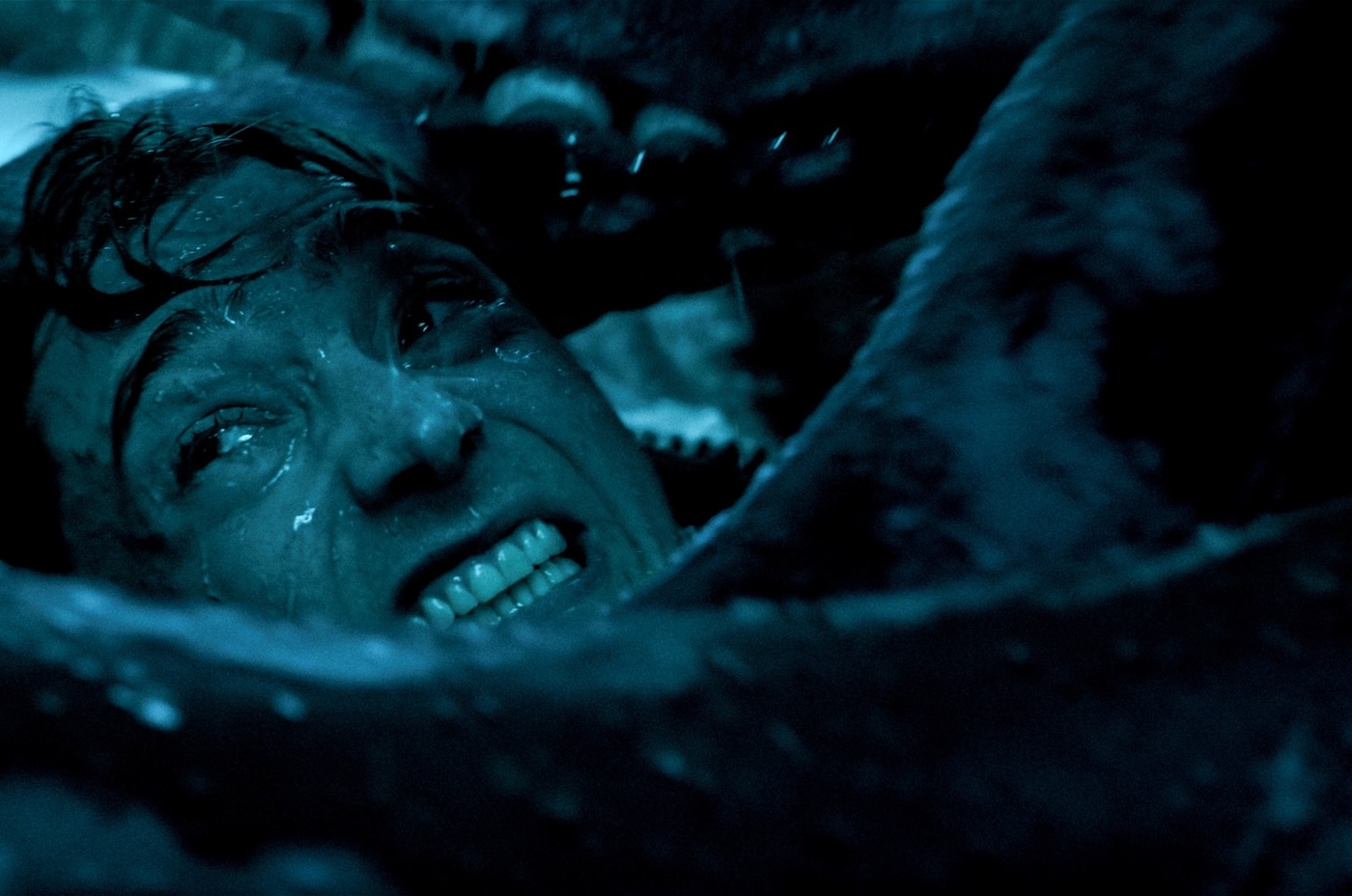
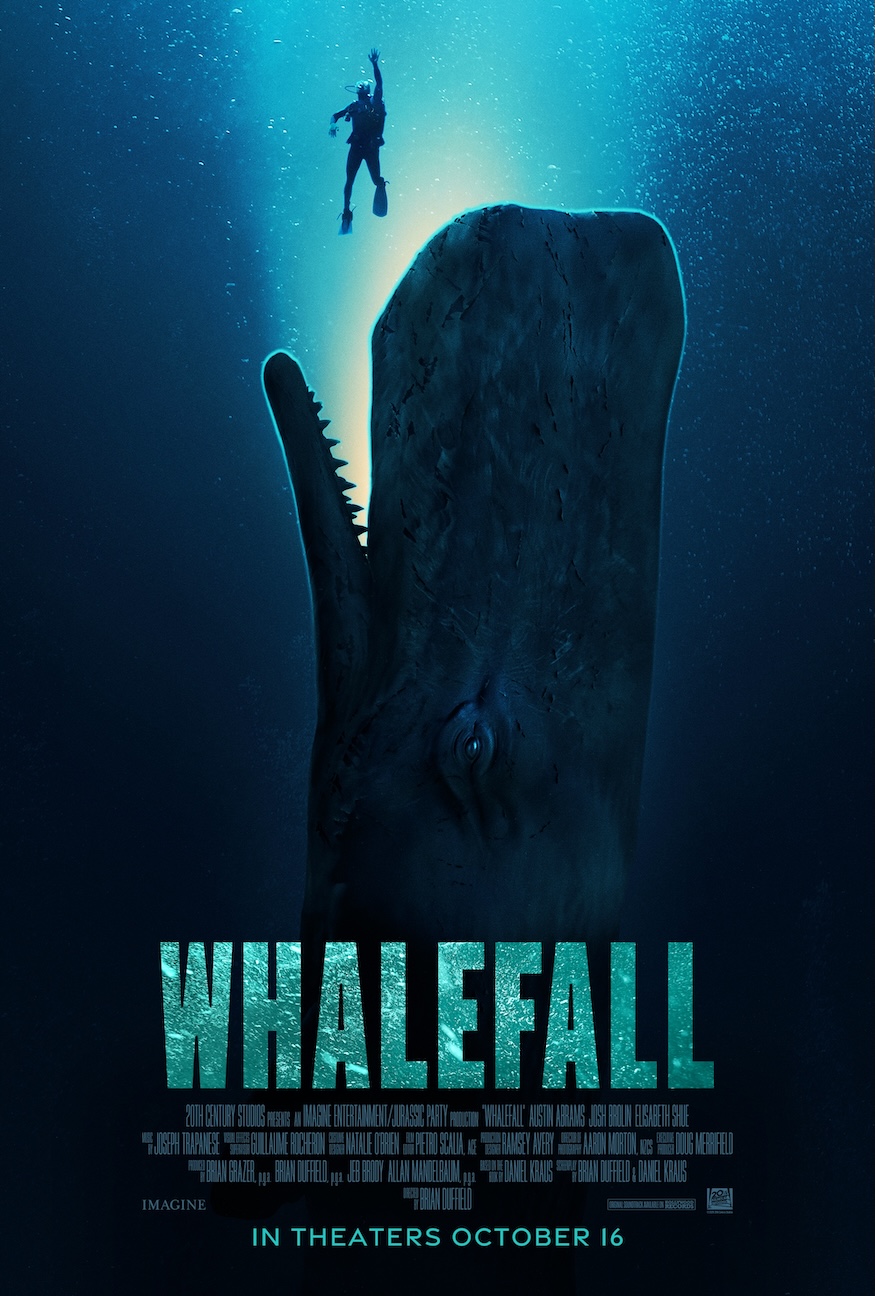
WHALEFALL:
Starring Austin Abrams, Josh Brolin and Elisabeth Shue
Directed by Brian Duffield
Written by Brian Duffield and Daniel Kraus
20th Century Studios
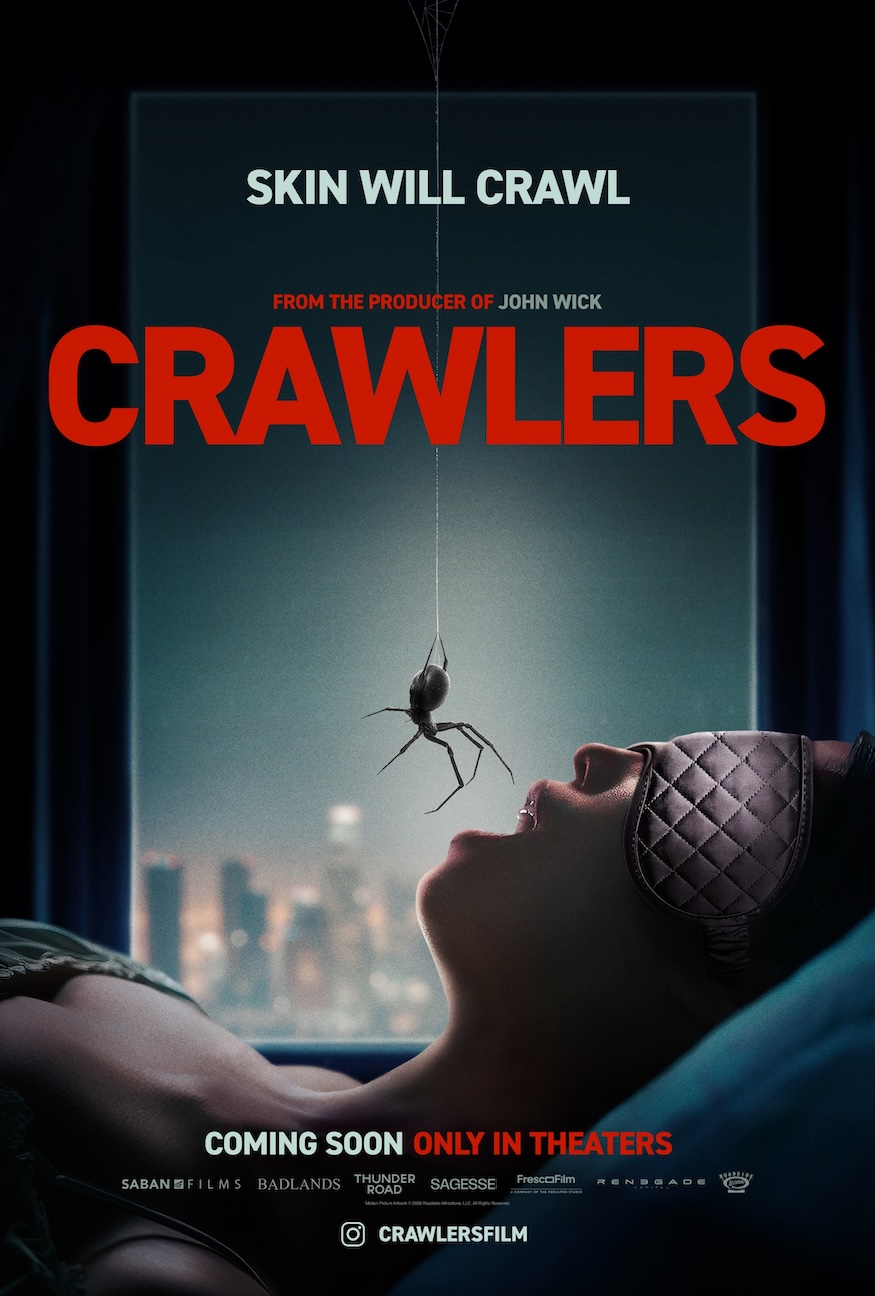
CRAWLERS:
Starring Matilda Lutz, Gregg Sulkin and Sam Lucas Smith
Directed by Angel Gómez Hernández
Written by Jayson Rothwell
Roadside Attractions/Saban Films
In the battle of the animal-terror movies taking place this weekend, the one with the much more unlikely scenario proves more effective than the one exploiting a very common situation. Few of us will ever encounter a whale in its home environment—certainly not close enough to be devoured by one—while the opening moments of CRAWLERS remind us that spiders “exist in 100% of our homes” and “We are never more than 3 feet from one.” And yet WHALEFALL is the one likelier to have you squirming in your seat.
Which is not to say WHALEFALL gets everything right; it’s a combination of the scary and the sentimental in which the latter doesn’t land quite as strongly. The ways in which the human story informs and affects the protagonist’s life-or-death struggle are sometimes forced and contrived. Yet that horrible situation itself is vividly and viscerally conveyed, in no small part due to the performance by Austin Abrams, who with RESIDENT EVIL and now WHALEFALL confirms himself as the go-to guy to carry a film in which he’s largely the only person on screen, in circumstances of gruesomely extreme distress.
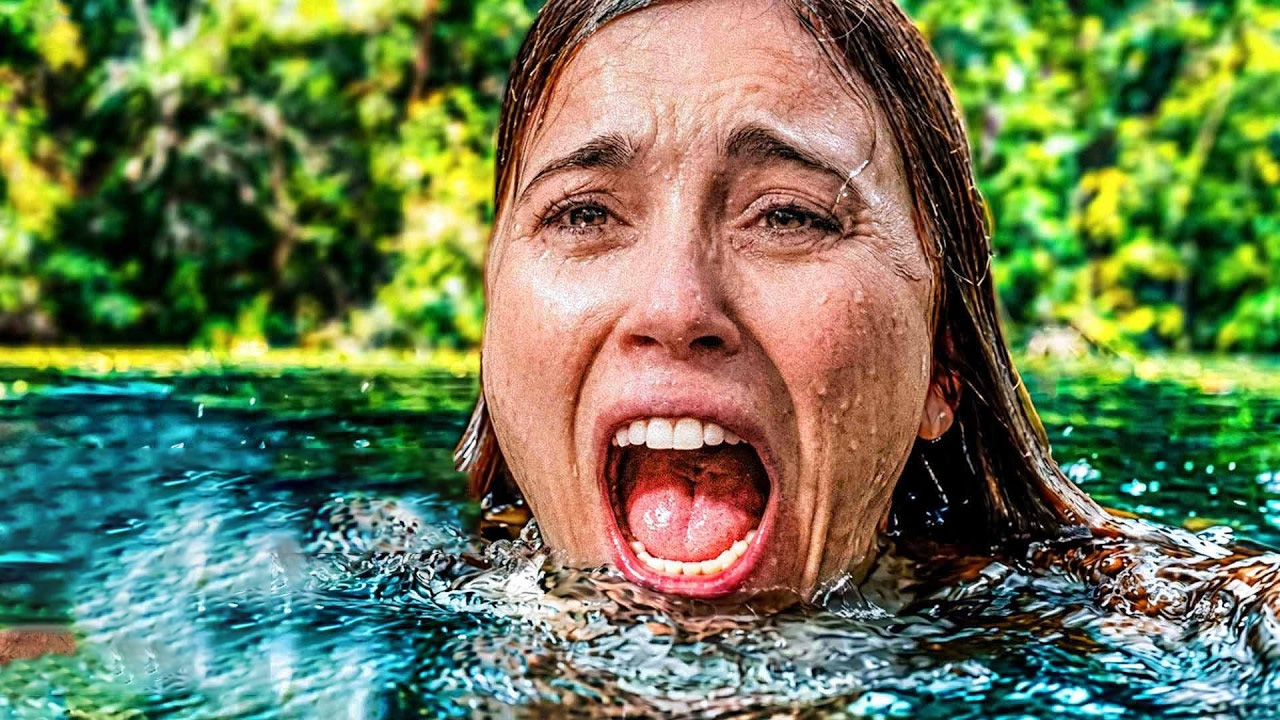
Abrams plays Jay Gardiner, who embarks on a solo scuba dive in memory of his father Mitt (Josh Brolin), a year after his dad’s suicide by drowning. Flashbacks reveal Mitt to be a tough-love type of guy prone to imparting nautically themed life lessons upon his son, which will come in handy after Jay encounters first a giant squid and then a sperm whale that swallows them both. This lengthy sequence begins by immediately establishing the size and power of these undersea denizens dwarfing the puny human, and Jay’s frantic attempts to escape being sucked down the whale’s gullet are truly harrowing.
From there, the movie alternates Jay’s adventures in the beast’s innards with more memories of his time with Mitt, which will inspire both his determination to escape and the means with which he’ll do it. Fortunately for us and Jay, he shares the whale’s guts with a bioluminescent jellyfish that serves as a light source, and eventually a sounding board, like Wilson in CAST AWAY (which has a few other echoes in this film as well). Director Brian Duffield teams with cinematographer Aaron Morton, production designer Ramsey Avery and makeup head Joel Harlow to fully convince us of Jay’s physical plight; there’s not a moment in WHALEFALL when we don’t believe he’s trapped within oversized organs, threatened with imminent digestion. Alternating desperation with calm reasoning and moments of humor, Abrams keeps us fully invested as well.
Duffield’s adaptation with Daniel Kraus of the latter’s novel is a little shakier, as the interpolation of Jay’s awful plight and his past with Mitt becomes schematic and a little too on-the-nose. Brolin is quite good as a sea dog fully decorated with nautical tattoos, and he and Abrams work well together, but their adversarial relationship increasingly comes to feel like a device rather than a natural part of the narrative. These portions also give short shrift to the women in their family; Elisabeth Shue as Jay’s mom and Jane Levy as one of his sisters are welcome presences given too little to do. Still, the central premise is convincingly and compellingly realized throughout.
Meanwhile, for anyone seeking a movie about virulently venomous spiders infiltrating an apartment building, the short-form review of CRAWLERS is: Just watch 2023’s INFESTED instead. For those who want more details…
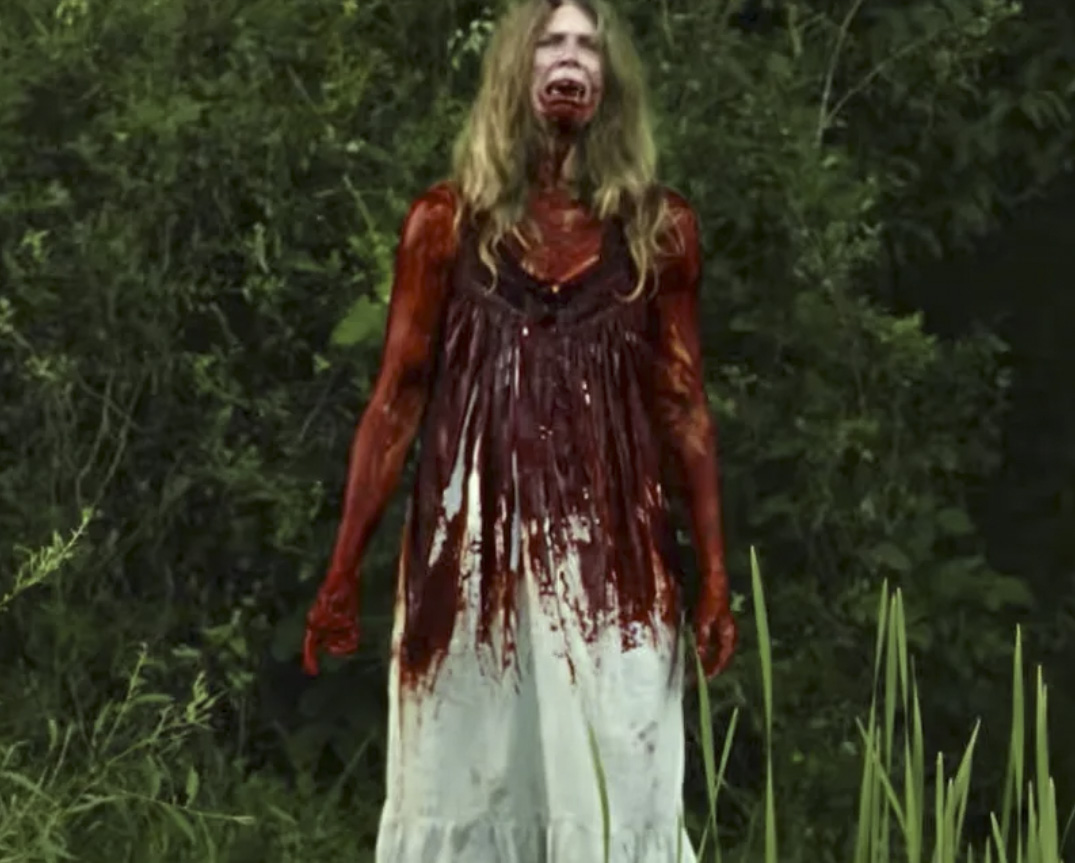
To this reviewer, the biggest appeal of CRAWLERS was watching Matilda Lutz, the completely bad-ass heroine of Coralie Fargeat’s REVENGE, as the central character taking on the deadly arachnids. She holds her own in CRAWLERS too, though her role begins as more generic and ends with her going to some gimmicky places. She plays Serena, live-in manager and Miss Fix-It of the Paradiso Palms Apartments, where she takes the brunt of complaints from the generally jerky residents that they should be directing at a-hole landlord Mr. Rossmore (William Miller). During an opening act full of obvious setups for easily predicted payoffs, Mr. Rossmore heads off on a vacation to Aspen at the same time UCLA professor George (Chris Rogers)—who looks like someone best suited for lessons in beer-drinking—arrives home from an expedition with a large boil on his back.
In short order, that boil bursts to disgorge a whole bunch of vicious spiders that scuttle their way all over the building, rapidly multiplying. Director Angel Gómez Hernández builds some tingly tension into scenes where Serena reaches for a coffee cup or into a bag of chips where one of the little buggers is lurking, playing off those everyday fears addressed at the beginning. There are also a few fun moments involving the other tenants, as when livestreaming paintball artist Bradley (Gregg Sulkin) is informed by a couple of viewers that his paint splotches are moving.
The trouble is, the script by Jayson Rothwell (POLAR, 2012’s SILENT NIGHT) doesn’t give us enough reasons to care enough about these sketchy characters and thus feel too much fear for them. And once the number of survivors is reduced to countable on one hand, you can be forgiven for not being too clear on the fates of some of the others. The most engaging personality aside from Lutz is Melina Matthews as Lady Lash, a BDSM-er for hire who entertains clients in her apartment, and who inspires a key and dubious development in the final act. The spiders (largely created digitally with varying degrees of persuasiveness) are sometimes ruthless attackers and sometimes don’t strike when they easily could, which works against their scare factor.
Midway through CRAWLERS, the Paradiso Palms is put under quarantine and sealed off by the IDC (Infectious Disease Center), and the colored emergency lighting allows Hernández to get a little Bava/giallo on. The director also pulls a lot of focus, zoom and other camera tricks, which only serves to prove once more that flashy visuals can only get a movie so far when the material isn’t there.