
By PAT KING
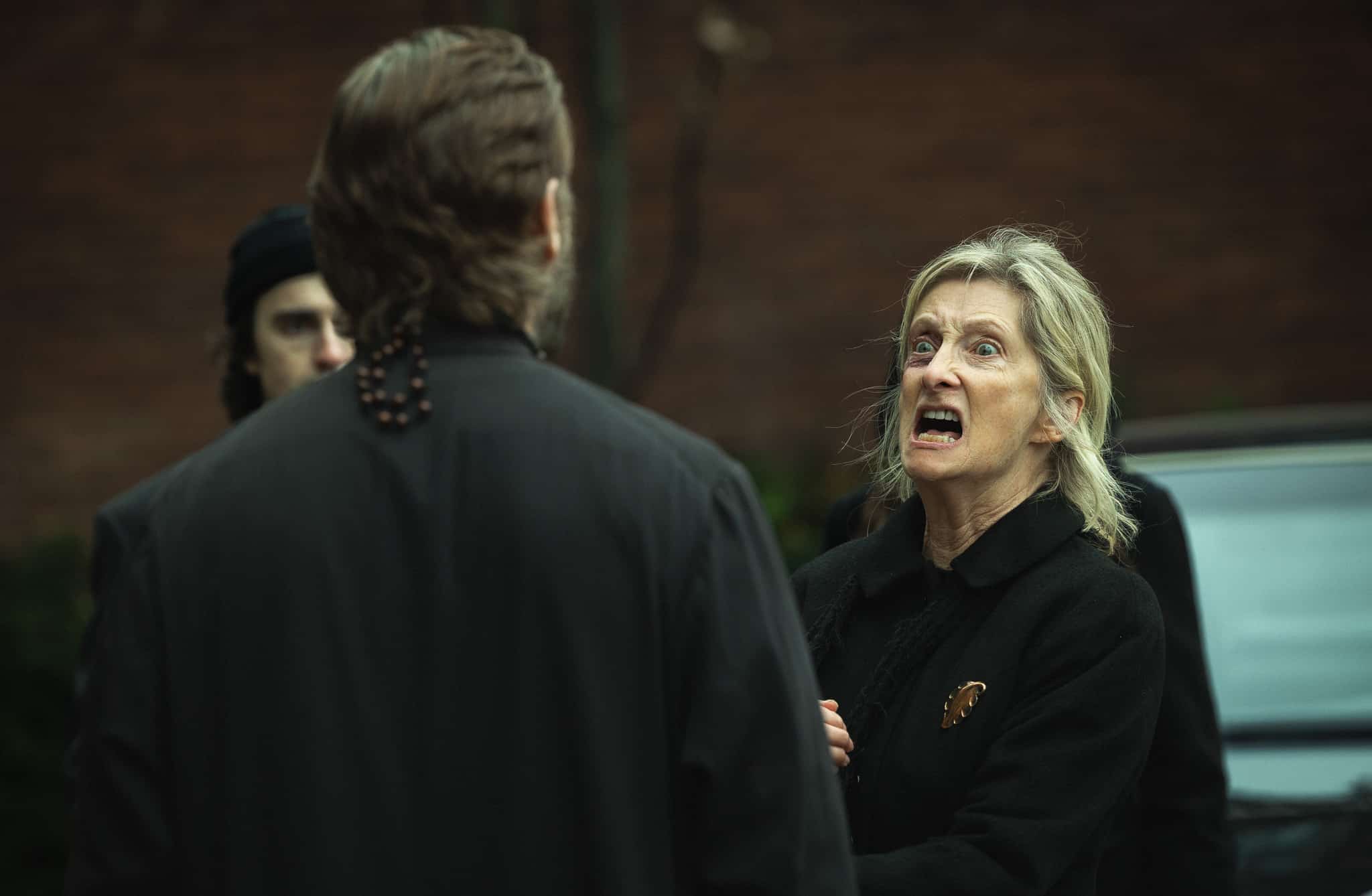
In THE VOICES OF OUR MOTHER, Sheila McCarthy plays Harriet, an emotionally abusive mother of four adult children. After her own mother dies in her 90s, Harriet starts to act strangely. She begins to show symptoms of dementia, although doctors can’t find any physiological explanation for her behavior. As her children gather to figure out the best course of treatment, Harriet reacts even more erratically and even violently. Could Harriet need something more than modern medicine can provide? An exorcism, perhaps?
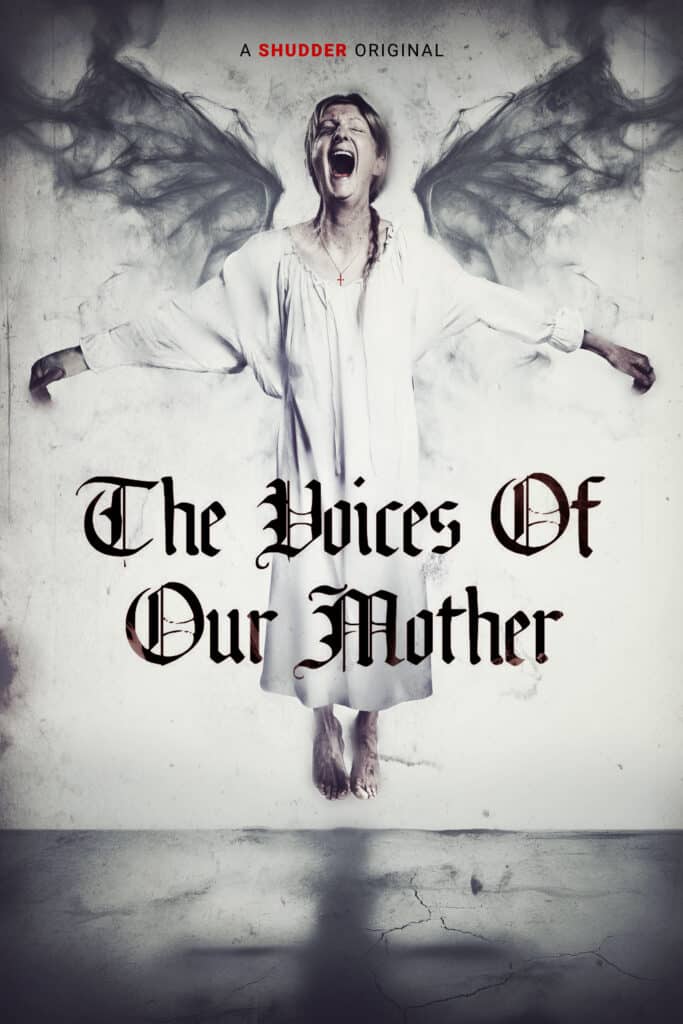
THE VOICES OF OUR MOTHER is an atmospheric story about generational trauma, how we hurt each other, the fragile bonds of family, and, just maybe, forgiving those who have harmed us in profound ways. The siblings have existential problems with each other and their mother. And let’s not forget about their physically abusive father, whose death may have been caused by his two sons. At the center of all this is daughter Annika (Georgina Reilly). Now a nun, her journey is on a parallel spiritual path with her mother. Though she doesn’t know it at first, she is the key to curing whatever is ailing her mother.
RUE MORGUE recently caught up with actor/director MarkO’Brien, who also appears in the film as Harriet’s son, William, to discuss this extraordinary horror film.
As a working actor, when do you find the time for your personal passion projects, like this film, for instance?
You know, it is quite a puzzle, because when you go and shoot something you’re going to direct, it’s also the prep time too. So you have a month or so of prep before that, you have a lot of pre-prep, a lot of meetings and whatnot that you can squeeze in, and then you have post, which goes on sometimes, for eight months. So it is a puzzle, but you know, I’m used to it. My wife is an actress. I have a daughter. We live in LA, where we don’t have a nanny. We’re hands-on with everything, so every day is a new scheduling thing we’ve got to figure out. It’s nothing new to me. It’s made me be able to compartmentalize quite well in life. I have that much time for this, and I have that much time for that. So I just make it work, and I think when you love what you do, you’re willing to do that without being too annoyed or burdened.
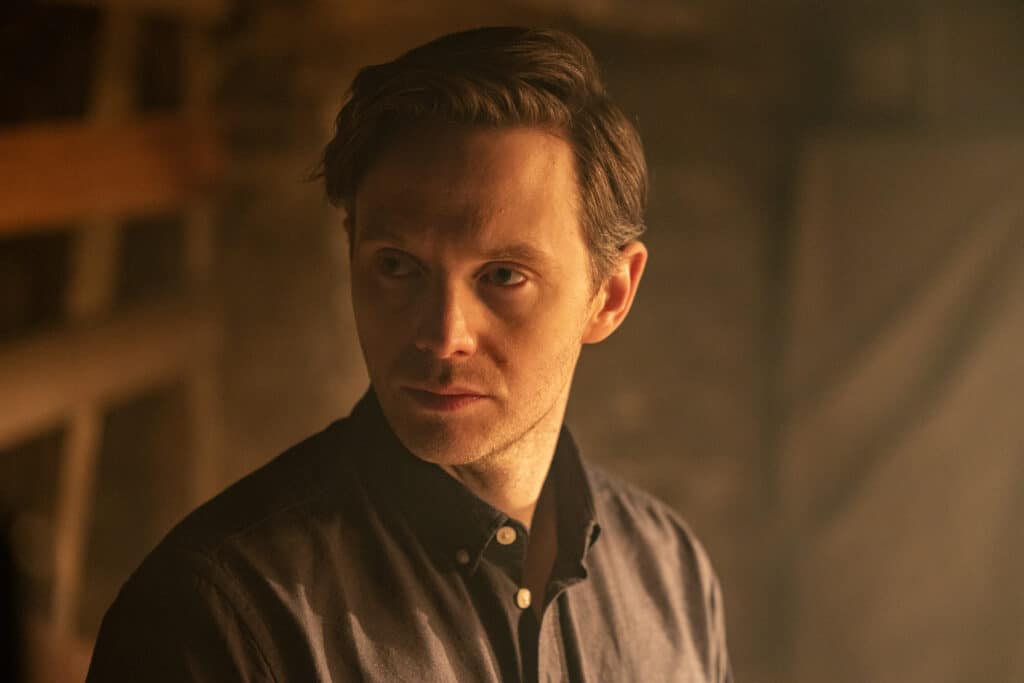
You act in all sorts of genres, but your two features have been horror. When it’s time to direct a film, what pulls you toward the genre?
I think it’s the limitless possibilities of creativity. When you’re making a horror film, the audience can settle into accepting so much more than other genres, and I just think that gives you kind of a boundless playground to create, and that, to me, is so fun. I like big ideas, too. I live in this world, and I don’t always love movies that are also in this world, because I’m already here.
So, for this particular story, what made you want to explore the inner workings of such an existentially dysfunctional family?
Everything starts with a place that’s real for me, and then you go beyond that, and you make it into something else. I am one of four siblings, and my grandmother had Alzheimer’s, so that was enough reality in my life to then make something totally different. I’m very close with my siblings, and my grandmother was nothing like Harriet in this movie. It gives you fertile ground to play. I just think it’s fascinating that in so many possession movies, it’s often a young child, and I thought it’d be more interesting if it were a matriarch. And it’s not the fact that they’re saying crazy things, it’s actually what they’re saying; it’s information that they’re saying. Then drawing that parallel line between what we perceive of possession and what we know about dementia, I think that’s a strong parallel line that I’d never seen in a movie before, and so I thought that was fascinating. I love creating things that feel somewhat familiar, like my first film, The Righteous. A stranger shows up at their house, but then you subvert that and turn it into something else. And I think in that way you’re being original, but it’s not so original that it’s hard for the audience to grasp. They’re like, yeah, this feels familiar, but it’s different, and that’s the kind of art I really enjoy.
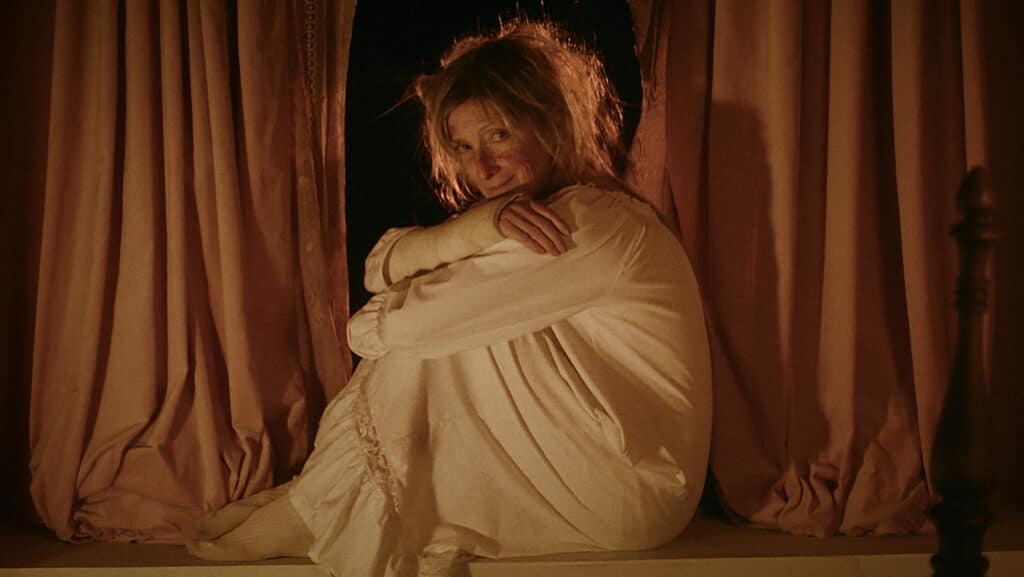
Sheila McCarthy gives such a great, intense performance. How did you find her?
I certainly was very familiar with her work. She’s incredible. She’s such a great actress. I’d seen her in so many things over the years, and this was a small movie, and I didn’t know who was going to play the part. Sometimes you write with people in mind, sometimes you don’t. And I was like, I have no idea who’s going to play this role, but it needs to be someone who can do such a severe arc, like literally it’s a 180. I’d seen her in so many things, but I really, really enjoy Women Talking, and she’s just so meek, but then I’ve seen her in other things where she’s big and grand and feisty, and I was like, Wow, she can just do that! Not a lot of actors have that sort of dexterity of performance. And she just had it. And you know, it is a wild performance, but I also really appreciate her performance in the beginning of the movie, where she’s somewhere else, it’s like she’s not even conscious of the world she’s around, and that’s a hard thing to portray.
I think that has a certain intensity to it, too.
Because something’s off and you don’t really know what it is.
The rest of the cast also gels really well, and they have a great handle on the emotional intensity of the material. Was it difficult finding the right cast?
It was difficult because I wasn’t even sure I was going to play [William] until it was probably a third through writing it. I was like, Oh yeah, this could work, and then I pictured Annika to be younger. I was going to have her in her early 20s, and then I was like, no, that would lessen the stakes; She’s been carrying around this burden for such a long time. So my wife, Georgina Reilly, plays the role, and I was like, “Well, you’re actually kind of perfect for it.” I don’t think she should be that young. It wouldn’t mean as much.
Alex Ozerov-Meyer is actually the only person I wrote with a role in mind. He plays Martin, and I’d worked with him 13 years previously, when I was very young, and I just thought he was great. And Carolina Bartczak, who plays Therese, my twin sister in the movie, showed up on my radar, and I was like, “Oh my god, she’s perfect.”
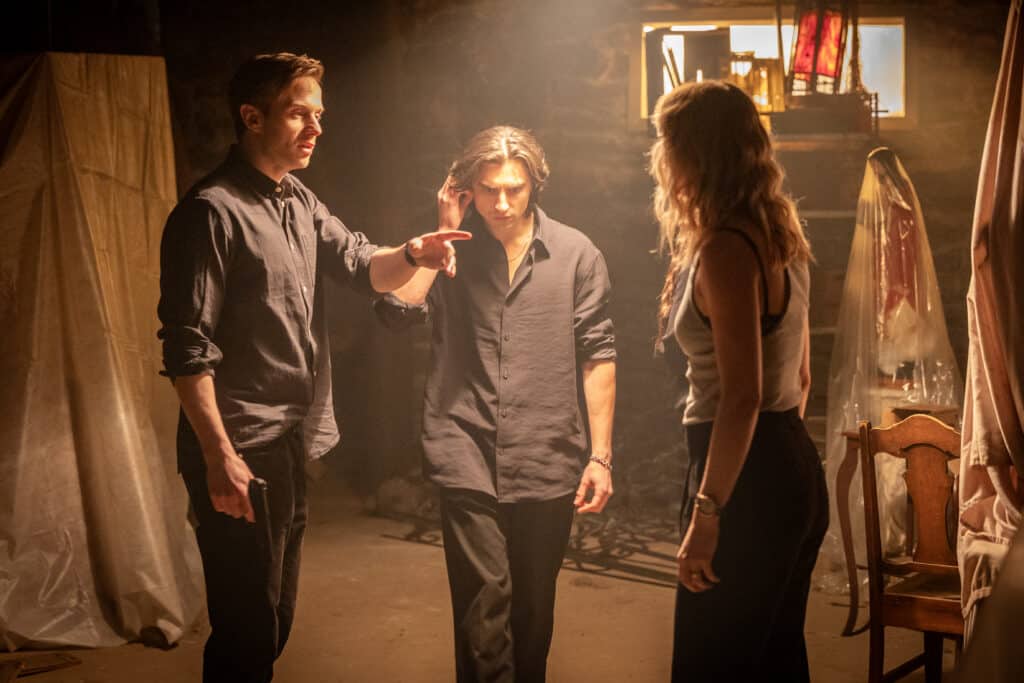
So it came together in a very strange way, but when everywas one locked in, I said, “That is so the person who needs to play this.” And on day one, the first shot of the movie is of us going down a hallway. We just stay on Sheila. We’re leaving the doctor’s office, and we’re all walking with her. And I remember, as we were setting it up, I looked at everyone in their wardrobe, which is very specific, too. I was like, “Yeah, that’s a weird-looking family, but I buy that they’re a family.” There’s something strange going on here, just the way we lined up against one another. I was so excited when I saw that, because you’re never really sure until it happens. I believe that you end up with the cast you were meant to have, and you always look back, and you’re like, “Yeah, it worked out great the way it did.” I was very pleased.
It’s perfect casting. Do you write specifically knowing that you’re going to play a part in your film, or does that come later?
It’s kind of a mix. I remember in The Righteous, my first film, I knew I’d play the role because it was so specific. It was such an odd role, and I just understood it. I wrote it, so I understood the role, and I was like, “I get this so inherently that this makes sense, and I don’t know how I’d be able to describe this to someone else.” My failings as a director made me act in it, because I wouldn’t know how to direct this part, and I’ve done it several times. I’ve directed a movie since VOICES OF OUR MOTHER, which I’m also in, and it just comes up naturally. When you’re acting in something you’re directing, it’s actually quite pleasing, because you’re making the movie in every way you possibly can make the movie in real time, and you’re dictating in the back of your mind some of your thinking about the cut. Even while you’re editing, and you’re thinking about what the other actors are giving you, it’s a very immersive creative experience. I love acting, and it’s really my passion as much as directing or writing. I guess I think it would work really well if I played that just for the overall part of the process, but also because I just love it so much. I can’t help myself. I have to be honest.
Do you have anybody that you rely on for advice or to critique your performance, and sort of stand in for the director?
Oh God, no! I’m joking. I worked with my cinematographer, Scott McClellan, on my first two films. I’m very close with him. We’re really good friends. I’ve known him for a very long time. I’ll look to him sometimes, like, “Are we good?” And he’s like, “Yeah, we’re good.” I remember one time, actually, it was on The Righteous, where I had this big monologue, and it was a close-up, and it was very emotional, and then, when I was about to go again, I remember Scott was like, “No, no, don’t, you’re good.” I like that, actually, because you can shoot another one to be safe, but sometimes the momentum is better to keep riding, and he was like, “You got that.” I trust him a lot. And our script supervisor, too. I’ll turn to the script supervisor. We had a really great script supervisor on VOICES OF OUR MOTHER, a girl named Hildy, who I really, really respect, and I would go to her and be like, “Did you think we got that? Does that work?” And she’d be like, “Yeah,” or not. That collaboration is so important.
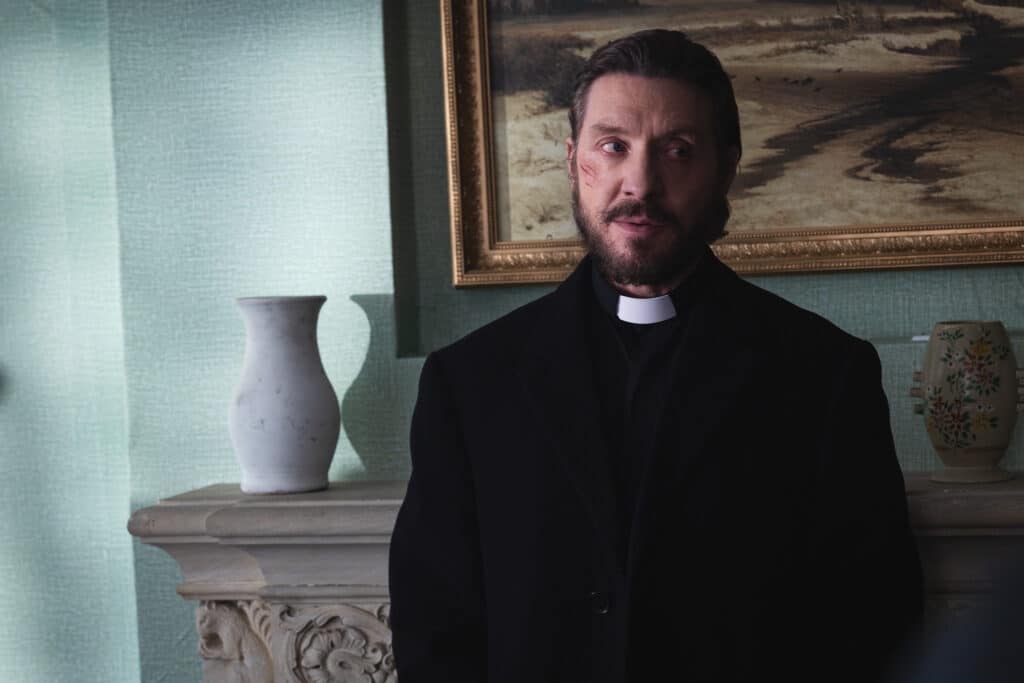
The movie deals with generational trauma in a very tense, explicit way. Early on, you have the priest say, “Even if they are certain of what they do, forgive them,” and that proves to be of critical importance as the movie goes on. Did you learn anything about forgiveness or formulate any theories on the subject through the writing and making of the film?
Yeah, I think I definitely did, because the movie is saying a lot of different things, and it all ends up open-ended. It’s abuse and an abuser, and how you’re tied to them. Does that help you, or is that just going to continue? There are a lot of things left open for one to interpret, but I do feel like Annika’s character is really trying to rise above facing something awful or something evil, and being able to find sympathy or forgiveness within that. And to me, it’s not always the right thing; Oh, maybe you should just get out of that situation. I don’t know, and I’m certainly not saying that in the movie one way or the other, but it’s what she’s wrestling with. She knows what’s really happening, and she knows that the only way for her to do this, based on what her grandmother has told her in the film, is to rise above this thing.
And I did learn something about forgiveness, because, you know, you get older, and I’m a father, and I’m a husband, and I have three sisters. Your life changes, and you think about life a bit more introspectively. I’m in this business where awful things get said to you sometimes. And it’s hard. And then, in regular life, too, we all deal with that.
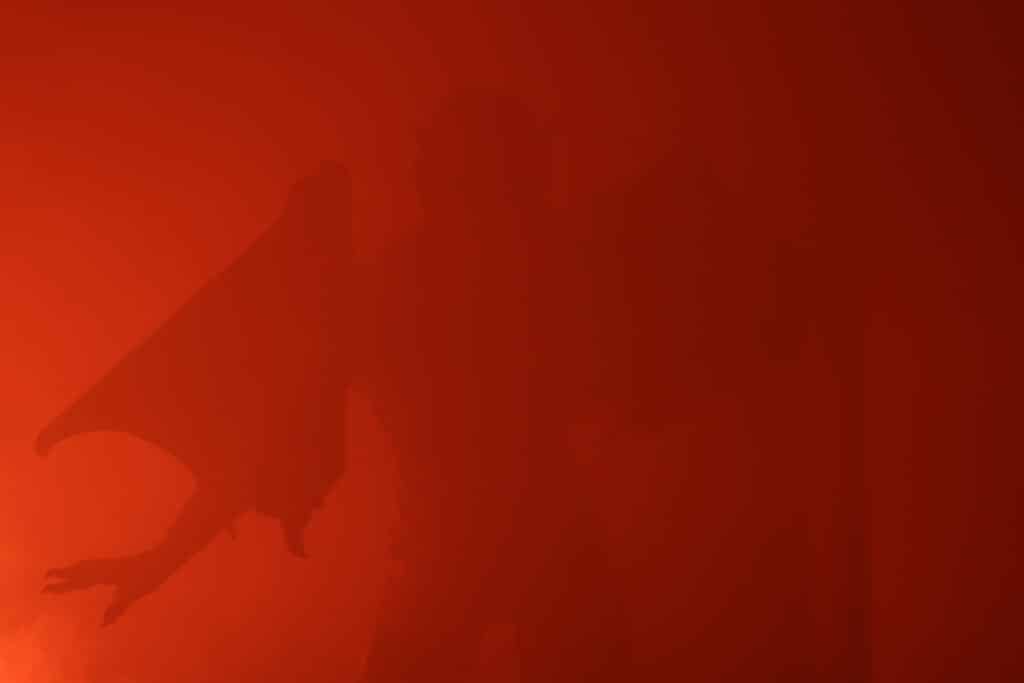
Color theory plays such a big part in the film, and it’s a very symbolic element. What was it like working with the cinematographer and production designer to make such a visually interesting film with so many layers?
I’m glad you asked that, because they’re so talented. Jason Clarke, a production designer, and as I mentioned,tioned Scott McClellan, our DP, we’re very good friends, and I do feel like the trifecta of production designer, director of photography, and director is so important, because you’re presenting the visuals. And costume designers as well, right? You’re presenting the visuals of how the film, the aesthetic of the film, is going to land, and, and so we talked a lot about, for me, you can’t think of exorcism or possession movies, or even movies like this in general, without thinking of the 70s, because you go back to The Exorcist right away, or The Omen, or even The Medusa Touch.
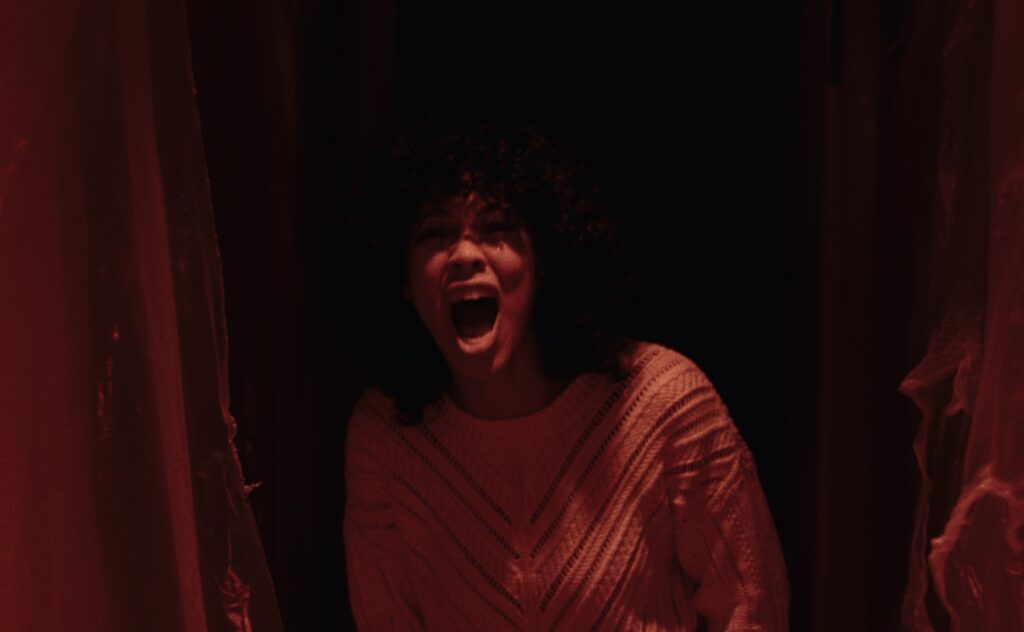
To place the audience in a familiar place, I wanted to have a 70s feeling. So with the wardrobe, Bertolucci’s movies were a huge influence on the film design-wise, like The Conformist and Last Tango in Paris, and even The Last Emperor. I’m even wearing the clothes Brando wears in Last Tango in Paris in this movie, because it was just like such a 70s thing with bell-bottoms or anything like that. Those colors, the aquas, are used very intentionally. We painted every room we shot in, because I wanted aquas for when there’s no immediate threat, and then it’s red as soon as there is a threat. And the red in the sky, because I feel like it’s overtaking them so much, this dilemma that they’re in, that it’s the whole world around them has become that, which I think we do sometimes, we become quite narcissistic when we’re stuck in peril. And so the red was an infection.
It was a really meticulous process, and the way we all look together: Martin has no color, basically, at all, because he’s so scared and timid. Therese has, like, a little, and she matches me to a small degree in browns, and Annika is completely covered in the beginning. As a nun, we covered her almost fully, and then by the end, you know, she’s John McClane from Die Hard. So it’s the unburdening for her. It was a meticulous and really fun process.