
Starring Austin Abrams, Zach Cherry and Kali Reis
Directed by Zach Cregger
Written by Zach Cregger and Shay Hatten
Sony/Columbia
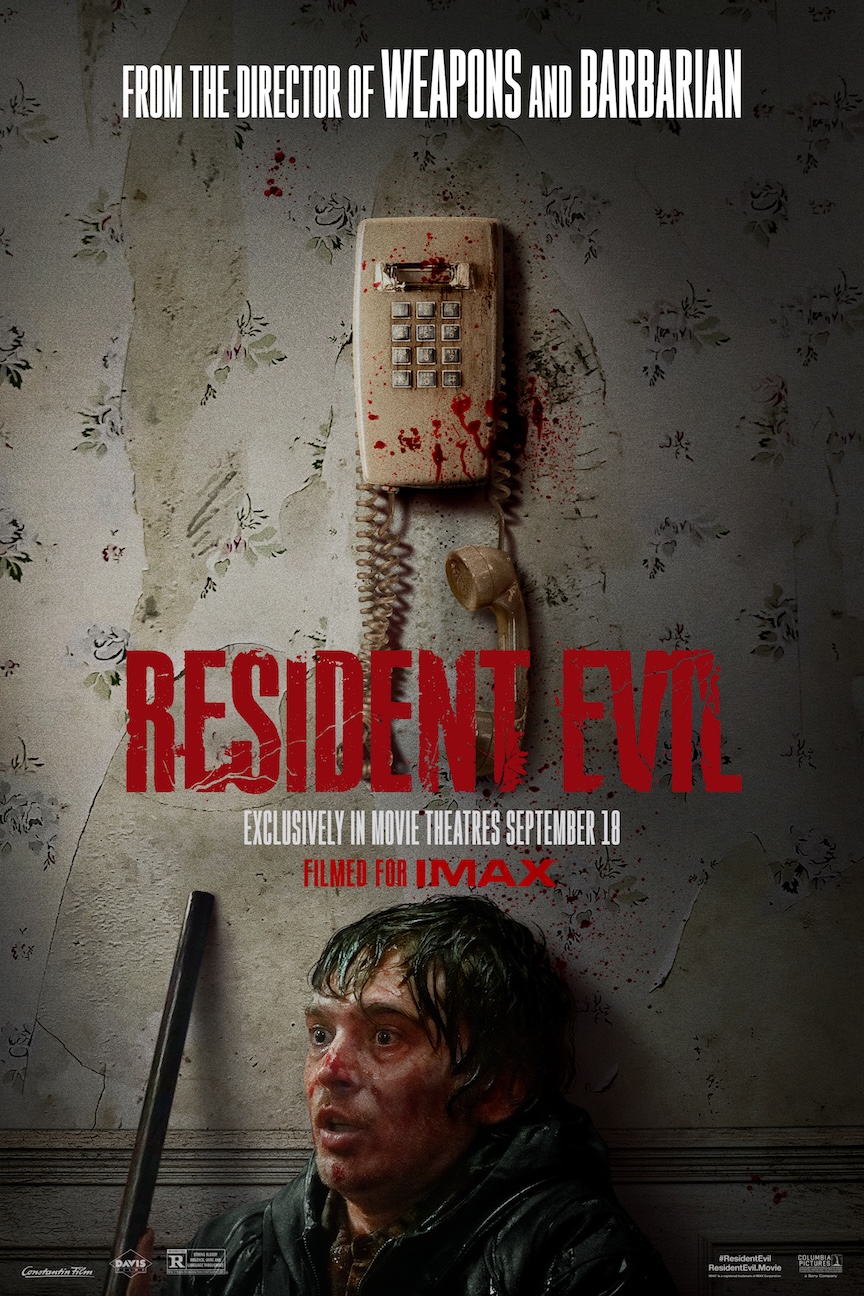
There’s been online dismay among some RESIDENT EVIL fans regarding director Zach Cregger departing from the game mythology in his new big-screen adaptation. Never mind that Milla Jovovich’s Alice, the anchor of Paul W.S. Anderson’s previous franchise, wasn’t in the games either, and that fidelity to the source was no guarantee of a good movie. And RESIDENT EVIL 2026 proves that the BARBARIAN and WEAPONS auteur was exactly the right man for the job. He makes this feel properly like the games, and drops in occasional Easter eggs for the devotees, yet this is very much his own, frightening film.
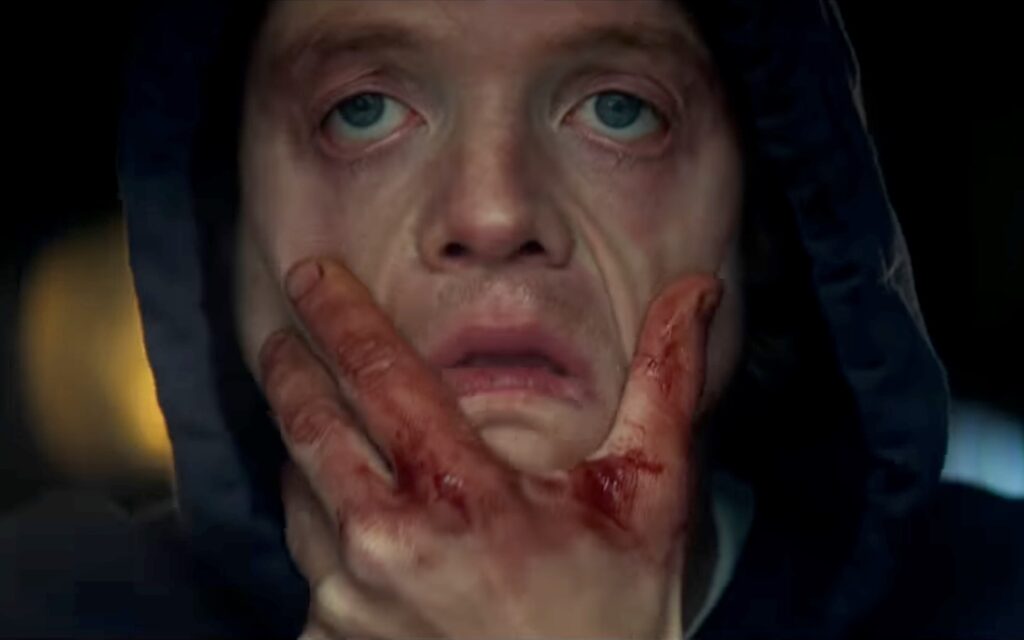
RESIDENT EVIL, which Cregger scripted with Shay Hatten, doesn’t have the kind of tricky, achronological narrative of Cregger’s previous features. It’s a linear, one-damn-thing-after-another saga that captures the game experience of run-and-gunning it from one horrific environment to the next. Our protagonist/stand-in is Bryan (Austin Abrams), a young courier who makes a dropoff at a hospital and really should get back home to his girlfriend (they’re having issues related to her pregnancy), but can’t turn down one last double-paying gig. He has to deliver a medical package to a facility in Raccoon City, and he sets out into the cold and snowy night even though his car isn’t prepared for it—and, as it turns out, neither is he.
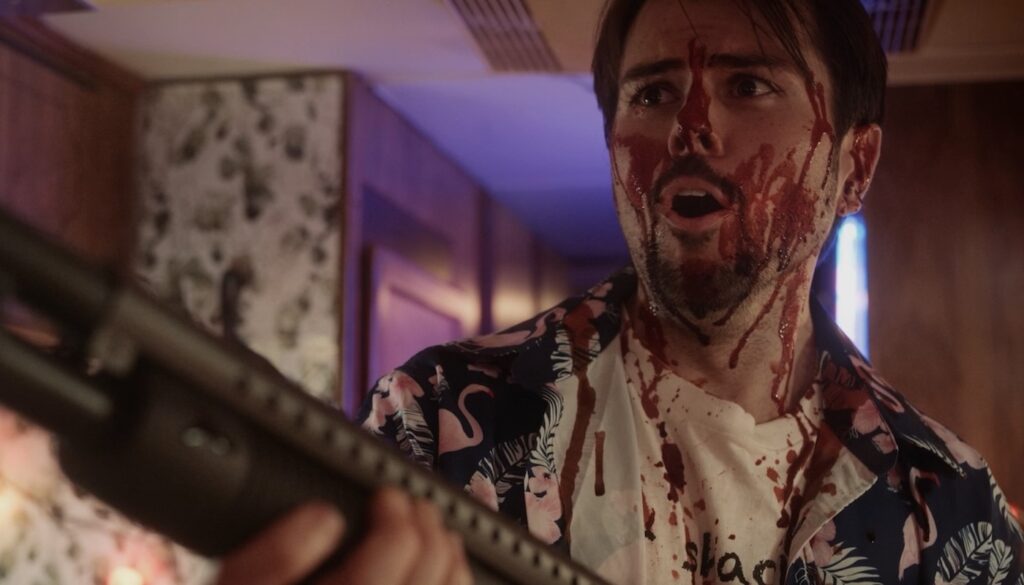
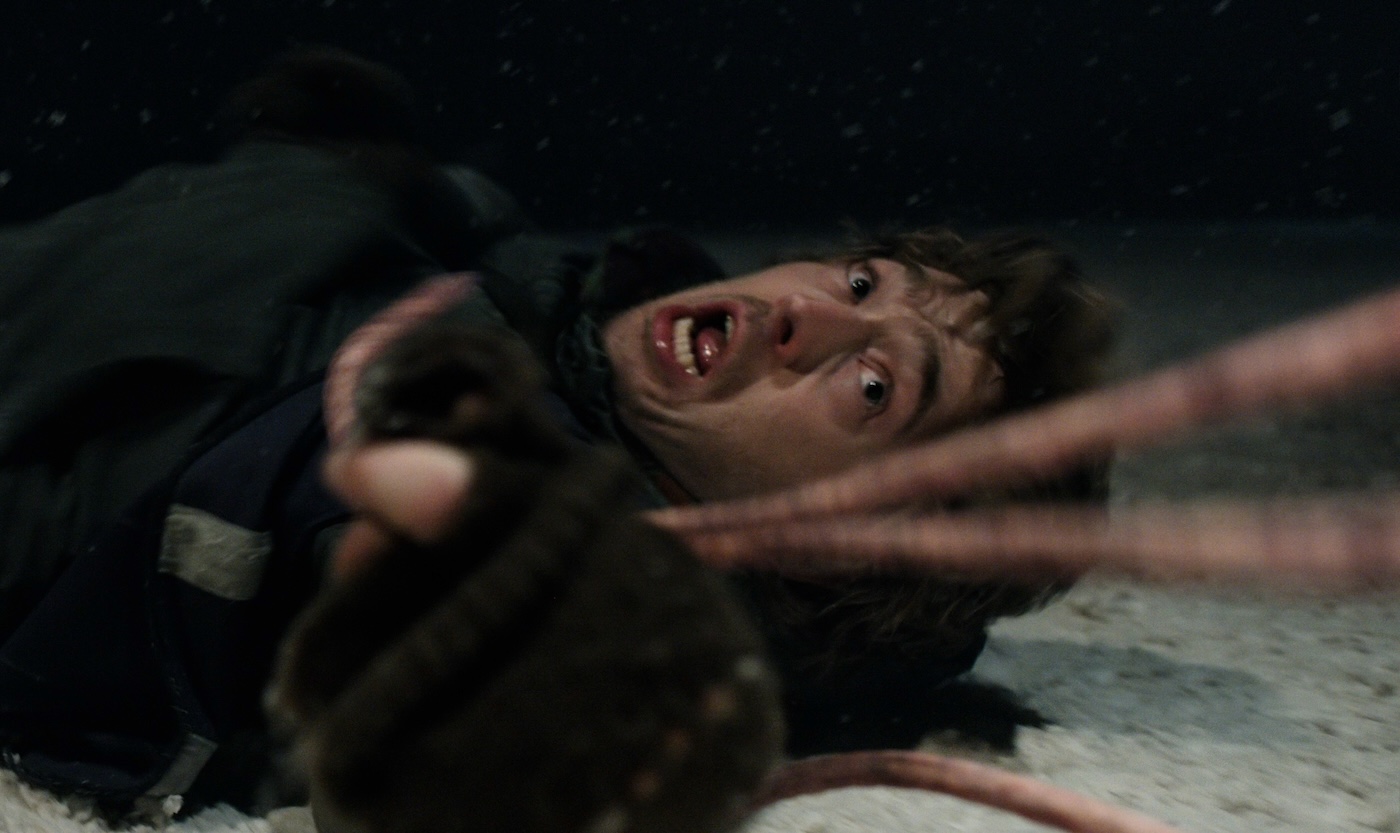
His troubles begin when a woman, crazed and not at all dressed for the weather, jumps out in front of his car. This leads to an escalating series of events that wind up stranding him at a remote house with a vicious dog outside, and people inside who may or may not be dead and/or human. At every turn, anything that can go wrong for Bryan does go wrong, and sometimes it’s due to his own inability to make the proper decisions in the heat of the life-threatening moment. Abrams, who had a very different part in WEAPONS, is a terrific audience surrogate as Bryan, reacting to the increasingly bizarre goings-on with alternating stark terror and amused disbelief. This is the funniest movie Cregger has made, but he doesn’t go for laughs at the expense of the monsters and other horrors that befall Bryan. They’re all played dead straight, and it’s in his reactions to them, which would likely also be ours, that the fun comes in.
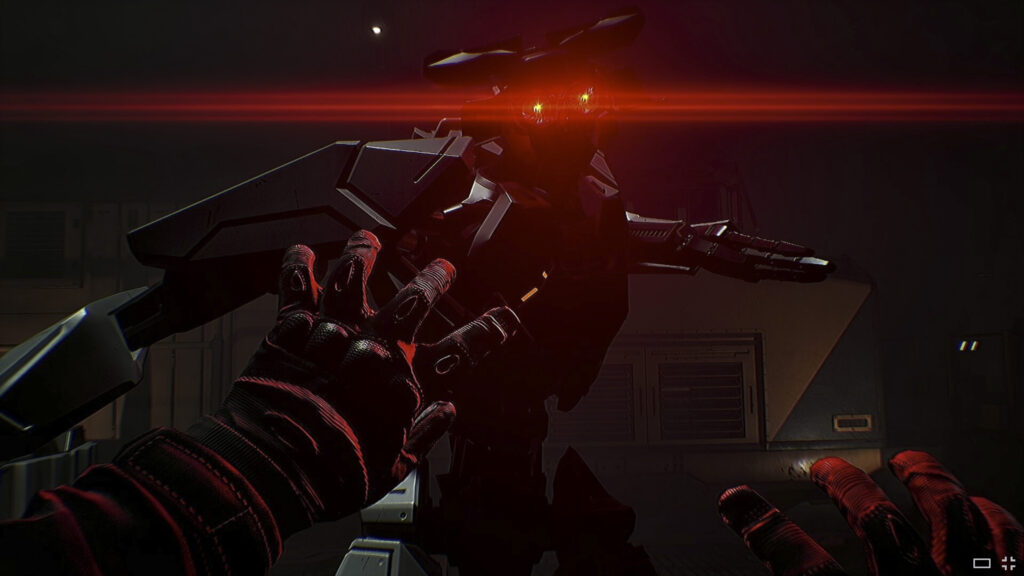
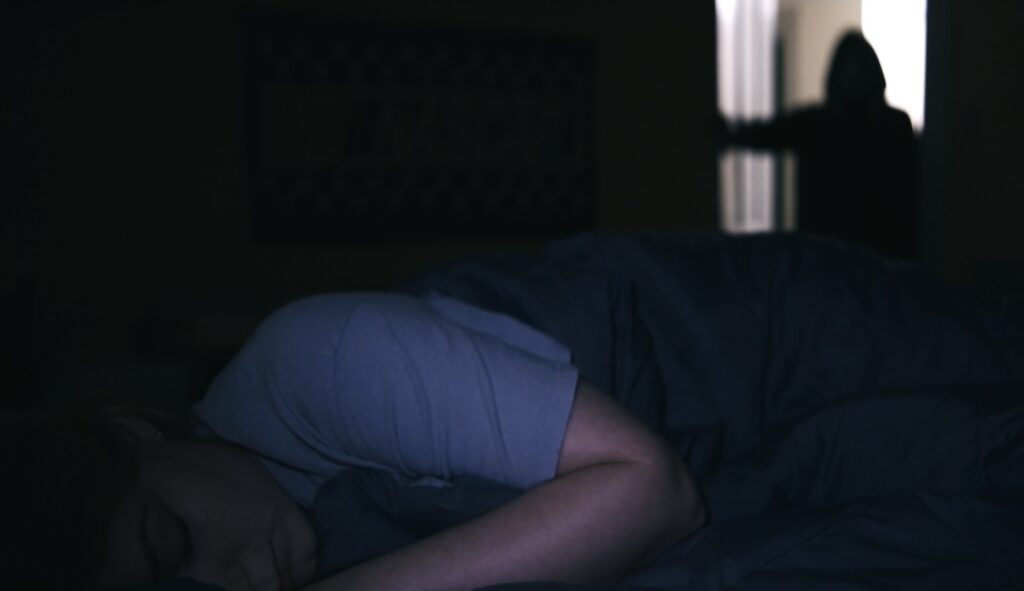
The scary stuff, meanwhile, proceeds from quickly glimpsed to in-your-face, with humans and animals mutating into all sorts of often tentacled monstrosities. There are a few sudden, out-of-nowhere transformations that result in serious jump-scares, and once the action eventually takes Bryan to Raccoon City itself, Cregger builds scenes of impressively sustained tension. Throughout, he and cinematographer Dariusz Wolski, whose credits range from THE CROW to most of Ridley Scott’s 21st-century filmography, drench RESIDENT EVIL in forebodingly gloomy atmosphere, as the roving, swerving camera threatens to reveal another shocking sight at every turn. The bestiary, created practically by Legacy Effects and via CGI by Weta Digital and other houses, always have a new, nasty surprise up their…whatever.
Running their gamut, Abrams is pretty much a one-man show here. A few other folks do turn up, including two members of the Umbrella Corporation team played vividly by Kali Reis and Paul Walter Houser, but…let’s just say, don’t get too attached to them. RESIDENT EVIL may be a lot simpler on its narrative terms that Cregger’s earlier features, but the filmmaker turns that simplicity into a virtue, proceeding with a nightmare logic and a relentless pace that keep the audience fully caught up in Bryan’s long, dark night. He has made a video-game movie (complete with a few first-person-shooter moments from Bryan’s point of view) that honors its source without seeming beholden to it, replicating not its specifics but its mood and excitement and writing them large. This is arguably the best film ever derived from a video game, and one of the few that could easily stand alone without the tie-in to a past IP.