
Anastasia Elfman, lifelong monster kid and film historian, pens a new column exploring the forgotten gems that still chill and thrill us.
Some kids wanted to grow up to be movie stars: Marilyn Monroe, Elizabeth Taylor, Cary Grant … I wanted to be Lon Chaney Sr.
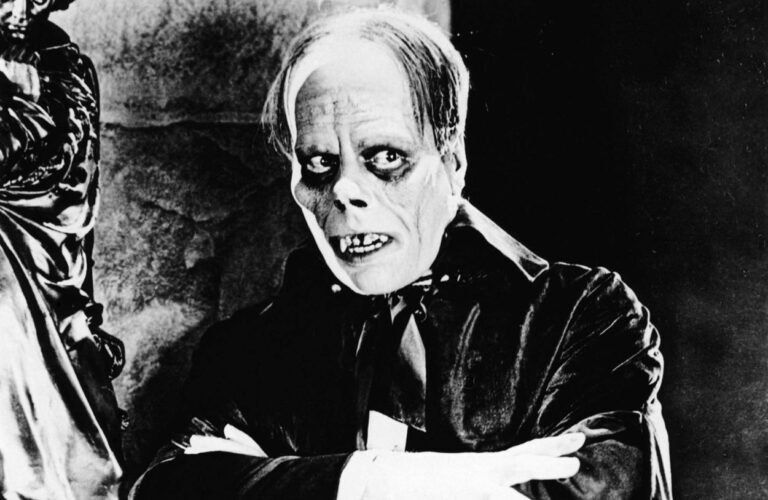
Besides sharing the same April Fool’s Day birthday, my offbeat and rather alienated upbringing mirrored (at least metaphorically speaking) Chaney’s alienated childhood. Both his parents were deaf-mutes–a disability less tolerated, less understood in the 1890’s. Before doing film, his trajectory was dance, then theater. I was the (undiagnosed) dyslectic daughter of strict former Marines–school was hell, my evenings were formal ballet and weekends were Young Marine Camp. I found solace performing in theater and voraciously watching horror films. Lon Chaney was my hero and role model–his 1925 THE PHANTOM OF THE OPERA is still my all-time favorite horror film.
Growing up in the theater instilled a “The show must go on” ethos. If you don’t have a prop, build it. If you don’t have a skill, learn it. If you don’t have a costume or practical effect, create it. And rehearse till it kills you! Those qualities defined Lon Chaney Sr., who pioneered special makeup effects and props.
Chaney was very close with his mute parents, leading him not to speak until he was four years old.Later,he would pantomime news and stories for his bedridden mother while juggling responsibilities with younger siblings. His strong work ethic and ingenuity eventually brought him to Hollywood, where he worked his way up to managing theaters, building stage sets, choreography and moving from comedic bit parts to leading theatrical roles. With his passion being theater, he had little interest in the newly popular “moving pictures.” Eventually, due to his first wife attempting suicide, Chaney was forced to make the jump to film so he could support his young son, Creighton Chaney (later known as Lon Chaney Jr.—the “Wolfman”).
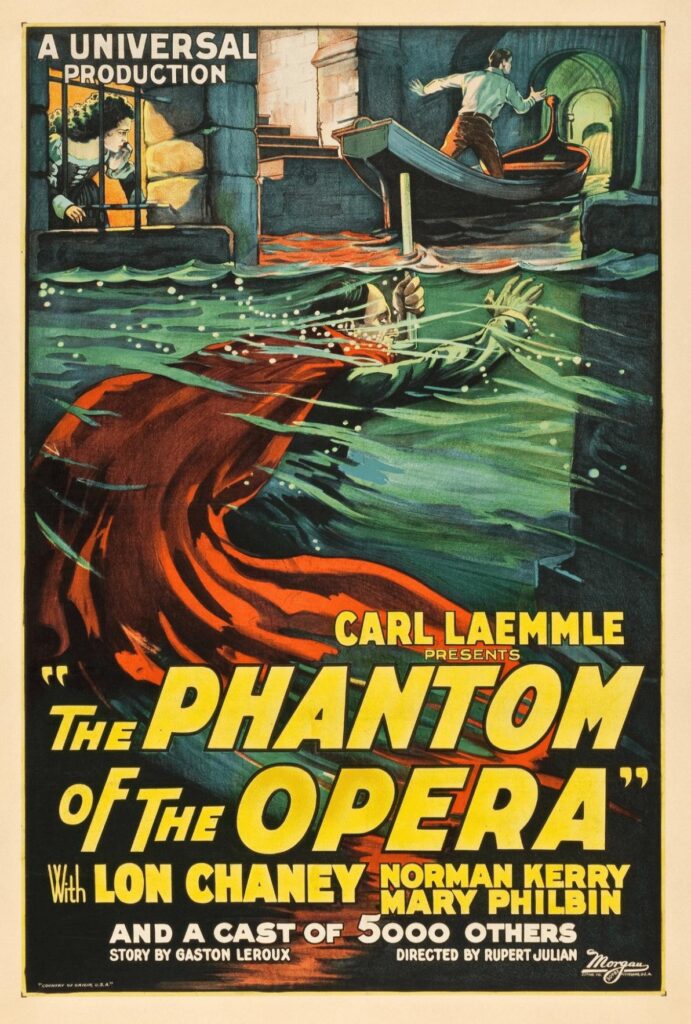
True stardom arrived in 1919 with the release of The Miracle Man, in which Chaney played a contorting con man disguised as a handicapped man. The critical acclaim skyrocketed him and caught the attention of major studios for starring roles in 1923’s The Hunchback of Notre Dame and his most iconic role, 1925’s THE PHANTOM OF THE OPERA, earning him the nickname “The Man of a Thousand Faces.”
Beneath the Paris Opera House, Chaney, as the masked Phantom, pulls the strings of a young soprano, Christine Daaé, played by Mary Philbin, as she rises to stardom thanks to the Phantom’s clever tactics. When she falls for another man, her now-obsessed secret mentor turns the opera house into a death trap.
THE PHANTOM OF THE OPERA was a massive landmark production, produced by Carl Laemmle, the president of Universal. Filming turned out to be a turbulent affair with major on-set feuds and extensive reshoots.
Apparently, a thousand faces couldn’t help Lon Chaney Sr. keep a straight face around the director Rupert Julian. Chaney wanted visionary Erich von Stoheim to direct and despised the arrogant Julian, who treated cast and crew quite abrasively. According to recollections from co-star Philbin and cinematographer Charles Van Enger, Chaney refused to take Julian’s orders and directed his major scenes himself (uncredited).
A true showman and perfectionist, Chaney spent hours building his Phantom makeup at home to keep his character’s features a mystery, including Mary Philbin, who only saw the incredibly horrid face for the first time while shooting the actual scene. Her genuine terror is still visible today during Erik’s famous unmasking.
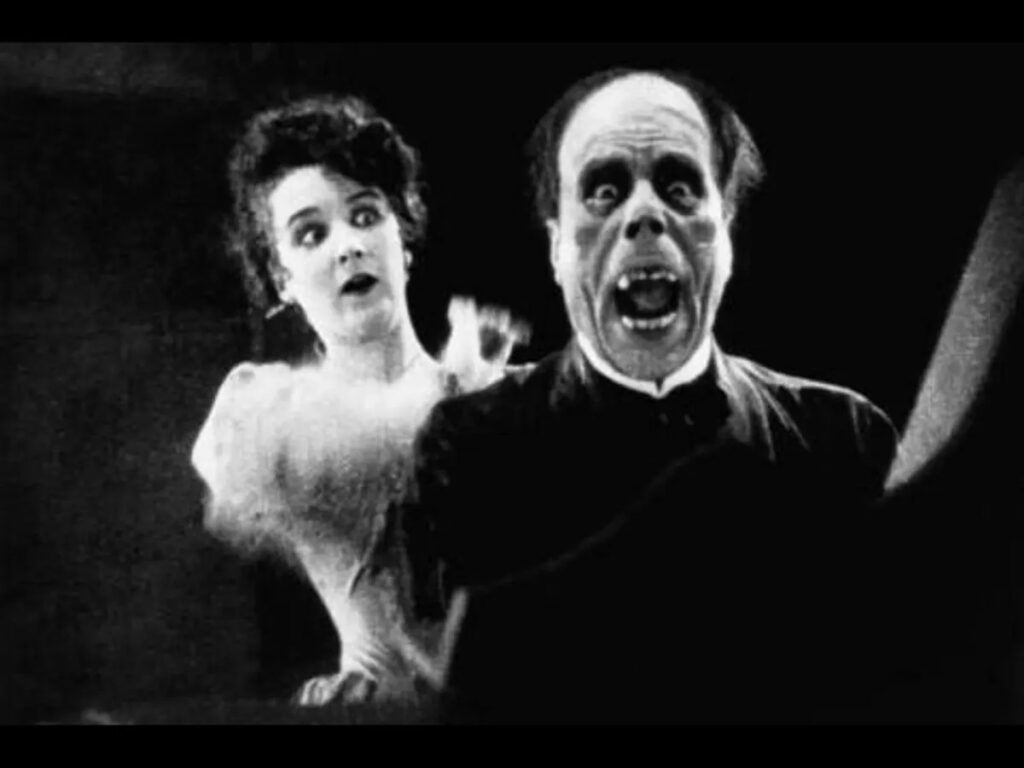
Chaney was a dedicated craftsman who meticulously planned his physical performances, had no patience for Julian’s heavy-handed, melodramatic direction and created his own physical vision for the character. Chaney also took on the responsibility of keeping his extensive makeup picture-perfect during their grueling 18-hour shoot days. Remember, this was the Wild West of early filmmaking, before unions kept schedules and before makeup or effects departments and stunt doubles existed.
Philbin remembered Chaney climbing onto the rooftop sculpture for the Apollo’s lyre sequence without a stunt double, then standing just out of frame for his co-stars’ close-ups so the crew could quickly get the reverse angle, which was rather dangerous in his bulky Red Death costume and heavy, flowing cape. Famous for his background in vaudeville acrobatics, Chaney routinely rejected stunt doubles and performed most of his stunts himself, including swimming in the underground water scene in full restrictive makeup.
For The Phantom’s iconic look, Chaney sought to perfectly replicate the Phantom’s description in Gaston Leroux’s original novel. Chaney engineered a contoured wire appliance to pull back and flare his nose, causing severe pain and frequent nosebleeds on set. To give the illusion of a hollow skull, Chaney glued his eyelids downward and his ears back. While Chaney rarely wrote or spoke publicly about his exact methods for his portrayal of the disfigured Phantom, he shared a general philosophy on basic character building, famously in his 1929 Encyclopædia Britannica entry: “The success of the makeup relied more on the placements of highlights and shadows, some not in the most obvious areas of the face.”
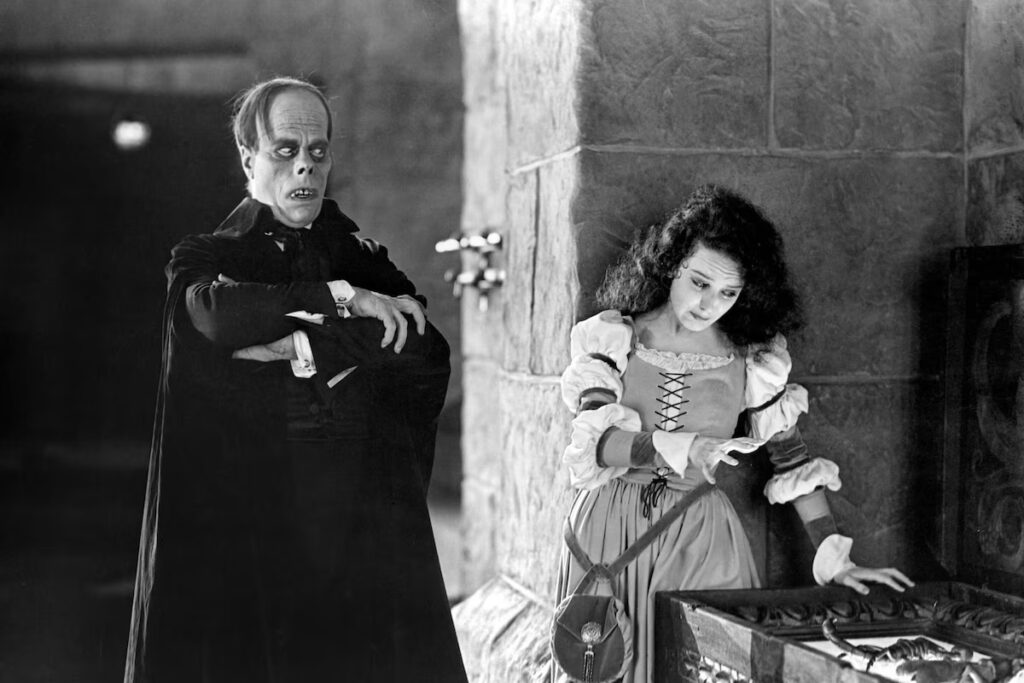
While Universal invested heavily in gigantic sets, early Technicolor and the Handschiegl-processed sequences, the film was conceived specifically as a star vehicle for Chaney and relied heavily on his creative vision, physical dedication and box-office draw to overcome a troubled production. With Chaney as the primary driving force, THE PHANTOM OF THE OPERA opened to high critical acclaim and became a massive, enduring box-office hit.
Universal and Chaney’s frequent collaborator Tod Browning began courting Chaney to star in Browning’s upcoming Dracula. At the height of his power as an A-list star in Hollywood and a go-to for major monster roles, Chaney likely would have played all the original Universal Monsters if not for his untimely death in 1930.
Chaney’s legendary work in THE PHANTOM OF THE OPERA helped lay the foundation not only for Universal’s monster movies but also for what practical effects could achieve. Lon Chaney Sr. was a trailblazer who revolutionized the world of cinema and defined early pre-Code horror and, ultimately, horror as we know it today.