
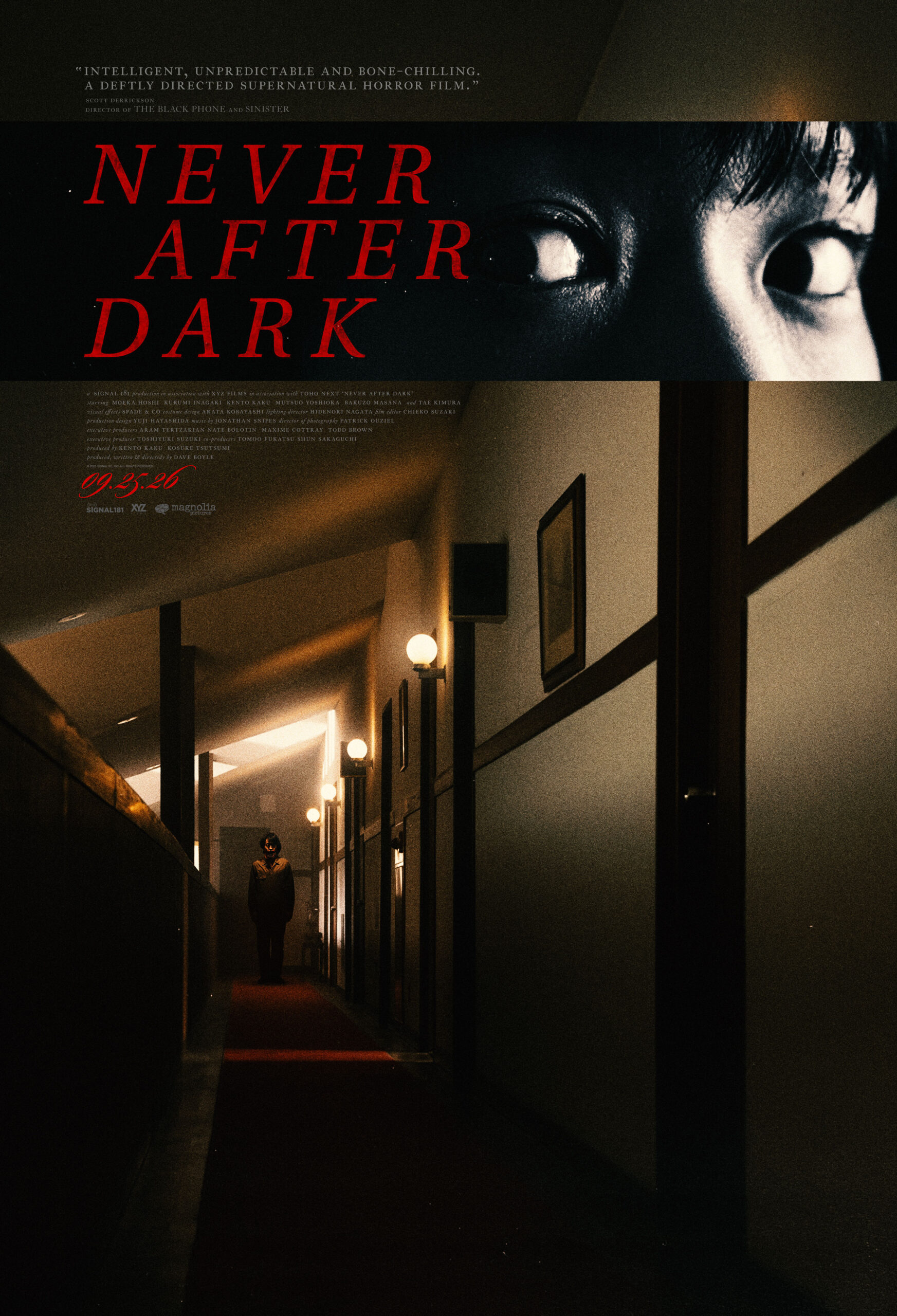
Filmmaker Dave Boyle has explored Japanese themes and employed Japanese casts in many of his previous movies, from his 2006 debut feature BIG DREAMS LITTLE TOKYO to the 2014 mystery-thriller MAN FROM RENO (starring Ayako Fujitani from the ’90s’ GAMERA films). Now he has tackled his first horror story, NEVER AFTER DARK, which opens this Friday, September 25 from Magnolia Pictures, and he discusses it below.
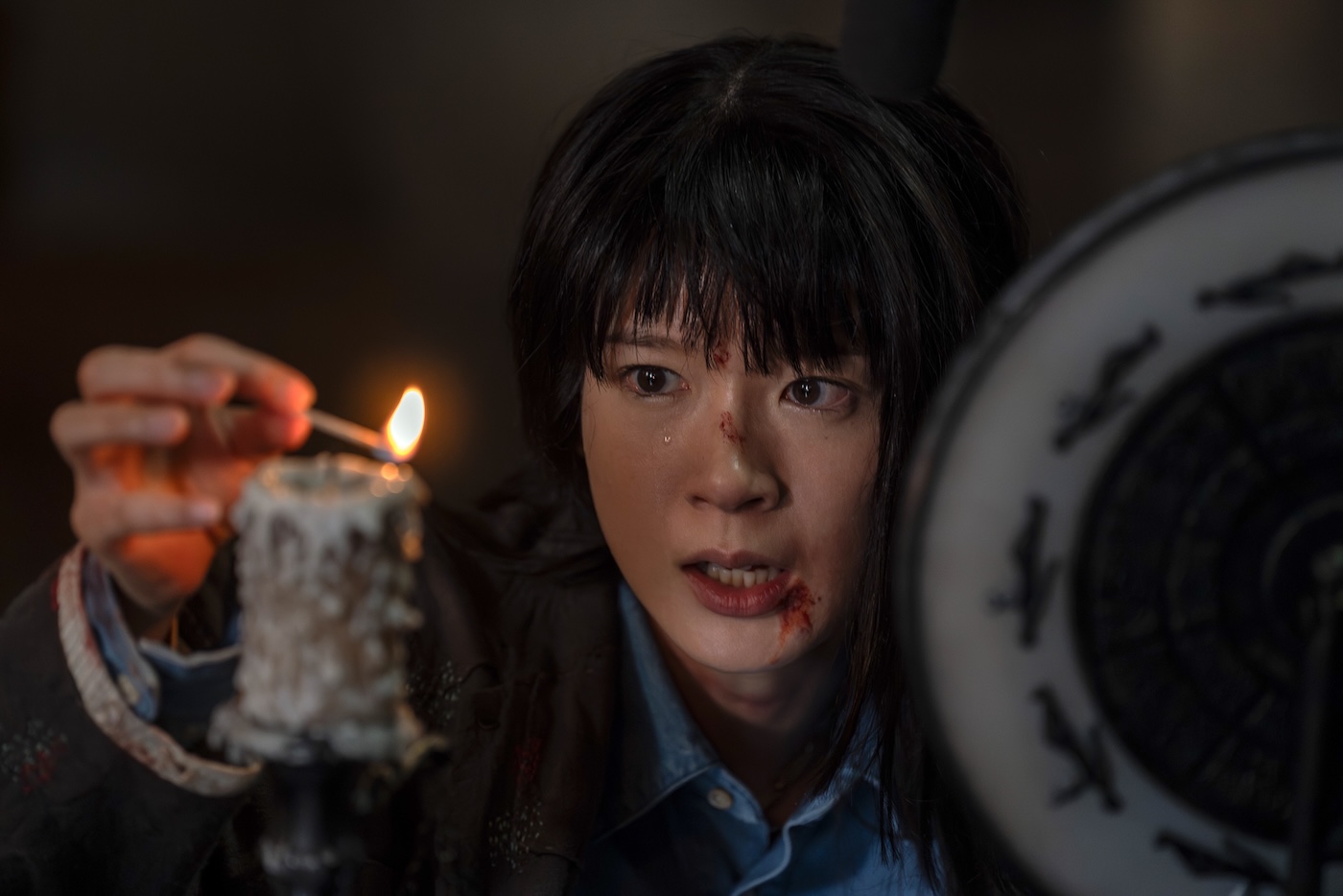
NEVER AFTER DARK stars Moeka Hoshi (SHOGUN) as Airi, a medium who travels to sites haunted by lost souls whom she helps transition to the realm of the dead, using a unique mirror device. When she is called to an expansive house deep in the woods, she confronts an especially frightening spirit, which becomes a case that threatens her own life. Employing classic tropes of the supernatural while going off in its own chilling directions, NEVER AFTER DARK has won widespread praise for both honoring and reinventing the J-horror genre.
You’ve done a number of different films with varying subject matters in the past, so what inspired you to make your first horror film?
I’ve been wanting to do a horror movie for a long time. It’s one of my favorite genres, and it’s funny—even though conventional wisdom says it’s the easiest genre to get a movie made in, for whatever reason, my experience has been the opposite [laughs]. I was able to work on other things, but had never gotten a horror movie all the way to the finish line. I made a Netflix show in Japan called HOUSE OF NINJAS a couple years ago, and my creative partner on that, Kento Kaku, and I wanted to make another project together. He asked, “What do you want to do? If you could have whatever you want, what would it be?” I said, “I really want to make a horror movie,” and he said, “Let’s do it.” So I grabbed the chance and ran with it.
What were the inspirations behind this story, and the choice to do a supernatural film?
I’ve always loved ghost stories and haunted house tales; I never miss one when they come out in theaters. The central inspiration behind NEVER AFTER DARK was the desire to do a supernatural story that ended in a different way than they usually do. Even though I love the genre, I feel like they tend to end in one of a handful of ways. I’d always tried to think of some sort of central concept or structure that would allow me to take the story in a really surprising direction. One of my favorite films in the genre is THE CHANGELING with George C. Scott, a great movie that has a lot of interesting thematic depth as well as just being a real rollercoaster ride. There are lots of twists and turns, even though the story itself is fairly simple, and the filmmaking is very straightforward in a way that I really like. So that was a source of inspiration.
I also had a little bit of a bee in my bonnet of wanting to create a new kind of medium or exorcist or whatever you want to call it. I feel like the usual pattern in these films is to enter the story through the eyes of an Everyman, somebody who’s dealing with a haunting and at some point calls on a professional to help with their problem. I wanted to start from the point of view of the professional, and without using too much explanation, give that person an inner life and a set of personal challenges that would be interesting to watch. At the same time, the movie itself is a procedural; you’re watching her deal step by step with this problem.
Did you take inspiration from either classic Japanese horror or some of the more modern J-horror films?
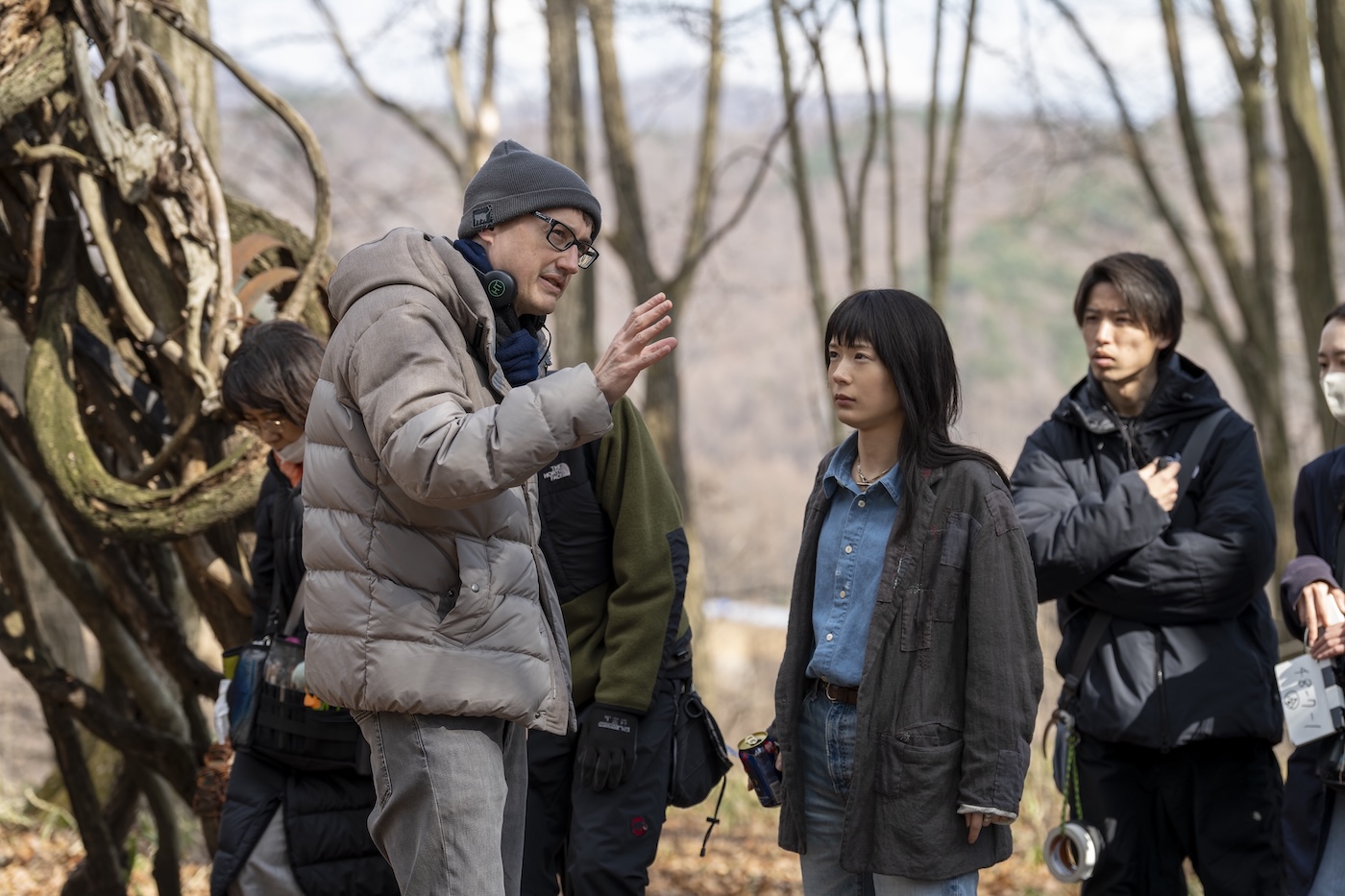
Oh, absolutely. This movie was made in the Japanese production style with a lot of veteran Japanese artists, like our production designer Yuji Hayashida and lighting director Hidenori Nagata—folks who have a long history of working in J-horror. I mean, Nagata-san was actually in the lighting crew on the original GRUDGE movies 25 years ago, and they’ve had a hand in these classics. So in terms of the visual language and storytelling tradition, I had a lot of people around me who could be sounding boards on how to make sure this was a respectful homage, as well as its own thing.
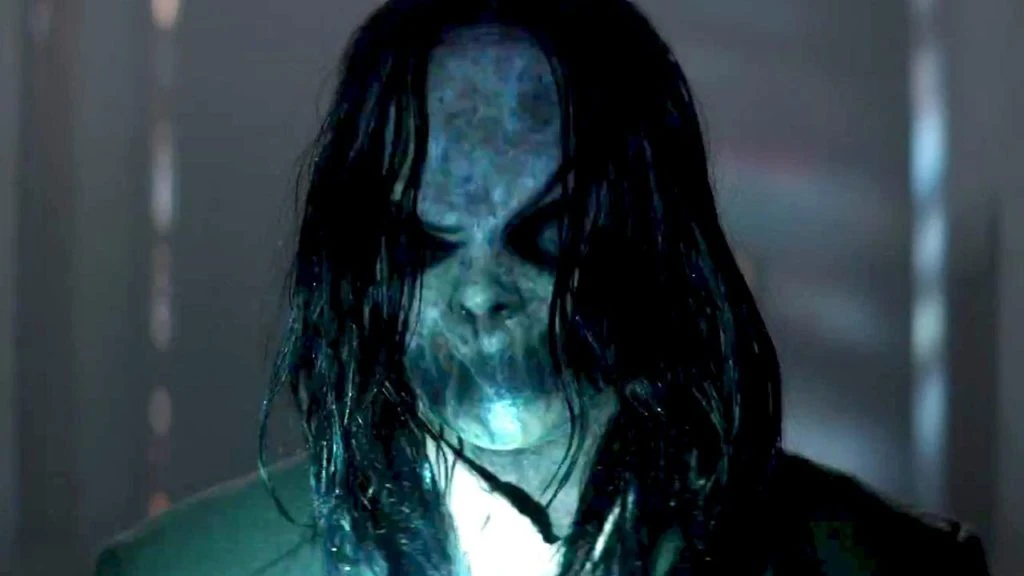
There were certain areas where we wanted this to have the texture and the creeping dread that is important to the J-horror tradition, but also areas where we wanted to subvert the usual visuals and storytelling patterns. Even with our central ghost: There’s an old folk tale in Japan about the slit-mouthed woman, and our central ghost, even though he’s never named in the film, is called the “gaping mouth man” in the Japanese credits. That’s a signal to audiences in Japan that we understand that we’re playing on certain images and trying to go a different way with them. It’s been really fun to, first of all, play in that sandbox, and then also to see the great reaction that’s gotten from audiences in Japan, and the rest of the world too.
Airi has a very particular process and device that she uses in her work. Did you come up with that yourself, or is that based on research into paranormal investigation?
I’m glad you noticed. That is something I invented myself, and that exorcism ritual she does was the first thing I came up with in working on this project. There are tons of things about it that were unconsciously and consciously influenced by real-life rituals, but for the overall process, I wanted to come up with something wholly new. So her spinning mirror device, I flagged that early on as something I wanted to spend a lot of time and resources on to get right. I also wanted it to be something the actress could actually use, and we could just capture it on camera without using any sort of CGI or VFX to get the effect across.
So Yuji, my production designer, worked from the written description in the script, and I talked about wanting it to be a zoetrope, so there was an animation happening that we could film on the day. He hand-drew the animation and created the device we used. And the guy who actually fabricated it was always on set with a set of screwdrivers and everything he needed to adjust speed and repair it on the spot. He made a handful of different versions, including a lightweight one that was a little bit easier to carry around.
I was going to ask if it was inspired by the zoetrope, because it seems like a homage to the early days of cinema.
Absolutely. In the original scripts, it just says that the edge of the mirror lights up and creates a hypnotic pattern. We were talking about what that would look like, and over the course of those discussions, I said, “What if it’s a zoetrope?” And the content of the animation can offer the audience a visual clue as to what function the device is performing, so we don’t have to add some kind of expository dialogue. I wanted it to be innately understandable to anybody, no matter what language you speak, and the zoetrope was a way to do that, and it also gives the device a sense of history.
They also spent a lot of time rusting it and making it feel worn and old and like a historical object, because it was all fabricated from scratch. The first prototype looked brand new, and we wanted it to feel like this thing has been through a journey of 100 years or more.
Can you talk about the approach to the effects in general, practical vs. digital?
Yeah, sure. My VFX team in Japan is this great company called Spade&Co.; I worked with them on HOUSE OF NINJAS, which was an extremely VFX-heavy show, and they were just wonderful. When it came time for NEVER AFTER DARK, I wanted this movie to feel a little old, like an object from the past. It takes place in the early ’90s, and I wanted it to seem like it was using the techniques that might have been used in that era. So in my first meeting with the VFX team, I told them, “I’m not denying the power of CGI here. It’s just that I want this movie to have a very tactile feel.” Wherever possible, I tried to get things on camera where the actors could react to them, instead of it being like, “You have to imagine this here.”
So Spade&Co. were part of a larger group that included a large practical effects team from Tengu Effects, and also my production designer and this guy named Tomo Hyakutake, who’s a legendary prosthetics guy in Japan. He probably has credits on a dozen or more movies every year, because he always has the most creative solutions for these problems. With the ghost, we needed to evoke the feeling that his jaw has been unhinged and is hanging down, so there’s an impression that he either has a large mouth or that he’s been maimed in some horrible fashion. With scheduling constraints and other factors, we couldn’t have the actor in the makeup chair for three or four hours, so Tomo came up with an ingenious design that managed to evoke the feeling of depth in the mouth, but also allowed the actor to be speak and communicate if he needed to, and looked great on camera.
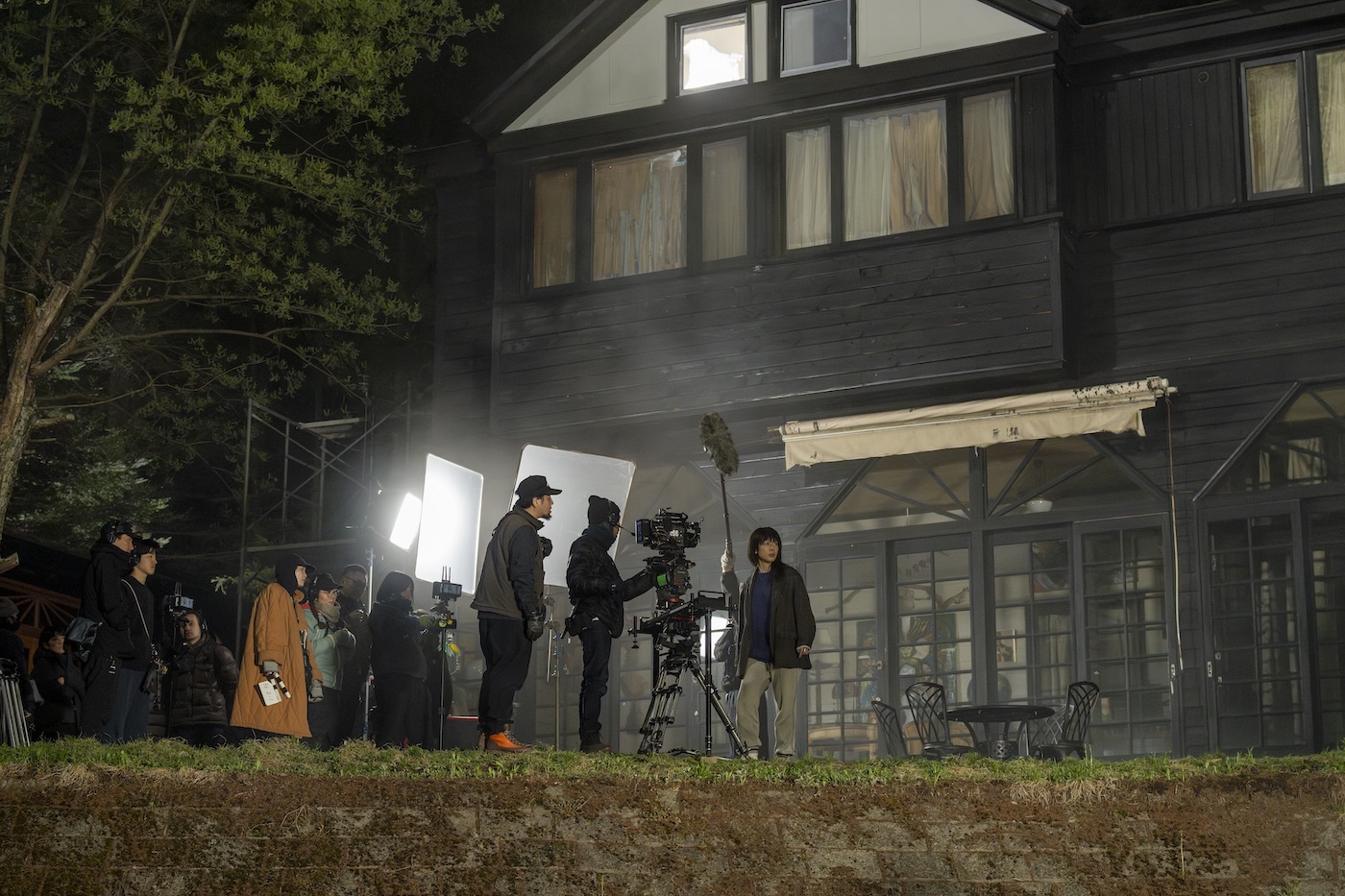
Where did you find the great house location, and was the movie all shot at that actual house, or did you use sets as well?
We didn’t use any sets at all. It was all shot at the house; in fact, even the little flashback scenes were all done in that very compact area. That house was a great find, and I have so much gratitude for the production team for finding it. One thing that’s kind of a structural challenge the entire Japanese film industry faces is the availability of locations. In the U.S., if you want to shoot on a public street, you can acquire the permits and get the cooperation. The police will help you shut down a street and get your movie done. The same kinds of things aren’t available in Japan. There are a lot of reasons why, but you’re limited in the choices of locations you can shoot at. I can recall that on a prior project I was shooting there, I was on a location scout and quite excited about the space I was being shown. I was thinking about all these possibilities and pitching all these shots. And I could see my production team—a lot of whom joined me for NEVER AFTER DARK—off in the corner, head in hands a little bit. I asked everybody, “What’s wrong?” and they said, “You know, this is my 15th time shooting at this location.”
So when we started making NEVER AFTER DARK, one of the things Kento and I wanted to make a real priority was finding a location that hadn’t necessarily been used in a film before. We were willing to put in the time and resources to make a deep search and commit to a place. I have to say, that house wasn’t the most convenient location, because everybody in the cast and crew had to stay in a hotel—which was also haunted, I believe—during the whole thing. But it was one of those cases where you walked in and it was just so perfect; it was clear that this was the place. It suited the script as written so perfectly that there was no second place in that race.
You mentioned that NEVER AFTER DARK goes to a different place than usual for the genre towards the end. Without giving too much away, can you talk about making that transition?
Part of the thought exercise behind the movie was having the pleasures of a haunted house movie and a ghost story, but I feel like oftentimes the most pleasurable parts of those films are in the first hour. And then, even in the best ones, there can be a bit of a dropoff for me. I felt there was a way to logically combine the kind of fear you have in a ghost tale with a more visceral terror, but still exercise a classical restraint over everything, so it’s not going in a totally different direction. You let the audience get their guard down in the first half because they feel like they know where it’s going, and then it’s a whole different category of fear that comes up in the second half. Just from a thought-experiment perspective, that seemed like a promising way to go.