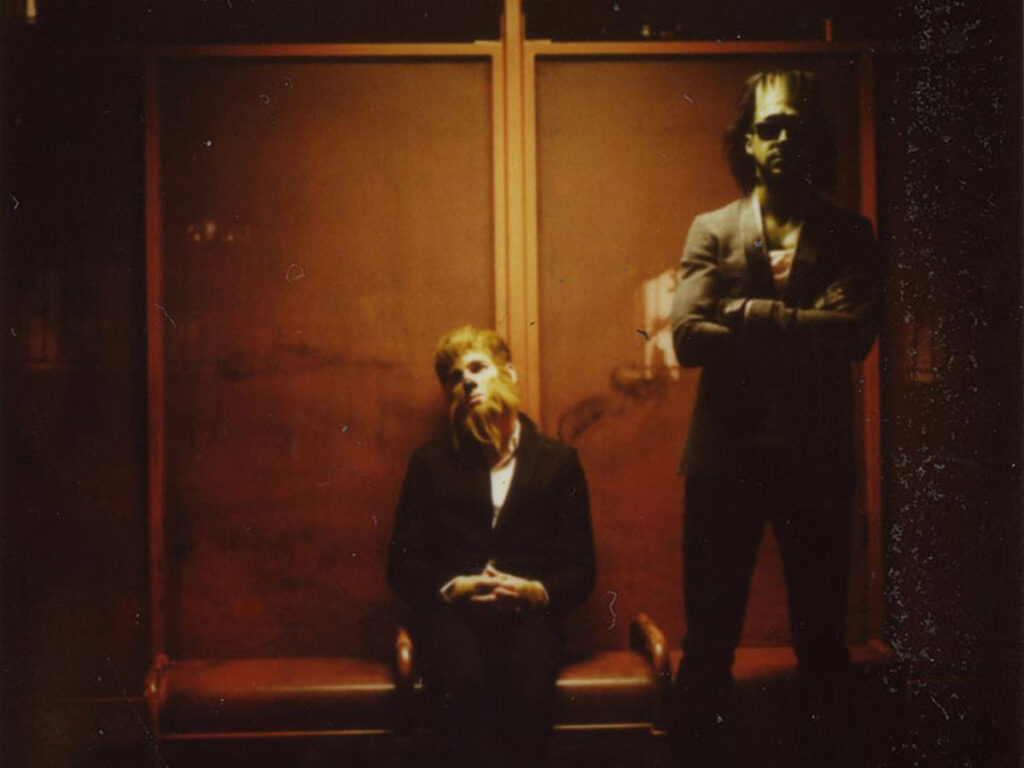

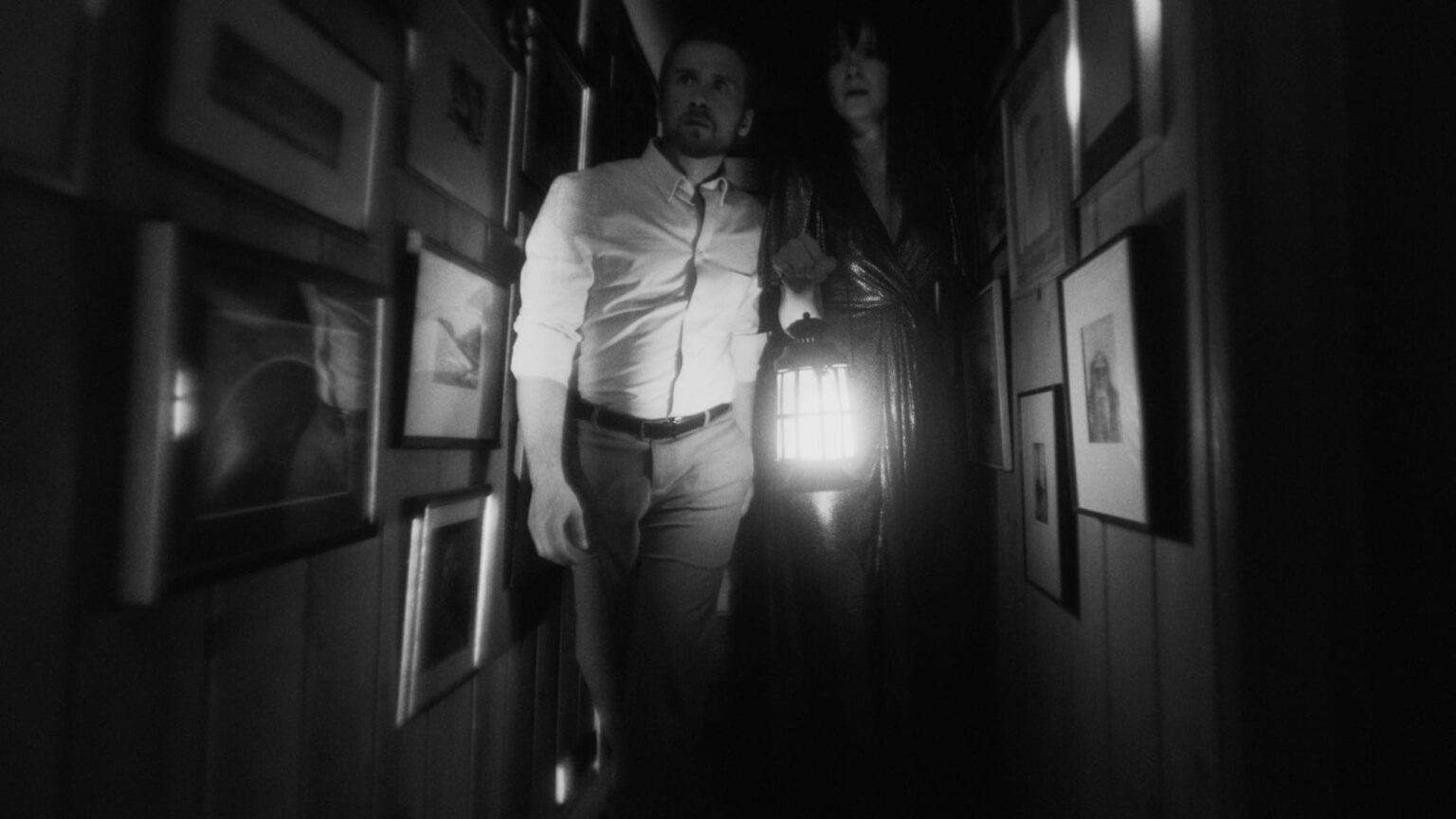
Ever wonder what happens when you die? What would you do if you knew you had more time? Could you handle being dead if you were conscious? These are questions posed when studying existential philosophy and ontology, which are themes in Johnny Coffeen’s THE AVALANCHE. Premiering at FilmQuest ’26, THE AVALANCHE has a surreal Lynchian dream logic tone, which is a personal influence on the film as Coffeen had a relationship with David Lynch. The plot surrounds two exes that wake up in an unknown cabin that’s buried under snow from an avalanche. Neither remember how they got there and whether or not they’re alive or dead. Further anxieties ensue when ominous figures begin randomly appearing in the cabin. Shot entirely in one location and in black and white, this film with only two actors takes the audience into the depths of existential dread and anxiety about what happens when we die.
Benny (Lou Taylor Pucci) and Zoey (Alexandra Essoe) wake up in bed together after having not seen each other in ten years, with no recollection of how they arrived. They look out the window and see feet of snow barricading them inside. The cabin has one inoperable phone and no cell service, but they assume a rescue is imminent. However, as days go by, more impending avalanches weaken those chances and further panic transpires. The old phone periodically rings but when answered, only static is heard. With time on their hands, Benny and Zoey begin catching up on each other’s lives since their relationship ended and it is evident they still hold strong feelings for each other and the connection they once had is rekindled. This aspect of the character’s arcs speaks to folks who are reluctant to act on the urge to reach out to an ex but, for reasons, don’t and wonder what would happen if they did or didn’t.
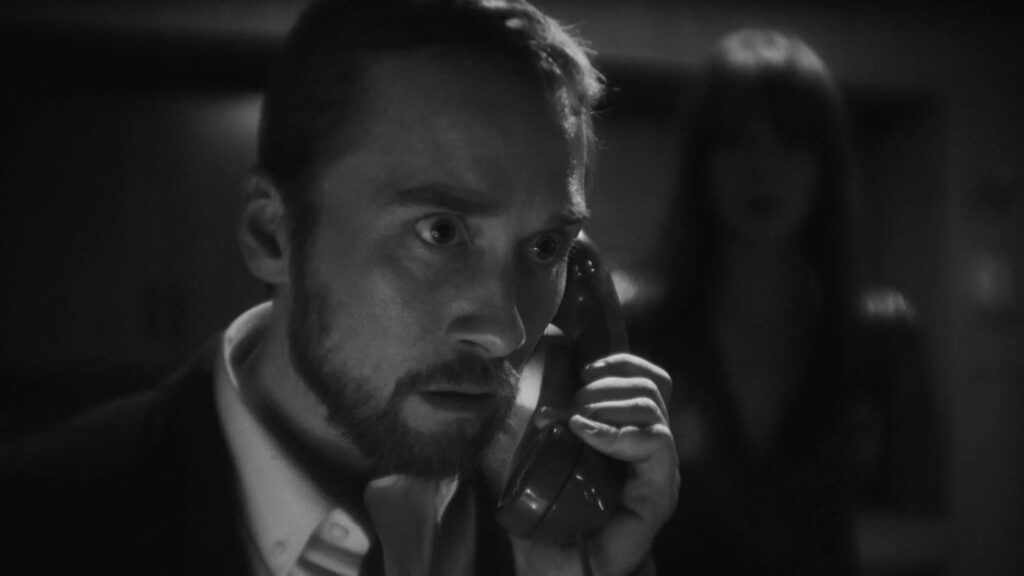
Whenever Benny and Zoey fall asleep, they have horrific nightmares, and as more days go by, they begin seeing visions of terrifying beings. Blood and gore hold a significant space in horror, but THE AVALANCHE proves it is not required in order to arouse fear in the audience, as the subtleness of these dark beings merely standing in a corner induce sheer terror. A unique aspect this movie holds is the use of colour for the past and black and white for the present, which is commonly reversed in film. This creates a sense of the surreal bleeding into reality and awakens those existential anxieties of what it would be like being stuck in purgatory, which is perpetuated once Benny and Zoey start questioning their mortality and the nature of their circumstance.
We also see the characters at times display a charming humour when they’re making the best of their situation, but it doesn’t last long as tensions and more ghostly occurrences arise. There’s an abundance of creepy doll faces and paintings in the cabin, and a significant focus on a bell jar that has a miniature cabin encased in snow that may reflect their fate. Coffeen’s DIY approach succeeds with a unique plot that is a blend of Sartre’s existentialism and absurdism philosophy and with the use of Lynchian shots to make you feel like you’re in a dreamy state, but in a nightmarish way. The addition of a lurking evil presence in an enclosed, isolated setting and the makeup on actor Bries Vannon instill horror and, as a result, it’s not recommend to watch alone. We’ve all, at one point in our lives, been pensive about our being, mortality and consciousness. THE AVALANCHE will not only leave you afraid but also contemplating these narratives and hopefully inspire you to live your life to the fullest, the way you were meant to.