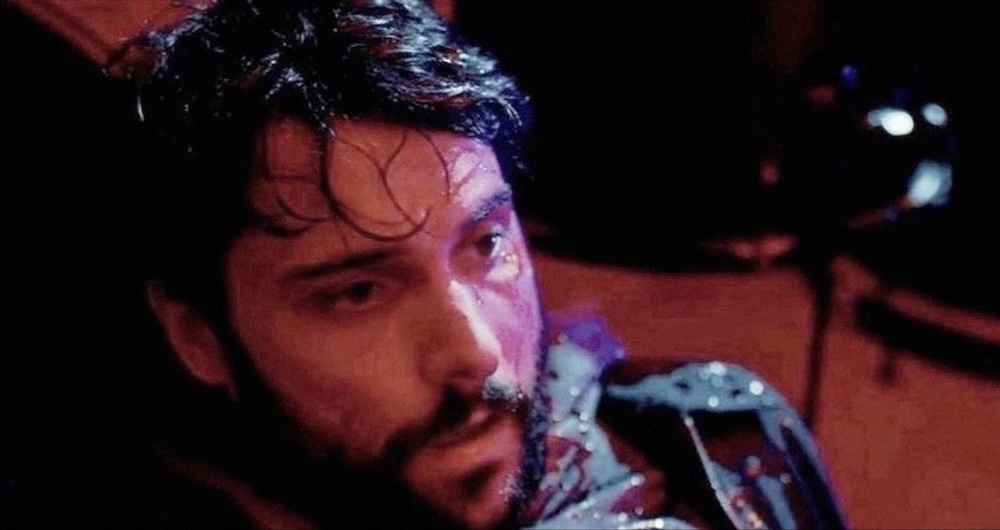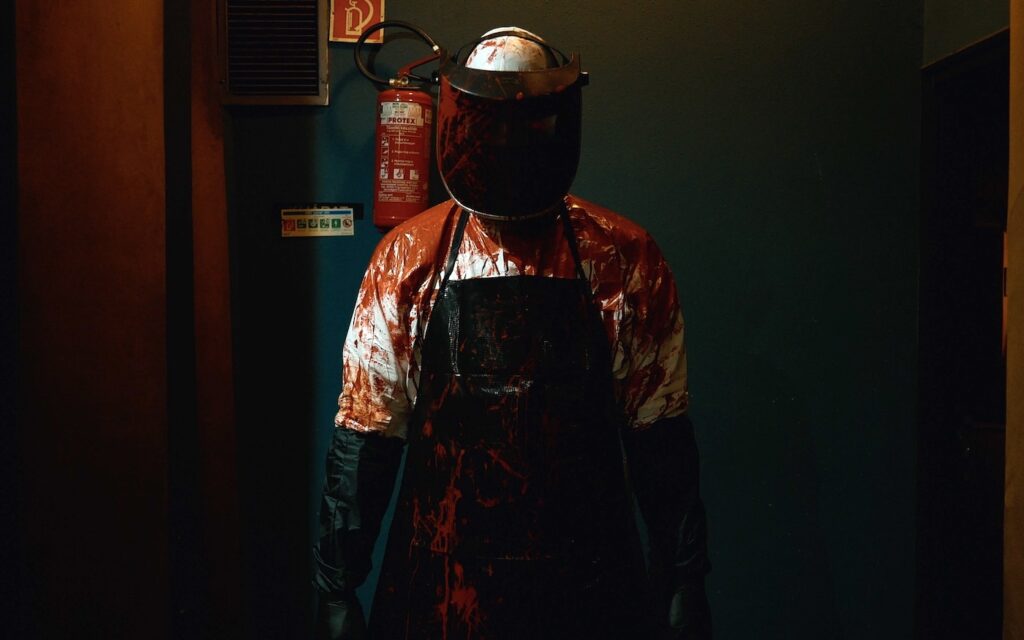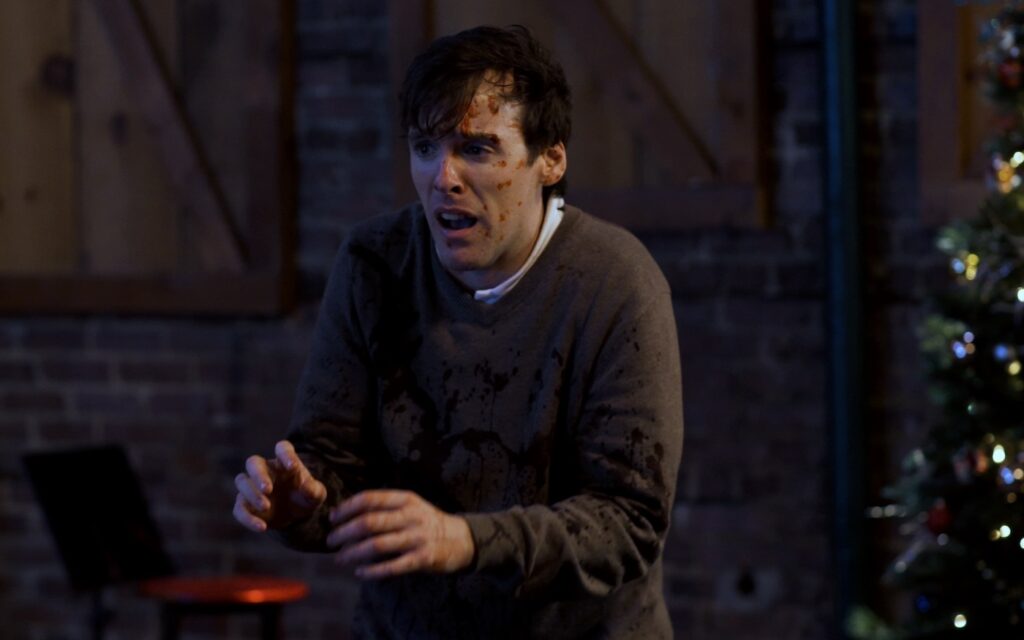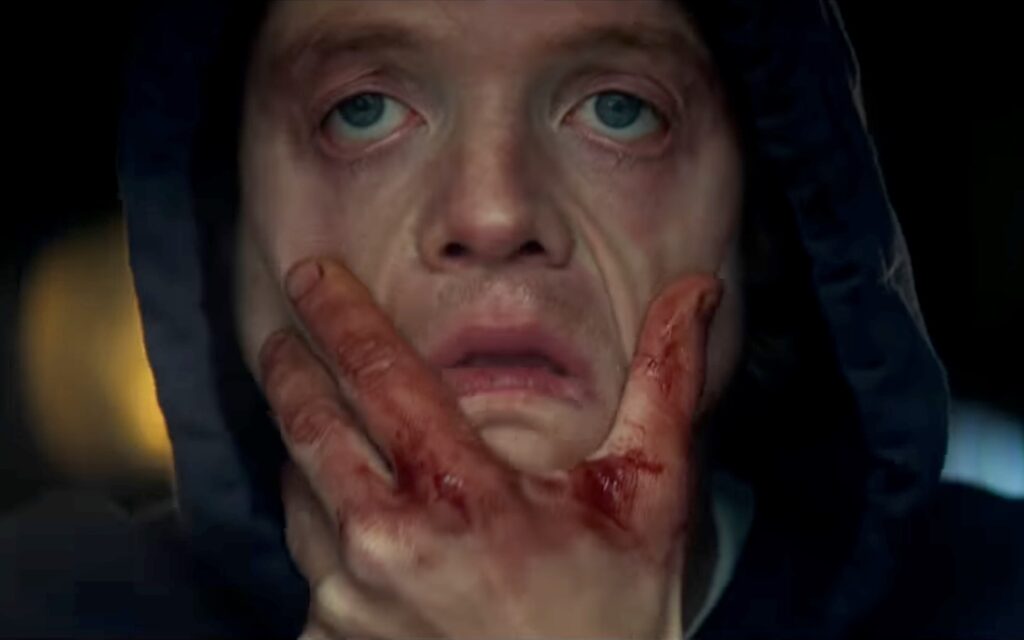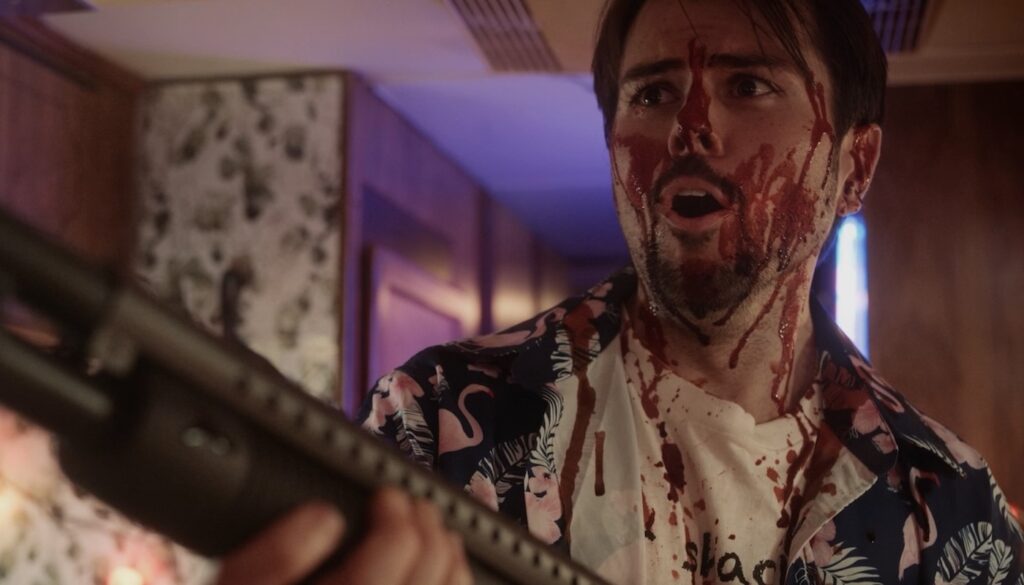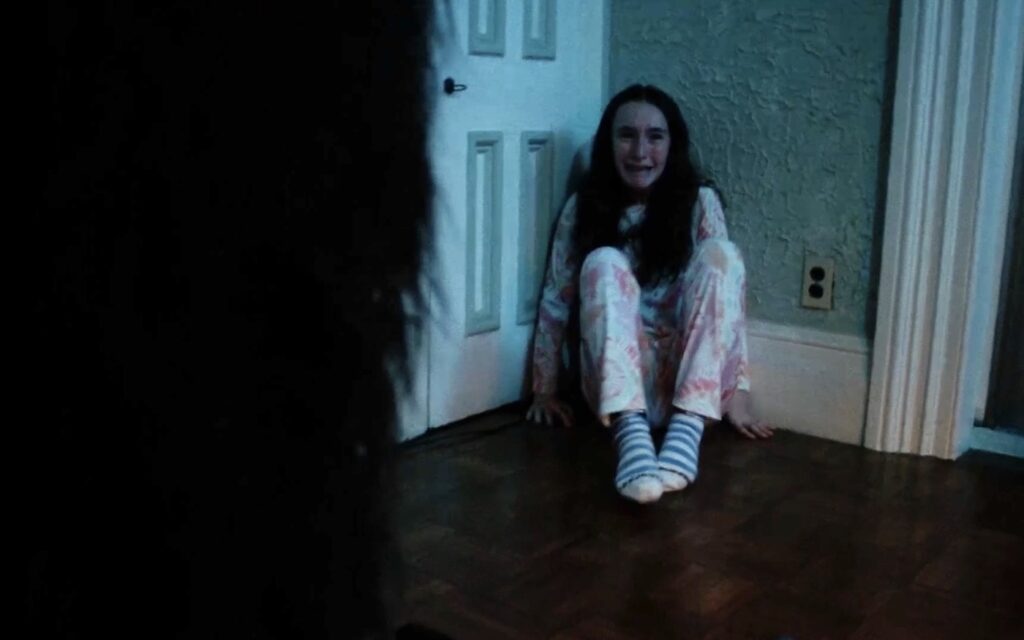

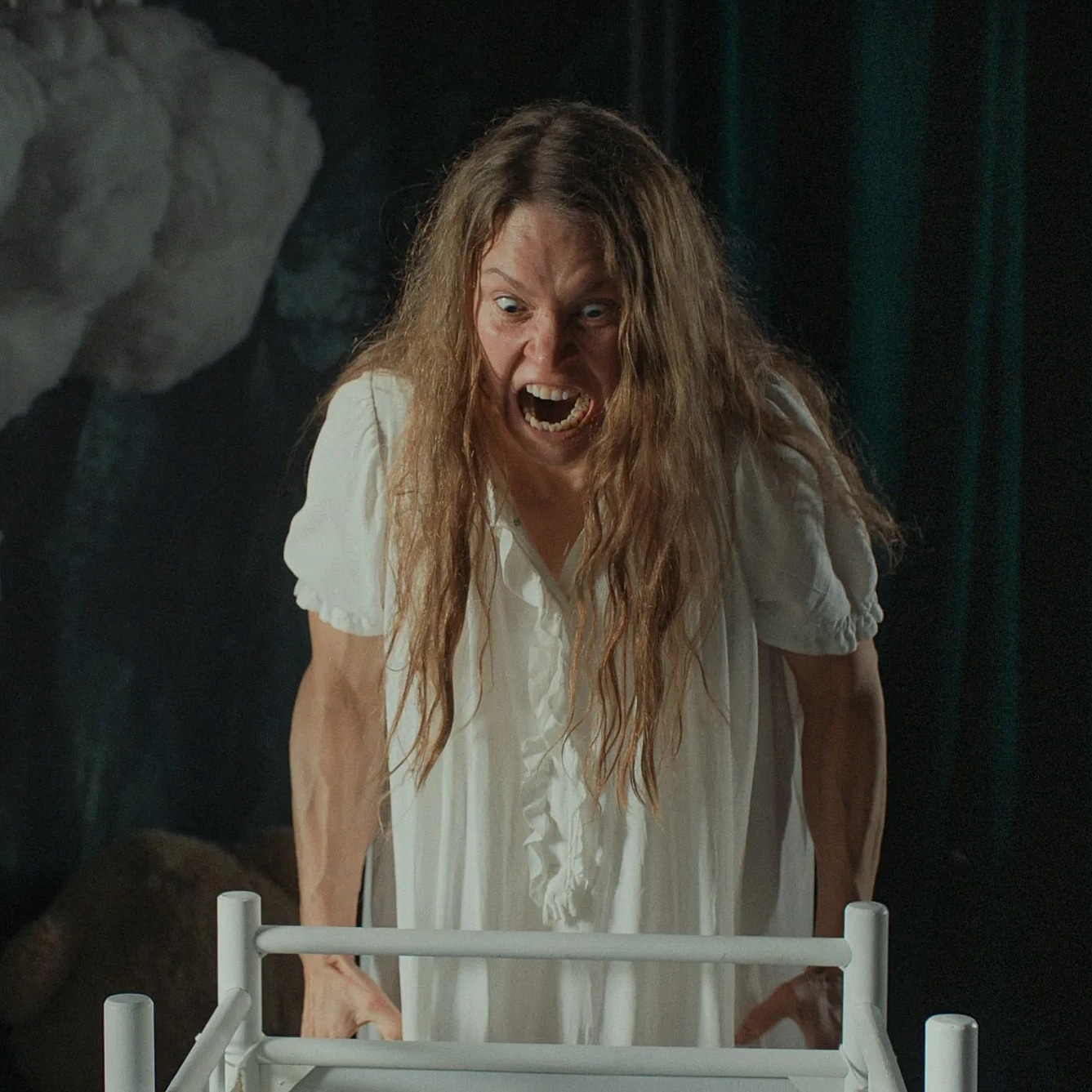
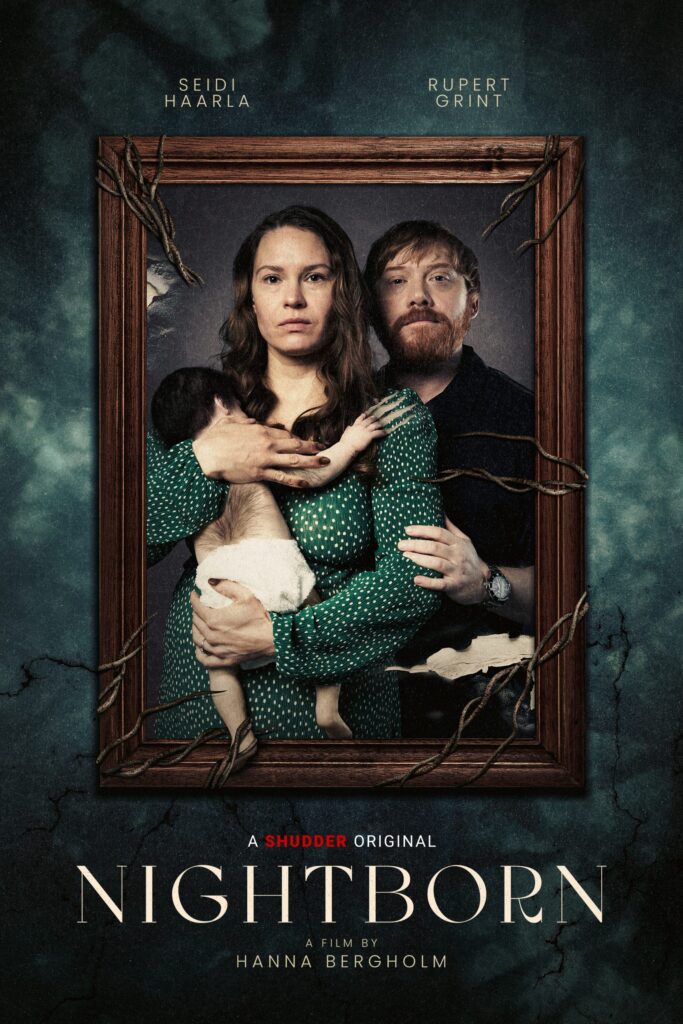
Hatching director Hanna Bergholm’s latest maternal mindbender, NIGHTBORN, recently won the top prize at the Fantasia Film Festival. This folkloric examination of postpartum depression by way of Finnish nature spirits (after a baby conceived in the woods is born, his eager new mother begins to believe that he’s more than meets the eye, causing mayhem in her marriage) also earned its lead, Seidi Haarla, Best Actress honors. The evening after this success, the director celebrated with RUE MORGUE and a screening and discussion at The Twisted Spine in Brooklyn.
Both Hatching and NIGHTBORN explore cultural conceptions of maternity and the challenges mothers and their children face. Tell me a little about the origins of your interest in this subject.
Well, first of all, it’s always interesting to tell about a parent-child relationship because that is the first and most profound relationship in our lives. It affects us all our lives, so it’s very interesting material to dig into that. This particular film started partly from my own experiences as a mother, because when I had my child, I was suddenly full of all these feelings that I didn’t know where to put. When the baby was just screaming all the time, I felt so much rage and confusion, so I felt the need to make a film about those emotions that feel kind of forbidden. Also, in this film, Saga’s body kind of breaks during childbirth, which often happens to women, but it’s something that we never talk about. What if you feel that that child has broken you while it was being born? How do you deal with your relationship with that child and your relationship with your own body that has changed? I felt that these things were taboos, so I wanted to talk about them.
You also entwine a lot of nature imagery into this story; the setting of the forest and the house is such an intense character in this film. What was your goal in blending these ideas?
I really thought about this theme, motherhood, a lot, and I couldn’t find the right angle to it until I put it in the middle of this Finnish forest. For me, we are all part of nature. All of us. So, in this film, you might say nature shows our primitive emotions. I also really wanted to use the old Finnish mythology about trolls living in the forest.
There are a lot of trolls in the credits! I would love to hear more about the trolls.
[Laughing] Well, yes. In old Finnish mythology, it is said that there are many kinds of creatures in the forest, but especially trolls. You’re never sure if they are good or bad, but they are kind of scary. People were afraid of them and told their kids not to go far into the forest because the trolls might take them. There was a lot of wisdom in these old mythologies as well. Don’t go too far; you might get lost. And trolls were convenient creatures to put in this film because it’s also about how to face the unknown and differences in yourself or another person. But you know, the troll mythology I used in this film is kind of… I made it up [laughing], so it’s not all accurate.
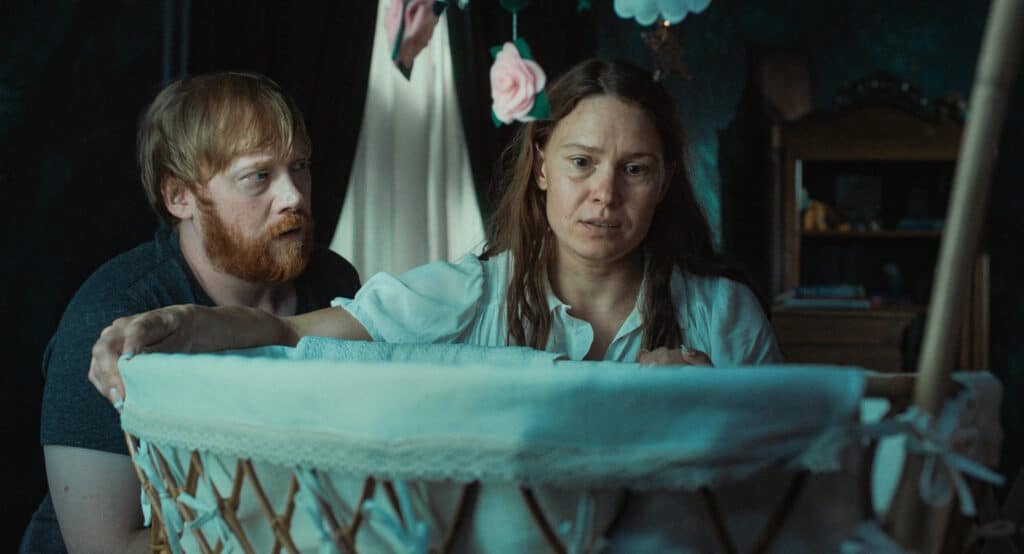
There’s a birth scene in this film that’s so visceral, and the effects are wonderful. The puppet is incredible. What was your process developing the effects for this film and working on the look?
It was really kind of a dream team. I worked with the same people that I did on my previous film, Hatching. Gustav Hugen was in charge of making them, and he has been the lead designer on Star Wars creatures and Jurassic World creatures. The special effects makeup designer, Conor O’Sullivan, has done Game of Thrones and Saving Private Ryan and The Dark Knight. They are so nice and so enthusiastic in their in their work. Those puppet guys used several animatronic baby puppets, so there were five puppeteers moving each baby with rods! Five guys with blue suits around the actors in very kind of weird positions.
About the birth scene: I’ve always wondered, why is it allowed that in films we can see a lot of people getting killed? We enjoy watching people getting killed in all these ways, and it’s kind of cool. But we never see people being born? I mean really born. We show a lot of blood in the movies, but not menstrual blood. The things that are taboo are usually parts of women’s bodies.
For the baby, I took reference pictures of some real babies who were that hairy. It was a fine line finding a balance, like, “Okay, this could be, but it’s still quite weird.” The whole film is also told from Saga’s perspective, how she sees the baby, so that when she feels that there is something wrong with the baby, that’s what we see, and when she gets more used to the baby, that kind of disappears.
The baby’s cry was a lot of work too. I wanted the cry to sound like heavy metal roaring because I’m a heavy metal fan, so our sound designer, Mick Nusstdom, found some very cool baby cries in the archives, then we cut in some animal sounds – baby lions. So many of his cries start with a baby lion, then turn into a human baby, then end with a baby bear or something like that. We also searched for babies who had very raspy breathing. We found a very cool baby who had really just [pants raspingly]. She was crawling on the studio floor, and we were kind of going behind her recording [laughs]. It was very cool.
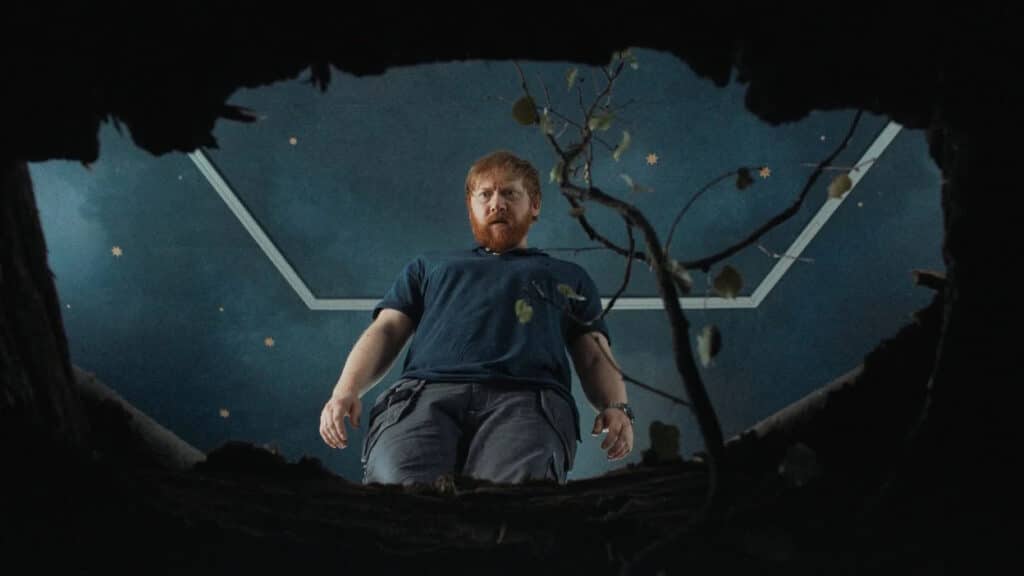
Going back to the puppet itself a little bit, what was it that made you decide you wanted this baby to be a puppet in the first place?
Well, I knew that we couldn’t do a lot of the things we wanted with real babies. Also, I really wanted this baby to have a kind of weird way of moving, because baby movements are quite cute. I really wanted this to have a stalking, controlled way of moving, so that’s why I wanted to use puppets. We had real babies, too, for different purposes and different ages. It was very interesting because with the puppet, it’s all very technical; you need a lot of takes, and you can only shoot a certain action because you know the puppeteers are in a certain position, and they can only do one thing at a time. But with the real babies, you never know what happens. They cry, or they run out of the shot.
Hopefully they never encountered each other. I feel like you show a baby that puppet and it’s going to turn into the puppet.
[Laughing] Yes, they were separated.
Your star, Seidi Haarla, won Best Actress at Fantasia. Her performance is so phenomenal.
Seidi Haarla was already in my mind when I was writing the script. I had only seen her in the Finnish film Compartment Number Six; that was at Cannes some years back. It was a totally different role, but I could already see that she has this kind of sensitivity and strength in her, and this kind of courage in portraying huge emotions. I knew that she was right for the part. When it was decided that the husband was going to be from the U.K., I wanted to have someone whom I would really believe would move to the middle of the Finnish forest. Someone very nice and down to earth. Rupert Grint can portray that, and it was a joy to work with him. He’s so nice. He’s very modest and very, very professional.
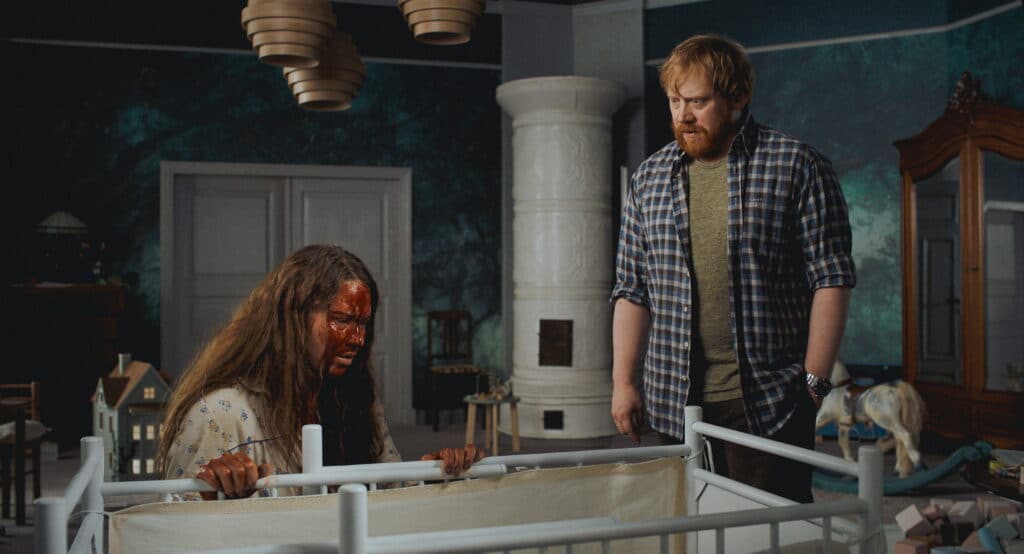
There’s such a rich tradition in horror of depictions of anxieties around motherhood, from The Bad Seed to Rosemary’s Baby, but lately we’ve had a couple of different films that deal with this: I’m thinking of If I Had Legs I’d Kick You, Die, My Love! and Nightbitch in particular. How are you feeling about this trend? Does it make you feel optimistic about the way women are expressing themselves?
I’m very happy that those themes have arrived. The reason I wanted to make this film and my previous film was to show some kind of female gaze. I’ve always loved films, but quite often it’s very difficult to imagine yourself being a female character as a woman. From now on, watch films and try to imagine yourself in the female character’s position. It very often becomes very weird [laughs]. I want us to have more diverse expression of women in films, and I’m very hopeful.
NIGHTBORN is now streaming on SHUDDER.