
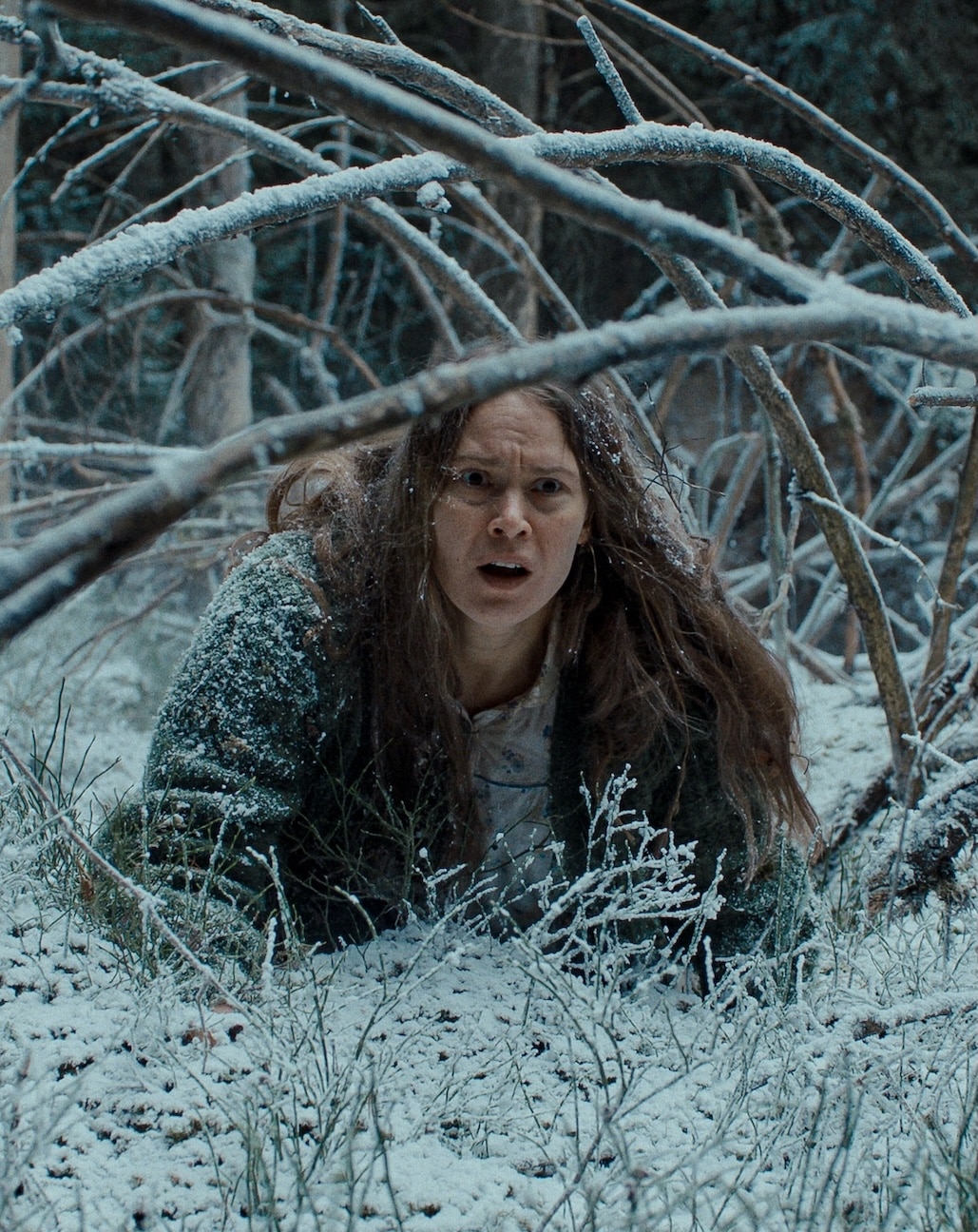
Starring Seidi Haarla, Rupert Grint and Pamela Tola
Directed by Hanna Bergholm
Written by Hanna Bergholm and Ilja Rautsi
Shudder
In her sophomore film, Hanna Bergholm is making a helluva splash. Winner of the Cheval Noir Awards for Best Film and Outstanding Performance at this month’s Fantasia Film Festival (where it made its North American premiere), NIGHTBORN has come out swinging before its release today on Shudder. The film deserves all the praise it has earned for being ambitious, empathetic and downright unsettling in its depictions of motherhood and isolation.
Continuing the cinematic preoccupation her debut feature HATCHING kicked off, Bergholm is unwavering in her dismantling of the concept of the perfect nuclear family. NIGHTBORN begins as so many horror films do: following a car on a long trip to a new beginning. Relocating to the depths of a Finnish forest, Saga (Seidi Haarla) and her Brit husband Jon (Rupert Grint) are deeply in love and about to begin renovations on her nearly abandoned (which means available!) childhood home. Their euphoric dancing and twirling in their dilapidated house appropriately mimics their naiveté and innocence in contrast with what these woods hold for their future. There is no fighting nature.

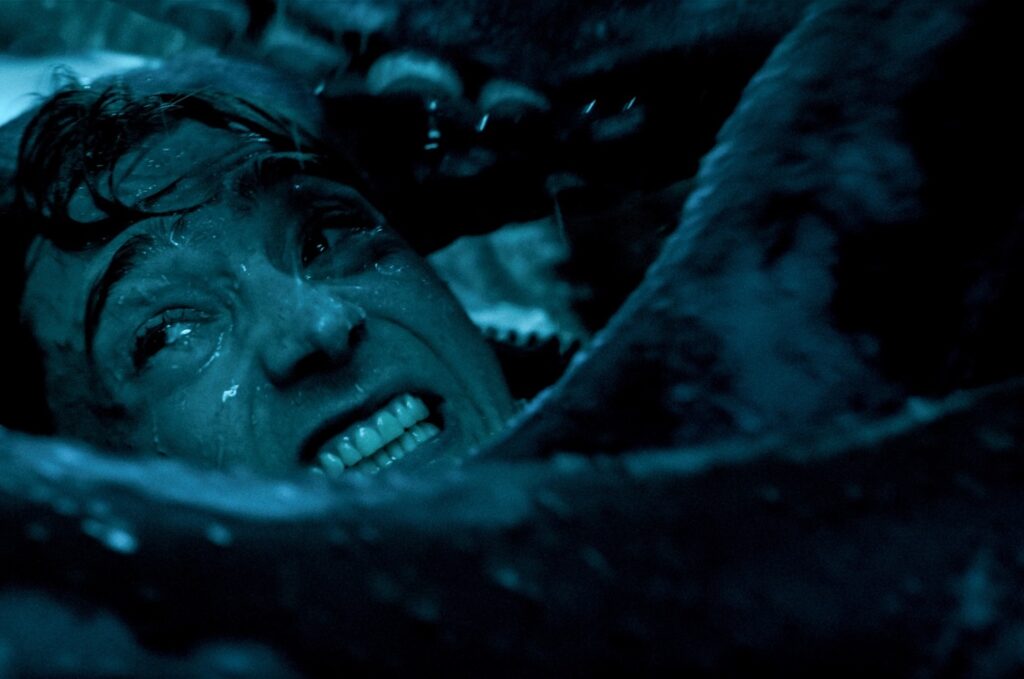
Months after conceiving a child in a mossy clearing among the trees near their house, Saga gives birth to a large baby boy. She names him Kuura (Finnish for frost) and this is where her maternal instincts are suspended for some very appropriate concerns. Kuura is hairy and hungry—far more than any newborn she has ever seen. But much like in Fantasia festmate MUM, I’M ALIEN PREGNANT, no one listens to Saga. The doctor tells her this is all normal. Her mother and sister say she is being dramatic and uncaring. Even Jon talks to her as if she does not understand her own child or her own body. Saga is alone, though surrounded by people who claim to care about her. No one is looking out for her, but she knows herself and what is best for her family.
The descent into horror is slow and steady in NIGHTBORN. Starting with a few signals that this is not your typical baby, the manifestation and repercussions of Kuura’s true nature creep and crawl out from his world into Saga’s. Mixing folklore and body horror, the most shocking elements derive from the embracing of motherhood, rather than the rejection of it. Saga is on a journey, and you had better not get in her way.
While watching Haarla’s performance as Saga, it is clear that she is worthy of her Fantasia award. Saga slides slowly away from her former self into a woman who is unrecognizable yet thoroughly natural. The sheer physicality of Haarla’s expression of Saga is a wonder. Bergholm’s direction and cinematic choices are also disarmingly deliberate. She never fully exposes all of her intentions until she is ready, and is in full control of every last inch of the screen and every soundwave from the speakers.
Speaking of sound design, one bit of trivia Bergholm could barely contain during her Fantasia Q&A was the creator of the monstrous noises coming out of baby Kuura. They were made by Max Cavalera, founding member of the metal band Sepultura. Listed in the film’s scrolling end credits as merely “Growls,” Cavalera’s inclusion should cement him and Bergholm in a collaboration hall of fame.
Motherhood is not for the faint of heart. NIGHTBORN explores not only the horrors of birth and children, but the greater terrors of ignoring women and denying nature.