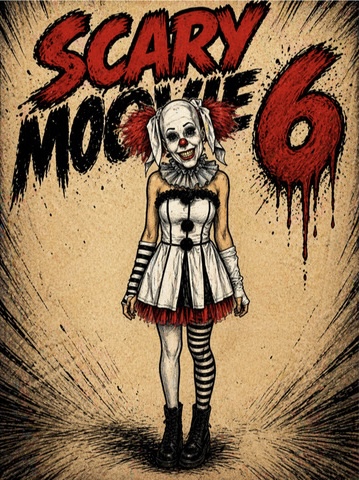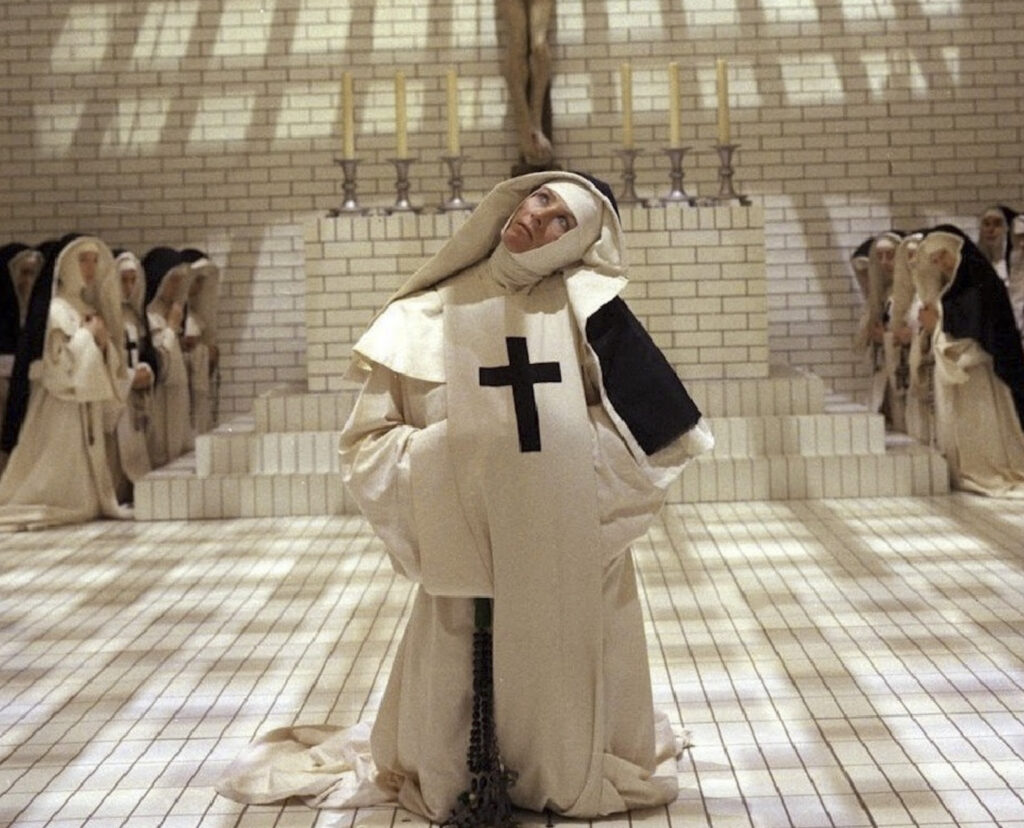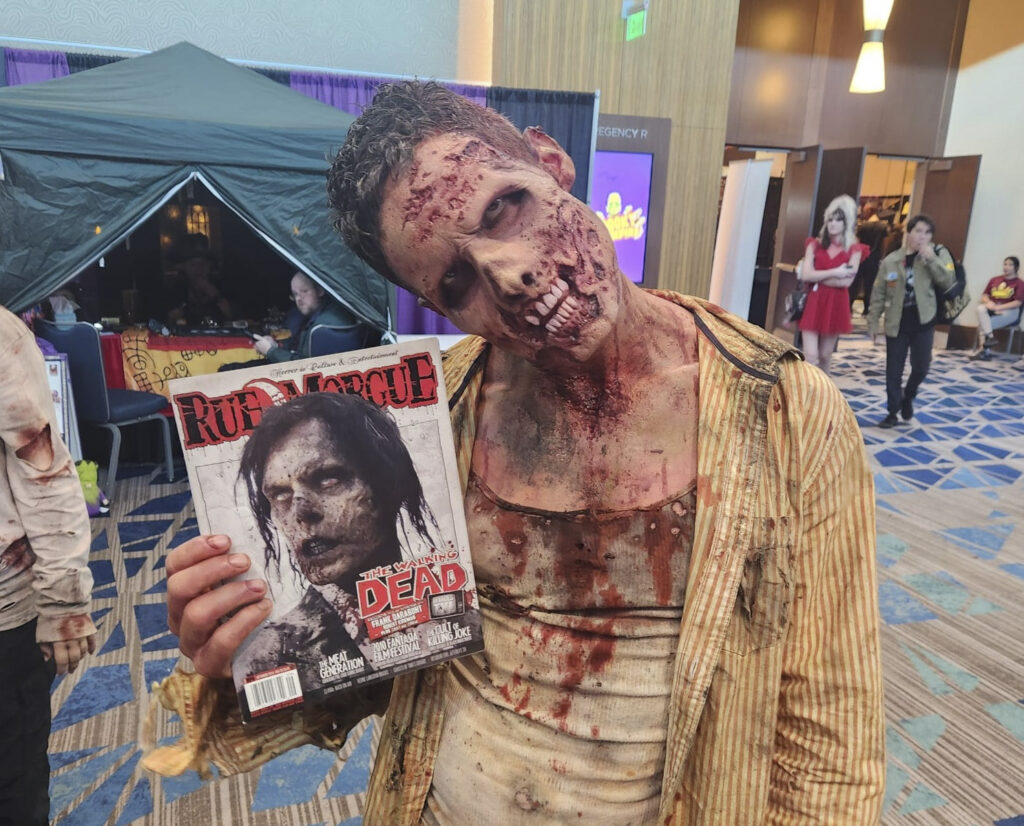

Costume designer Ariyela Wald-Cohain is no stranger to the world of horror. Having designed costumes for My Best Friend’s Exorcism, Insidious: Chapter 3, and the most recent Scary Movie, she is an expert at creating the perfect spooky aesthetic for any character. Wald-Cohain knows her stuff when it comes to designing horror costumes, and graciously delivered solid advice for creating your own horror Halloween costume- even if you can’t sew.
RUE MORGUE chatted with Wald-Cohain about all of her costuming secrets, from finding the most minute details to make a costume stand-out, how to achieve screen-accuracy for the diehard fans, and the specifics of what goes into costuming a parody movie. Take her advice, and you’ll be sure to win your office’s costume contest, or be the coolest parent on the block while trick-or-treating.

What is the secret to the perfect horror Halloween costume?
First of all, it’s deciding what character you want, and what you like about that character. There are all kinds of different interpretations- sometimes there’s iconic characters, and they’ve been in multiple shows, and finding the one you like the most, or combining multiple versions of it is the way to do it. I think it comes down to thinking about three or four characteristics that really describe them. If someone sees those three pieces, that will help sell the costume. You don’t want to go through all that effort to do something that people won’t recognize, if that’s the point. So trying to focus on key elements, and spending your time and resources to pull those together.
You have to be focused on what they are- the color, the texture, the way it fits you. It depends if you’re going to go trick-or-treating, or if you’re going to a party, because comfort is something that needs to be taken into consideration for a Halloween costume. Buying or making something super uncomfortable, you’re just going to take it off in the middle of the night. So being practical when it comes to weather and comfort, as well as thinking the iconic pieces that will make the costume recognizable, I think those are important things to think of in the beginning.
What are your tips for achieving screen-accuracy, if that’s the goal?
I think collecting footage, pictures, or visuals so that you have a reference to go back to is important. Because sometimes we tend to remember things, and they’re not exactly as they are, so do that if you want it to be accurate. Finding those visuals that really connect to you, and dissecting the visuals, the texture, the silhouette. An actor could wear one shirt, and it could look different if it’s tucked versus untucked. So not just getting the key elements, but also getting it the way the designer made it to look. It tells a lot about the character, and I think by examining that, and trying to be accurate with that. Even if it’s not the exact same shirt, but how it’s worn, the color, really does help sell the actual character you’re trying to relay.
How do you communicate a character’s personality through their look?
When you’re reading a script, or doing research on a character, you want to find out who they are, other than what they’re wearing. Their socioeconomic background, their psychological state- those things bring a lot of detail into the costume itself. If they’re wearing it very crisp, or they’re wearing it very dirty, from one extreme to another. But I think first understanding who that person is, in that costume, and now finding the elements that you want people to recognize.
Again, with color, texture, pattern on the fabric. If the clothes fit them, if the clothes are too big or too small, even just looking at the silhouette, where the shirt ends. Is it a jacket? Is it a long jacket? Is it a trench jacket? Is it a knee-high jacket? Or is it a short jacket? Really paying attention to how the person’s wearing it and why they’re wearing it that way, it really does help sell the character.
How does someone who maybe doesn’t have experience designing or sewing create a detailed and effective costume? What is the most important thing to remember?
So it depends on what the costume is. I do think that being creative and resourceful is key, because you could go and thrift some pieces, or you could order some pieces on Amazon and put them together. I mean, if you don’t know how to sew a pattern, that’s okay. We all started off somewhere. There’s always duct tape, or safety pins, or a hot glue gun. That goes so far, especially if you’re making a costume for Halloween. It only has to survive for one or two parties, so I think being resourceful is really great.
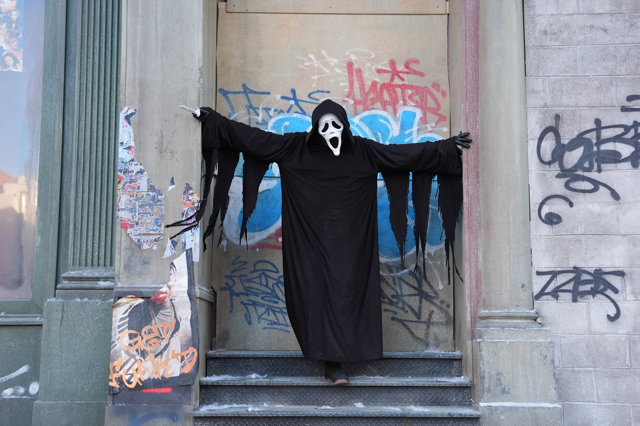
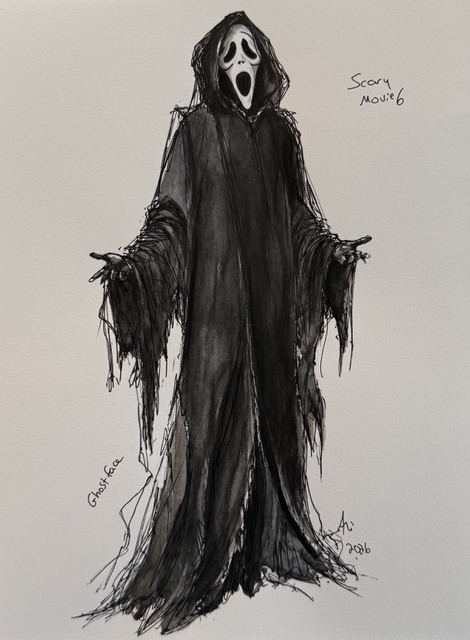
I think we’re so blessed that things are easily accessible in the United States. I think going to the thrift store and finding a piece, and then if you need a specific belt or something- just take Ghostface from Scary Movie, his mask may not be something that someone could sculpt or print. You could buy a cheap version of that, take some paint or coffee or tea and age it very easily at home. I don’t want to say “buy something on Amazon”- we shouldn’t say that. I put so much effort into our robes, and we aged them and we chose the fabric and weight, so I don’t want to just say buy something cheap on Amazon, but you can buy versions of that. You can fray the edges, you can dirty it up, you can cut it up, you can glue something to it- you can make it yours.
Starting off with something pretty generic works. You can even just find a black piece of fabric, and instead of sewing it, you could hand-stitch it. If you don’t have a sewing machine, you could tie it- there’s ways to improvise, and still get the silhouette, the idea. There’s such iconic costumes out there, people will probably still recognize it. You just really need a few pieces, a boom! You have a costume.
How do small choices like hairstyle and accessories transform a character?
What the details do is bring a personality into the character. Any person is wearing some clothes, but the character could be wearing some jewelry that maybe was her mother’s, given by a grandmother, given by someone. So I think the small details really do bring it alive and make it real. As a costume designer, we just want the audience to recognize and understand who this character is, without them talking, within a few seconds. We want the depth of the character.
It’s hard sometimes, you don’t have the script and all of the detail of what happened to the character, where they’re from, but when they’re wearing a special necklace or a couple of rings, if the bracelet they’re wearing is tattered and worn out, there’s a story behind that. So it adds layers of complexity to the character, and really production value and interest to this whole character who isn’t just wearing generic clothes. You want it to be heightened, even the way those clothes are worn out, or if there’s embroidery on the clothes, or if the cuffs are aged- every little thing like that goes really far in detail and brings out more complexity.
In Scary Movie, so many iconic characters are spoofed. How did you make an iconic horror character recognizable on screen?
So because it was a studio movie, I wasn’t allowed to actually copy the costumes exactly. It’s legality with IP and stuff. We have this rule in spoofing where it’s the thirty percent rule- you have to change it thirty percent. Go figure what thirty percent is, but legally we went through this whole process. I had to design the character, and I had to send it to legal to approve it, then I had to get that costume on the person. I dyed it and aged it and sent it back to them, and again we cleared it, and then we could use it on camera.
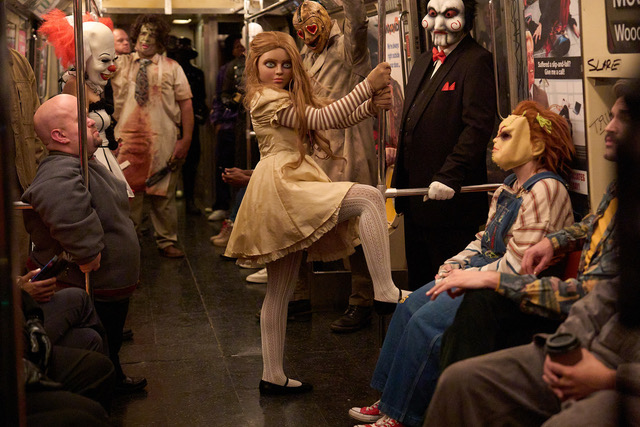
We had a lot of costumes in the subway scene, and then at the Halloween party scene at the house, all those costumes- nobody just walked on set, they were pre-approved and pre-designed. Again, looking for the iconic things that would sell the costume. I wanted them to be on the subway, and I wanted people in one split-second to see who it is, and know exactly who it is, but I couldn’t copy it one-to-one from the original movies. But of course you have to research the original movies, and you make it your own.
The small thing that we also had to do for Scary Movie, because we were building its own crazy world, I wanted the costume to look iconic, but I also wanted them to look like people made them themselves. It wasn’t like we planted Hollywood people on the subway, it’s supposed to look like commuters on their way to a party. So it was this fine line of making it really cool, and making it a little homemade, a little cheesy. The idea was to grasp two or three iconic elements, put them together, and trust your audience that they know their movies and know their reference, but also make it a little new and have a little twist to it.