Starring Gianna Jun, Koo Kyo-hwan and Ji Chang-wook
Directed by Yeon Sang-ho
Written by Yeon Sang-ho and Choi Gyu-seok
Well Go USA
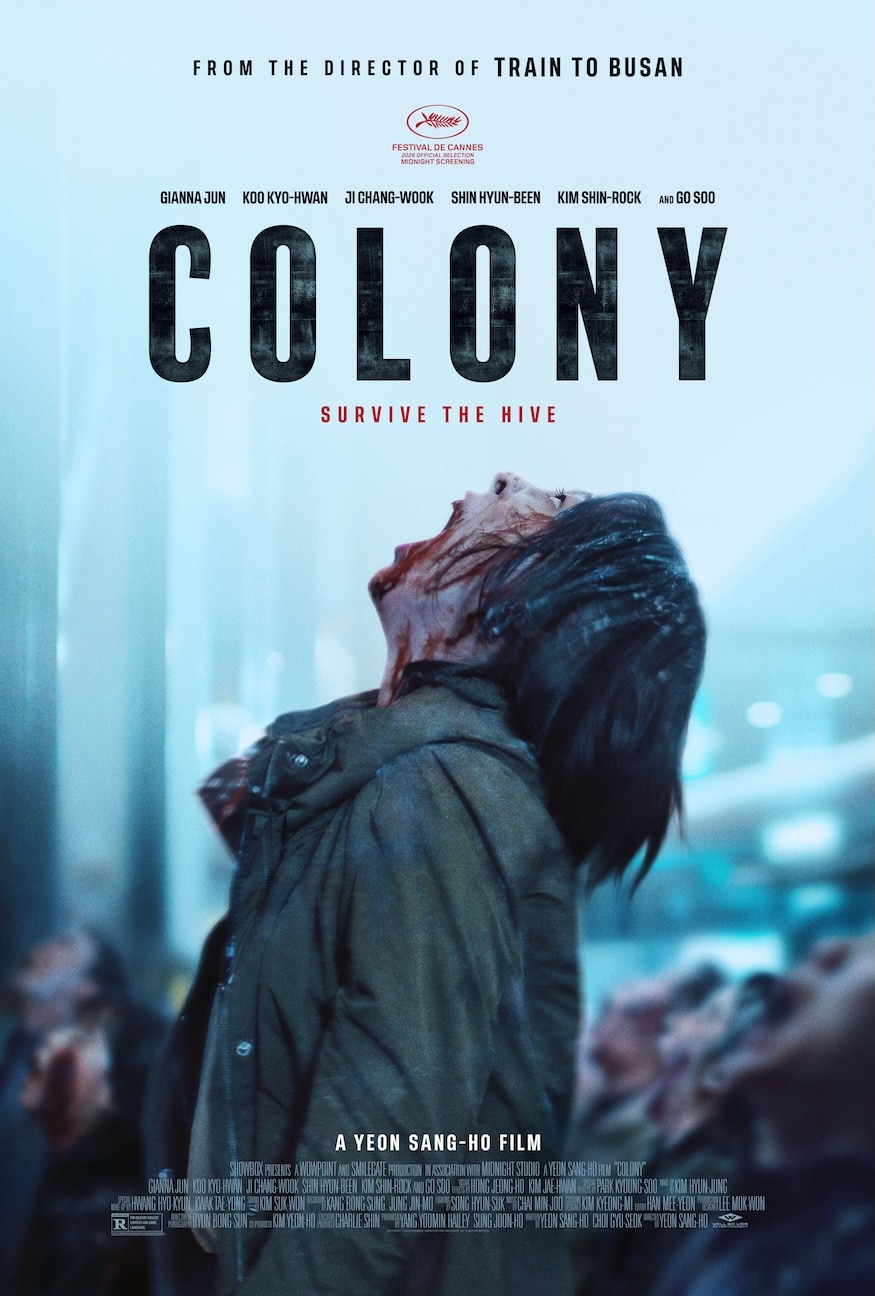
Ten years ago, Yeon Sang-ho’s TRAIN TO BUSAN inspired the closest thing to a critical hive mind you could get; you’d be hard-pressed to find someone who didn’t consider it a thrilling reanimation of the zombie genre. Now Yeon is back with a movie in which the ghouls themselves have the hive mind—one that doesn’t reach the revelatory heights of TRAIN yet delivers plenty of kinetic excitement nonetheless.
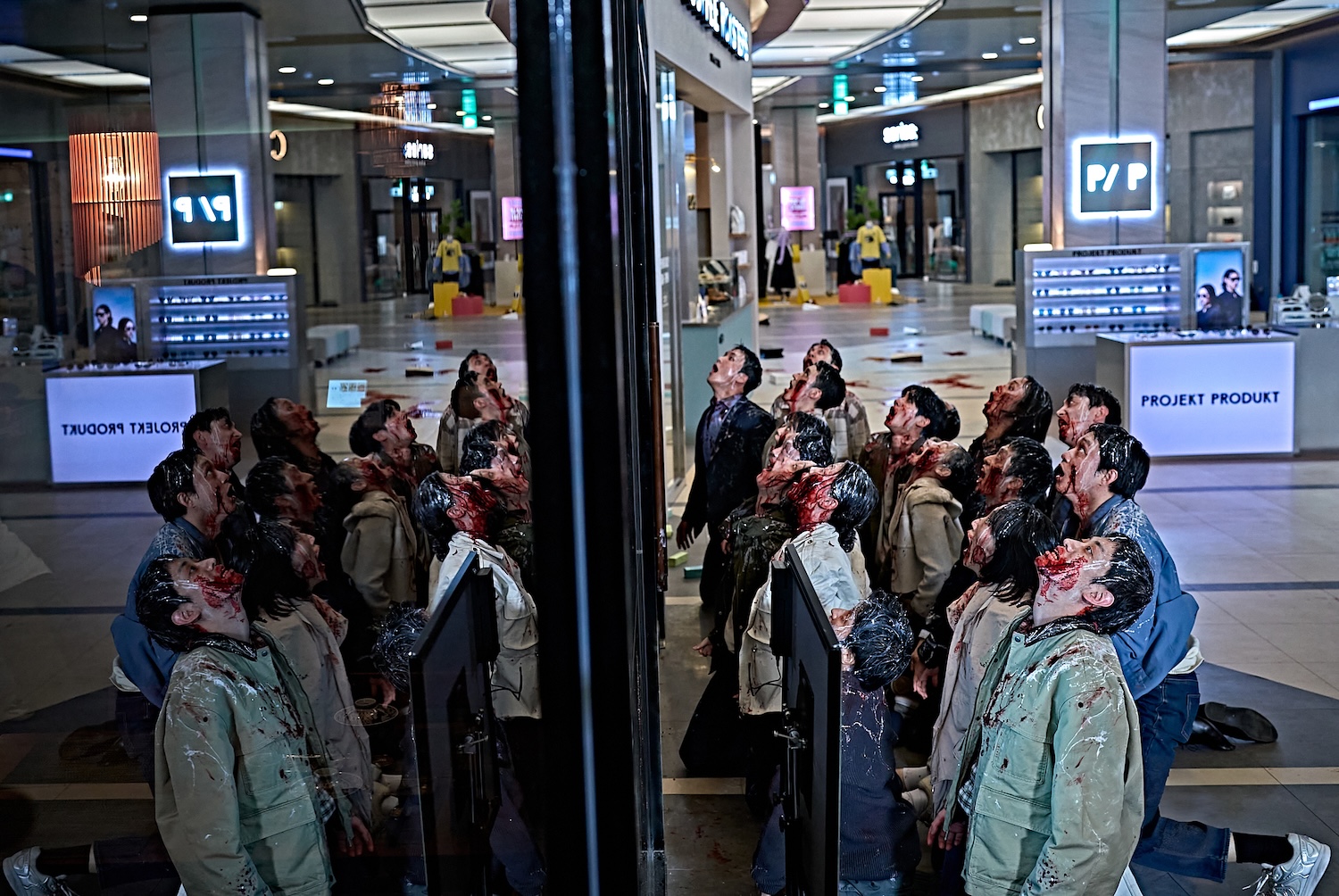
The screen undead have previously been defined by many based on their movement: fast or slow. COLONY (which had its Canadian premiere at this summer’s Fantasia International Film Festival and goes into U.S. release today) adds a whole different choreography into the mix that quickly distinguishes it within its genre. They start out as rapidly crawling, acrobatic zombies that every so often interrupt what they’re doing en masse and jerk upright with their heads vibrating, like a pack of human cell phones seeking a signal. They’re the creation of Suh Young-chul (Koo Kyo-hwan), a biologist who opens the movie by calling the authorities to announce that he’s about to unleash a bioterror attack—and that he himself is the only vaccine.
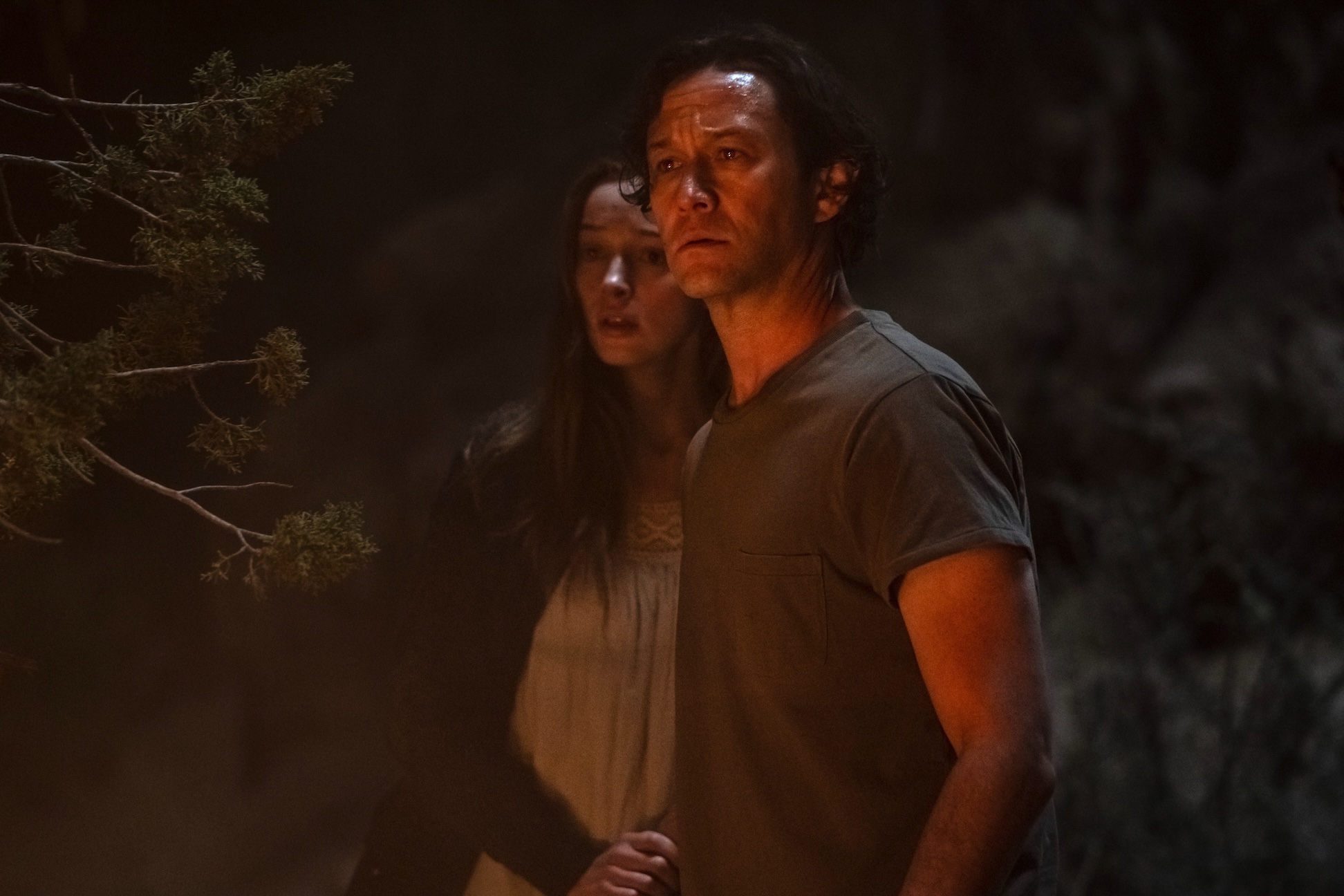
Yeon and co-scripter Choi Gyu-seok then, echoing TRAIN and similarly following the classic disaster-movie template, introduce us to a cross-section of characters whose lives will be forever altered—if they’re not ended—by the awful events to come. Foremost among them is Kwon Se-jeong, played by Gianna Jun, an early-21st-century K-cinema star making a rousing return to the screen after an 11-year absence. Se-jeong is a principled professor with a bit of an attitude problem, attending a conference hosted by the Chains Bio company in the Doongwoori Building, encouraged to seek employment there by ex-husband Han Kyu-seong (Go Soo). Unfortunately, Young-chul is a seriously disgruntled former Chains employee who arrives to make the company CEO into Patient Zero for his deleterious serum, and soon there’s an outbreak of loping, slavering fiends terrorizing—and rapidly reducing—the population trapped in the building.
One of the innovations Yeon adds to the formula here is his human villain amidst, and responsible for, the growing hordes. Young-chul is not just motivated by revenge, but bears grandiose plans to bring about the “birth of a new humanity” and a “new cognitive revolution.” In other words, the zombies all behave as one collective unit, and share a neural network whereby what one sees, they all see. That makes escaping and hiding more difficult than usual, and Young-chul carrying the only antidote in his blood means he can’t simply be taken out. That ups the stakes for Se-jeong and the other survivors who join her fleeing and fighting through first the shopping-mall portion of the building (hi, George!) and then the offices, back hallways and storage rooms, desperately trying to find a way out and stop the infection from spreading.
Here too, there are some twists on the genre’s standards; this may be the first ghoul-survival movie in which the imperiled characters raid a store for perfume instead of guns and blades. The overall plot isn’t as groundbreaking, but it’s well-developed and well-paced; although, like much Korean genre fare, this one pushes past the two-hour mark, you don’t feel the length. The action is varied and ferociously staged, with lots of very enthusiastic zombie performers rampaging around behind strong makeup effects by Hwang Hyo-kyun and Kwak Tae-yong. (And it’s not just on the actors; many of the sets end up covered with as much blood and slime as the people.)
The claustrophobia within Doongwoori gets diffused a little bit by occasional cutaways outside, where the military tries to deal with the situation, guided by scientist Gong Sul-hee (Shin Hyun-been), who just happens to be Kyu-seong’s current wife. This subplot does allow for one of the most outrageous setpieces, involving infected animals, which also provides a vital clue about how the threat might be stopped. Meanwhile, one of the traditions followed inside the building is the living being as big a threat as the dead; even more than in TRAIN TO BUSAN, Yeon emphasizes that people under pressure cannot be trusted to help their fellow man and woman.
On a budget of reportedly only around $12 million, Yeon has marshalled a very slick production here, including Byun Bong-sun’s sharp cinematography and Chai Min-joo’s energetic score. Jun leads a strong ensemble, matched in intensity by Koo as the egotistical, hateful villain; particularly notable among the supporting cast are Ji Chang-wook as a Doongwoori security guard and Kim Shin-rock as his visiting, wheelchair-using sister, who becomes an emotional stalwart among the dwindling group. COLONY is going into limited release today, and its scale and impact make it definitely worth seeking out on the big screen; you can find theaters here.