
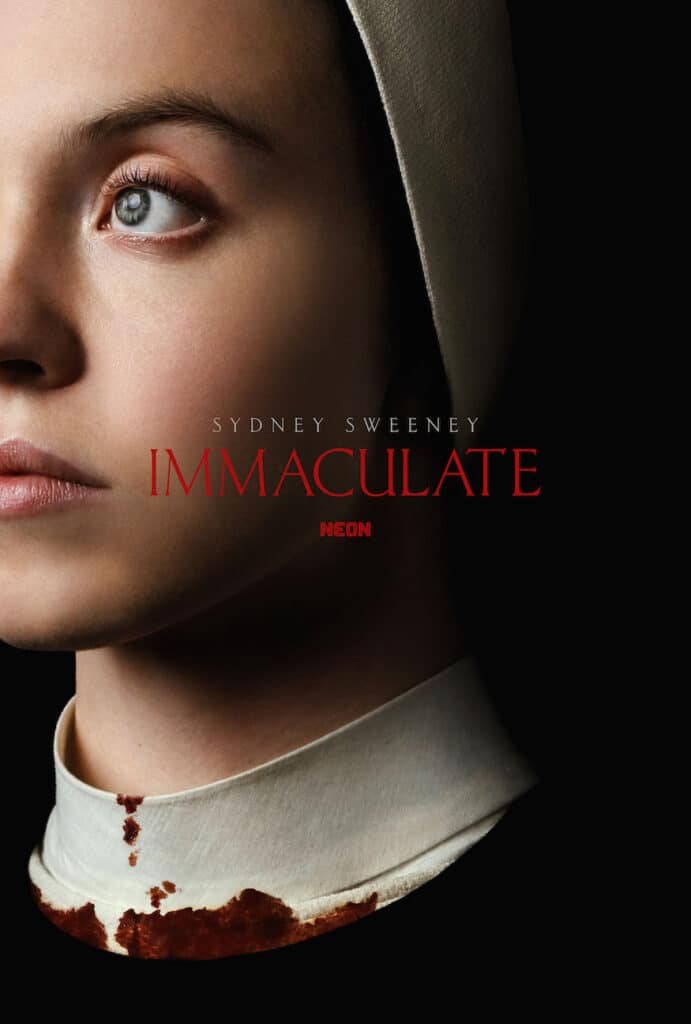
While it does get to more extreme places than a lot of mainstream horror, IMMACULATE doesn’t really go for the true perversion or gonzo visuals of its forebears in this subgenre; it’s shot in hushed tones by cinematographer Elisha Christian, on some very suitable locations (love the giant cross-shaped dinner table). There’s a definite Old World/European flavor to Will Bates’ score, though, and one montage is scored with a Bruno Nicolai piece from THE RED QUEEN KILLS SEVEN TIMES. It all sets a proper atmosphere, and an early scene is shot to emphasize how supplication is a key part of Catholic dogma. Lobel originally conceived IMMACULATE many years ago as a boarding-school-set tale, and switching the locale and upping the theme of female subjugation within this particular faith is certainly timely these days. It’s not hard to see the metaphor when Cecilia becomes pregnant despite never having had “congress” with a man, and the authority figures around her are determined that she keep her baby even as circumstances lead Cecilia to realize something’s terribly wrong.
There were rich opportunities here to really mine this story for both its significance and shock value, but IMMACULATE keeps things largely surface-level. There are plenty of jump-scares, including random harbingers of evil like a raven crashing into a window, but not many moments that really creep under your skin. Bits of body horror are thrown in involving a tooth and a fingernail that provide momentary quease without seeming truly connected to Cecilia’s plight. As IMMACULATE goes on, it lines up a number of the tropes of religious horror yet doesn’t really explore them, and there’s not much to Cecilia as written beyond her faith and a briefly revealed backstory involving a near-death experience when she was 12.
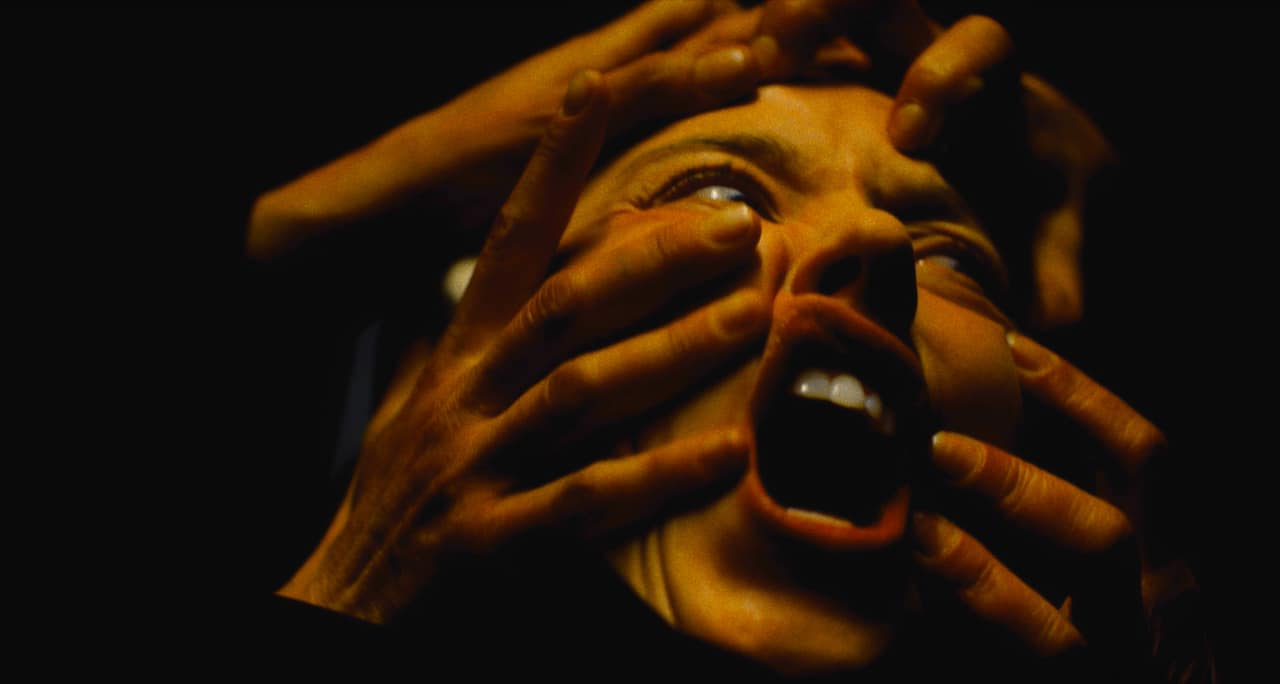
Still, at just 89 minutes, IMMACULATE moves along well and always has another unfortunate or gruesome development to reveal, even if they don’t hang together as well as they should. And the filmmakers rally for the final act, when Cecilia’s character takes a turn that leads to some startlingly gory and definitely audience-pleasing acts of violence. The delight Mohan takes here in destroying Church figureheads is IMMACULATE at its most transgressive, and it leads up to a conclusion that is easily the most audacious part of the movie, and will likely send audiences out buzzing. Sweeney really goes for it in this scene and elsewhere, and she’s the best thing in IMMACULATE, her expressive eyes filling with fervor, fear and fire as the situations require. Uneven as it may be, the film provides Sweeney a strong showcase that she makes the most of, and makes it a worthwhile watch for both her followers and fear-film fans.