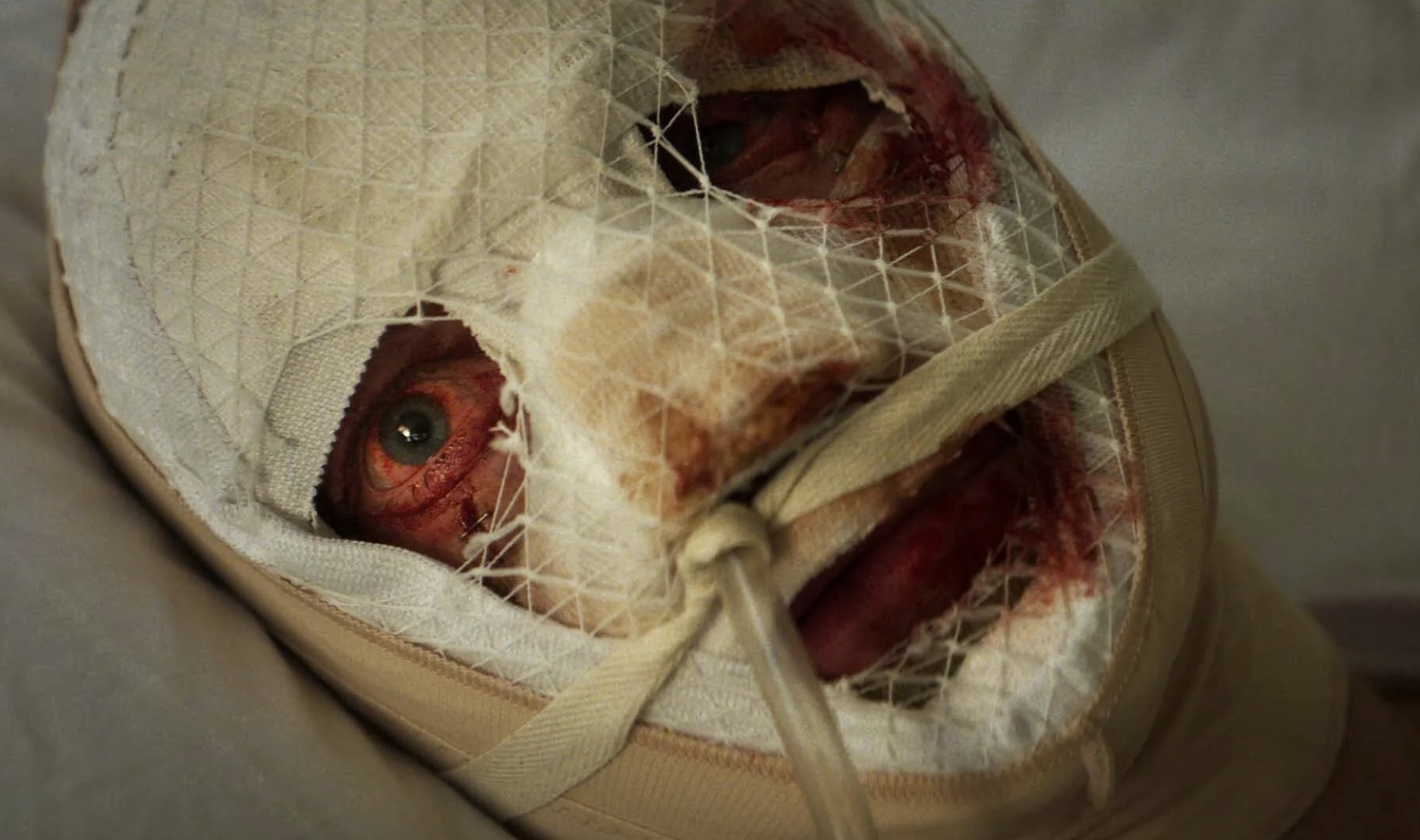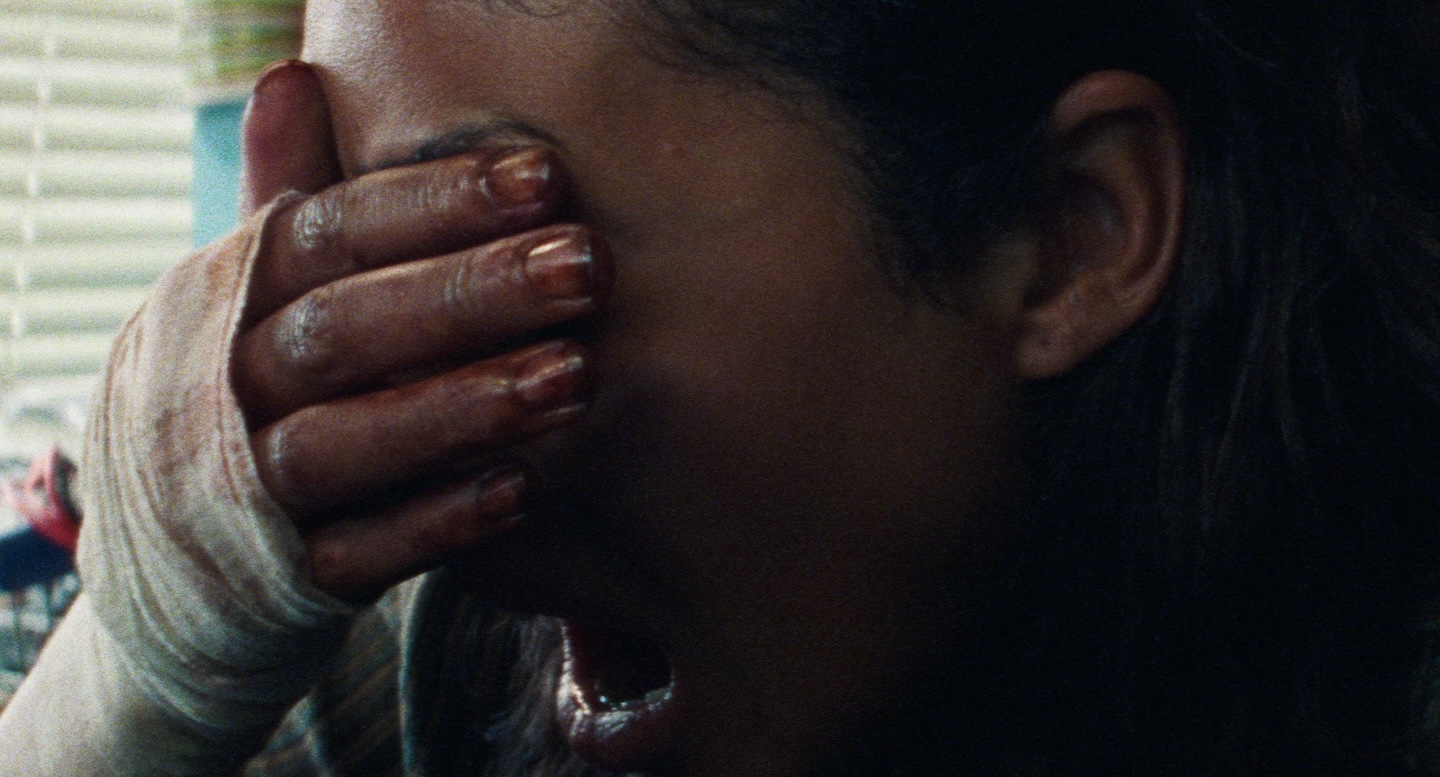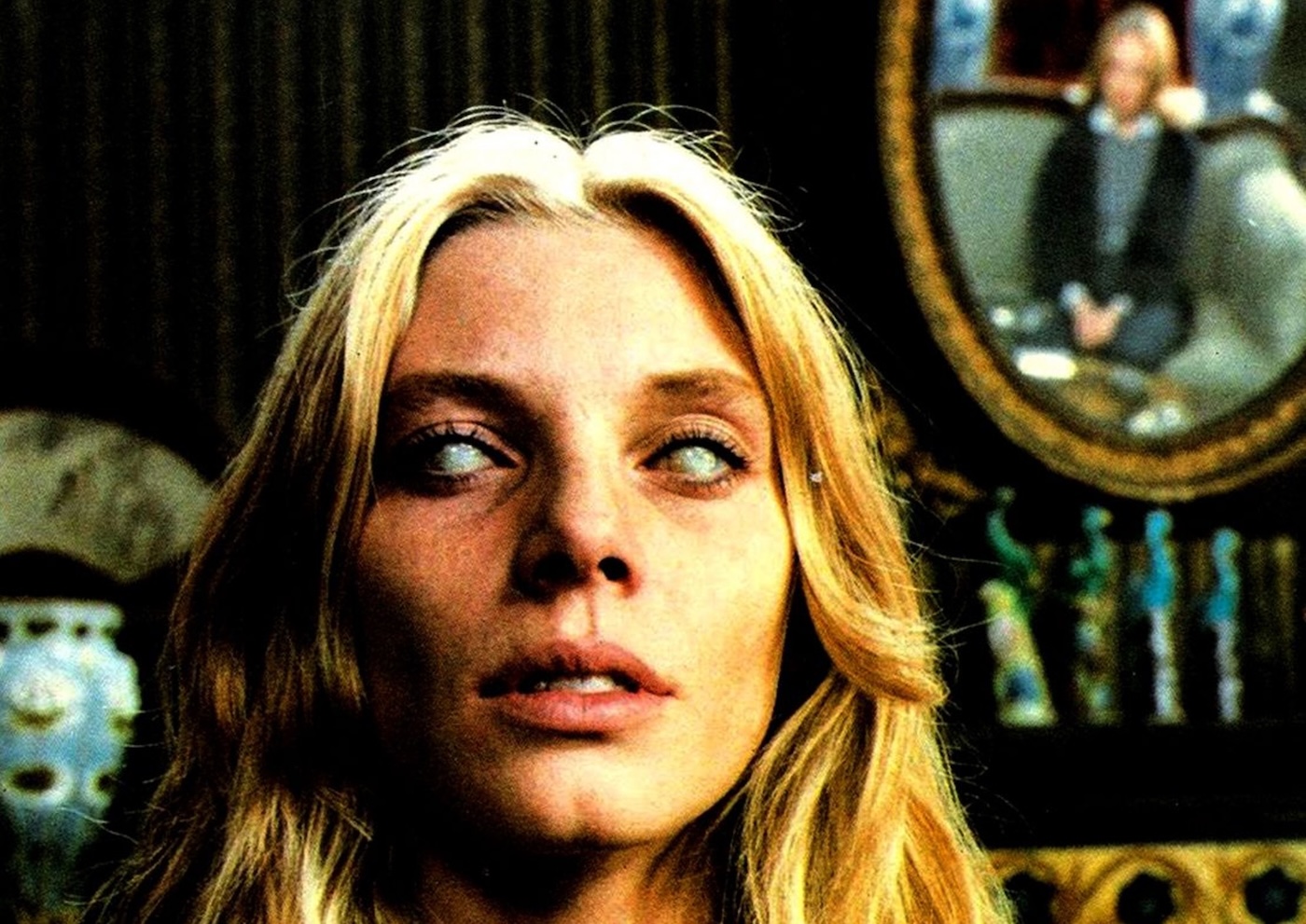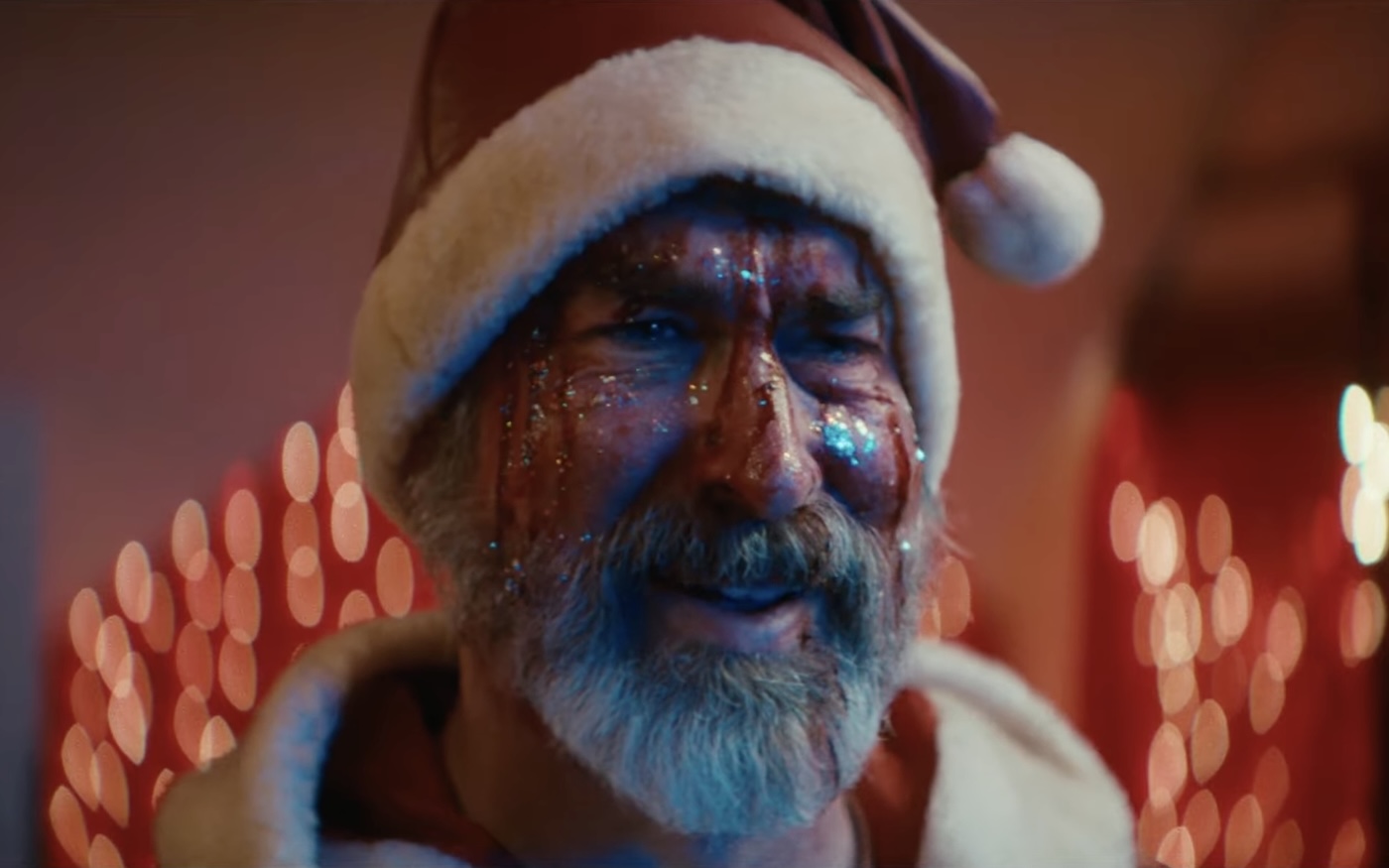

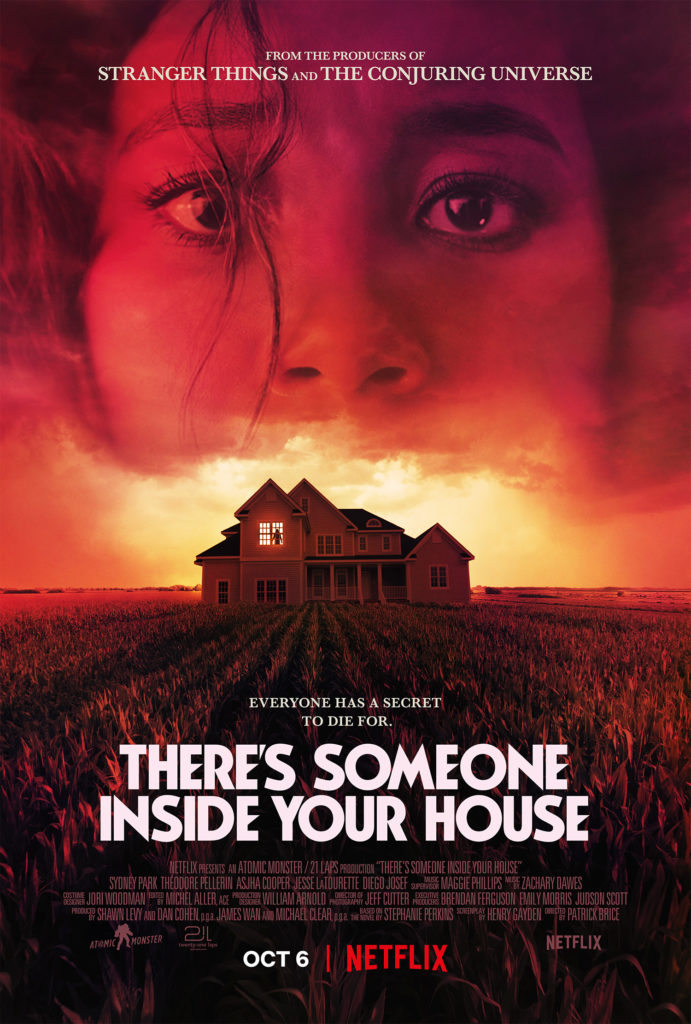
There’s a masked killer preying on the students of Osborne High, but both the motivations and disguises are different from the norm in THERE’S SOMEONE INSIDE YOUR HOUSE. The Netflix original is also a change of pace for director Patrick Brice and scripter Henry Gayden, both of whom spoke to RUE MORGUE about its creation.
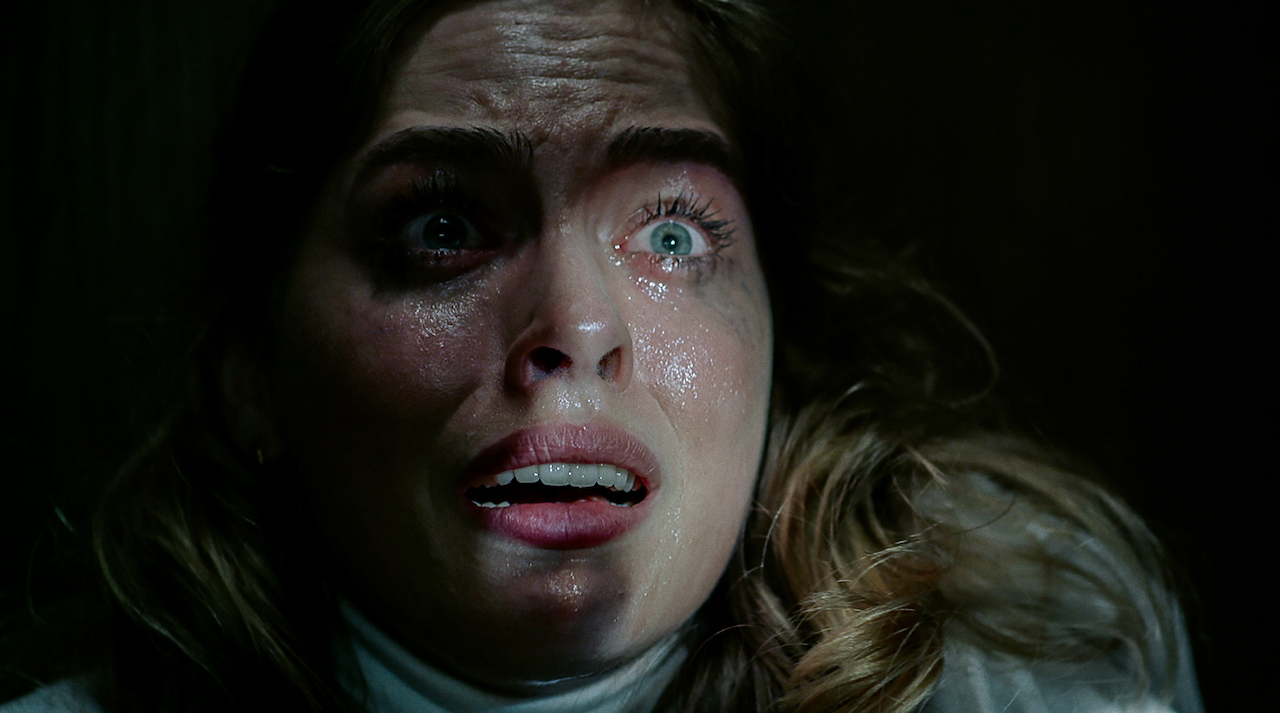
Based on the popular novel by Stephanie Perkins, THERE’S SOMEONE INSIDE YOUR HOUSE focuses on Makani Young (Sydney Park) and her friends as the mysterious slasher begins racking up a body count around them. The villain wears lifelike, 3D-printed masks of each victim’s face while killing them, and reveals their deepest transgressions to the rest of the Osborne population. Makani, who has a dark secret of her own, fears she may become the next target as she tries to determine the murderer’s identity. Brice, who first won attention with the duo of found-footage CREEP movies, and Gayden, whose most significant past credit is the lighthearted superhero adventure SHAZAM!, here deliver a slick and polished while sometimes quite gory (with makeup effects by THE X FILES’ Toby Lindala) fright film that also deals with very current themes of social “cancellation.”
Tell us about the process of translating Perkins’ book into a feature film.
HENRY GAYDEN: The book is so layered emotionally and has such rich characters, and it was a lot of fun that I got to start with that. Stephanie has a real clear sense of place; she spent a lot of time in small Nebraska towns doing research, so that was all in there. Really, it was about finding how to put that story into a three-act structure. And most importantly, how do you make this different from any slasher movie we’ve seen before, at least in my view? And the kind of low-key revolutionary concept I added in was the m.o. of the killer of secrets, and the idea that each setpiece isn’t just running from the murderer through the woods or in a house and trying to survive, it was realizing that if they kill you, they will release the worst secret in your life to the world. So then there’s an emotional layer to the entire scene that you don’t usually see in slasher films, and on top of that, the slasher is wearing a mask of your face, because you’re facing your worst secrets. When I unlocked that and put it into Stephanie’s story, I felt thrilled to get started.
How much of the style of ’80s slashers, if any, did you try to put into THERE’S SOMEONE INSIDE YOUR HOUSE?
PATRICK BRICE: You know, I wasn’t thinking about ’80s slashers as much, just because those were films that I was not allowed to watch as I was growing up! It was really the late-’90s/early-2000s ones that I went to see in movie theaters, a lot of them on opening day as they came out. There’s definitely a spiritual sort of through-line between those films and ours, but in terms of the way THERE’S SOMEONE INSIDE YOUR HOUSE looks, I was just excited to be able to take a more classical approach to styling a movie. I’d never had the chance, or had the time or the money to be able to craft a film visually in the way we were able to do with this one. I worked a lot with the DP, Jeff Cutter, in terms of thinking about what lenses we were going to use, and what the look was going to be, and it was thrilling to be able to craft the movie in a way that spoke to solving the problems of this individual project, as opposed to feeling like I had to throw in specific visual references to these other films you’re talking about.
In the book, the first victim is a teenage girl, but in the movie, it’s a male jock. How important was that kind of revisionism in writing the script?
GAYDEN: I did not want to start our movie with a young woman dying. I wanted to have that difference right away, because I feel like I’ve seen that so often. I rewatched about 150 slasher movies before I started on this, and so many of them open with a girl being killed, and I wanted to see the victim you’d least suspect go down. And that would be someone you would think can control themselves, who you think has it all together, and it’s this guy who’s a star quarterback. That, to me, is an important first step into the movie, showing that it has a little something more on its mind. Obviously, women do die, but that was a very intentional step, just to set the tone at the beginning.
Were there any restrictions placed on you by the producers or Netflix, or did you place any restrictions on yourselves, in terms of how graphic the movie’s violence would be?
BRICE: Thankfully, no; there were no restrictions whatsoever. We were given so much freedom by Netflix to make the best movie we could make, and just play, especially in those kill sequences. So the approach to all of them was, let’s try to do these practically as much as we possibly can, and then if we need to, augment them with visual effects later. As a viewer myself, I definitely appreciate that approach, and know there’s a rich tradition of practical effects in this genre. So any time we had the ability to do that, we would, even though it would sometimes take more time during the day, and felt like a very cumbersome thing. But it would also be one of those moments where there were elements of chance at play, and it would either work or it wouldn’t, and that’s kind of the reason I love making movies: finding yourself in those moments where you can do as much planning as possible, but if that guy doesn’t push the pump to make the blood come out at that one precise time, and get that ballet of movements correct, you could be screwed. Or it could be one of the most beautiful things you’ve ever seen, you know?
GAYDEN: I think it makes a difference. I mean, there’s a throat-slitting in the movie that’s practical that they did three or four times, and sometimes there was tons of blood and sometimes it was a little blood, and it always really startled me. I believe that if it had been done with visual effects, it just wouldn’t have landed the same way.