
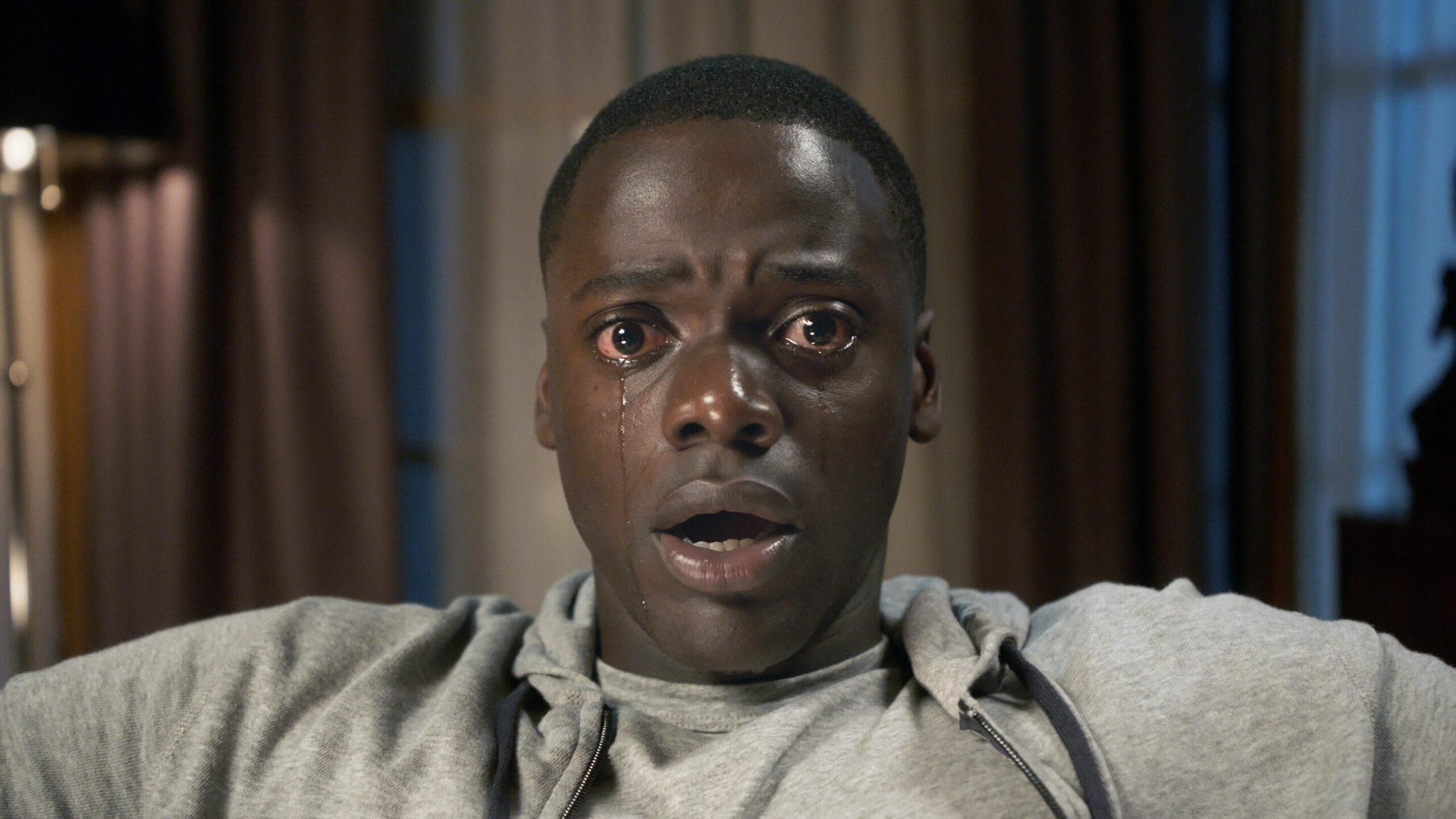
For most of the 2000s, Jordan Peele has been making us laugh as an actor, and now he’s about to make everyone scream as a filmmaker. GET OUT, his feature writing/directing debut, bids to be a major horror hit when it opens tomorrow night, and RUE MORGUE got some exclusive words from Peele about it.
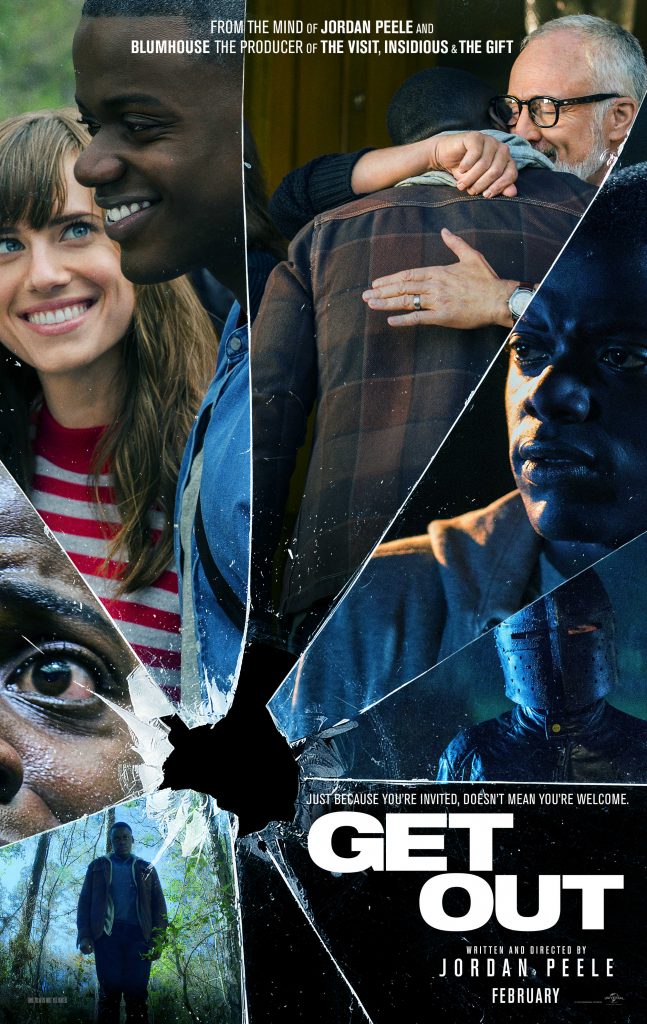
Produced by Blumhouse Productions and released by Universal (the companies that already scored bit this year with SPLIT), GET OUT is a far cry from Peele’s well-known credits as a comedian (MAD TV, the award-winning KEY & PEELE with Keegan-Michael Key and the movie KEANU, which they starred in and produced and Peele co-scripted). Daniel Kaluuya (SICARIO) stars as Chris, an African-American man making his first trip to meet the wealthy parents of his white girlfriend Rose. When they arrive at the opulent, remote house, Dean (Bradley Whitford) and Missy (Catherine Keener) are welcoming if a bit condescending, and Chris begins to suspect that things are more menacing than they seem and that his life might be in danger. This change of pace for Peele is one he’s had in mind since before his comedy stardom…
Is GET OUT a film you’ve wanted to do for some time?
Yes; I’ve wanted to direct since I was 13. I’m a huge cinephile, I love horror movies and the dream has always been to do this. That being said, the first half of my career, in comedy, was very fulfilling and I sort of thought that maybe this dream was not meant to be. It really wasn’t until the script was in some sort of development that I realized I was the only person equipped to direct it.
You hadn’t directed any of your comedy projects before GET OUT; were you “saving yourself” as a director for a horror film?
Yeah—I think more than anything, I felt like it’s just not in my marrow to act and direct. Both tasks are very hard, and take very different emotional skill sets. Some people can do that very well, but not me; I need to kind of focus on one or the other.
Can you talk about the horror films that inspired you?
Yeah—as I’m sure you picked up on, ROSEMARY’S BABY and THE STEPFORD WIVES are two of my favorites. Specifically, their ability to tackle the social issue of gender, and of men making decisions for women without their consent. That’s such a powerful issue, and handled in a very entertaining way in those films. So I patterned the style of GET OUT after those Ira Levin stories, because first of all, I love those movies, and they also showed me it was possible to bite this off.
In addition, there’s a bit of GUESS WHO’S COMING TO DINNER? in GET OUT as well. Was that one an inspiration?
Absolutely. At one point in developing it, there was an early version that was about meeting old friends from high school, and feeling left out of whatever private jokes they have, and that sense of being the outsider. At some point, I realized this movie needed to be GUESS WHO’S COMING TO DINNER?, but the horror version. One of the reasons that movie resonates so much is that apart from being about race, it’s a situation that anybody can relate to. The fears involved in meeting your potential in-laws for the first time is sort of a unifying starting point.
Did you draw on any personal experiences in coming up with the script?
It’s a very personal story. I’ve never been in a situation where I’ve felt any sort of persecution from a girlfriend’s family, but I’ve felt the fear of that persecution or prejudice, and even that alone showed me that there was a horror movie there. Where there’s fear, there’s a potential horror film. Ultimately, what ends up being the bread and butter of this story—the feeling of being at a party where you’re viewed as the outsider—is something that many people, certainly minorities, face every day.
How long had you been working on GET OUT before you hooked up with Blumhouse?
Basically, eight years ago, after MAD TV, I started developing many script ideas, all in the category of social thriller. After maybe five years, this one bubbled to the top; it was the concept that had matured, and felt like it was complete. I pitched it to QC Entertainment, who took it on, and they very wisely partnered a couple of years ago with Blumhouse, who of course are known for making microbudget films that are able to get this amazing Universal release platform.
Did you ever consider starring in GET OUT yourself?
You know, I thought about it maybe once or twice, but it always very quickly seemed not right, you know? The only way I would have starred in it, I think, would have been if I had felt like I could work for very cheap, and that would give me money to spend on other things. To be quite honest, I’m not that big a fan of myself as an actor [laughs].
One of the impressive things about the movie is the way it seamlessly integrates horror, social issues and comedy. Was it a challenge to keep those elements in the right balance?
Yeah, that was the big challenge. Imagine me pitching this movie; you can’t really get across how the three will blend. All I could do was point to movies like THE STEPFORD WIVES and SCREAM that, for all intents and purposes, are thrillers, are horror movies, but there’s a satire to them that keeps them fun, and from being downers. I knew I wanted to make an entertaining popcorn flick that just happened to talk about something pretty deep.
How was the experience of making the transition from the comedy world to doing a horror film?
That part came naturally. It’s basically the same thing, except that there were situations where I definitely didn’t want laughter! Both art forms are about a kind of precision where you’re focused on what your audience is feeling moment to moment.
Do you think you might do another of your social-thriller ideas with Blumhouse?
I loved working with Blumhouse, so yeah, I really hope to do more films with them. I don’t know which movie I want to do next, but I do know that in the next, say, 10 years, I’ve got four other social thrillers I want to make.