By ROB FREESE
Cindy Hinds made an indelible impression on audiences at age 8 as a child caught in her parents’ custody battle in David Cronenberg’s divorce drama/body horror The Brood (1979). She next appeared in the Canadian thriller Deadline (1981), as the daughter of a horror writer who falls prey to the terrors he creates for the screen. The same year, she appeared in Gordon Hessler’s Evil Stalks This House (aka Taled of the Haunted) with Jack Palance. Her last big screen horror role was in Cronenberg’s adaptation of Stephen King’s The Dead Zone (1983).
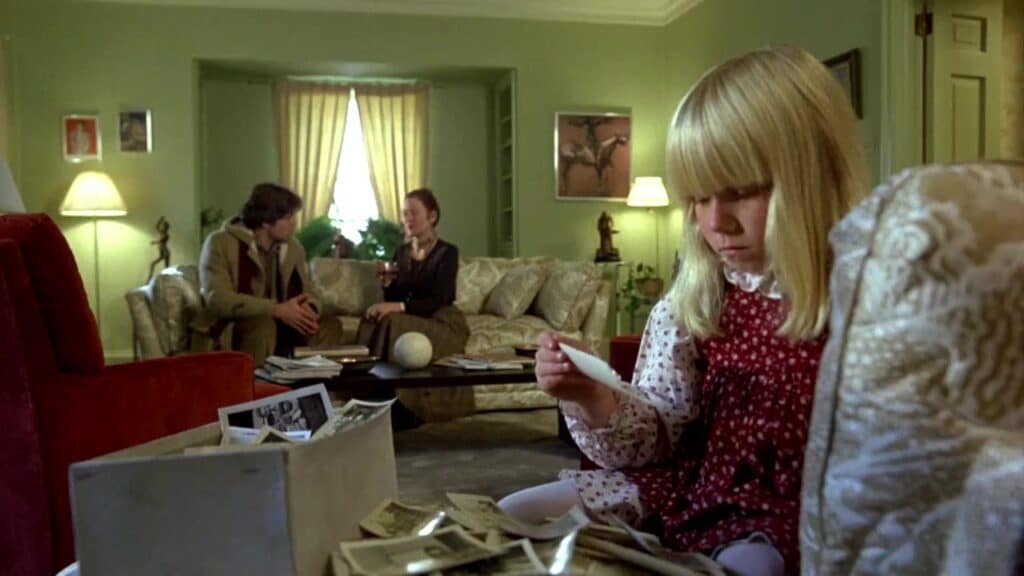
Without a doubt, Hinds delivered one of the greatest child performances all time in The Brood. Since then, Hinds has become a mother and businesswoman. She remained out of the limelight until she was interviewed with co-star Art Hindle for the Criterion Collection’s 2015 release of The Brood. Since that interview, she’s enjoyed meeting fans at horror conventions and finding out how popular her films still are to this day. Most recently, she participated in Brett Kelly’s homage to the ’80s fitness craze and demon possession, Spandexorcist (2025), from SRS Cinema. In this exclusive installment of Recollections From a Rotting Brain, she was nice enough to sit down and talk to us about her body of work.
Art Hindle played the protective father in The Brood, but he seemed to be generally protective of you. Was that the case during filming?
He absolutely was. He was always looking out for me, checking in, making sure I was okay, giving me pointers, making sure I was comfortable, bringing me treats. Yeah. He was very fatherly on set. Absolutely.
There is an amazing moment when Hindle tells your character that the thing that killed your grandmother is dead, not to worry. You seem to study his face for a long time and then hug him. As you’re looking away from him to the camera, you have this genuinely heartbreaking expression – like you can’t believe him because he doesn’t really know what is going on. Was that David Cronenberg working with you, or was that your instinct in how to play the scene?
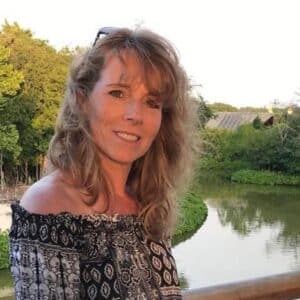
Cindy Hinds
That was, I think, probably more direction from David [Cronenberg]. It’s so funny, I was literally just going through some photos, and I have a Polaroid of when [Art Hindle] is kneeling beside the desk, and I’m sitting there with my hands up, crying. That was my first day of filming. And on day two, when they did the cuts of the scene, Art was trying to tell me how to cry. There was a lot of eye rubbing to get them red, [and] eye drops. Because I was a pretty tough kid, I didn’t cry very easily, so it was difficult for me to actually cry. I wasn’t emotional that way. So, he helped me that way. As far as the hugging and the end of the scene, I do recall David just telling me to look lost, like not knowing what I’m supposed to do, or just believing, as you said. I don’t ever recall it being a “you have no idea” kind of thing. I think I was probably too young to grasp that understanding.
But there were a lot of very simplistic ideas. Anytime I had to do anything where there was daydreaming or thought, everybody always seemed to go to pets. “What makes you happy? What makes you sad? What makes you think about a time when?” Those kinds of things to get that kind of look. And I think, because I was so serious in nature, naturally, it came across as very pan-faced, lost, and lacking emotion. Yeah, I could pull that one off good. Still can. [Laughs]
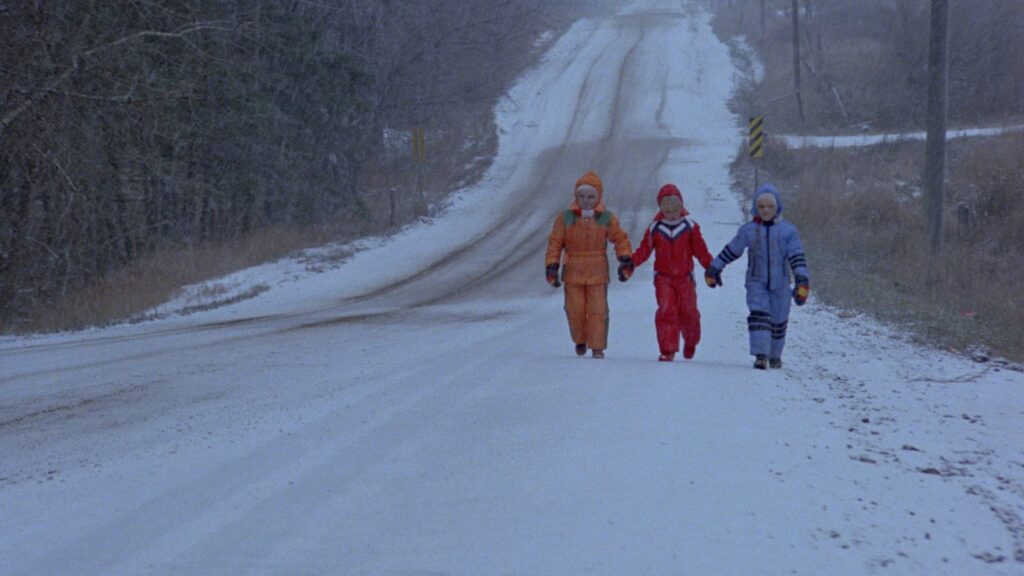
There’s another creepy scene of you and two of the brood walking in the snow to the clinic, and a truck passes. Was it at all creepy working with the brood creatures when they were in makeup?
No. Actually, I wanted to be dressed up myself, and of course, they would never put any of the makeup on me. I always thought it was so cool. I thought they looked great. I’d been around Felix [Silla] and Johnny [Ferguson] so much dressed up that the comfort level was already there. The makeup didn’t scare me. The blood was delicious. We were always licking our fingers and enjoying it and having so much fun. I do remember feeling bad for them, though, because it was hot and itchy. As much as I thought it was fun to get dressed up, by the time it was eight hours later, you go, “Man, I’m sure they don’t want to be wearing that stuff anymore.” You couldn’t just eat simply. You had to eat through straws, those kinds of things. And it took a long time to get that stuff on.
That scene is even creepier because whoever is in the truck just passes her by and doesn’t ever stop to question three kids walking in the snow in the middle of nowhere.
You know, back then too, to see kids walking together hand in hand down a country street, you thought, “Well, yeah, they’re just coming home from school.” You know, you’d probably think it was safe as opposed to anything alarming or concerning going on.
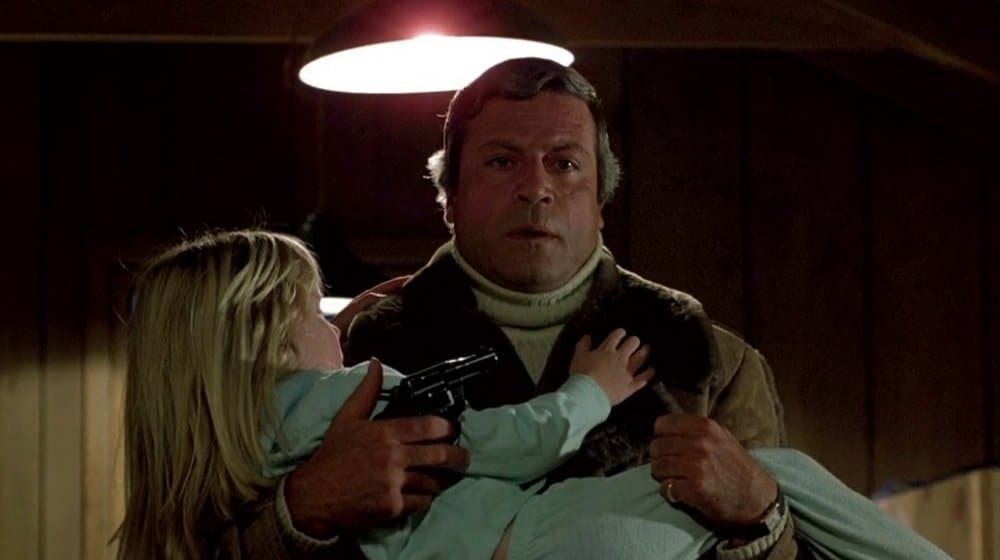
Do you have any memories of working with Oliver Reed, particularly during the climactic attack scene?
Oh, vividly. He was so funny. He was great. I’ve got some fantastic photos of him and me laughing and joking and messing about as he’s poking guns into my ribs. I remember him being very upset because it was like 1:00 in the morning, and they still weren’t filming the scene yet, and he wanted to get home. I’m sure he wanted to get home and have a couple of beverages before he went to bed. But he was wonderful. A very domineering presence. At first, I was like, “Holy heck!” I didn’t understand or know who these actors were, but he just had this presence about him. And then, all of a sudden, this soft voice comes out, and he starts cracking jokes. Yeah, he was great. Fabulous.
While you were making the movie, did you even understand what was going on? Did you ask questions? Or did you just do what they asked you to do?
I just did what they asked. I had an understanding, but I don’t think it was comprehension … That comes from seeing the finished product, but even then, not really understanding at 8 or 9 years old. You can’t grasp the gravity of what you’re watching. That came much later in my life, watching it again, and I went, “Holy… sugar shack!” [Laughs]
When did it finally click?
Ironically enough, I was in North Bay, and Art was doing E.N.G., and he was coming for some promo stuff. My mother reached out to his agent about seeing if we could do a photo opp and to see Art and say hi.
I had just graduated from college … That was 1991. I was 21. I watched it with a bunch of friends, and they all kind of looked at me and went, “What the hell?” I’m like, “Oh… Oh, I get it now! Okay. That was… Wow!” It just hits differently as you grow and experience. If you watched it twenty years ago, you could watch it twenty years later with different experiences, and it’ll hit differently again.
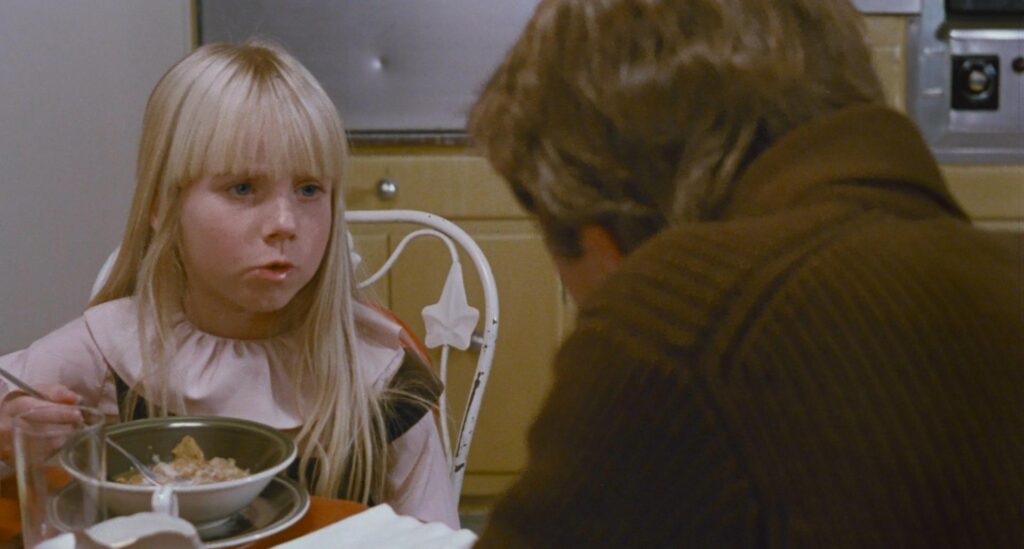
In Deadline, there is an insane scene where the mother comes home drunk, and it becomes chaotic with the parents carrying on and all the kids upset and screaming. It’s upsetting to watch. Was it upsetting to shoot? How did everyone get the energy to do that scene?
For me, absolutely. It was very difficult. The acting was so good. Sharon [Masters] was so good at playing that part. It felt so real. The younger brother [played by Tom Woodcroft] was very high-energy.
I think there was something that just happened. I’m not sure what. There were so many different things, and again, I was young and kind of removed from it. But there were numerous times when things happened on set, and I know there was a lot of high angst going on that day in filming. I know there were some concerns about people getting hurt, because there were stairs and that kind of stuff. I think it was easy to create that kind of energy, and Stephen [Young] and Sharon were able to feed off of that. The young boy who played the brother got a little bit afraid, too. I remember trying to help calm him down after that.
A similar thing happened in the school scene in The Brood. When the kids are younger, it’s really hard. I was a little bit older. I was so tiny, I played 5 in The Brood, but I was actually 8 years old. Same thing with Deadline, I played a younger child, but I was older, so I had a little more of a grasp that it was fake and that everyone was okay.
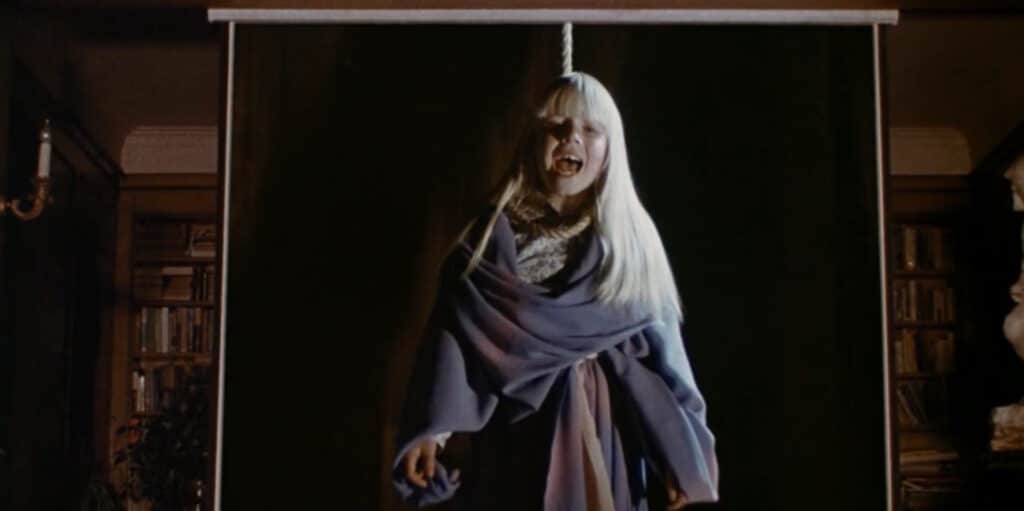
Was it disturbing shooting the scene where your character is hanged?
One hundred percent. The flashback hanging was the first scene that I had to film for that movie. I sat on set for days for that while they were trying to get harnesses, get things ready, and get approval and all that kind of stuff. I watched a lot of people, the real actors in that film, bitch. So, the actors, some of them, didn’t fare so well with that filming. When it came to my turn to do that scene, after about ten to twelve drops, I couldn’t do it anymore. I actually said I had to go pee really, really bad, and I couldn’t hold it anymore, that if they dropped me, I’d end up peeing myself. And I went into the bathroom and completely broke down. My mother said, “What’s wrong?” I said, “I can’t, I can’t do it anymore.” It was freaking me out. To play dead is different than having monsters banging on a door trying to break through, right? It’s literally being hung and dropped screaming, “Daddy, daddy, daddy!” Even at that age, after so many times, it was like, “Okay, yeah, no. That’s enough, thanks.” Thankfully, Mario [Azzopardi, the director] was incredible. My mom went out and told him what was going on. He came in and said, “Do not worry about it. Don’t ever do that again. You talk to us, you let us know.” He was just so wonderful.
That was really difficult. When it came to actually doing the real-life one, when it happened in the film, it was easy peasy. I felt very safe. It was only a little tricycle versus a ten-foot scaffolding. It was just a completely different feel. I do remember being in a body bag for a very long time. That was a little weird. But the flashback was very difficult to do. It was difficult for me to watch.
I think it’s difficult for anybody to watch, honestly.
Yeah. It’s a tough film. It’s got great little vignettes in it, but if you actually get rid of those vignettes and look at the storyline, it’s quite disturbing.
It was highly lauded by a critic I respected, Chas. Balun, so I had to watch it. It was not what I expected. I really didn’t understand it. It is definitely a movie you have to have some life experience to understand. It’s not a fun, popcorn horror film.
Yeah, you’re like, “My god, they forgot the kids! They forgot the kids! What the fuck!” You know, the mother’s clearly fucked up, and the father’s clearly – “What the hell? Why is nobody doing anything for these children?”
It’s a serious mental health issue movie. It’s, ironically, as old as it is, it is so relevant to what is going on in the world today, and what’s not being addressed and looked at. Even some of the conversations in the classroom, with the kids talking. Mario was ahead of his time.
Next, we saw you in a burning bedroom in Cronenberg’s The Dead Zone…
No. That’s not me. That’s the part I was supposed to get.
Oh! I thought that was you!
No. So, the little girl in the fire, the nurse’s daughter [Julie-Ann Heathwood], that’s actually what David cast me for. But when I walked into the room, I’d grown up too much on him. I ended up, because of that, being the young girl, the student, with Christopher Walken, just before Anthony Zebre comes in to talk about tutoring his son. I’m that little girl.
Forgive me! I had it in my head you were the little girl in the fire.
That’s okay. You know what, it’s perfectly okay. People hear me talking, telling the story, and that little girl is blond as well. So that’s an easy thing [to get wrong]. But how lucky for me? I got to work with Christopher Walken!
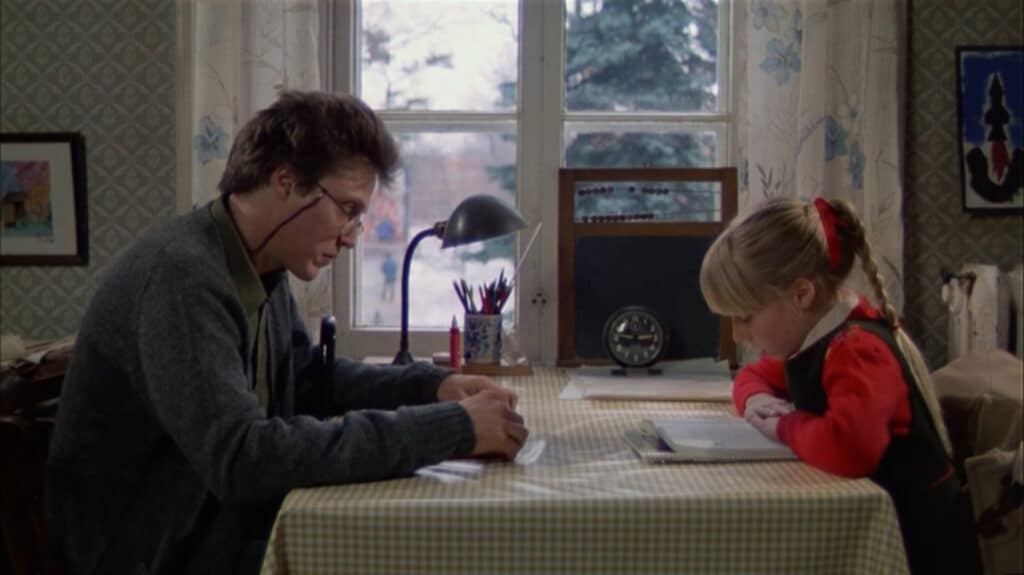
What was that experience like, working with Christopher Walken?
It was short and sweet. Again, one of those things that took 30 years to go, “Oh my god! I worked with Christopher Walken!” I did not realize who he was. My mother was a huge fan of everybody who was in that film.
Nick Campbell was in The Dead Zone. He was in The Brood with me as well. It was nice to see him and say hi. Just to work with David again, the fact that he cast me in that just because. He’s absolutely lovely. Such a wonderful thing. And Christopher Walken, a serious actor, right. You know, it was a very serious role he was doing. My part with him was relatively serious. He wasn’t teaching; I was just reading with a stuttering problem. It was quick and easy, but hey, I got to meet the man.
You had quite the acting career by the time you were ten!
The other great thing that I did was with Jack Palance in Tales of the Haunted.
Was that an anthology?
That’s exactly what that was. It was a [single film shown as a] five-part series. The story was titled Evil Stalks This House. It was a pilot for a possible series. The idea was for it to be like The Twilight Zone. There was a late-night show, and after that show was a 30-minute episode [for five consecutive nights]. They got Jack Palance in that, so Derrick [Jones] and I played his kids in that one. It had a bunch of well-known Canadian actors at the time as well. That was really incredible to be a part of that experience, working with interesting creatures and critters, witchcraft and all that kind of fun stuff.
I kind of got swayed towards the horror aspect of it. I started in the industry in 1974. From ’74 until maybe ’78, when I got The Brood, I’d done a bunch of print media, television commercials, TV shows, made-for-TV films and things like that. Once The Brood came along, that’s when things changed, and I started doing more of the film work, but it all seemed to be horror, which was really interesting.
Were you a fan of horror back then?
It’s funny because I work with a couple of horror film festivals. The community is phenomenal. But no, right now, my preference is not horror. Even back then, I liked A Nightmare on Elm Street, but I’ve never been a slasher horror person. I’ve never enjoyed Friday the 13th or The Howling. People love those, but it was just never, you know, my thing. Freddy freaked me out! I love Freddy. He scared the crap out of me. I don’t like to be scared. I like happy, happy, fluffy stuff. [Laughs]
What brought you back to acting?
I wouldn’t say, in so much, I’m acting anymore, as to popping my head in on things that people may ask me to do. Many years ago, The Brood was coming out for its 35th anniversary, and Chris Alexander, who was with Fangoria magazine at the time, was commissioned to do some behind-the-scenes stuff. So, he decided to try his hand at Facebook and found me, reached out to see if it was really me and arranged for me and Art to get together and do some really fun behind-the-scenes stuff. It just sort of snowballed from there. I started hanging with the Blood in the Snow Film Festival in Toronto and that gang. Now, I’m on the board of directors and work with them every year doing that festival. My background is outside the film industry. I was in hospitality for a while. I was in manufacturing, and then I ended up in real estate, so I’m a businesswoman with nothing to do with the film industry until the last decade. And then, like I said, dropping in, making little appearances on little things here and there if people ask. It’s not my go-to, I just like helping out, doing stuff like that. It’s fun.
Total fantasy question, if David Cronenberg came to you and Art Hindle to do a sequel or a remake of The Brood, would you consider it?
Yep. I’d do it in a heartbeat, absolutely. I’ve already got the script written in my head.
You need to write that!
(Laughs) I know. They had somebody do a script for a [remake]. Are you familiar with that?
No!
A number of years ago, I did a deep dive one day. I wondered if somebody had done anything with it, and sure enough, somebody bought the rights and they had sent it off to some writer. I’m not familiar with his work [Cory Goodman], the horror genre is not my thing, per se. But yeah, the script was written, but it was pre-COVID, and then it got shelved and put away, and I don’t think it has ever been looked at again. Personally, I didn’t really care for the storyline and the way it took it. But you know, sometimes things can’t be remade or shouldn’t be remade. Sometimes I think certain movies should be left alone. If you want to do a sequel, go for it, but leave the original out of it.