By ROB FREESE
I will never forget the moment I arrived home from running errands and found the following message on my answering machine: “I’m calling for Rob Freese. This is Sam Sherman, president of Independent-International Pictures. A mutual friend gave me your number.”
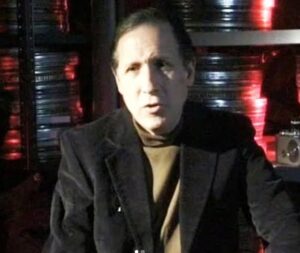
Samuel M. Sherman, writer, producer, B-movie legend
At the moment, I wasn’t sure what was going on. It seemed too far-fetched that the Sam Sherman, the guy who pitted Dracula against Frankenstein, who unleashed Satan’s Sadists and Blood of Ghastly Horror upon unsuspecting drive-in screens across the country, would take time out of his day to call me… But he did.
He left his number, and I quickly called back. I caught Sam eating lunch. He told me to call back in ten minutes. I told him I would, then agonized as to whether or not he meant ten minutes exactly, or if a “casual” ten, like twelve or thirteen minutes, would be okay.
While I sweated it out, I called my wife at work to let her know that Sam Sherman had called me…ME! She was well aware of who Sam Sherman was. This was in the mid-aughts, when DVD was booming, and everything old was new again. I snapped up every Sam Sherman/Al Adamson/Independent-International Pictures film released and watched them repeatedly.
When I called back, Sam greeted me warmly and asked a lot of questions about me. At some point, he told me about his tankless water heater and how he’d never go back to a tank water heater ever again. He asked if I had any questions about tankless water heaters or anything else. The floodgates opened.
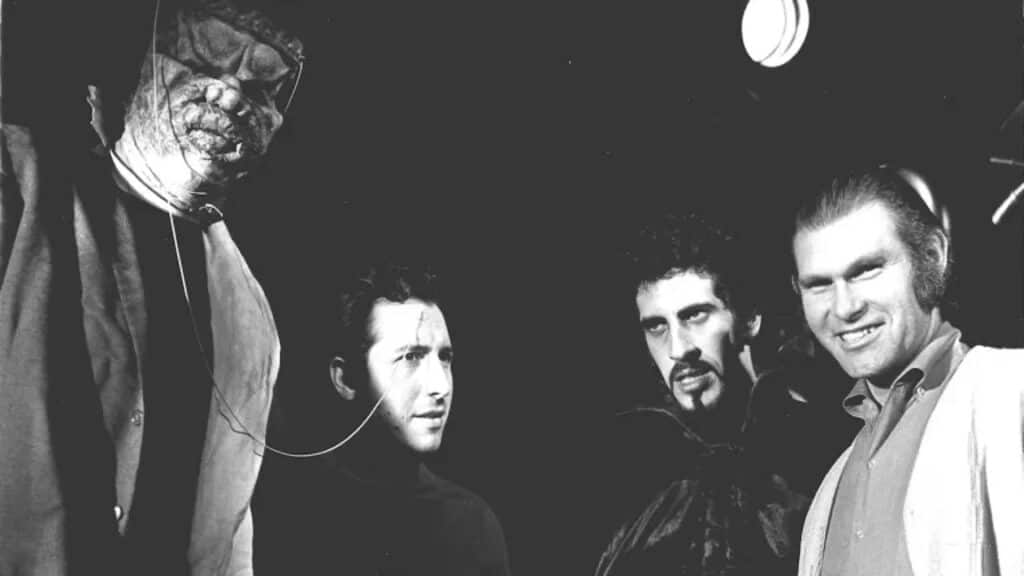
L to R: John Bloom (as Frankenstein’s Monster), producer Samuel M. Sherman, Zandor Vorkov (as Dracula) and director Al Adamson behind the scenes of “DRACULA VS. FRANKENSTEIN” (1971)
Sam answered my questions – questions he had no doubt answered dozens of times before. But he responded like it was the first time he had told these stories. His memory was amazing, and he recalled the tiniest details. We spoke for just over an hour, eventually getting around to favorite movies and whatnot. I asked him which recent films he had seen that he liked. He hadn’t really seen any. He told me he liked watching the older films, movies that were already his favorites.
I asked him what he thought about the then-new in-theaters flick Grindhouse. He had not seen it, but he was familiar with it and said, “For what they spent on that picture, Al [Adamson] and I could have made a thousand pictures.”
We wrote back and forth for a while. He sent a treasure trove of I-IP materials that he signed for me. If I ever had a question, I sent him an email, and he promptly replied. Sam Sherman was the real deal.
In addition to being one of the greatest drive-in movie producers of the late 1960s and ’70s, Sam Sherman was an honest-to-goodness fan of cinema. He loved every day he spent making movies, even the rough days when nothing went right, and he had to wonder if it was worth it. I know even on those days, he was happy with how his unconventional life turned out.
Beginning as a writer for James Warren and Forry Ackerman of Famous Monsters of Filmland, Sherman eventually moved into film distribution with Al Adamson’s father, Denver Dixon. He also became involved with Irwin Pizor and Kane Lynn’s Hemisphere Pictures. There, he got an education in film distribution, marketing and promotion. Once he met Al Adamson, the two began working together on a number of movies. Quickly, he learned that distribution was the only way he could control his pictures. Independent-International Pictures was born, and its first flick, Satan’s Sadists, was enough of a hit to encourage them to release some of their older titles, and soon, I-IP began producing new films.
If you lived in the South during the ‘70s and went to the drive-in regularly, you no doubt saw your fair share of I-IP films. They ran the gamut from new films made to capitalize on current exploitation trends (The Naughty Stewardesses, Dynamite Brother, Angels’ Wild Women) to foreign films picked up and made to look American, sometimes adding new scenes with new actors (Nurses for Sale, Mean Mother, Bedroom Stewardesses), to standard drive-in fare (Hell’s Bloody Devils, Girls for Rent) to pick-ups they would distribute (Frankenstein’s Bloody Terror, Horror of the Zombies, The Boob Tube).
With the rise of home video, Sherman started Super Video, a video distribution company established to bring the I-IP library to the home video market via Beta and VHS. They were sold in oversized cases that have always interested collectors, with amazing artwork to catch the potential renter’s attention.
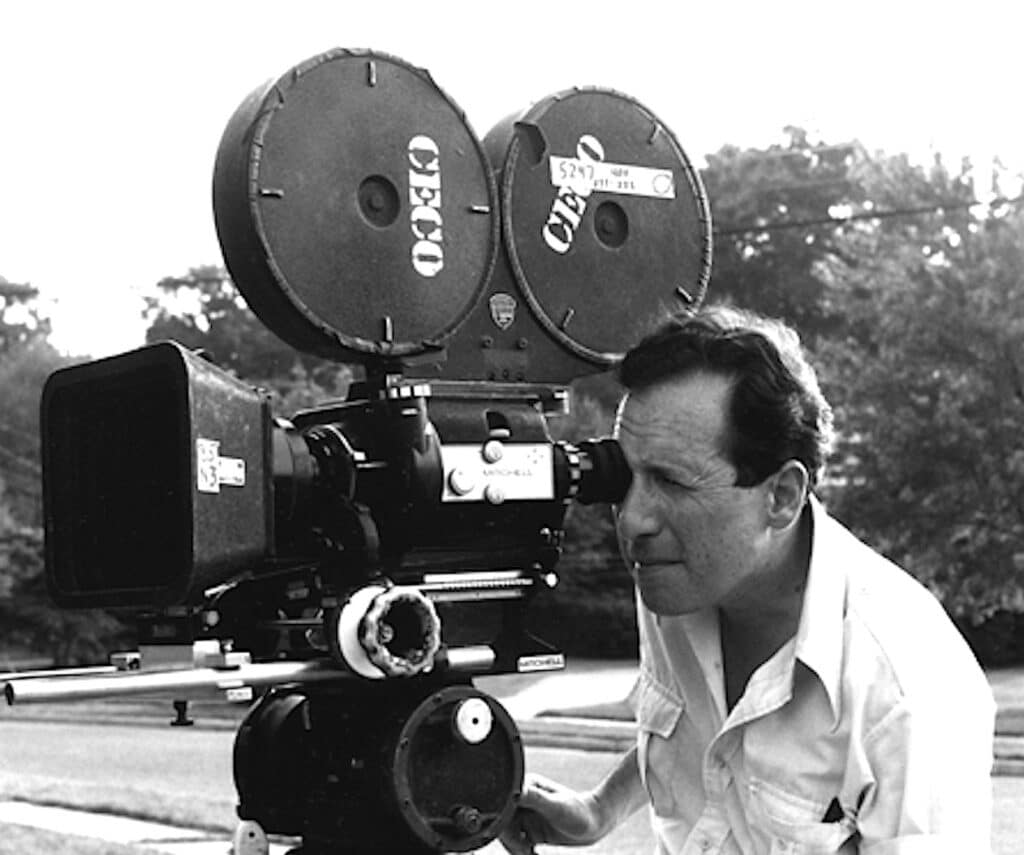
When I caught up with Sam next, it was to interview him. Sam gave me a wonderful option, one I had never been given before or since. He told me, “You can ask questions, or I can give you a mini-oral history of I-IP.” Betting he would tell stories I wouldn’t hear because I didn’t know enough to ask about them, I agreed to just sit back and listen to him talk.
For the next 45 minutes, he took me through his early days with Pizor and Lynn and all through the I-IP years, telling stories I had never heard. I would ask an occasional question, which would set Sam off on another amazing tale. It was quite an experience.
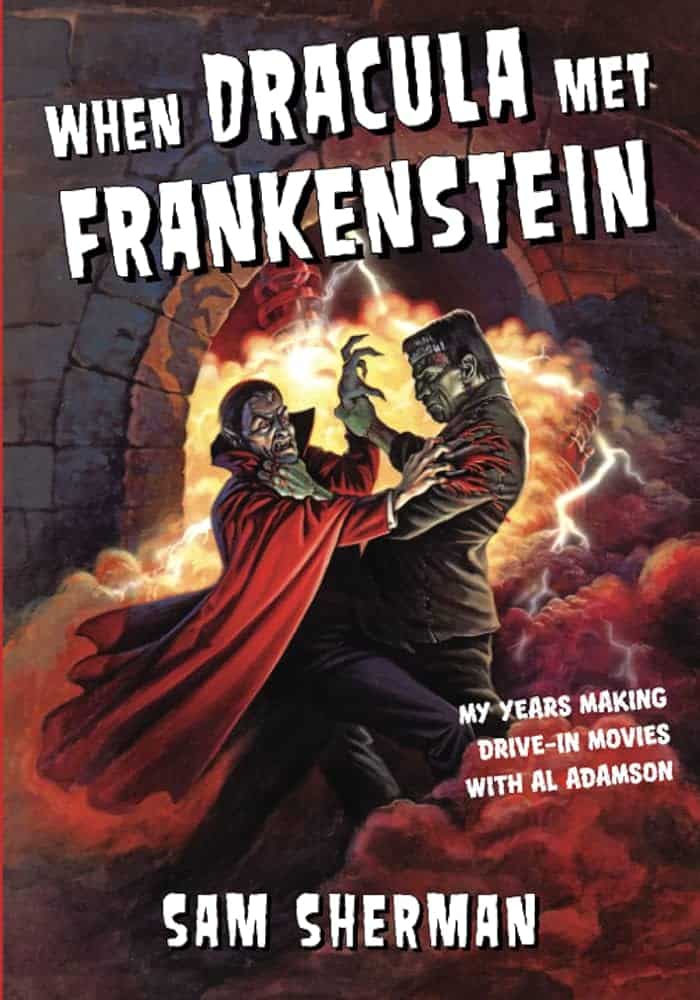
Later, I was invited to join the editorial team that helped assemble Sam’s autobiography, When Dracula Met Frankenstein: My Years Making Drive-In Movies with Al Adamson. I took on the assignment of transcribing all of Sam’s audio commentaries he recorded over the years. I believe there were roughly three dozen. (To this day, I still hear Sam’s voice in my head. It doesn’t matter what. It’s always Sam.)
After that, it seemed like Sam was content. There was talk of possibly doing another book focusing on his work outside of the Adamson films. He had hundreds, possibly thousands, of stories to tell. I always got the feeling that he was satisfied that the stories he felt most people wanted to hear were told.
 At one point, we talked about the possibility of me writing a novelization of The Horror of the Blood Monsters. I told him I had an idea how to color the pages to correspond with the shifting hues in the movie. Sam thought it was a great idea and asked, “How are you going to get the pages to change color, though?” “We’ll use colored paper.” He paused for a moment and then burst out laughing.
The last time I spoke to Sam, I just called him one Saturday afternoon to chat. The subject quickly shifted to movies. I mentioned a movie he was amazed I had seen called S.O.S. Tidal Wave, from 1939. It used special effects from the 1933 film Deluge, which he mentioned frequently. Sam’s enthusiasm always picked up when we talked about the older films, no doubt like mine does when I talk about horror and slasher movies from the ’80s.
Again, I asked Sam if he had seen any movies lately that he liked. His response surprised me. “I like a lot of the Hallmark movies. I watch them with my wife and daughter.”
At some point, his wife called him for lunch. We said goodbye and still kept in touch with an occasional email. I hated it when he lost his wife, Linda. You hear how much he loved her whenever he mentions her in his commentaries and in the book. They were a great team.
Samuel M. Sherman died on September 29, 2025, at the age of 85. He leaves behind a legacy of exploitation films that helped write the history of horror, action and comedy films throughout the 1970s. He devised numerous gimmicks, starting in his early days with Hemisphere and continuing through his time at Independent-International Pictures, that packed theaters full of horror-hungry teens.
He wrote volumes about cinema over the years.
His business savvy built a mini movie empire that turned what many erroneously consider “trash” or “camp” films into box office gold.
Above all, Samuel M. Sherman loved movies. He was a fan his entire life, and we’re lucky he had the opportunities he had to fill our screens with marauding ghouls, space vampires, maniacal bikers, blazing stewardesses and possessed freaks. Rest in peace, my friend.
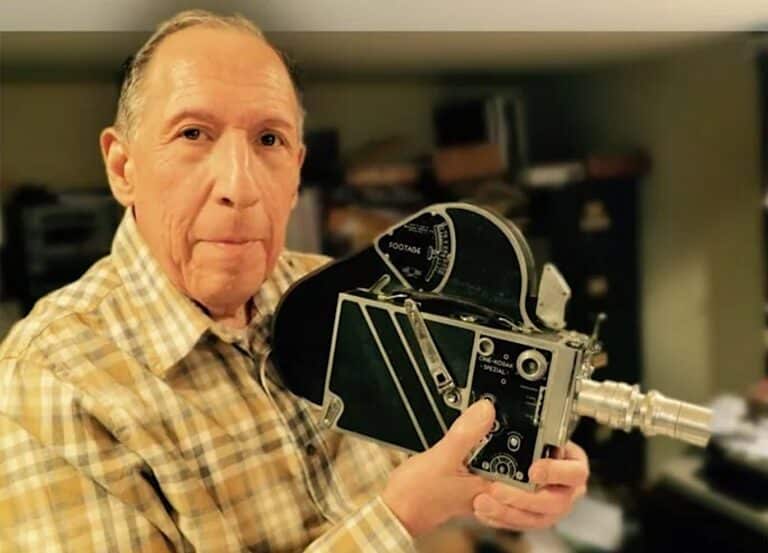
Samuel M. Sherman (1940-2025)