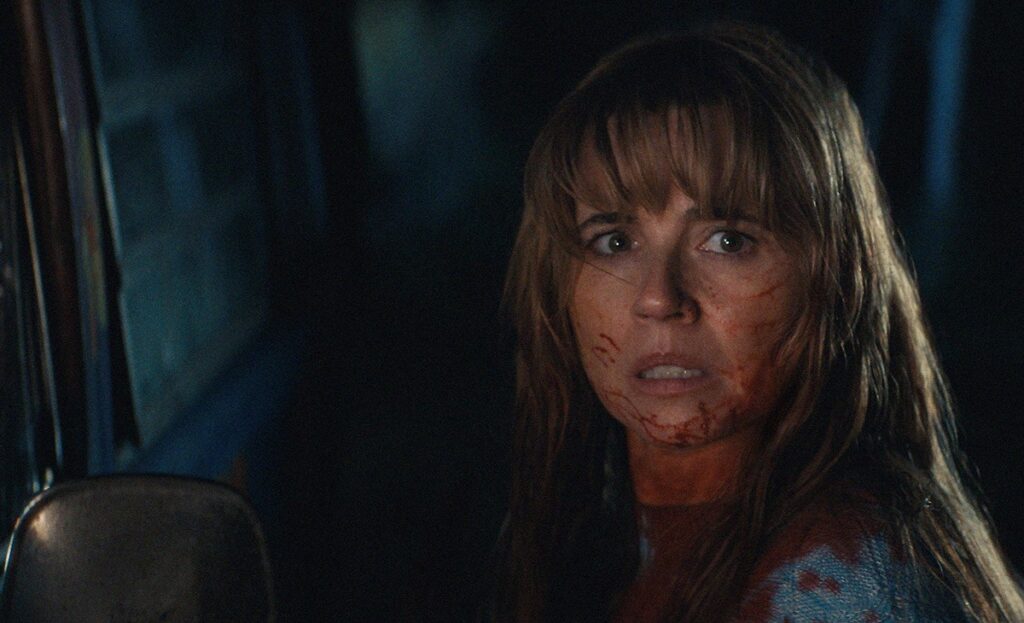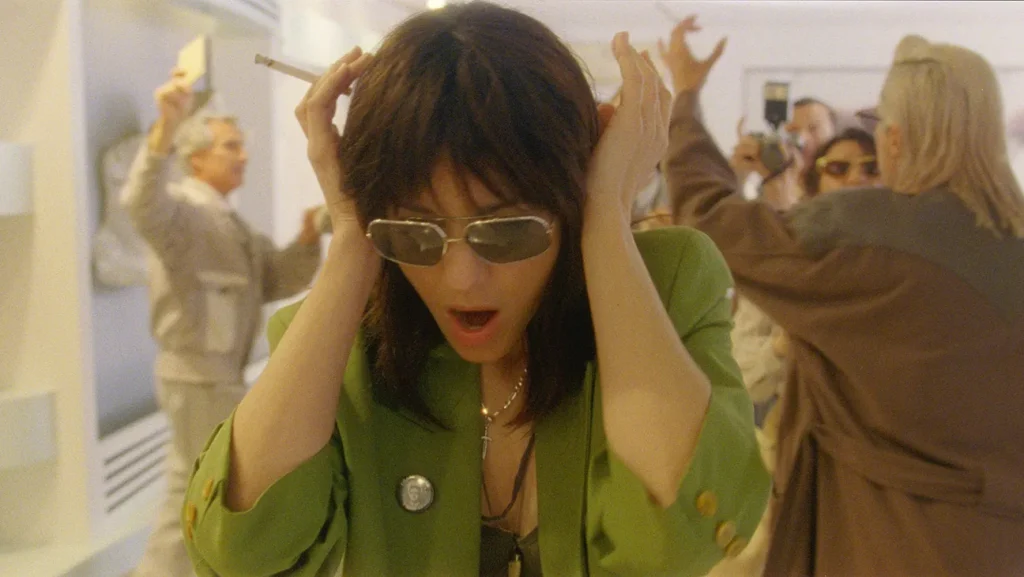

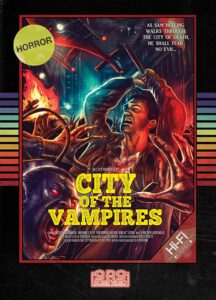
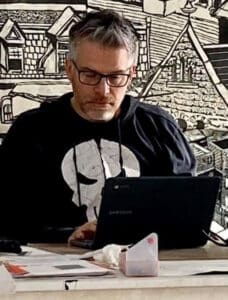
Like many of us, Ron Bonk grew up reading Famous Monsters of Filmland and Fangoria and watching horror and science fiction films. “I remember watching Halloween with my mom, and afterwards she said, ‘There are people really like that?’ Which, as a little kid, I was nine years old or something – that’s scary to hear. Later, I remember being in middle school, and there was one kid who would get to see all the Friday the 13th movies, and he would relay the plots to me in class. I was really fascinated with Jason Voorhees.” Bonk’s first film was the SOV feature City of the Vampires in 1993.

Recently, RUEMORGUE spoke with Bonk about how he built SRS Cinema into a prominent distributor of independent films.
Did you find distribution for City of the Vampires on VHS?
 I did. I ended up self-distributing it. There were two distributors, and one had a horrible reputation, and the other one was going out of business. I self-distributed an antique video [earlier], and that one was a different sort of beast. That one did really well because it got this great review in the Library Journal, so all these libraries started ordering it. I would say I had some experience there with distribution, and because of that, I decided to self-distribute. I remember buying ads in VideoScope. Some other filmmakers saw my ad, and they reached out to me and said, “Hey, you’re a distributor. Do you want to distribute my stuff?” I had been doing reviews for Alternative Cinema Magazine, so I reached out to some of those filmmakers, and pretty shortly, I had a catalogue. I didn’t really quite understand the market, but that got better with time and experience.
Is that how SRS Cinema was formed?
Pretty much. Back then, I was at Salt City Video Production. That’s how I started with the antique [tape] and the early releases, and then I established an LLC. The first LLC was actually Sub Rosa Studios, and then I created a second LLC, which was SRS Cinema, which was originally going to be prestige releases. There were a lot of good indie dramas being sent my way that didn’t seem to have a market. I was trying to elevate the line. These were going to be more prestige-type titles, and they just didn’t sell. After a while, everything came back under the umbrella of SRS Cinema.
Do you remember when you saw the change to streaming coming?
Well, DVD obviously came first. That was kind of a gold rush that I was able to capitalize on because they were buying everything and putting it on the shelves. I think it was the special edition of There’s Something About Mary. I remember seeing it advertised and thinking, “The studios rushed all these titles out. Sometimes they didn’t even do very good transfers, with no extra features. Now, they’re doing special editions. We’re going to be bumped off the shelf.” And sure enough, we started getting bumped off the shelves. Because of that, I kept my eye on what the next trend would be. I saw digital coming for a while, but it was a slow build. As we were working on digital, I actually went back to VHS for a while. There was this sort of craze of these boutique releases. I went into the library and started re-releasing them, and they initially did great. Blu-ray came along, and I decided I’d start putting these analog movies on Blu-ray. A lot of people were like, “It doesn’t make any sense putting them on Blu-ray. They’re not going to look any better. They don’t fit the format.” Blu-ray was better than how they looked on DVD. I was still watching digital, and then, I forget how many years ago, I saw digital start to surge. Then we gave that more focus and more attention.
Do you plan to continue making physical copies of your films available?
Yeah. And I still do DVD. Sometimes people just want the Blu-ray, but I’ll put the DVD out because I have a couple of people asking. But the Blu-rays are going strong. They won’t go anywhere anytime soon.
What effect did the pandemic have on the independent film community?
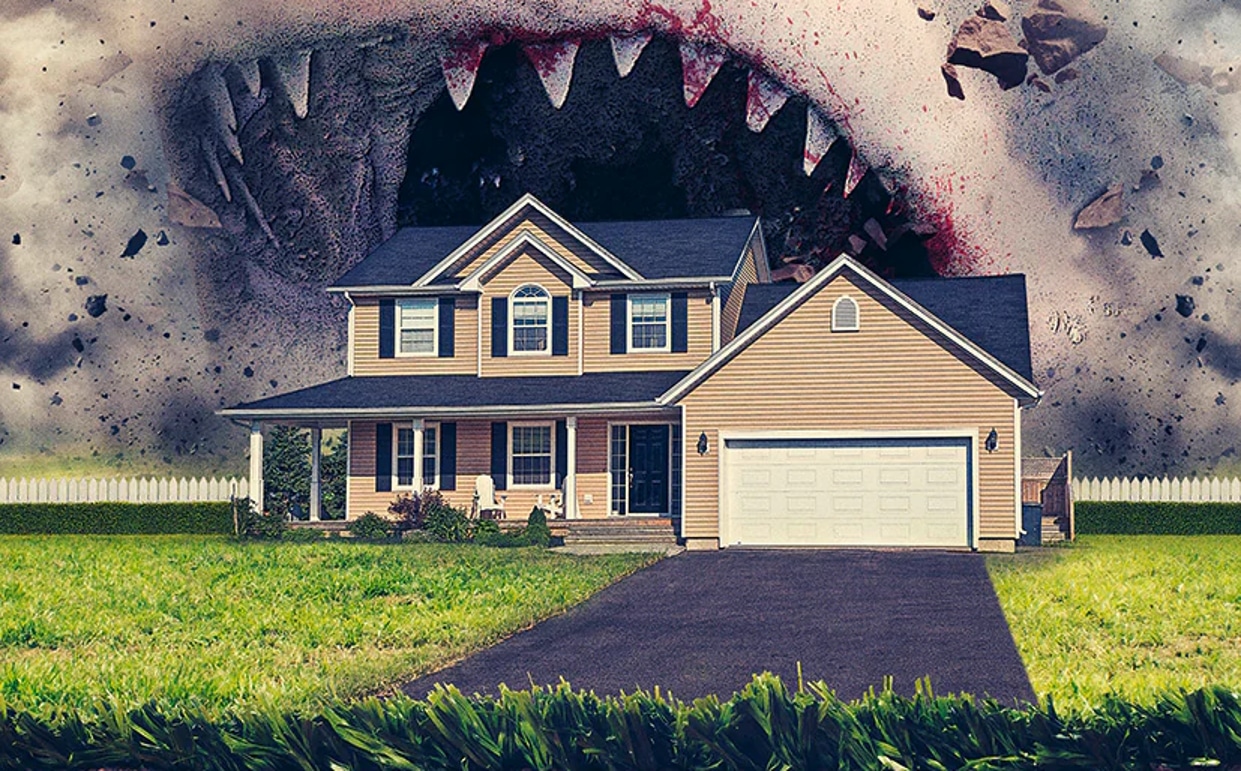
I think everyone had kind of a rise in digital then. But at the same time, physical was doing great. I started bringing titles back that had been out of print and doing a week or two sale on them, and people were buying tons of copies. Then, Walmart, because no one was making new movies, they were taking titles they already had, like House Shark. Sometimes, we would have old stock of a title that had already run through Walmart. They came back because their shelves were empty and they needed stock, and they sold all of those, and they ended up running it two more times. The same thing happened to some of the kaiju titles that had already run through Walmart, like the Reigo and Raiga movies. For everyone else who wasn’t looking for physical media, they were streaming.
Do you think it will be more difficult for people to discover some of these films later, since they no longer have a paper trail of posters, stills, press kits, and the like?
It might be. I mean, sometimes, paraphernalia definitely helps to discover a movie. I know at the I know at the Block Cinema at Northwestern College right near me, the curator there, he’ll talk about the movies he shows, and he’ll talk about going through old film festival programs and looking for something that stands out to him. There are people like that who are digging around. I think most of them could be rediscovered at some point, but yes, just like we’ve lost film prints of older movies, there’s definitely stuff that’s going to be lost that may have a small article on the internet, and then that website goes away. We don’t have the print publications that you could find a little ad in the back of an old magazine or something.
In your opinion, what makes a new film stick out and get noticed?
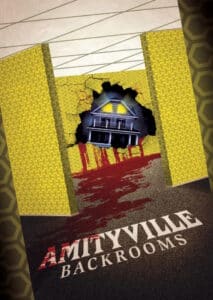 Doing really good artwork and a snappy title. It always takes a little extra, but those are the two things that will lean in its favor to hopefully get it seen, discovered and watched. And not only a good title but a good hook. Sometimes a title itself will come off as a hook, like Amityville Backrooms or House Shark. The hook is within the title. Sometimes, it takes a little extra work, where you read the synopsis, and then you catch what the hook is. It’s amazing, the number of Hollywood films that hinge on that hook. At the lower budget level, I always say it helps a lot to have one.
Is that where you start when you come up with an idea, a title and a poster and then build a movie around it?
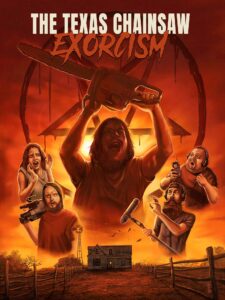 [Laughs] Sometimes! Yeah, I mean, usually, they’re going hand-in-hand. Sometimes, if we’ve pitched an idea to a filmmaker and they pick it up, and we haven’t made the artwork yet, I’ll reach out and talk to them, like on Texas Chainsaw Exorcism. I talked to Bobby [Canipe, Jr.], and he even drew up concepts for me, if I’m remembering right. On others, like Emotional Support Shark, I talked to Mark [Polonia] about making that, and I created this artwork before he had much of a plot, and then his plot was way different. He went in a direction I never would have went with on it. Mark, I give a little more leeway because he’s been doing this for so long, and he can deliver. Some other filmmakers may be a little more insistent on the plot or the elements in it. Yeah, so it’s actually one or the other, but both do happen for sure.
You also bring a lot of foreign titles into the U.S. market.
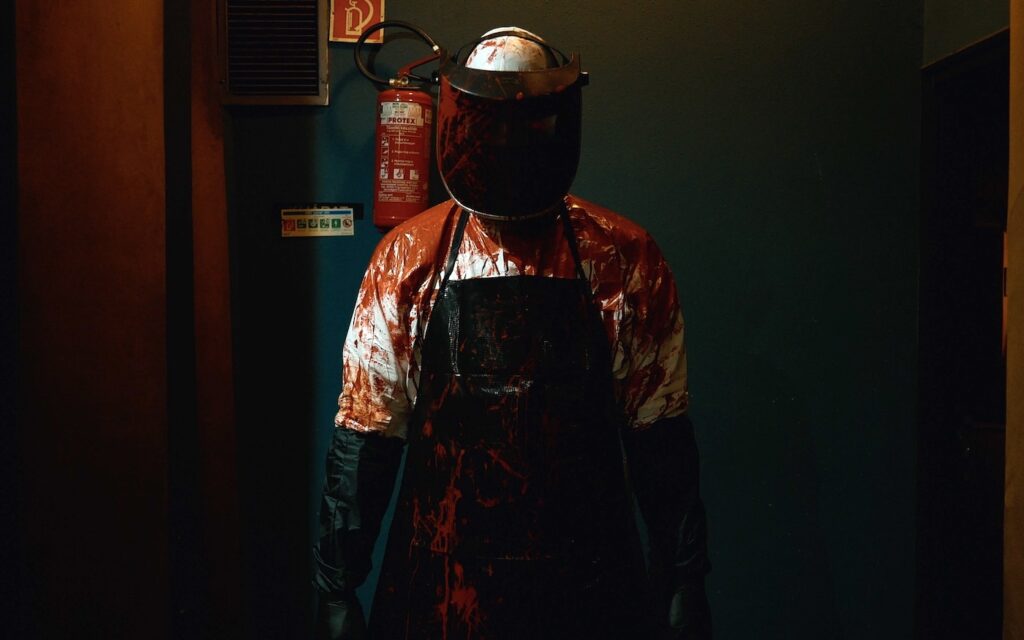
I get these films from Europe, and sometimes, they just don’t move much. It’s surprising. They’re gory. They are Argento and Fulci-inspired, and they have that giallo vibe going in them. I don’t know if it’s the subtitles or what, but they just do a fraction of what the other movies do. I have a relationship with some of these filmmakers, so if they send me something, I’m most likely going to work with them and hope that the audience finds those movies.
What is more popular, Amityville or shark movies?
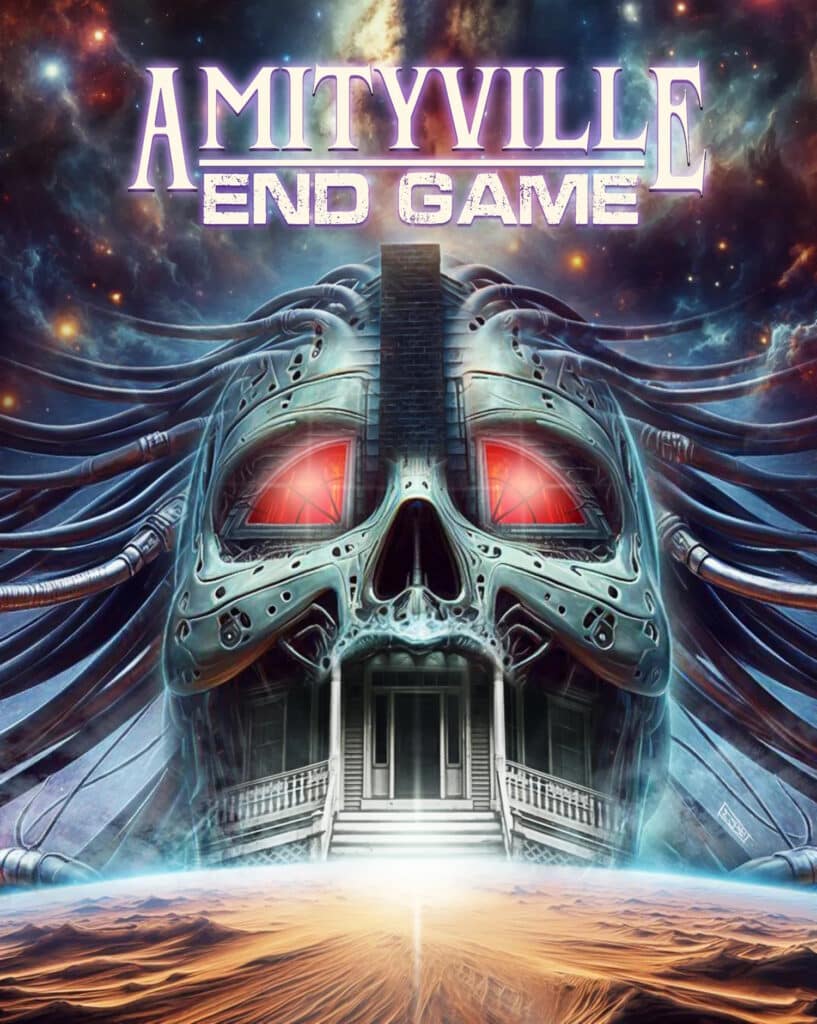
Shark movies definitely do better. I keep waiting for shark movies to hit that peak. I remember when vampire movies were really hot for me. I wasn’t even making them; I was just listing them on B-movie.com, which was a very popular website. That was my site. I used to use it as my main site, then listed titles from all over. I was just selling a ton of movies on there, and I had a group of customers that every time I listed a vampire movie, they would buy it. I think it was the Twilight movies that killed that genre. I keep waiting for that to happen with sharks, with the big-budget shark movies they make. People love shark movies, and they don’t stop buying them. The Amityville movies, whenever I do those, they do well.
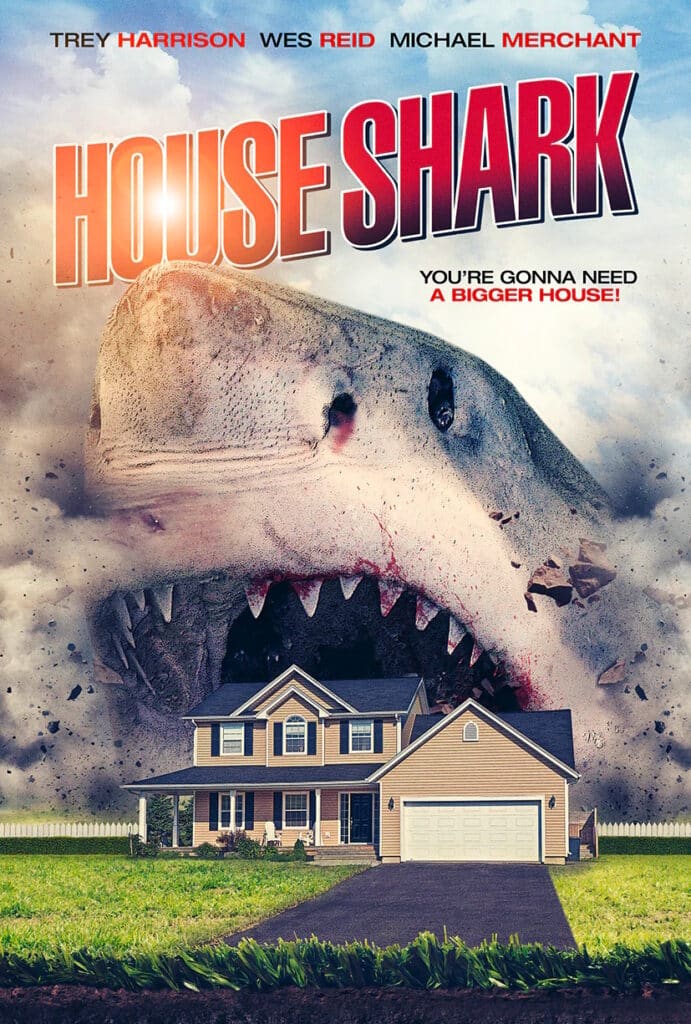
You haven’t directed anything since 2017’s House Shark. Are you planning to direct again?
Yes. I was really exhausted after House Shark. I was burned out, and I just wanted to take a break, and then the pandemic hit, so I just kept writing scripts. Also, because House Shark didn’t come out the way I wanted it to, I wanted to go back to “film school” for a while. I wanted to get back to my roots, read some film books, study some movies again and really try to figure out my vision. I tried different techniques. She Kills and House Shark both were me sort of trying to channel other filmmakers to make those movies. I joke and call it “method directing.” The pandemic allowed me to do a lot of things. I shot some shorts, so I’m not completely rusty, but gearing up another production is a lot of work. I do have a script that I want to make. I’m working on a series of short ideas right now. I figured doing some shorts would help me get out there again, try some ideas, and try some new filmmaking techniques. Once I feel like I’m fully back up to speed, it’ll be time to dive into a feature.
Do you see AI being used as a tool by indie filmmakers to make their productions look bigger?
Oh, yeah. Definitely. People were resistant to movies being made on analog video. There were a group of film purists who hated the shot-on-video movies, but it gave all these filmmakers, including myself, a chance to make movies because that was the budget we could afford. Same with AI. We can’t stop them from using it to help with their movies. I would only express that they use it sparingly. Don’t completely rely on it. Rely on your skills. Rely on traditional filmmaking techniques. Physical effects are still very popular, but digital effects work, too. Occasionally, we will use it to enhance, and I don’t think there’s anything wrong with that, as Hollywood studios are embracing that. Making a full AI movie? I’ve had a few sent to me, and they’re horrible. I have Uktena 2 (aka Uktena Returns). It has a lot of AI in there, but it’s mixed with the guy in the rubber monster suit. The Uktena AI version looks like the suit Dan Treanor created, so it’s not like he’s generating monsters from scratch and just inserting them into the movie. I’d certainly encourage filmmakers not to be left out, look into it, embrace it, don’t abuse it and use it as an enhancement.