
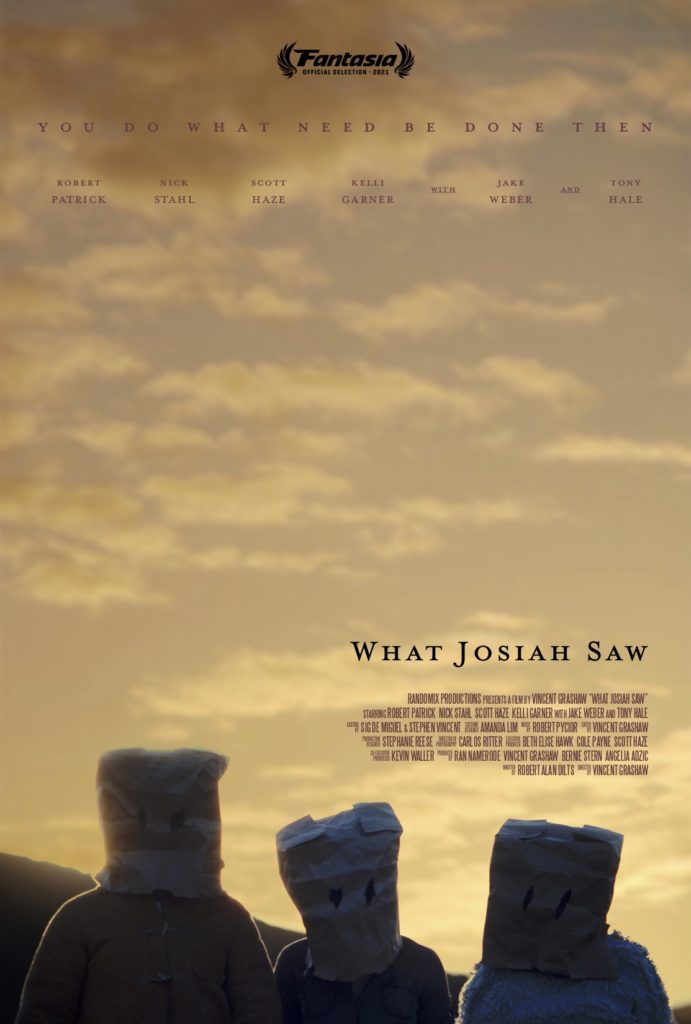
Starring Robert Patrick, Nick Stahl and Scott Haze
Directed by Vincent Grashaw
Written by Robert Alan Dilts
Randomix Productions
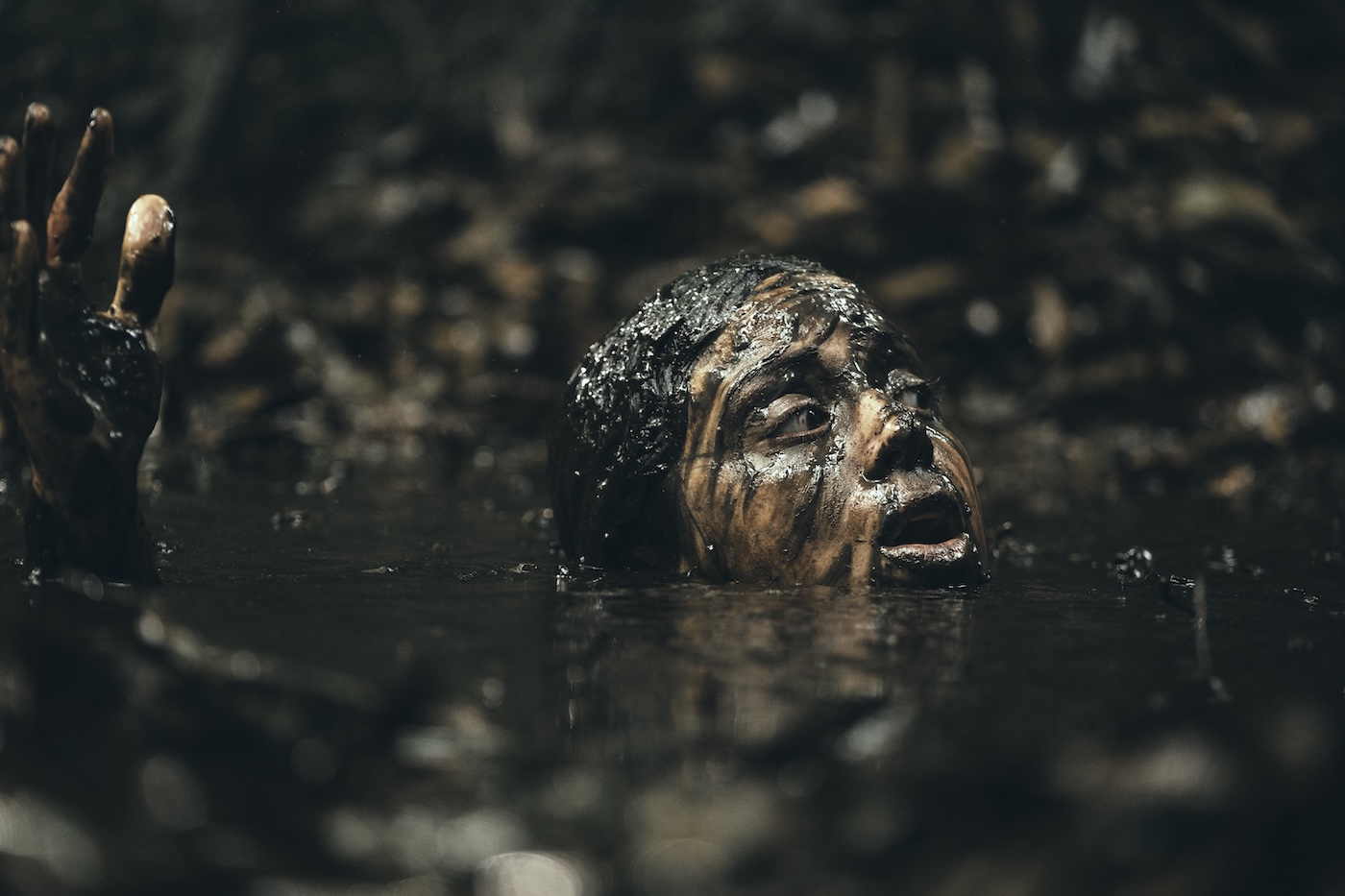
WHAT JOSIAH SAW came billed by the Fantasia International Film Festival, where it made its world premiere, as being in the tradition of last year’s Fantasia discovery THE DARK AND THE WICKED. There are indeed many thematic and aesthetic parallels between the two, though WHAT JOSIAH SAW eschews the narrative rigor of Bryan Bertino’s rural standout in favor of a more sprawling story.
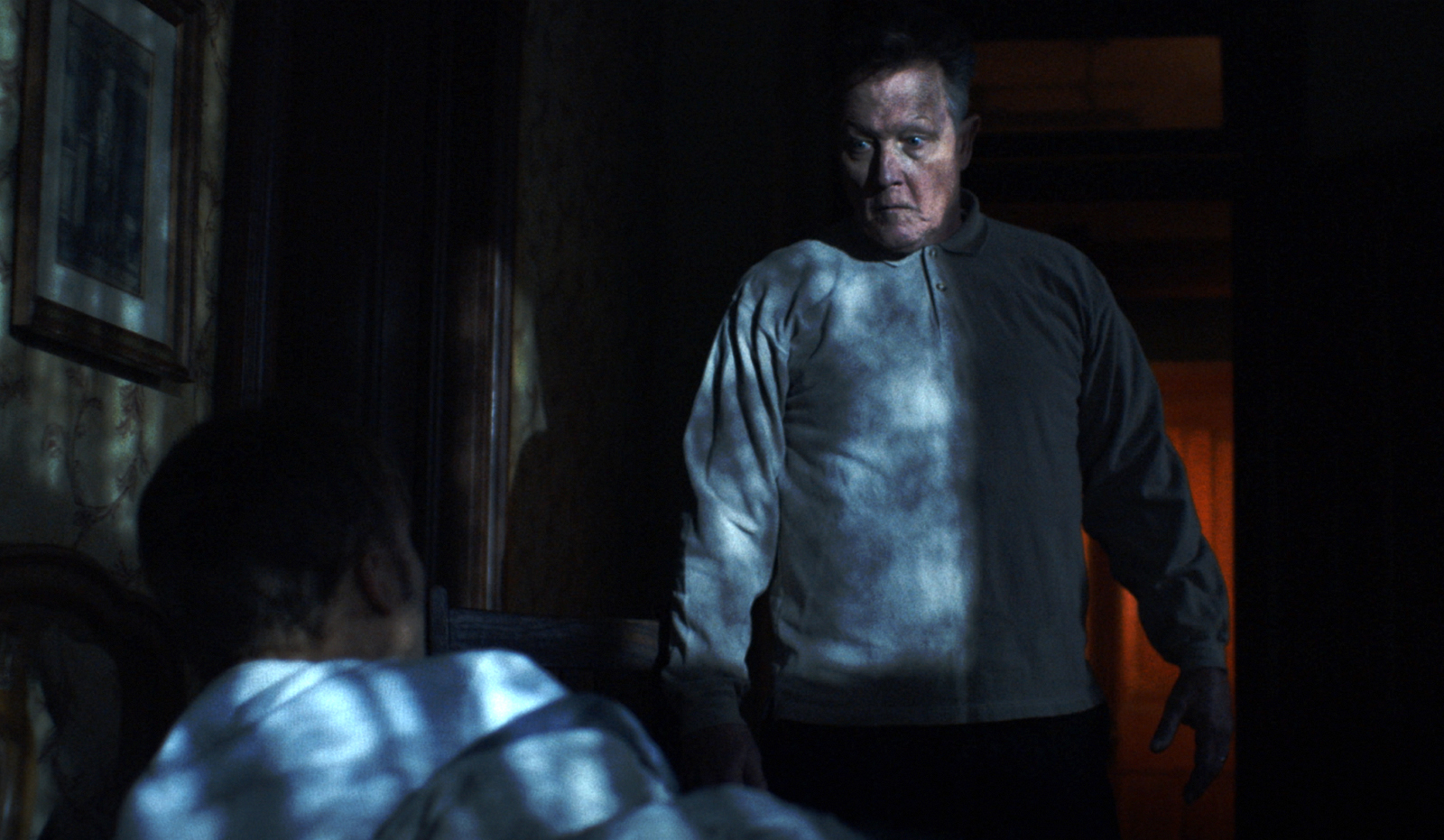
The basic premise is the same: Adult siblings are drawn back to their childhood home, where a dissolute parent is the locus of encroaching evil. Here, Robert Patrick has the title role of Josiah Graham, who lives with his grown, apparently mentally challenged son Thomas (Scott Haze) in a farmhouse that is filmed to appear too big for them (a neat visual gambit by director Vincent Grashaw and cinematographer Carlos Ritter). With bad posture and hair like a rat’s nest, Josiah takes pleasure in humiliating Thomas and mocks his religious convictions–until he begins having visions that his deceased wife is in hell, and that he and his son must drastically change their ways to save her.
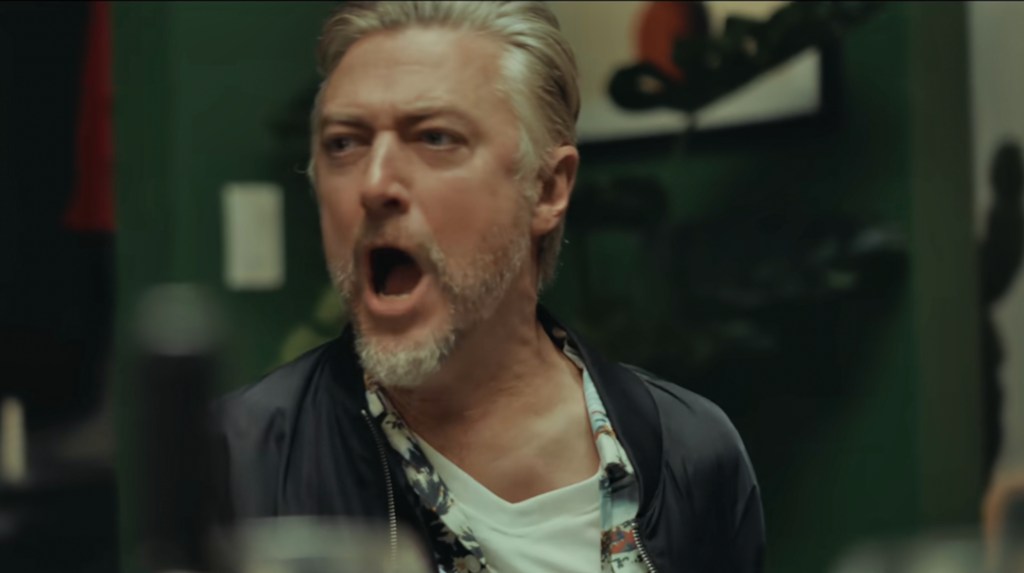
From the beginning, the ingredients of this study of horrific rustic dysfunction are familiar–stark landscapes, ominous music (by Robert Pycior), birds flying off phone lines–but Grashaw and Ritter make them work, building a brooding mood of impending doom. There are some nicely, naturalistically atmospheric touches, like the way light from passing cars reflects into a small-town office where it’s revealed that Devlin Oil (heh heh) wants to purchase the Grahams’ haunted land. We soon learn that it’s not just Josiah and Thomas who could use the money, as the film introduces us to Josiah’s other son Eli (Nick Stahl), living many miles away and in the middle of a heap of trouble. On parole for a statutory rape charge, he becomes the natural suspect in a little girl’s disappearance, and he’s deep in hock to local bar owner Boone (an atypically and effectively skeevy Jake Weber).
As Eli takes a job he can’t refuse from Boone to clear his debts, and that seems fated from the start to go very wrong, Robert Alan Dilts’ script shifts from religion-suffused horror to a dark crime drama in the Quentin Tarantino mode, with a couple of hints of the occult to tie it back to what’s up at the Graham homestead. The longest of the film’s chapter-titled sections, Eli’s story is a compelling and suspenseful mini-movie in its own right, and Stahl is terrific as this deeply conflicted young man who, even when neck-deep in criminality, tries to do the right thing. The next segment brings us to the suburban home of third sibling Mary (Kelli Garner), who has taken steps to insure her family’s troubled lineage doesn’t continue. She has now been having second thoughts–but also awful dreams once again tied back to her youth. Garner is quite good as well, though Mary’s portion of the narrative feels truncated in comparison to the time allowed her brothers.
Even so, WHAT JOSIAH SAW runs two full hours as the younger Grahams eventually reunite back at Josiah’s place to reckon with the dark deeds of their past. Though the overall narrative feels somewhat unbalanced, it’s consistently absorbing as it plunges deep into a Southern Gothic milieu (filmed on evocative Oklahoma locations) where you can’t escape the sins of your parents no matter how far you run. Grashaw and Dilts never make clear exactly when the events are taking place–it could be 20 years ago just as easily as today–which adds an extra bit of disorientation to a film that throws disturbing surprises at us right up through the final act. There’s one particular revelation toward the end that throws the entire story into new relief, and the conclusion is open to interpretation, ensuring that the unease generated by WHAT JOSIAH SAW lingers after the movie is over.