
By LINDY RYAN
Beneath the polished veneer of 1950s suburbia, something cracks. In THE MAD WIFE, Meagan Church peels back the wallpaper of domestic bliss to reveal the quiet horror simmering beneath. When housewife Lulu Mayfield begins to unravel after childbirth and the arrival of an enigmatic new neighbor, her tidy world slips into creeping madness. Church channels the claustrophobia of mid-century medicine and the suffocating myth of the “happy homemaker,” crafting a ghost story without a ghost, a tale haunted instead by the specter of control, conformity and what happens when a woman’s sanity is no longer her own.
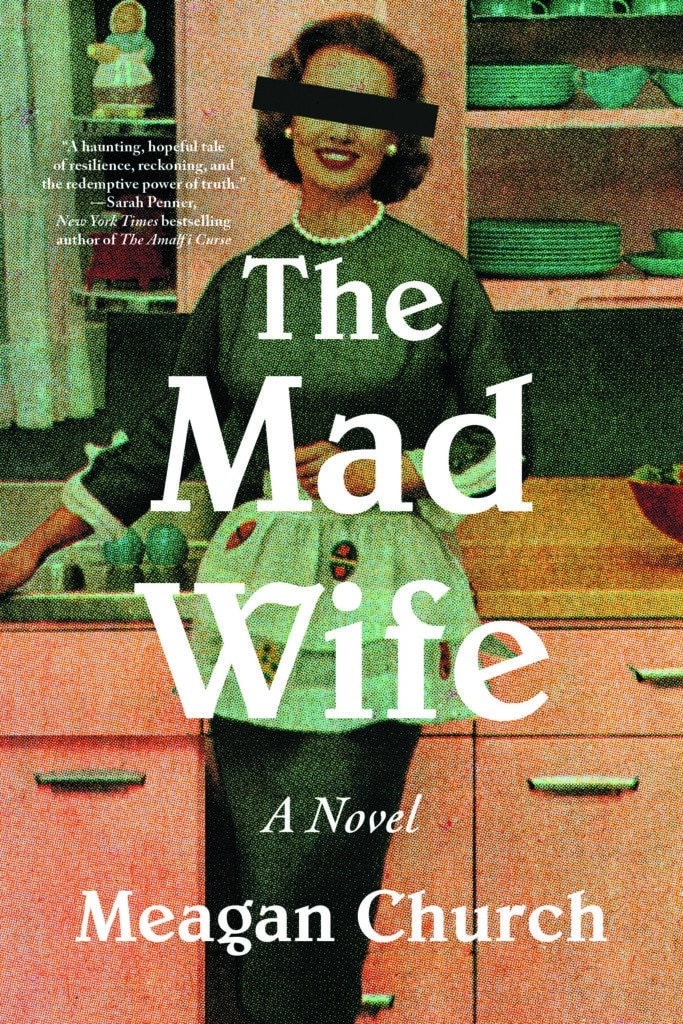
RUE MORGUE recently had the opportunity to sit down with CHURCH to chat about THE MAD WIFE, now available from Sourcebooks.
THE MAD WIFE explores the life of a seemingly perfect 1950s housewife, Lulu Mayfield. What inspired you to set the story in this era of domestic idealism, and why choose that moment for Lulu’s breakdown?
The 1950s have always fascinated me because of that glossy promise of perfection – the smiling housewife, the tidy home, the obedient children. But that veneer was often built on suppression, especially for women whose interior lives didn’t align with the ideal. I wanted to set Lulu’s story in that precise tension, the moment when the cracks begin to show.
It’s also a decade when medicine and mental health intersected in some truly chilling ways, with lobotomies, electroshock therapy and the rise of tranquilizers like Miltown. Women were routinely misdiagnosed with “hysteria,” a label used to quiet rather than understand them. Lulu’s unraveling begins after childbirth because that’s when so many women of that era were most vulnerable and most silenced. Her breakdown is both personal and historical.
You blur the lines between mental unraveling and potentially real horror. Is that the threat inside the house, inside Lulu’s mind or somewhere in between? How did you balance ambiguity and suspense in writing that tension?

Author Meagan Church
For me, THE MAD WIFE lives in the in-between. I wanted readers to question what’s real just as Lulu does because that uncertainty is its own form of horror. When you can’t trust your own mind, the walls around you can feel like they’re closing in. And the butterflies on the wallpaper appear to flutter.
To balance that ambiguity, I leaned on atmosphere more than action, quiet dread rather than overt terror. The lighting, the silence, the repetition of domestic life all become unsettling in their own way. Lulu’s perception of her environment changes as she unravels, so the horror grows not from jump scares, but from erosion of certainty, trust and self.
Motherhood, identity, and societal expectations loom large in THE MAD WIFE. How did you approach developing Lulu’s internal life and her external performance of “perfect wife” so that her collapse felt both inevitable and shocking?
I wanted Lulu to feel both familiar and frightening, to be the woman readers recognize – until suddenly she isn’t. The performance of perfection is exhausting, and for Lulu, she is haunted by who she’s supposed to be.
I spent a lot of time imagining what it would feel like to be a woman whose grief and pain are repeatedly dismissed as nerves. She’s performing wellness while deteriorating inside. So, when she begins to unravel, it’s both a release and a reckoning. The shocking part isn’t that she breaks, but that she held herself together for so long.
The new neighbor, Bitsy, becomes a catalyst for unraveling Lulu’s world. What does Bitsy represent to Lulu, and how did you construct her role to reflect both character and theme?
Bitsy is both mirror and myth. To the neighborhood, she’s the ideal woman who is graceful, beloved and perfectly put together. To Lulu, she’s everything she’s supposed to be and everything she can’t be. That tension becomes obsession.
But there’s something off about Bitsy’s perfection. She embodies the cost of compliance, the extreme end of what happens when a woman conforms too completely. For Lulu, she represents both temptation and terror, a warning wrapped in a smile.
THE MAD WIFE references classics such as The Bell Jar and The House, and reviewers mention the creeping dread behind suburban normalcy. How important was the horror element to you in this novel of domestic fiction with a terrifying twist?
I see THE MAD WIFE as a ghost story without a ghost. Every unsettling image or shadow of dread, and element of horror comes from what’s been buried. Lulu is haunted by misdiagnosis, grief, the impossible standards placed on her body and mind.
The horror element was organic to the story. Because the truth is, what women endured in the name of treatment during that era was horrific. The real terror lies in the idea that someone could take your agency, your sanity, and call it care.