By LEXI MOYER
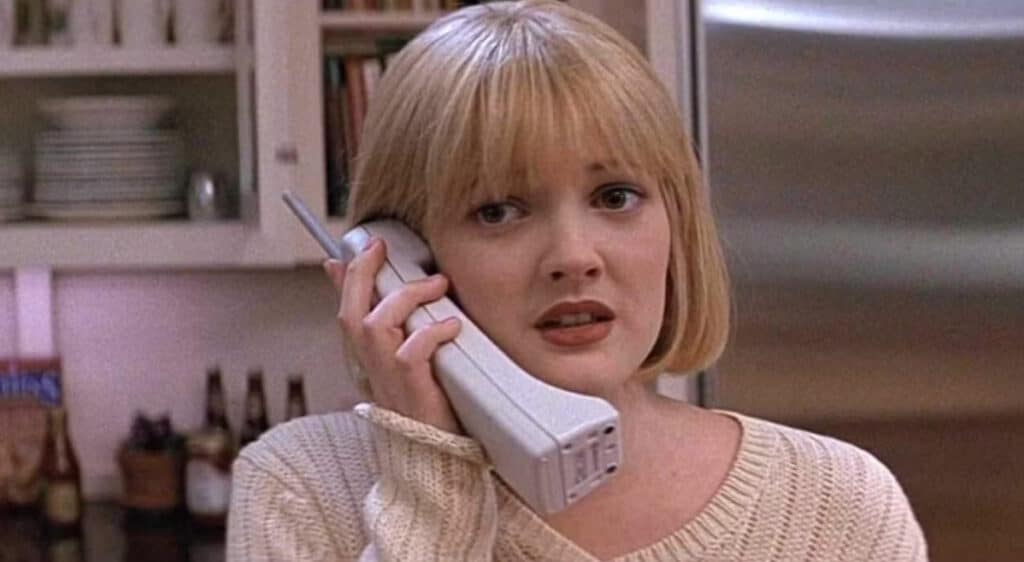
A packed theater of nearly 400 people settled into their seats. Somewhere in the audience, the writer, the director, and the editor waited. The lights in the auditorium dimmed, and the sound of a landline ringing cut through the air. On screen, a young woman answered the phone and began an innocent conversation with a stranger. The filmmakers sitting among the test audience knew that what played before them worked, but they didn’t yet know if anyone around them would be afraid. Then, the voice on the other end of the line made a simple statement: “I want to know who I’m looking at.” In that instant, the crowd gasped in unison. A smile crossed the face of Patrick Lussier. Years of instinct, timing, and precision had culminated in that single moment. Behind one of the most iconic openings in horror history was an editor who had spent years learning how fear works in the edit room.
In 1977, Star Wars changed the industry, the world, and, for Patrick Lussier, his life. Access to information about how George Lucas’s film was made provided an unprecedented look into the craft involved in making movies. For Lussier, this was the first time that he realized that filmmaking was a career people actually had and that there was more to movies than watching them as an audience member.
When he graduated from high school, he tried to get into a film school in Vancouver but was told that his ambitions were “too commercial” and that he would likely never amount to anything. Instead, Patrick enrolled at a local community college where he was able to use the film department’s gear. He and his peers took any gigs that were offered to them, always for minimal pay. Around this time, Vancouver was becoming a hub for television. He became an assistant editor on the HBO anthology show The Hitchhiker, where he got to work with Predator (1987) co-editor John Link. “I got to ask him a lot of questions about Predator and hear a lot of stories while it was happening. You learn a lot when you’re starting out, and you get to work with people like that,” Lussier recalls.
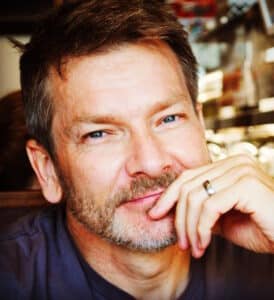
Patrick Lussier
In the edit room, he began to understand that storytelling often reveals itself in the assembly. His most pivotal collaboration would come a few years later when he landed a job editing the pilot for the 1992 series Nightmare Cafe, a short-lived television show that was created by Wes Craven. Before digital, editing meant working with video transfers of film loaded across a bank of Betacam tapes. When the system needed to queue up the next sequence, the machines would take several minutes to shuttle the tapes into place. During that time, Lussier would turn his chair around and talk to Wes Craven, who was supervising the editing process. He remembers asking Craven about his experiences making films like A Nightmare on Elm Street, but the friendship evolved far beyond Nightmare Cafe. “That wait time became one of the foundations of our relationship,” Lussier says.
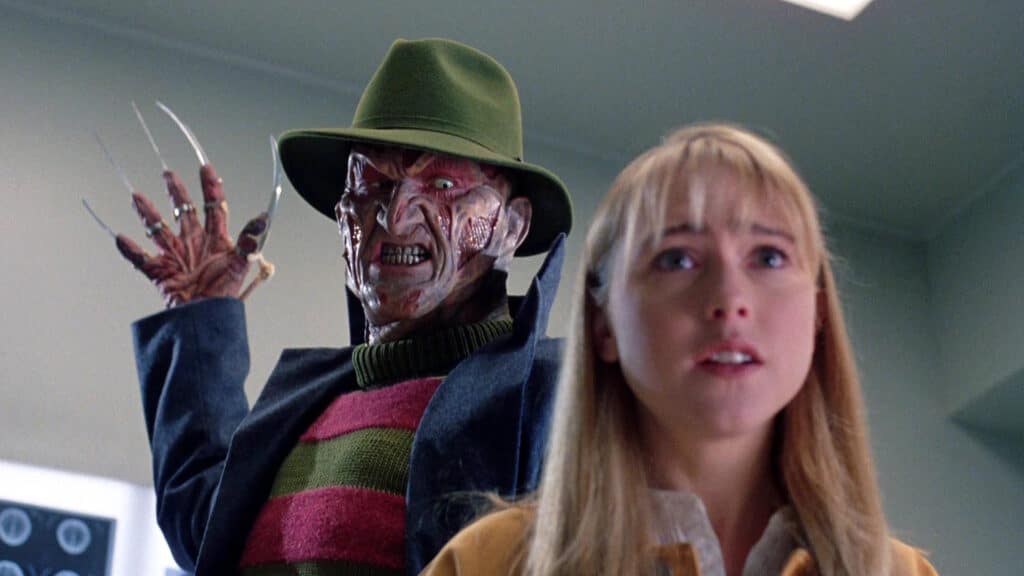
Those long pauses between cuts also became a kind of informal film school, where conversations about story and structure slowly shaped the instincts he would bring into the edit room. A year later, the two worked together on Wes Craven’s New Nightmare, which would be Lussier’s first experience working on a studio-scale movie. The relationship between New Line Cinema and Craven had become mildly hostile following the release of A Nightmare on Elm Street due to the studio taking ownership of the concept Craven had created. New Nightmare offered an entirely new narrative that the genre hadn’t seen before, one which executives tried to convince the filmmakers would never work. Lussier recalls the first time the studio was shown a cut of the film. Around 30 people went around the room offering their notes. “Wes was feeling more and more sort of down at the screening as the comments were coming,” he remembers.
The first comment given by the head of the studio was a disparaging one, and Patrick recalls that the rest of the room followed suit. It wasn’t until the final person, Mike DeLuca, gave his feedback that the perception of the film began to change. It had been agreed that the final cut of the film would be given either to Craven or to the studio, depending on how it scored at its test screening. If it tested under 72%, the studio would determine what the finished film would look like. If it tested above that number, the director would have total control over his movie. The film ultimately tested at 74%. The cut he and Craven assembled would be released.
By that point, Craven and Lussier had developed a creative shorthand. “We were very in sync with how he shot and how I could put it together,” Lussier explains. Working closely with Craven also sharpened his sense of rhythm, teaching him how suspense could be built, or broken, by the smallest editorial decisions. He would go on to edit Craven’s next feature, Vampire in Brooklyn. Though the film starring Eddie Murphy was not a commercial success, what followed it would change horror forever.
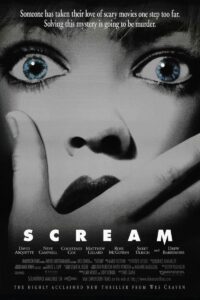 In 1996, Scream became a cultural touchstone. Kevin Williamson’s screenplay reinvented the slasher sub-genre and ushered in a new era of horror. Despite the unprecedented script and the star power of the cast, Lussier and Craven once again found themselves at odds with studio executives. “The first week of shooting was the Drew Barrymore sequence, and Dimension hated it. Hated the dailies.”
The two knew that Williamson’s script was strong, but Dimension Films could not grasp the intent of the raw footage – to such a degree that Lussier recalls the studio calling Craven “a TV journeyman and a hack.”
Lussier assembled the now iconic opening scene and sent it to Craven, who provided only one note regarding a music cue. The two conformed it on film and sent it to the executives in New York. Lussier shaped the sequence carefully until the scene revealed the full weight of Williamson’s script. In moments like that, he says editing often comes down to instinct. “You cut with your gut, not your head. It’s not a thinking thing, it’s a feeling thing. As such, you don’t quite know how you do it. It’s magic.”
After watching the edited sequence, the studio’s perspective shifted entirely. They finally saw what Craven and Lussier had known was there all along. Lussier regards the opening sequence of Scream as one of the most important moments of his life. “Those thirteen minutes gave me my whole career afterwards. It completely changed my life…”
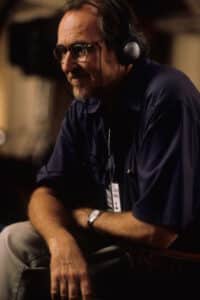
Wes Craven
Lussier would continue to work with Craven, serving as editor on Scream 2, Music of the Heart, Scream 3 and Red Eye. However, Lussier, Craven and Williamson would find themselves in another conflict with Dimension over the 2005 film Cursed. After another project fell through, he was asked to take over the editing of the werewolf film that reunited the creators of Scream. He knew the production had devolved into another sort of new nightmare for Craven, but he could not have anticipated how strenuous the project would become. “I was supposed to be on it for six weeks. That’s it. I was on it for nineteen months.”
Looking back at the ordeal the film became, Lussier remembers his long-time collaborator’s first impression of the script. “Wes read Cursed and said, ‘I’ve made this movie, it was called Vampire in Brooklyn. It didn’t work. I don’t want to do this,’ and they said that they would kill his other film that was in production, so he might as well do it anyway.”
Craven had an entire crew already employed, so he went ahead with the project to “keep everybody working.” Cursed was still in principal photography when Lussier came aboard, but only a week or two later, the studio demanded extensive rewrites that caused members of the main cast to drop out. The result was essentially a complete rewrite in the middle of production. Lussier says that he was able to pay his mortgage off with Cursed, though he and Craven were ultimately dissatisfied with the film.
Following Scream, Lussier worked alongside Guillermo del Toro on Mimic and cut Halloween H20: 20 Years Later, but his desire to take on a different role in filmmaking was becoming stronger. “I always wanted to direct, but I sort of kept that quiet for a long time and came in through editing.” Years spent assembling films in the edit room had given him a deep understanding of story and structure, and the idea of building a film from the beginning was becoming increasingly appealing.
Dimension Films asked Lussier to edit Scream 3, and he was able to leverage his talent to pursue directing. He explains that the studio essentially offered him a movie to direct as part of the deal – if he would return to edit the third film in the series, admitting that he would have directed Scream 3 before their offer.
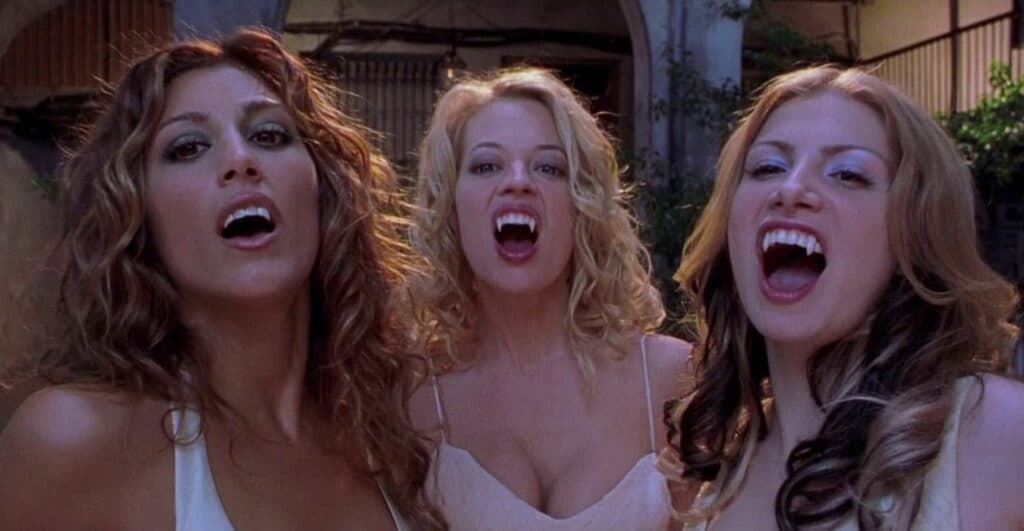
Lussier’s directorial debut came with Dracula 2000. “They had a title and a release date. They didn’t have anything else.” He and Joel Soisson quickly put together a story that worked with the film’s title. “We had a pretty good script in April. We destroyed it by June when we started, and then tried to gain it back. That was an interesting foray,” Lussier says. Dracula 2000 garnered two sequels, also directed by Lussier, Dracula II: Ascension and Dracula III: Legacy.
Patrick Lussier’s next major step behind the camera came almost by accident. At the time, he had been brought in to recut The Eye and oversee reshoots when the production ran into trouble, a job that ultimately placed him in exactly the right place at the right time. “The day I was showing the cut to the producers,” he recalls, “was the day they closed the deal for the remake of My Bloody Valentine. I walked into the room, and they said, ‘We just closed this deal. Do you want to direct this movie?’ I told them absolutely.” The film also marked the beginning of Lussier’s long creative partnership with writer Todd Farmer, whom he had first met years earlier while recutting the troubled Darkness Falls.
The opportunity arrived suddenly, and the scale of the challenge grew just as quickly. Within weeks, the studio added another wrinkle, suggesting that the film should be shot in 3D. Rather than treating the technology as a gimmick, Lussier embraced the challenge, designing the film’s scares and kills around the immersive format. The stereoscopic camera rigs were massive, so large that he joked shooting with them felt like “shooting with a refrigerator.”
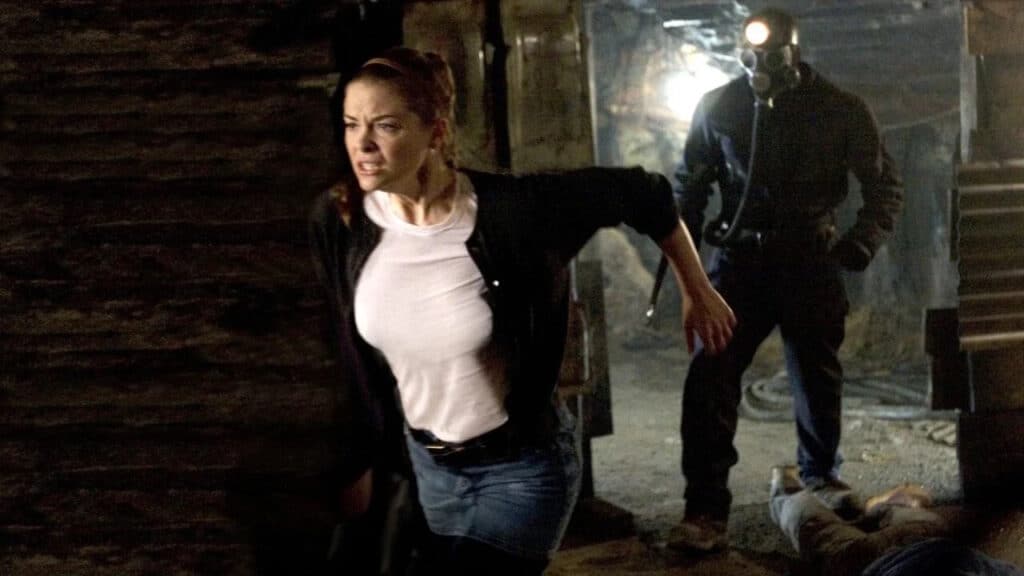
The production spent nearly two weeks filming deep underground in a real mine, maneuvering the 3D equipment through tight tunnels and uneven terrain. The decision gave the film’s claustrophobic setting a tangible sense of scale and depth, turning the legendary mining town of Valentine Bluffs into a space the audience could almost physically inhabit. The result was one of the most visually distinctive horror remakes of the late 2000s and a film that demonstrated how 3D could be used not simply as spectacle but as a tool for building tension.
Lussier and Farmer collaborated on numerous projects afterward, including an ambitious but ultimately unrealized Halloween film that would have followed Rob Zombie’s entries in the franchise. “Todd and I wrote the whole script,” Lussier explains, recalling that the production was only weeks away from filming before the project collapsed. In their story, the mask that Michael Myers dons fuses into his face, erasing the man beneath it so that all that remains is The Shape. Tom Atkins was set to return, and the rights to the Silver Shamrock theme song were procured, but nothing ever came of their concept.
Instead, their collaboration continued with the high-octane film Drive Angry, starring Nicolas Cage. The production faced its own hurdles. At one point, the visual effects team was pulled away from the film to work on another project, forcing the crew to rethink how several sequences would be completed. Lussier and Farmer co-wrote the film. However, writing has never been Lussier’s passion. “I’ve always hated writing, but I’ve always written. Writing’s the hardest of all of it because you have a lot less to work with, and you have everything to work with. It’s the finite and the infinite all rolled into one.”
Although writing is his least favorite aspect of filmmaking, he equates it to editing in that he might not know where he is going until suddenly he finds himself in the middle of it. Though Lussier first made his mark shaping horror in the edit room, his career behind the camera has continued to evolve. Lussier returned to the slasher genre with Trick, which reunited him with Scream alumnus Jamie Kennedy, and most recently, he directed the thriller Play Dead.
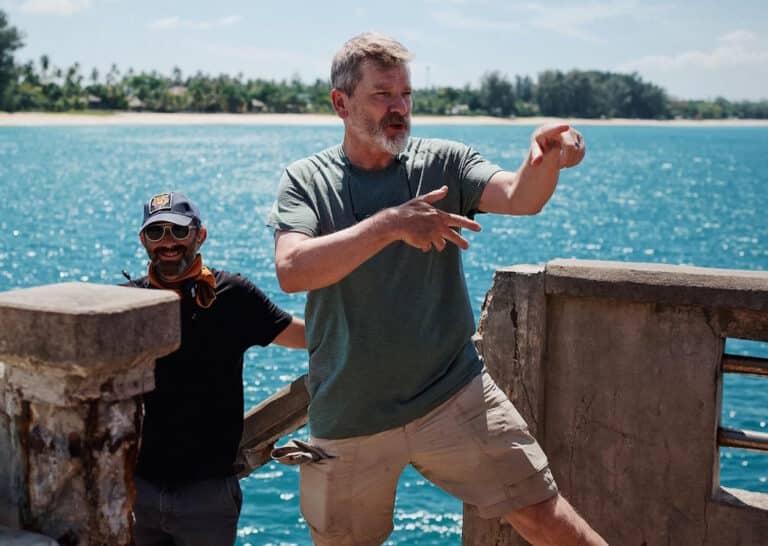
Patrick Lussier at work.
Now, Lussier has turned his attention to the depths of the ocean with the next installment in the 47 Meters Down series. Though an official release date has not yet been announced, Lussier speaks about the film with pride. “I showed the director’s cut to Johannes [Roberts],” Lussier says. “His response was, well, annoyingly, ‘this is the best of the three.’ They were sort of shocked at how huge it feels.”
Moments like that are proof that the instincts that guided him in the edit room still inform his work. For Patrick Lussier, the process of making films has never stopped resembling the craft he first fell in love with as a young editor. Whether he is creating tension in the edit room or building it from the ground up as a director, he is still working toward the same moment when a theater full of strangers gasps together, right at the moment he designed it to happen.