
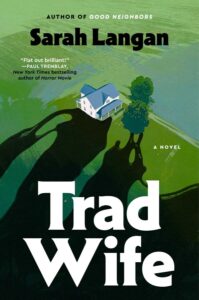
When journalist Jenny Kaplan investigates the idyllic Black Swan Farm and its charismatic tradwife matriarch, Mia Wright, what begins as a story about viral fame spirals into a nightmare of performance, identity, and psychological dread. In TRAD WIFE, Sarah Langan blends folk horror, social satire, and the terrors of modern visibility as she transforms influencer culture, curated femininity, and online obsession into something deeply uncanny, examining the dangerous cost of becoming exactly what the internet wants you to be.
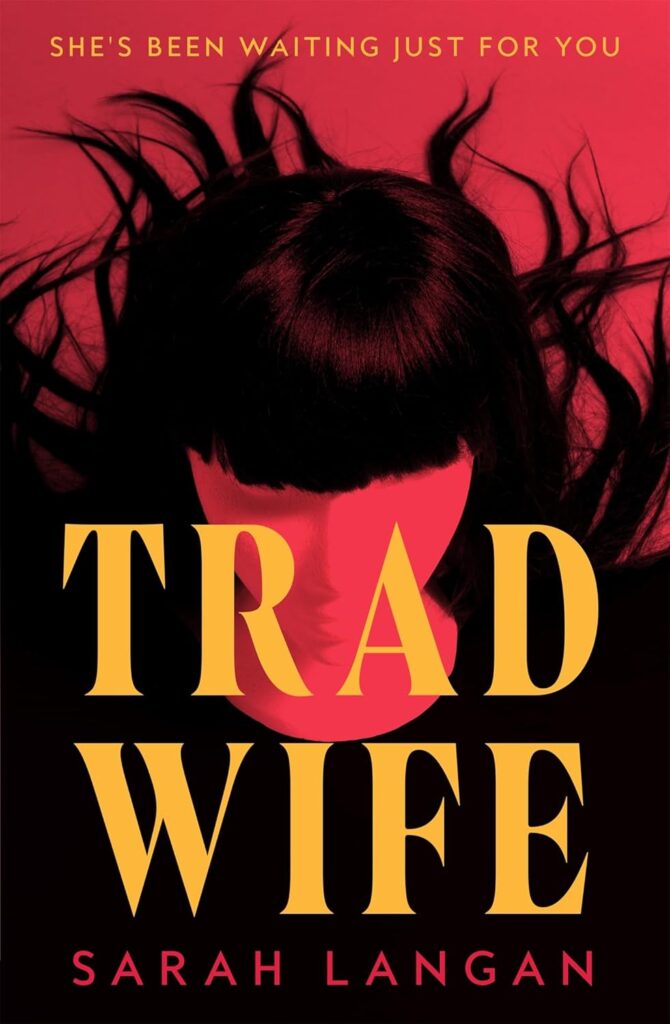
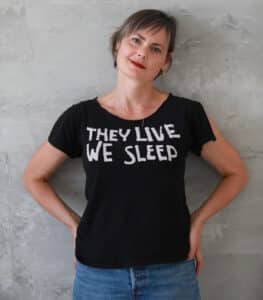
RUE MORGUE recently had the opportunity to sit down with Sarah Langan to chat about TRAD WIFE, coming September 2026 from Atria Books.
TRAD WIFE feels deeply horror-rooted from the start – not just because of what happens at Black Swan Farm, but because the novel understands how terrifying performance can become, the smiling domesticity, the curated femininity, the pressure to be consumable at all times. How did that discomfort drive the concept for the book?
I’ve been working on this kind of story for a long time, through a lot of iterations – stories and novellas and even a screenplay. With this novel, the concept of a tradwife seemed like the perfect vehicle.
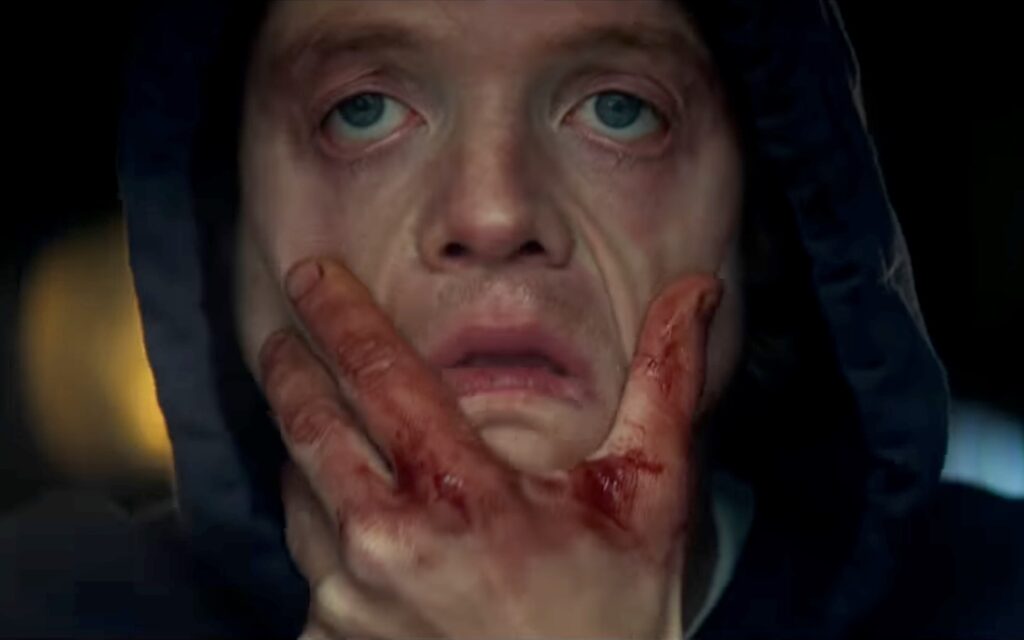
I’m reminded of the first Smile movie; it’s resonant in ways the second, more spectacular Smile film is not, because it’s rooted in something deeply felt and true. We smile when we’re sad. We smile when we pretend love. We smile when we’re terrified, and the nighttime versions of ourselves turn against us.
The camera has a power that I don’t think we’ve evaluated as a culture. We post ourselves, and because the big institutions we once depended on are falling apart, we’ve by necessity become brands. The impetus is to show particular, marketable aspects of our lives – the things most likely to get a reaction. But humans are not static. We’re complicated, infinitely faceted. It’s a reduction. And the thing about reductions? We tend to believe them. They make us small. They can be a trap. They change us for the worse.
The opening “magic hour” sequence has this eerie folk-horror quality: an entire town witnessing something terrible and collectively deciding not to interfere. And that’s something you tap into throughout the book, from the town’s past and the Sylvan Six, to Mia Wright and even her daughter, Victoria. What fascinates you about communal horror and shared complicity?
I just read this story in The New Yorker about a child trafficked in Houston, who was a slave to the family that housed her for sixteen years. What’s appalling is that the neighbors knew what was happening but couldn’t believe it. Only one of the neighbors reported the story to child services, but nothing was done.
Complicity is a very bad thing, but it’s also often a convenience. The world is heating up. What are we supposed to do about it? Stop driving? Refuse AI, even though it’s embedded into everything? At what point in this fight are we Don Quixote tilting at windmills?
With the story of the trafficked child, practicalities held people back from helping. She had no passport and might have been deported. The family holding her was important people, likely to punish her in the U.S., and back home, where she got sent. Eventually, the girl, who’d taught herself to read by stealing Hooked on Phonics from one of the children she nannied, reached out to an estranged family friend, who found her a lawyer. The story is relatively happy in that the parents who’d done this went to jail, and the girl is free. But it took sixteen years. Those scars she carries are deep, and maybe unnecessary. It’s hard to recognize when to act in the moment. We all want to believe we’re heroes. But in reality, few people can manage it.
The way the town depends on Mia’s business makes them accept Black Swan Farm despite their misgivings. It’s inconvenient to see the ugly underside.
What I was also trying to address in TRAD WIFE was the idea of survival. If winning means throwing someone else under the bus, are you a monster for doing it?
One thing I really appreciated is that TRAD WIFE never reduces tradwife culture to easy satire. There’s genuine loneliness and longing underneath the aesthetic performance, and the story threads a rich discourse through the book. Was it important to you that readers understand why these spaces become emotionally seductive?
My mom grew up on a farm. She was very happy to leave it. Farmers work hard.
The tradwife reality sounds like hard work, too. The public mask is one thing, but raising and homeschooling kids? Whoa! People assume they have nannies and cleaning people, and they probably do. But managing the nannies, cleaning people, the farm, their children, their husbands and their own bodies is also a lot of work. And I think not much happiness comes back.
I don’t think people are drawn to tradwife videos because they seem happy. They’re drawn to them because they seem so universally loved in ways we all want to be loved. They represent home, a place that welcomes everyone, and where everyone is safe.
In the story, I wanted to introduce Mia, the tradwife, to Jenny, the single, hot-mess thirty-something. It’s logical to assume they’ll hate each other. Instead, they’re fascinated. Jenny envies Mia’s family and home. Mia envies Jenny’s freedom. They’ve both been forced into boxes, the trajectory of their lives externally determined. They begin to understand that about each other, too.
Jenny’s relationship with writing almost reads like possession. Once she finally finds her voice, it changes the trajectory of her entire life – for better and worse. Were you interested in creative ambition as its own kind of haunting?
I think I probably just wrote that naturally, not as an exploration, but as a reflection. Writing is all I’ve ever wanted to do, and that feeling when you’re in the zone is so good. But it can also be haunting. In my own writing, I sometimes excavate things I don’t consciously understand. It can be startling. Like little elves are building shoes inside my head.
I also wanted to acknowledge the changing industry. Jenny’s a journalist. She wanted to win the next Pulitzer Prize in reporting. But those days of journalism are mostly over, except for the few elite. I worry about the future of fiction as well. It used to bother me that I’d never be as famous as Stephen King, until I realized that no one from my generation will be that famous. It’s not the same industry that it once was. A lot of industries aren’t what they used to be, and that’s a lot of the impetus of this story, the idea of things falling apart, the people remaining fighting over scraps while the corporations thrive.
A lot of the horror in TRAD WIFE comes from systems rather than individual monsters: publishing, influencer culture, online radicalization, gender expectations. The novel seems very aware of how modern life turns identity into performance. Do you consciously approach horror through systems like that?
 I tend to think in terms of systems. I didn’t want to write a hit piece against tradwives. I don’t know their circumstances. It is entirely possible that some of them are real. It also feels circular: women judge women judge women judge women. It’s assumed they don’t really love their children. It’s assumed they lack character. I hate everything about that.
There are larger factors at play in this tradwife movement. The platforms are getting rich by pitting us against each other, leaving us with so very little. It feels like a synecdoche for something much bigger throughout the country. We’re fighting each other. The big guys are walking away with bags of money. The world gets worse, democracy gets subverted, and everything gets ominously quiet.
TRAD WIFE taps into the mechanics of viral culture and how quickly the internet turns real people into spectacle, discourse, or targets. Jenny becomes visible almost overnight, and the backlash arrives just as fast, including from a group that call themselves “The Brotherhood.” Mia’s experience has its own significance. Were you interested in social media virality as a kind of modern horror engine? And is there a deeper message you want readers to take away?
At the start of the story, Jenny Kaplan wants to write stories that matter, about systems, politics, large corporations. But she’s stymied by her boss and the Powers That Be, who’d prefer she tell frivolous stories that are cheap to produce. So what does she do? She writes a confessional essay that goes viral. She reveals herself, even though it’s not her instinct to do so, because it’s the only forward path in her career. She makes her magazine a lot of money, but when the backlash comes, no one protects her. She’s dangling on her own, in physical danger that no one takes seriously. In fact, they double down and ask her to interview Mia Wright, knowing her profile will only get more negative attention, and telling her the lie that she can only survive by getting too important to tear down. She’s so naïve that she believes it.
Then there’s Mia. She’s stuck, so she sells a tradwife narrative to try to get out of the box she’s living inside. Because it’s an acceptable narrative to the Powers That Be, they raise her up and give her a little power. Is she wrong to do this? Or is she taking what she can by the only means at her disposal?
Probably, more than social media, I’m writing about narrative itself. It feels very much lately, that telling truly emotional stories that get to a reader, really resonate with them because they’re honest, aren’t wanted. Hollywood is driving the boat, and Hollywood likes all the scary edges sanded smooth. This trickles down to what sells and is promoted in stores, and how readers engage with art as a consumable instead of something that ought to be larger than its individual parts. That bothers me. I’m not saying I want to go Lars Von Trier, here, but I don’t understand the point of doing this at all, if I’m not getting into people’s hearts and heads.