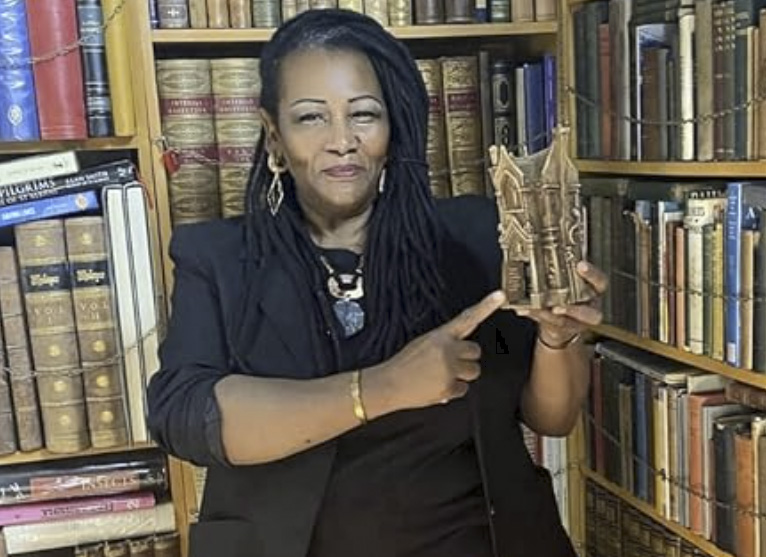


Award-winning writer Kelly McWilliams, author of Agnes At the End of the World and Mirror Girls, is back with an all-new YA horror novel exploring her signature themes of white passing, American history and the uncanny.
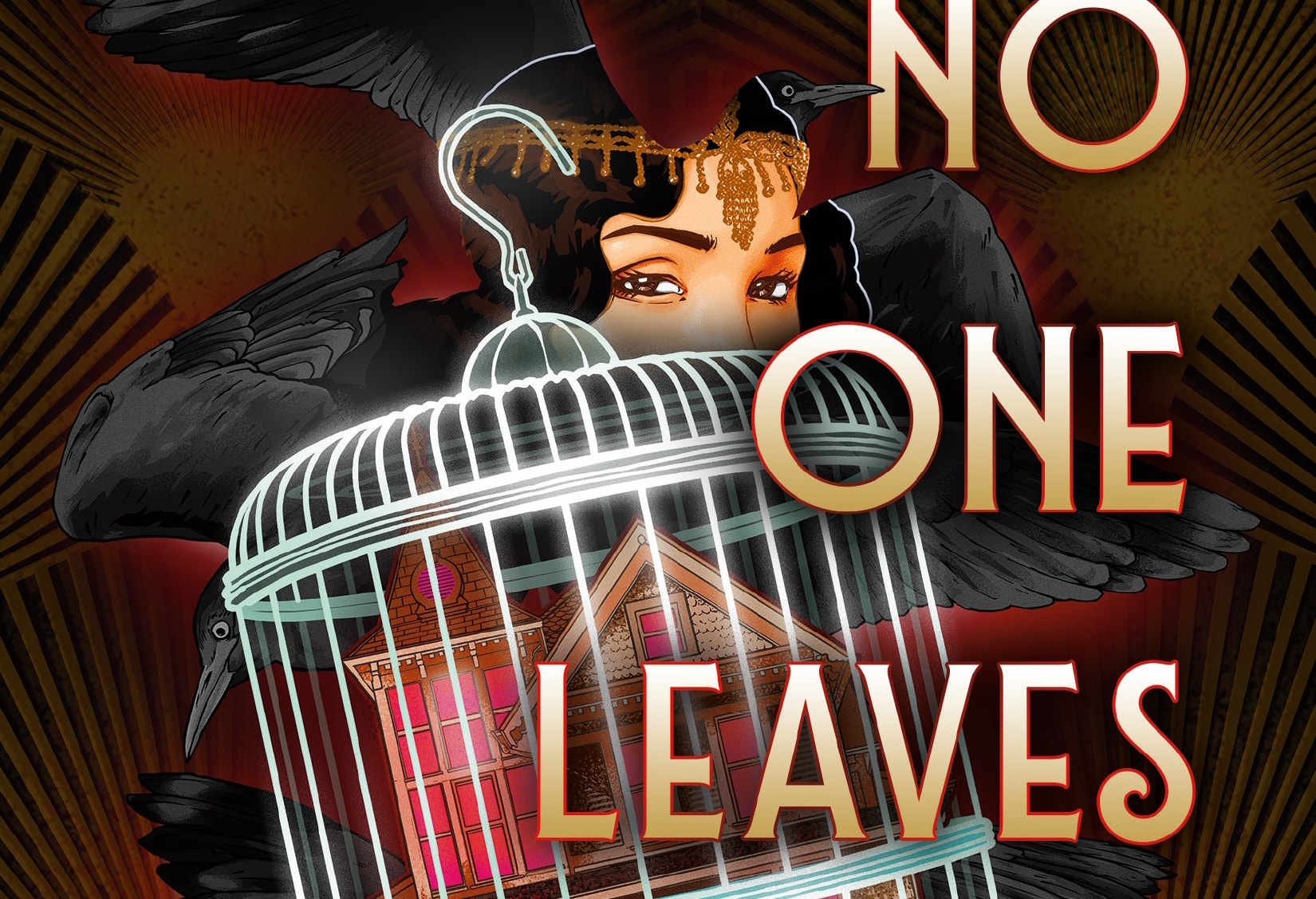
Set in 1921, NO ONE LEAVES THE MANOR (now available from Little, Brown Books for Young Readers) finds four young women – a white-passing Black con artist and three white debutantes — guests at Greystone Manor, the stately home of oil heiress Caroline Kane. However, Kane’s motives are far from pure. The purpose of the gathering is competition. The prize? Kane’s vast fortune. And only one will be judged worthy. However, there is something even more sinister hiding behind Greystone’s walls.
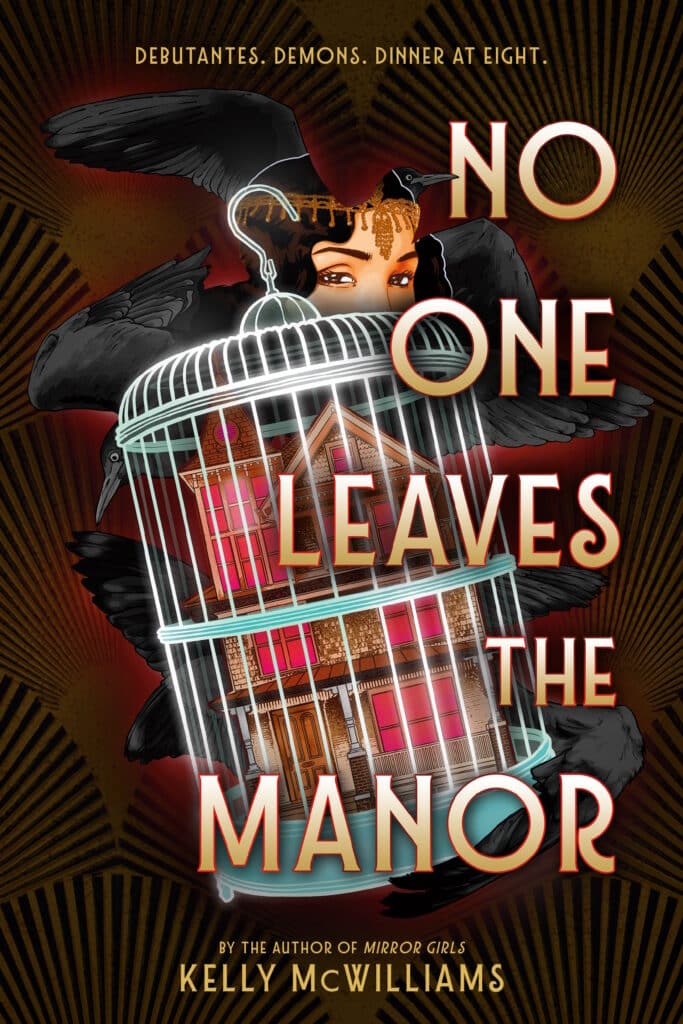
Read an exclusive excerpt from NO ONE LEAVES THE MANOR below:
Chester Williams has never seen Jim Crow’s South, but driving north from Boston into the woods of New Hampshire, he imagines it’s not so different from the rural towns he’s passing now—choked with trees and white farmers, not a brother or sister in sight. He keeps the speedometer low, careful to abide by the advice in The Negro Motorist’s Guidebook:
Drivers be wary in the Bretton Woods. Sundown towns scattered throughout!!
If one must stop in northern New Hampshire, seek out the small Jewish district.
TALIA’S DINETTE offers a warm welcome and a delicious pastrami on rye.
“How much farther?” Dor calls from the back. “I’ve got a cramp, and I need to pee.”
“We’re thirty miles out. Can’t you hold it?”
From a sagging petrol station, white men in overalls eye the Royce as if it’s a spaceship. Chester tightens his grip on the wheel. They can see it’s a Negro driving—but maybe they’ll let it go. Surely, they’ve seen plenty of chauffeurs hauling rich folks up to the mountain.
“I could hop out,” Dor says. “That station’s gotta have a bathroom. The way I’m dressed—”
“No,” Chester says sharply. “Nobody’s getting out of this car until we reach the White Mountains.”
Dor shuts her mouth. She remembers the Red Summer of 1919—how the headlines stacked with names. Lynchings didn’t stop at the Mason-Dixon line. They reached into Northern towns, too. Wooded places, small enough to vanish in.
“How’d Mama get here?” Dor asks softly.
The forest crowds the road, shadows falling like a curtain behind them.
Chester loosens his bow tie. “Mama took the train. Someone must’ve picked her up from the station.”
“Oh.” Dor strokes Cleopatra, whom she insisted on bringing along.
“But, Dor.” Chester eyes her in the rearview. “There’s no way to know for sure Mama ever made it to the manor. She was headed for Greystone—”
“To sing at a fancy dinner.”
“Right. And all we know is, she never came back.”
“She would’ve come home, if she could have,” Dor murmurs. “She loved us.”
“Yes.” Chester nods. “That much I know.”
“And I know she made it to Greystone,” Dor says firmly.
“I can feel it. Whatever happened to her—it happened there.”
Liza’s tires hug a winding road. The Royce is swiftly gaining altitude, chewing up gravel and kicking up leaves. Each curve is sharper than the last, snaking into a dead-white sky.
WELCOME TO THE WHITE MOUNTAINS, a sign blares. HOME OF AMERICA’S GRAND HOTELS!
The climb grows perilous, the narrow mountain pass twisting through teeth of granite and green. He’s grateful for the Royce’s horsepower as they surge upward, nose to the dense canopy like a black torpedo. The engine groans, fighting gravity. Between branches, Chester catches his first glimpse of the White Mountains, peaks snowcapped even in summer, ridgelines like the spines of sleeping giants—and his heart fills with cold, spooled dread.
He doesn’t like those mountains. He doesn’t like this road. A sour taste creeps into his mouth, like milk gone bad.
“You’re not still afraid of heights, are you, Chester?” Dor teases. “Because if you are—don’t look down.”
A flimsy fence separates them from a sheer granite drop. Pines shiver below, small and black as burnt matchsticks. Sweat gathers under his cap, stinging his eyes.
“A little more speed, sweet girl,” he whispers to the car. “Up and over, that’s the way.”
Hands aching, he wrestles the Royce uphill.
Dor rolls her window all the way down.
Throws her head into the wind and yells, “Hot dog!”
Liza’s tires slide—Chester releases the wheel for a breath, and she rights herself.
Sure you can handle a Royce, boy? the white car salesman asked, giving him the once-over in the leasing garage. They’re built like battleships. They don’t forgive mistakes.
Thank you, sir, Chester said, ever so polite to the man standing between him and the rest of his life. I think she’ll handle just fine.
At last, the forest thins—and the road levels.
They’ve made it to the other side of the Bretton Woods, and it’s the most hideously green place Chester’s ever seen. The grass looks combed. Even the trees seem arranged—designed to impress the right kind of people.
His jaw tightens, spastic. A warning hums in his bones.
SPEED LIMIT 35 MPH
AFTER SUNDOWN
NO NEGROES
NO JEWS
“Friendly,” Dor mutters.
Chester, thinking of Mama, says nothing at all.
—
It’s evening when they finally reach the dirt road that promises, according to Dor’s invitation, to lead them to Greystone Manor.
Chester’s fading. Dor’s napping. He wants coffee badly enough to consider sending her into one of the grand hotels they’ve passed. Nobody around here would serve him—not even with his chauffeur’s cap on. But she could get whatever she wants with a smile.
In the end, he lets her sleep.
“This is our last job,” he’d reminded her before they left Boston. “After this, we’re going straight as arrows.”
She’d promised they would, they would go straight—just as soon as they found out what happened to Mama.
The gem-cut ticker in the Royce’s dash reads well past seven. Sunset’s close. His stomach flips. He’s pushing forty miles an hour. Forty-five. And it feels good. Driving feels good because it’s freeing, and freedom is the one thing America always promises but carefully withholds, at least from Negroes like him.
Still, Chester can dream.
He dreams of heading west to California. Away from icy New England, sniffily segregated ever since the slave ships docked. He dreams of chauffeuring stars and novelists, of driving to parties, premieres, vacations. He’ll earn enough to buy a little house—maybe find a wife. Then, some sun-drenched morning, living for his steady job and steadier family, Chester’s worries will melt away—and he’ll finally taste it. What it’s like to be free.
A siren screams.
A Packard patrol car draws abreast, lights flickering.
Dor sits up. “Are we getting pulled over?”
“Yeah.” Chester slows. “I’ll handle it. Keep quiet.”
“You work for me, remember? Maybe I should do the talking.”
“I know you’re feeling real white right now, Dor, but you’re still my baby sis. Let me handle it.”
She settles back, stroking Cleo. Gravel skitters as Chester parks, keeping his hands glued to the wheel.
“You.” The cop raps the window. “Roll this down.”
Chester does, slow and steady, already wearing his helpful dullard’s smile: friendly, blunt, and none too bright. “Evening, officer.”
The air’s thick with sap and heat, the reek of mulch and pine.
“You were speeding, boy. Forty-five in a thirty-five zone. Let me see your papers.”
“I’ll just reach into the glove compartment, sir.”
The cop glances at Dor. Seeing how she’s dressed, he loosens up. “Yeah, all right. You a livery boy?”
Chester hands over the paperwork—false name and all. Chester K. Johnson. His real record wouldn’t pass.
“I’m taking Miss Williams up the mountain.”
“Where from?”
“Boston.”
Blue eyes flick up. “Where you planning to stay tonight?”
AFTER SUNDOWN, Chester remembers. NO NEGROES NO JEWS.
“With me,” Dor pipes up.
Chester stifles a groan.
“I’m sure there’s a room at the manor for the help.” Dor lays it on thick. “And I am sorry he was speeding. I told him to step on it, and Chester, the old sweetheart, always indulges me. Do you know, he’s been my driver ever since I was a little girl?”
Chester catches her eye in the rearview mirror. Don’t push it, Dor.
“That so?” The cop leans in, eyeing them both…and the fear in Chester’s heart is a symphonic string, quivering.
So far, no one’s ever made Dor for a Negro. Her golden skin and auburn hair, so loosely curled—it’s always been enough. But that’s just luck. And luck runs out.
Especially when you run your mouth, the way Dor just did. The cop narrows his eyes, and Chester’s sure they’re about to be made.
“Your boy should know better,” the trooper says, talking to Dor as if Chester’s not even there. “There’s a fine for speeding. Which hotel’s he taking you to?”
“Oh, we’re not going to a hotel.” Dor twinkles her fingers.
“We’re going to Greystone Manor.”
The cop stills—then takes a slow, shuffling step back.
“You got an invitation?”
“Course I do.” Dor cranks her window lower, brandishing Mrs. Kane’s summons. “It’s right here, in black and white.”
The cop doesn’t take it. Instead, as if the paper’s venomous, he takes another, larger step back.
“‘To Dorothea Williams,’” she reads aloud. “‘Mrs. Caroline Reginald Kane cordially invites you to spend a summer weekend at Greystone Manor—’”
“Enough,” the cop cuts in. “That’s enough, miss. Move along.”
“But what about the fine?” Chester hears himself ask. “Will you mail a letter to Greystone, or—”
“Stop.” The cop holds up a reddish palm. “You don’t have to keep saying its name like that. There’s no fine, boy. Just move along.”
Then the policeman scurries—actually scurries!—back to his black-jawed car.
Dor laughs—but sweat pools under Chester’s collar, trickling down his back in slow, stinging drips.
That cop was a predator, foaming at the mouth to pull over Chester, even with a rich white girl in back.
Then Dor said the name.
Greystone Manor.
And the predator backed down.
It doesn’t smell right.
The last time Chester ever saw Mama, she was pinning a hat to her hair before she caught the train to Mountain Ville—a dangerous enough journey for a woman of her complexion. But
all day she washed dishes for the Catfish Club, dreaming of a better life. And when she received an invitation to sing at Greystone, she’d been so excited she could hardly speak.
“Chester, look,” she breathed. “It’s what I’ve prayed for. Will you watch Dorothea while I’m gone? I’ll only be a couple days. But if you think I should stay, baby, I will.”
What she meant was: I’ll stay for you.
Chester looked at his exhausted, beaming mother, and said: “Go, Mama. You’ll be the best singer they ever had. And don’t worry about baby sis. I’ll watch her. It’ll be a cinch.”
I killed my mother, Chester sometimes thinks. She died because of me.
Because he said: “Go.”
The cop’s Packard vanishes into the trees, leaving the road empty once more.
“Did that seem weird to you?” Chester asks.
Dor fusses over Cleo, hoisting her up to kiss her little pink nose. “Did what seem weird?”
“The way that cop ran off. Like demons were chasing him.”
“Maybe he’s just a fraidy-cat. Unlike you, Cleo,” she coos. “Unlike you.”
“He was mean at first. Then you mentioned the manor— when I told you to keep quiet, by the way”—she chuffs—“and suddenly, he couldn’t get away fast enough.”
Dor’s silent.
If she asks me to take her home, I’m taking her home, Chester promises himself. I’ll turn this car around and never set foot in the state of New Hampshire again.
“I figure it’s Mrs. Kane.” She settles Cleo back into her lap.
“The old woman probably pays that cop’s salary, one way or another, and she’s crazy as they come. Why else would she leave her fortune to a stranger?”
“We can still go home,” Chester offers. “Beat the sunset.”
Dor tilts her head. “Only if you speed. Right?”
Reluctantly, he nods. They’ll only make it out of the Bretton Woods in time if he hits the gas and doesn’t let up. He thinks of the filling station. The white men in overalls.
Dread squeezes the cage of his ribs.
“Don’t worry.” Dor pats his shoulder. “I know how to handle myself, and we’re not even here to steal. I’m not afraid of the Big Bad House.” She grins. “Are you?”
Sluggishly, as if in a dream, Chester remembers the funny thing the cop said, right before he hightailed it out of there.
You don’t have to keep saying its name like that.
Is what he said.
And isn’t that strange, calling the manor an it and treating its name like a taboo?
Grimly, Chester shifts the car into gear. The hair on his neck stands straight. His ears prick to listen. He’s more than afraid now. He’s wary.
Of the White Mountains, The Negro Motorist’s Guidebook said it best.
Beware.