
BY JULIAN SINGLETON
In promoting 2016’s Sadako vs. Kayako, director Kôji Shiraishi declared his intent to “destroy J-horror entirely,” taking aim at a once-acclaimed slow-burn tradition he believed had stagnated into cliché. In the decade since Shiraishi’s bombastic provocation, Japanese horror films have successfully navigated a diverse array of tones, cultural anxieties, and global influences to create a formidable modern canon. At the Marché du Film this year, that diversity is increasingly visible to international buyers and programmers looking beyond the legacy of Ring and Ju-on. Contemporary Japanese horror now spans microbudget viral experiments, festival-ready psychological chillers and high-concept genre thrillers with global appeal. For distributors seeking distinctive voices in an increasingly crowded horror marketplace, Japan’s current wave offers both recognizable genre DNA and a willingness to push form in unexpected directions.
Shiraishi remains a prolific cult auteur, expanding beyond acclaimed fake documentaries like Noroi (2005) and the Senritsu Kaiki series into increasingly wild tonal and formal territory. About a Place in the Kinki Region (2025) adapts the mononymous writer Sesuji’s bestselling novel into a puzzle-box hybrid of narrative and found footage that evolves into a poignant study of obsession and grief coloured by cosmic horror. His adaptation of the Rensuke Oshikiri manga House of Sayuri (2024) is a gleeful haunted-house blast: a Ju-on-tinged family slaughter that rebels against J-horror fatalism as a punk-rock octogenarian trains her timid grandson to fight back against the spirits.
In terms of newer talent, Kadokawa’s annual Horror Prize has become a key launchpad, pairing emerging filmmakers with mentors like Ju-on creator Takashi Shimizu. For instance, prizewinner Ryota Kondo expanded his short Missing Child Videotape – about a man investigating his brother’s childhood disappearance – into a feature-length masterclass in negative space and sound design. Fellow prizewinner Yuta Shimotsu takes a sharper satirical edge with Best Wishes to All (2023), in which a woman’s discovery of her family’s grotesque secret triggers bloody supernatural blowback – skewering Japan’s persistent intergenerational conflicts with a righteous, timely fury.
Sayuri co-writer Mari Asato occupies a similarly socially conscious position in Japanese horror. While stewarding major IPs like Ju-on and Fatal Frame, she consistently explores the social pressures facing Japanese women – terrain often sidelined or filtered through male perspectives. Bilocation (2013) crystallizes Asato’s ethos, centering on an artist torn between love and ambition who is terrorized by the appearance of her malevolent doppelganger. While foundational J-horror texts like Ring and Dark Water often frame self-sacrifice as an inevitable expectation of womanhood, Asato instead reframes the genre around the horrors of compromised agency, validating her heroine’s “selfish” desires with an emotional resonance that transcends cultural borders.
Legacy J-horror directors have also been finding their second wind lately. Takashi Shimizu (Ju-On) revitalized his career with the Sana and Scary Village films, blending J-horror nostalgia with humour and gruesome special effects. Meanwhile, Kiyoshi Kurosawa (Cure, Pulse) distills his patient aesthetic into pure paranoia with Chime (2024). Likewise, Dark Water writer Yoshihiro Nakamura’s The Inerasable (2015) remains a buried procedural-horror gem, as investigators uncover historical ties between hauntings linked to the same cursed patch of Tokyo.
For gorier tastes, Takeshi Kushida’s maternal techno-chiller My Mother’s Eyes (2023) plays like Black Mirror by way of Park Chan-Wook, while Kenichi Ugana has made his stomach-churning mark with his body-part furniture shocker Incomplete Chairs (2025) and the riotous demon comedy Visitors (2023), complete with a Lloyd Kaufman cameo. While many of these films circulate internationally through festivals, specialty distributors and streaming platforms rather than wide theatrical releases, they demonstrate a Japanese horror scene that remains formally adventurous and culturally sharp.
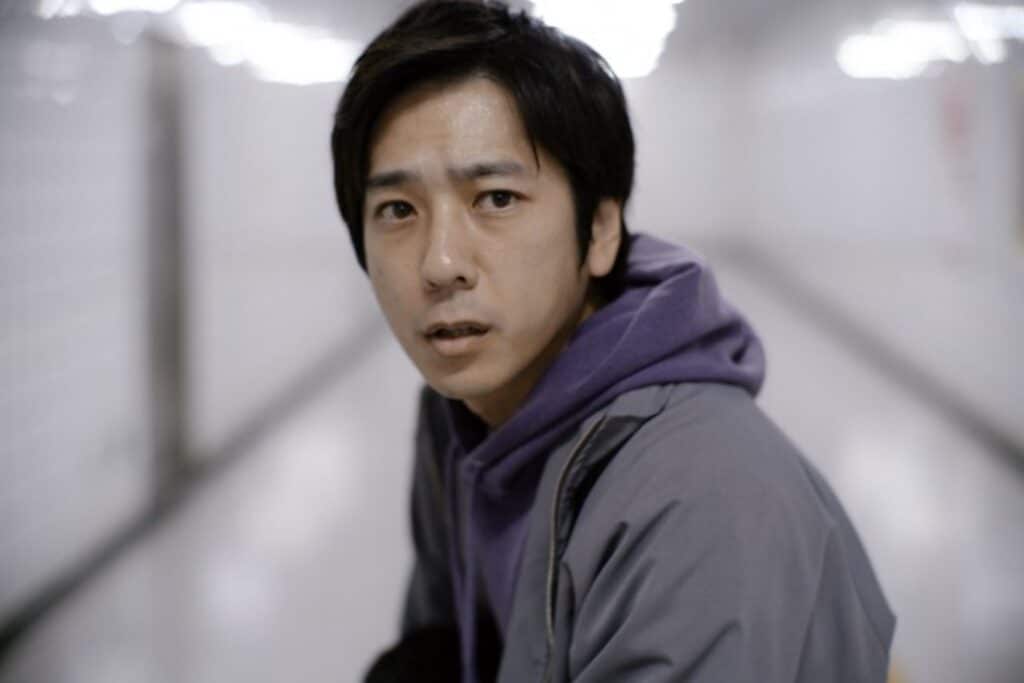
In terms of crowd-pleasing high-concept thrillers, Genki Kawamura’s Exit 8 – released in North America this past April by Neon – wrings Cube-like mayhem from a looping subway terminal, while Shinobu Yaguchi’s Dollhouse (2025) delightfully reinvigorates the creepy doll subgenre.
What’s thrilling about this new age of Japanese horror is its restless refusal to be confined to a singular theme or identity: each filmmaker mines the ruins of J-horror to build new, provocative nightmares, reasserting Japan as a boundary-pushing creative force in international horror.