
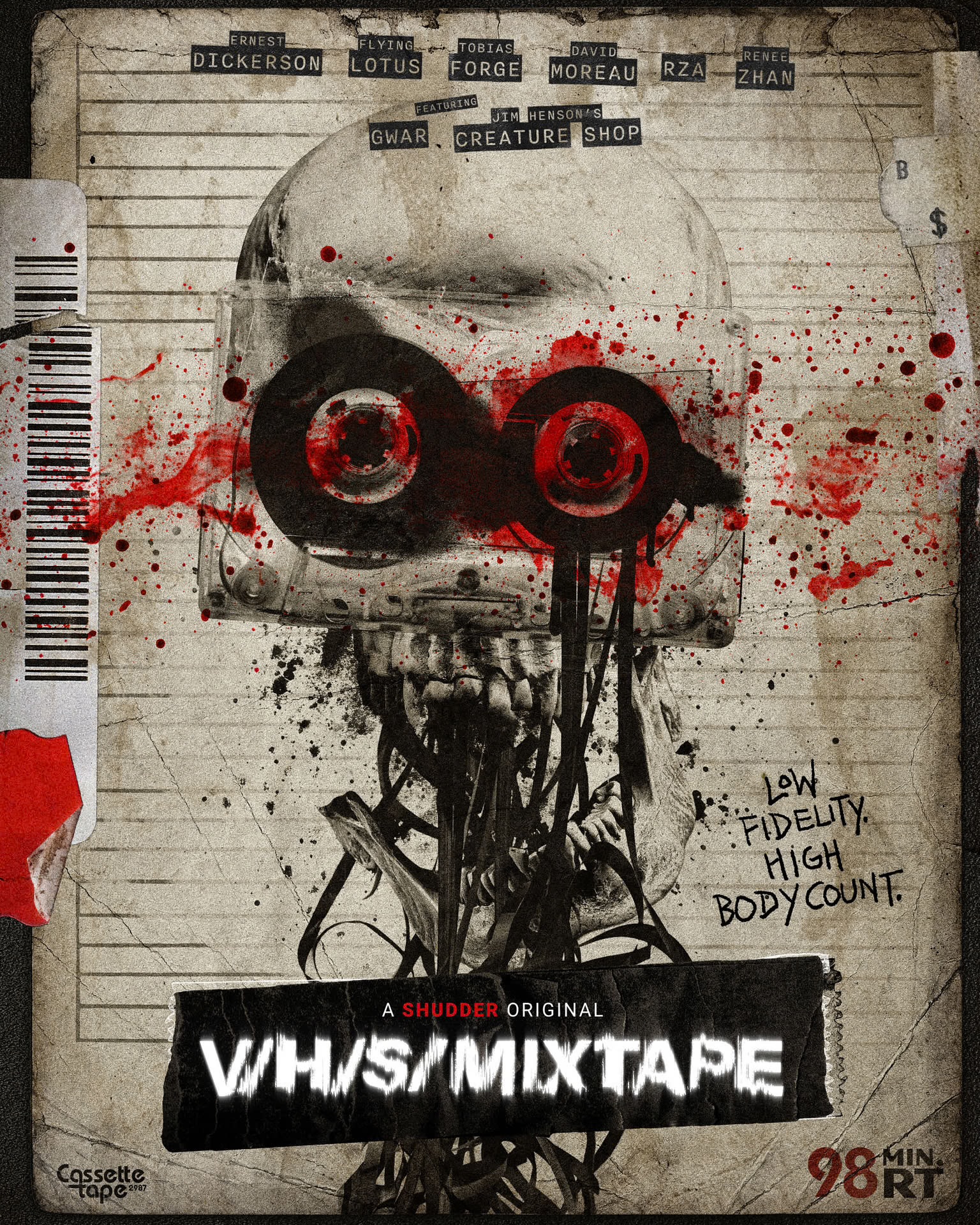
The V/H/S series is long known for being unsettling, claustrophobic and horrifying. The latest addition is no different—V/H/S MIXTAPE is a balls-to-the-wall entry in the series, guaranteed to make you never look at puppets, sound booths, violins or music mixing the same way ever again. What sets this entry apart from the rest is the addition and running theme of music-based horror, with each of the main characters being musicians or performers of some kind. It brings a new depth to the horror of it all, a feast not just for the eyes of a gorehound, but for the ears too.
RUE MORGUE chatted with the three of the four directors of these main segments: David Moreau (“Heartbeat”), Renee Zhan (“Dance Dance Dance”) and Ernest Dickerson (“The Music of Mr. Sze”). Each of these segments have wildly different aesthetics, insane plots that will have you wondering where these directors got their ideas from.
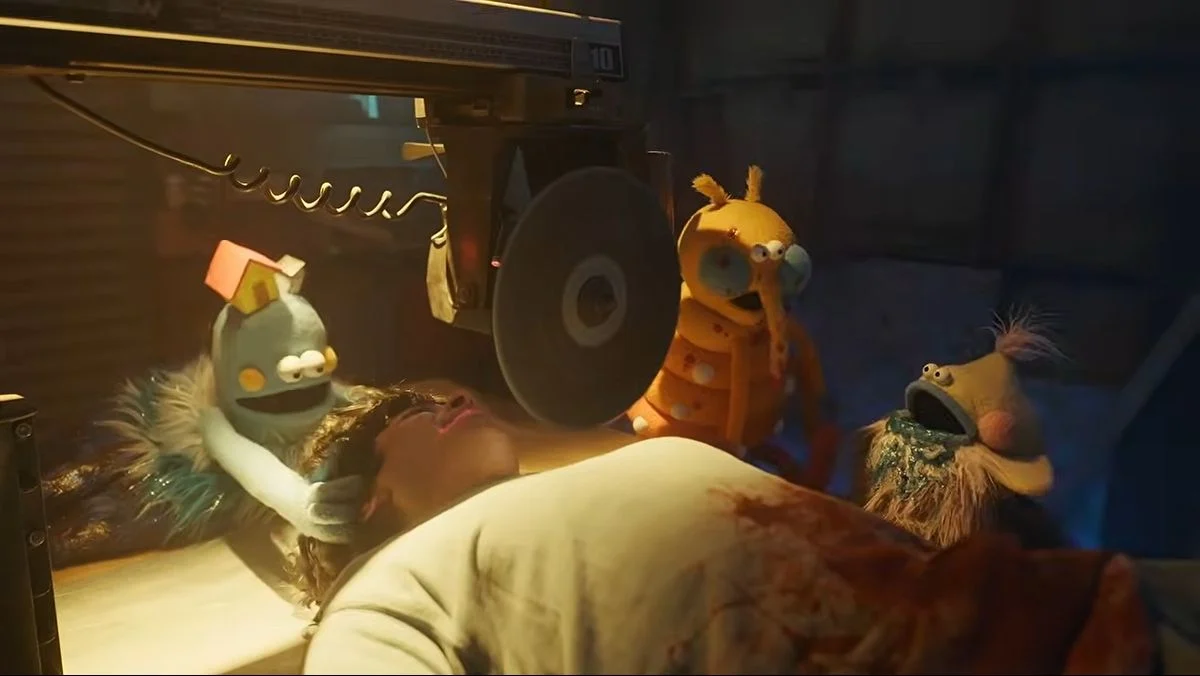
While music connects all four segments, the vibe of each is totally different. Dickerson’s music documentary is cosmic horror, Zhan’s Jim Henson-inspired piece has Muppets taking revenge and Moreau’s explores how the sounds of your own body can kill you. This V/H/S entry strays from the typical plot of the series—usually someone stumbling across cursed films that they aren’t supposed to see. This one is more of a messed-up MTV music video segment.
”I think the fact that the sound is thematic of the movies,” says Moreau. “For me, the audio and visuals of a movie are more important than anything, and to be able to tell a story with the sound holding this kind of weight, it’s very very interesting. I was very excited to be able to write a story, and be able to focus on the sound. And to have the sound carry the scary elements of the story is really, really exciting.”
Of course, creating segments for a found-footage horror film presents its own challenges. When you are creating this kind of horror, you are limited to only what the handheld footage picks up. For segments like Zhan’s, which heavily feature puppets, there was the added element of trying to hide the puppeteers from sight of the camera.
“For me, it was a practical problem, of trying to hide a whole body,” she says. “And usually you can do that by cutting around, with different angles. But you just couldn’t, since it was a single handheld camera shot. So that was a big something to be worked around.”
For Dickerson’s piece, on the other hand, the challenge of the handheld camera was interesting, saying that the placement of the camera really determined where the action was.
“I was able to work it into my main character, who was a film student, working on a documentary,” says Dickerson. “And wearing glasses that have a camera in them. He winds up being drawn to something that ultimately turns out to not be cool. Hear weird music? Maybe you should just let it be weird over there.”
There is something about the found-footage format that’s simply horrifying for viewers, dating back to the first found-footage film Cannibal Holocaust, and more modern entries like The Blair Witch Project and Paranormal Activity. It’s a genre that is claustrophobic and taps more into realism than your average horror movie, and the V/H/S series holds its own in terms of how disturbing it is.
”It’s more realistic when you tell a story through the found footage process,” says Moreau of the genre. “It’s real. What’s crazy about shooting this kind of movie is that it makes it more real, and if it’s more real, it’s more scary.”
Dickerson also points out that the shortness of each of the segments contributes to their scariness. When you only have a few minutes to tell a story, you have to ramp up the scares in a shorter amount of time, and pack a greater punch.
“The intensity speeds up right away,” says Dickerson. “And that’s really the hallmark of the V/H/S series, they’re all pretty intense.”
”In feature length horror, you have this arc, and then you have a release at the end,” adds Zhan. “But with this, it’s nonstop.”
V/H/S MIXTAPE streams October 9th on Shudder.