
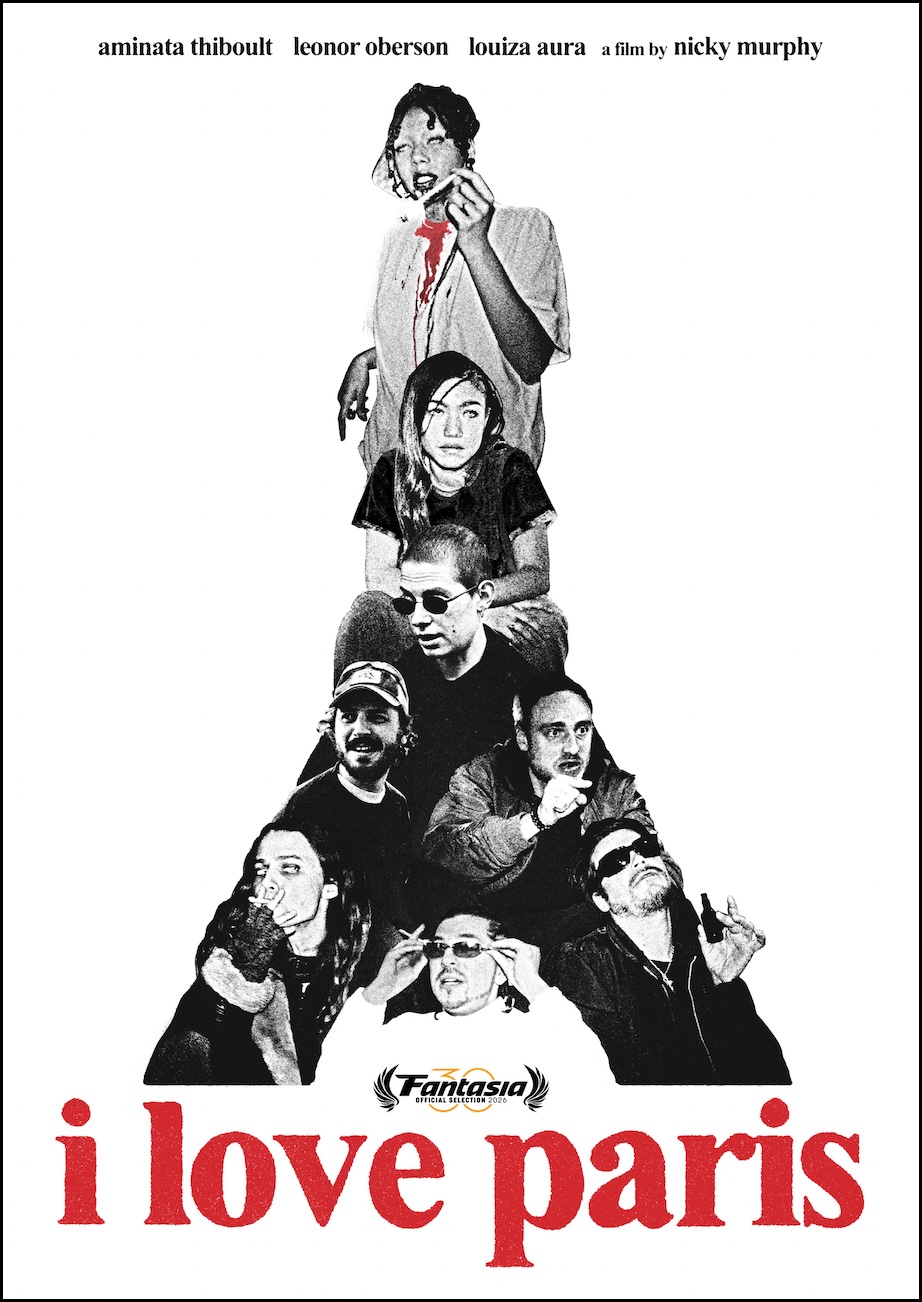
Starring Aminata Thiboult, Leonor Oberson and Louiza Aura
Directed by Nicky Murphy
Written by Nicky Murphy and Aminata Thiboult
rareamazing
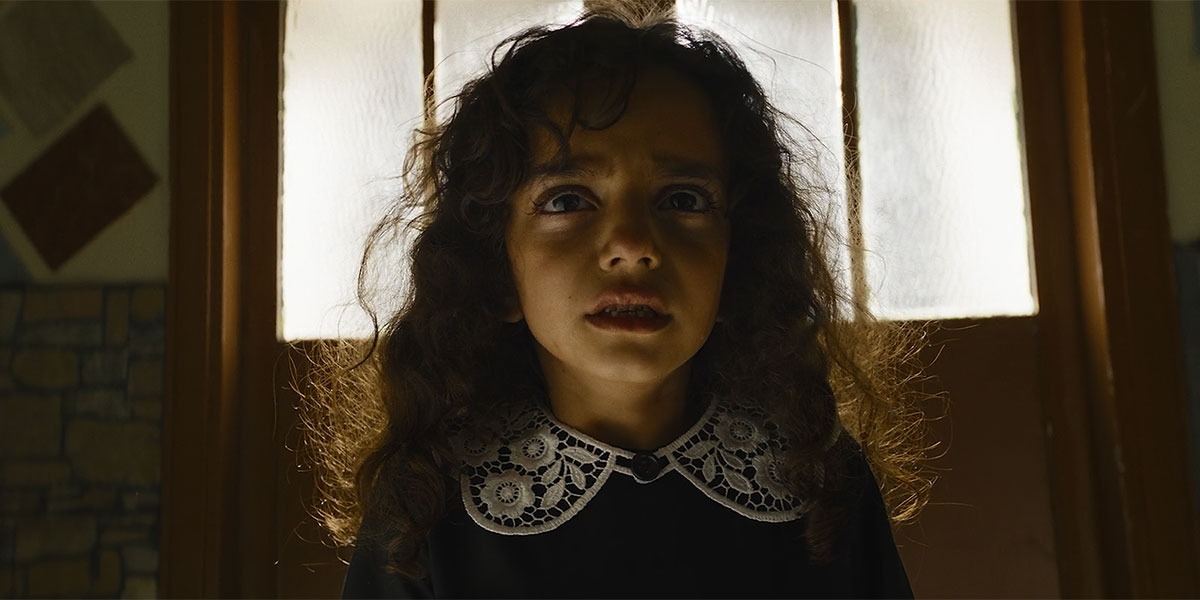
The question often hanging over found-footage horror movies is why the characters keep shooting as they’re being terrorized, running for their lives or otherwise dealing with unpleasant situations. In I LOVE PARIS, the whole point is to keep the camera rolling no matter what. Its lead character, Paris (Aminata Thiboult), is one of the many modern young people determined to live their lives in front of an active lens, and in this case, she goes through her undeath in front of it too.
A word-of-mouth hit at this summer’s Fantasia International Film Festival (where it won the Gold Audience Award for Best International Feature), I LOVE PARIS is told entirely from the point of view of a camera wielded by an unseen operator. He’s been tasked by Paris to document her every move in what she’s confident will be her rise to the top of her namesake city’s music scene. (Though Paris isn’t her actual name; her real one is Ami, but she’s adopted the other so that the omnipresent “I ❤️ Paris” souvenir gear will support her, too.) Not yet popular enough to get into an upcoming major festival, she promotes herself via TikTok videos. She sets out to shoot such a clip late one night; in a bit of foreshadowing, she feels uncomfortable doing it at a church or cemetery, and winds up in front of an abandoned train tunnel—where a mocking female voice floats out of the darkness.
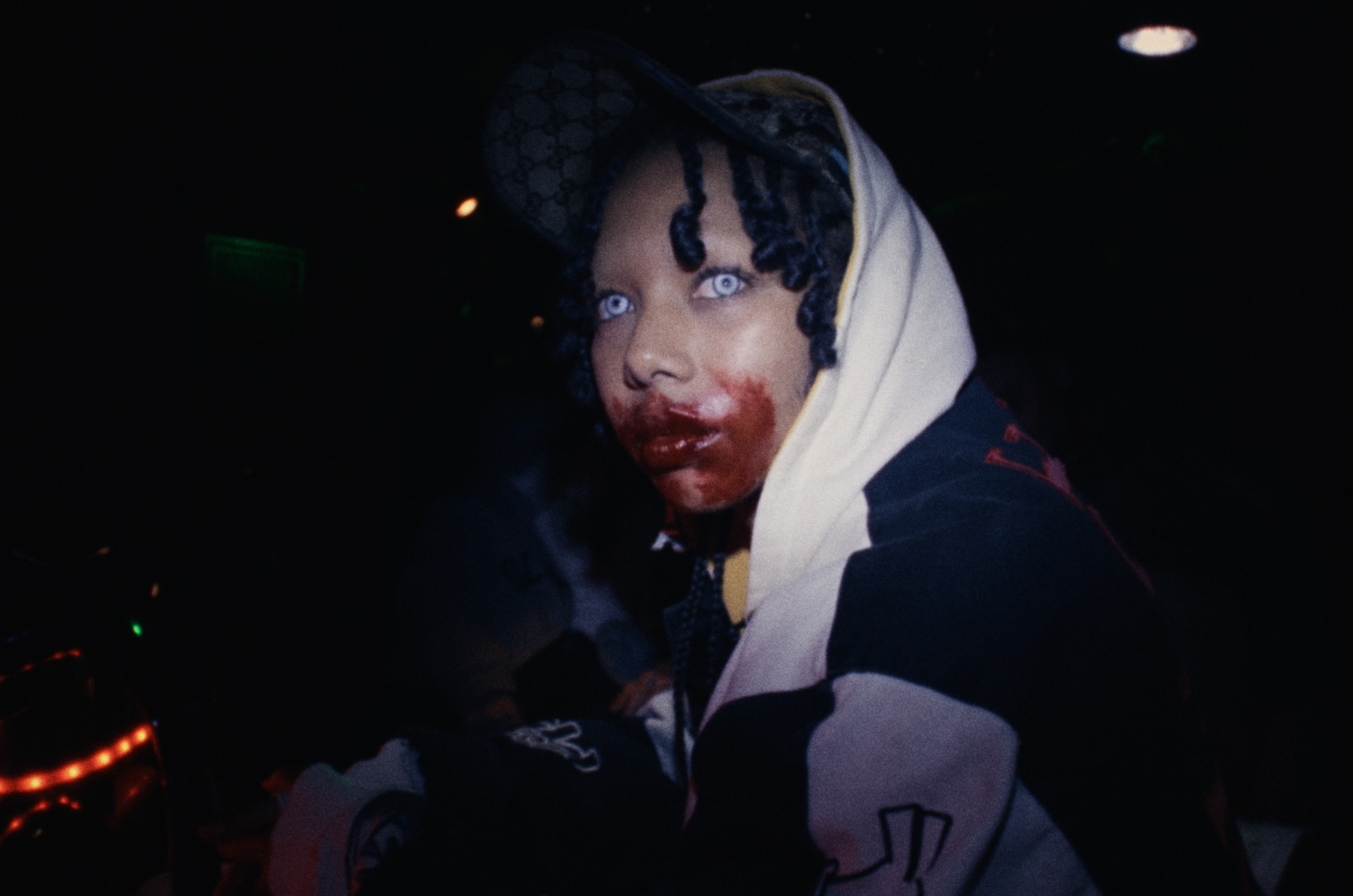
There’s an authenticity from the very beginning of I LOVE PARIS to the way Paris interacts with the camera, and by extension her presumed audience, and in how director Nicky Murphy captures the nightlife of the City of Lights, while suggesting the threats that might be lurking in the shadows. One of those proves to be the woman from the tunnel, who eventually catches up with and puts the bite on Paris. When the latter wakes up the next morning, her first concern is the blood staining her jeans, but she soon discovers that one of her eyes is now blue, and she’s sporting fangs. Yep—she’s a vampire, and Lutèce (Leonor Oberson), who transformed her, advises her that due to the arcane vampire lore Murphy and co-writer Thiboult have invented for this story, Paris must now kill 107 people.
I LOVE PARIS has good, ghoulish fun with the Faustian bargain Paris has been forced into, and how quickly she turns it to her advantage to get what she wants. Anyone standing between her and fame gets it in the neck, and she uses her particular powers of persuasion to secure a prime slot at that festival. Making the music world a literally cutthroat business in a horrific scenario isn’t a new idea, but Thiboult (who was also a producer, composer and makeup effects artist on the film) brings a fully engaging specificity to Paris that makes you want to follow her no matter what depths she descends into, both literally and figuratively.
At the same time, there’s a lived-in feeling to the presentation of Paris’ (the city’s) music milieu that gives a strong sense that the movie’s creators are filming what they know. At certain points, I LOVE PARIS becomes something of a hangout movie, particularly during a lengthy sequence in an apartment full of vampire musicians. It’s full of good, convivial spirits—until Paris discovers something that jolts the scene into full-on horror, a good example of how Murphy is able to blend genres in a way that seems natural and inevitable.
The handheld vérité of his filmmaking, of course, also gives I LOVE PARIS an immediacy that holds your attention and keeps you on edge throughout, wondering where Paris’ pursuit of fame and victims will take her next. The fact that the two are inextricably intertwined creates an ongoing tension, punctuated by grisly shocks and a number of very funny moments, and populated by well-performed, eccentric characters. Within its subgenre, I LOVE PARIS has less in common with THE BLAIR WITCH PROJECT and its many imitations and more kinship with the likes of MAN BITES DOG, the still-underappreciated AFFLICTED and, naturally, WHAT WE DO IN THE SHADOWS in its quirky take on vampirism. Its incorporation of the quest for fame into supernatural tropes and exploration of its city’s darker atmospheres, however, are very much its own.