
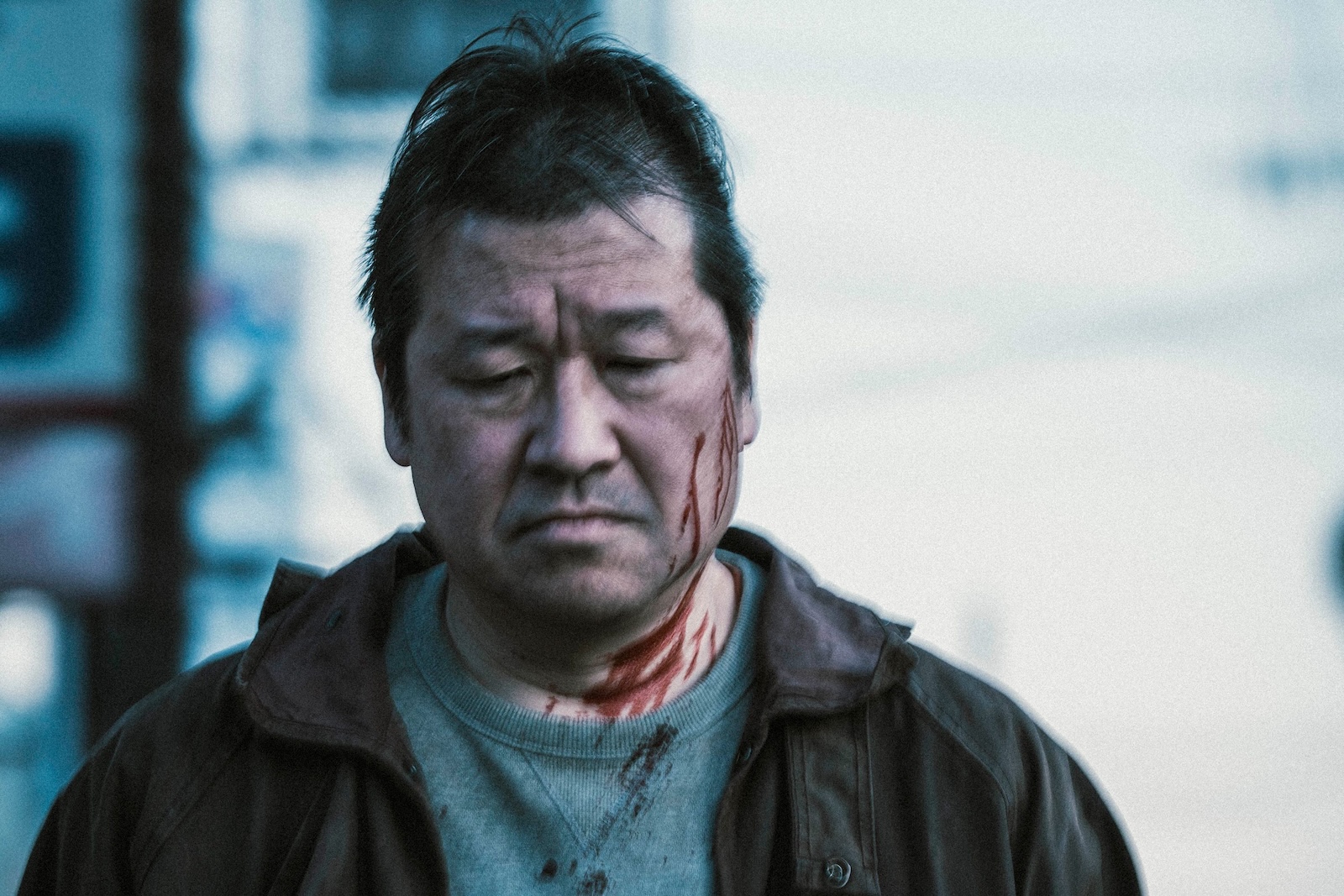
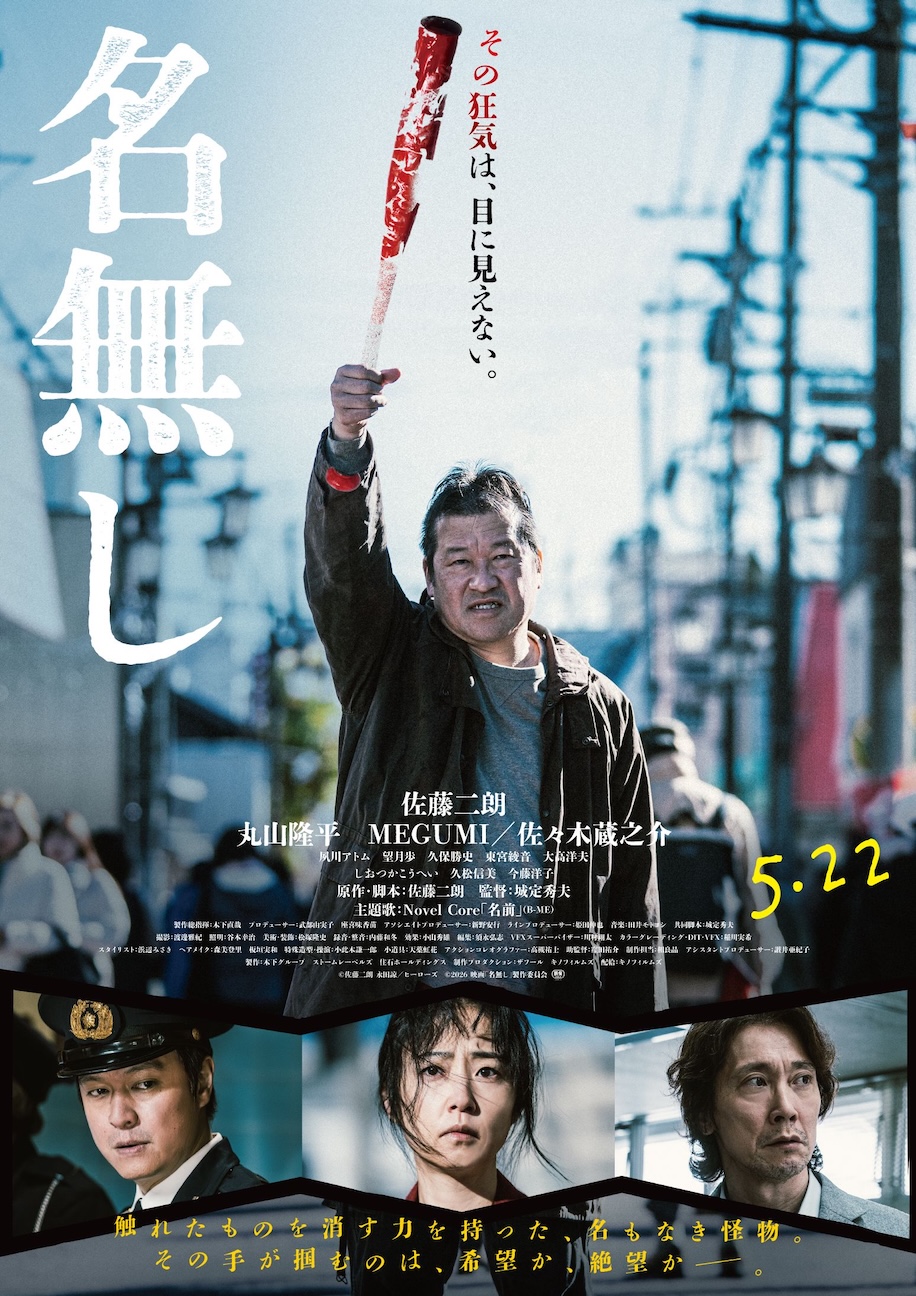
Starring Jirō Satō, Ryûhei Maruyama and Megumi
Written by Hideo Jōjō and Jirō Satō
Directed by Hideo Jōjō
Kino Films
If there were awards given to horror films for best opening scene, NAMELESS would not only win this year, it would likely get into the Hall of Fame of this fictional accolade. Though the movie wavers a bit throughout the following hour, its throat-ripping introduction is a sight to behold.
In a quiet cafe in daylight, a twitchy man (Jirō Satō) sits on edge across from a kind, chatty woman. No matter how calming and even-toned she remains, the atmosphere thickens as the man’s unease refuses to abate. With a quick motion, the woman’s neck receives a deadly spurting slash and the man launches himself out of their booth through the rest of the cafe’s crowd. This would appear to be a simple violent spree by an unhinged man, but there is one major catch: We cannot see a blade in his hand. In fact, no one can see any weapon anywhere. The chaos rising from the patrons as they are hacked apart without any obvious knife reaches full panic as the man makes it to the street without anyone understanding what just happened.
The police arrive and investigate, but are at a loss. How do you track a killer when there is no weapon present at the crime? They do not know what evidence they’re looking for, but thanks to omnipresent cameras in this day and age, they at least know what the assailant looks like.
Satō not only stars in NAMELESS (a North American premiere at this year’s Fantasia International Film Festival), he also co-scripted the movie, based on his web-manga series. Much like the comic, the film weaves through timelines, flashing forward and back to paint a psychological portrait of what would drive a man to attack at random. Though the most interesting part of NAMELESS is the fact that this man wields invisible killing implements, the movie is not too concerned about exploring how that magic works or its origin. Rather, it is wholly focused on what the attacker’s brain is up to. This narrow focus makes the film poignant and tragic, though it does feel a bit like talking to someone with a parrot on their head without them letting you ask about the parrot.
The movie’s emotions are laid on quite thick. This man’s violence did not come from nowhere, and seeing how his childhood and even adulthood have conspired to break him explains but does not excuse his actions. Satō knows this guy inside and out, and brings him to life more like a dramatic manga character than a subtle, uncontrolled man. His rage and his sorrow are never far below the surface, and his motivations and actions are fairly shallow. That is not to say his tragedy is unearned, but it’s lacking in nuance.
Even with the black-and-white plot and the expected character development, the rampage scenes in NAMELESS are a lot of fun. The man changes weapons from scene to scene and uses them on innocent people who get in his way or merely catch his eye. The effects bringing these attacks to life work exceptionally well and reflect craft and imagination. To repeatedly show violent barrages without being able to see what is causing the carnage is a rare sight to behold.
The randomization of victims feels mean, because it is mean. If this flavor of attack were to be launched upon a satirical summer camp of horny teens by any number of indiscriminate slashers, the audience would cheer for more through their bloodthirsty mouths. But the attacks in NAMELESS are sad—not only because they take the lives of children, parents, strangers and literally anyone who commits the sin of being near this man, but also because each body added to the pile is evidence of just how broken the murderer is. There is nothing to celebrate here, just much to mourn.
Adhering to its manga roots may give NAMELESS some leeway for comic-style characterization shorthand. In that regard, it lays it on thick and sticks to the script (to mince metaphors). But it may leave you empty if you want to learn anything about the origin or mechanics of the magic within.