
By RUBEN R. DIAZ
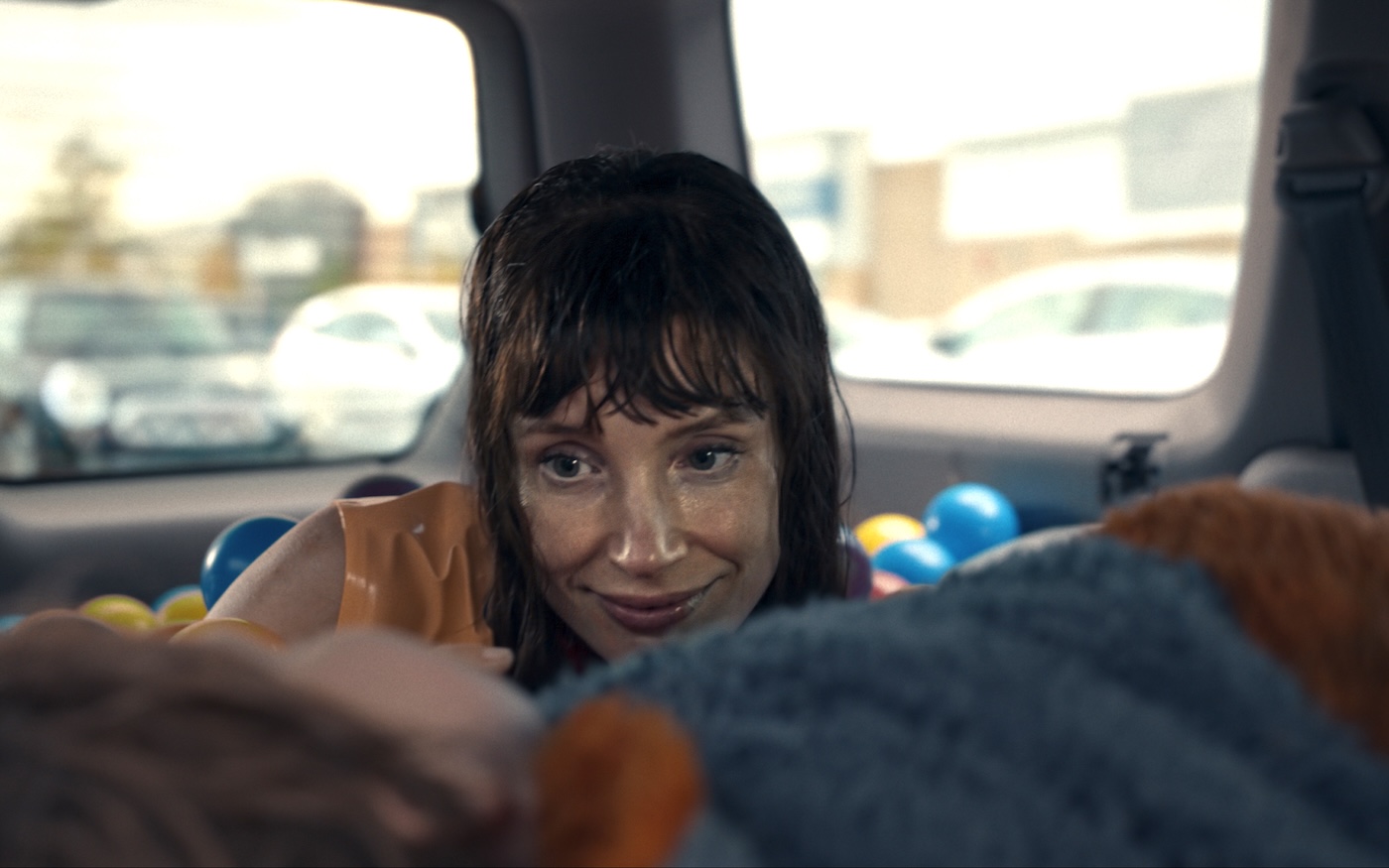
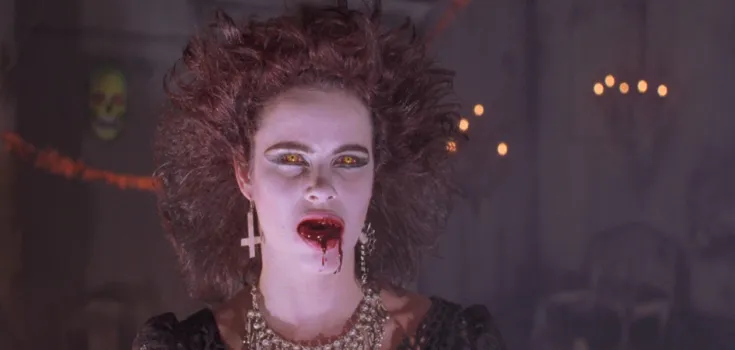
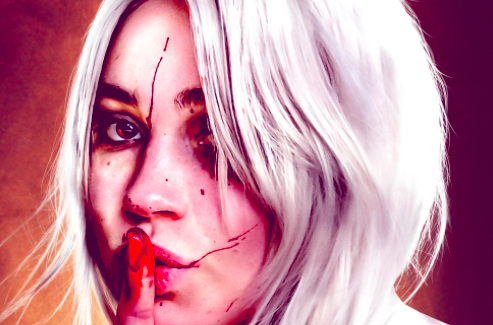
DOUBLE WALKER stars Sylvie Mix (Poser) as a supernatural entity living her best and last life as she exacts revenge. The film, directed by Colin West (Here & Beyond), blends genres in frightening and thoughtful ways. Credited simply as “Ghost,” Mix spends most of the movie in silence, but with little more than facial expressions, body language, and the occasional weapon thrust into the necks of unknowing victims, the lead more than gets her points across. The young woman with platinum hair wanders from victim to victim as the film slowly unveils bits of her past, revealing something dark and sinister from her former life that’s fueling her actions. Rue Morgue sat down with Mark Hadley to discuss composing this supernatural shocker.
What was your first instrument?
The first instrument I took seriously was the guitar, and that was around seventh or eighth grade. Before that, I was playing trumpet and piano through lessons my parents would set up. I didn’t connect with that until I found the guitar. I was listening to a lot of pop-punk music that’s very guitar-centric. I eventually got into jazz and went to college for jazz guitar.
When did you know you wanted to compose for film and TV?
The first movie that ever struck me from a score perspective was Revolutionary Road – Thomas Newman did the score. Before then, I vaguely knew about writing music for film because of people like John Williams. But I didn’t focus on the music in movies until Revolutionary Road. I probably saw it at a time in my life when I was expanding how I thought about music. I was in college, and it was a pivotal moment. After that, I shifted toward adding film scoring to my studies.
Who are some influences on your music?
[A major] influence is Clint Mansell. His score for Moon was life-changing for me. Thomas Newman taps into these more ambient, delicate sensibilities. I [also]admire Johnny Greenwood.
How did you go from college to Hollywood?
It’s been a journey. I moved to Los Angeles after graduating from Berklee College of Music. I worked as an assistant for a TV composer initially. Over the years, I made more friends, did more projects, and I met Colin West. We became great friends and worked on projects together. He brought DOUBLE WALKER to me when it was a script.
How soon into reading a script does your musical mind get to work?
My brain immediately gets to work. I try to make sure I’m not imposing my ego on it; I don’t want my desires to inform the decisions. But of course, as I’m reading the script, I’m thinking about the feelings and the sonic world. Once you start writing, you get into the nitty-gritty and make micro-decisions.

What were the initial discussions about the film’s score like?
I don’t remember any references off the top of my head, but the way the film’s structured, Colin and I kept coming back to this idea that it would be like a tone poem. It almost feels like one big piece of music threading through the film. We talked a lot about feelings.
The more you can avoid talking about specifics and focus on the feelings, the aesthetic, the vibe; then the rest follows that. So I start thinking about the kinds of sounds that match the story and visuals.
How did the colors of the film affect the score?
The color of the movie was a significant factor. It’s very white, wintery, grey as well. So, I gravitated toward the metallic percussion sound. And not necessarily to use them percussively but as drones. I knew it was going to be a lot of that and a sort of sound painting. To capture the humanity, I used piano, a little cello, and a harp.
DOUBLE WALKER is screening around the US but is available on AppleTV and Amazon.