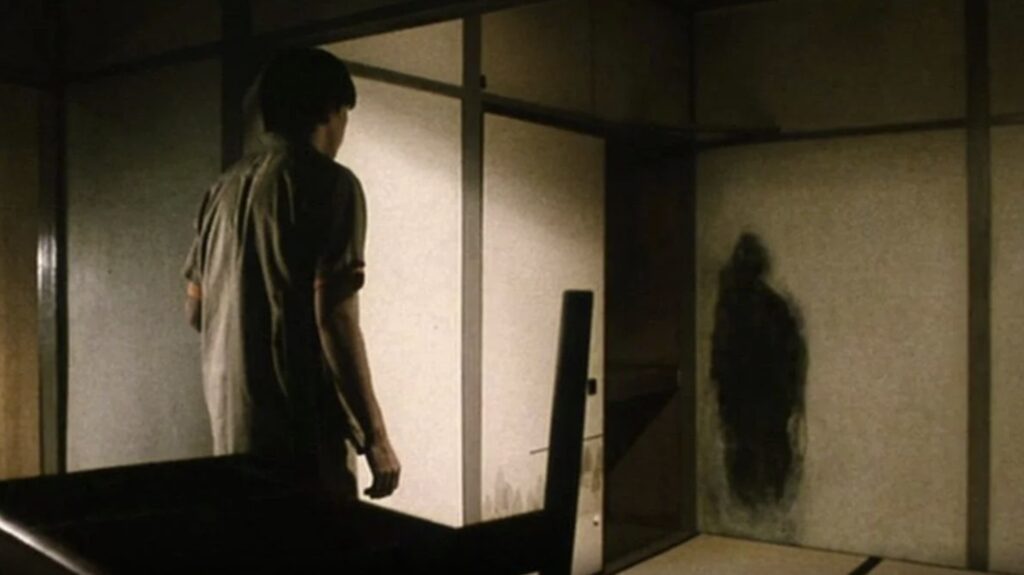
BY SEAN PLUMMER
Mid-August in North America normally sees Hollywood raking in the last box office dregs of its summer blockbusters as families return from vacation and kids head back to school. But the Japanese traditionally beat the overbearing heat at that time of year by flocking to air-conditioned movie theatres for a few shivers while watching the country’s latest horā (horror) films.
It is an auspicious time to do so, as it coincides with Obon, Japan’s festival of the dead. Obon shares similarities to Halloween, including the belief that the veil between the living and the dead is at its thinnest and the penchant for telling macabre stories. For example, the hit kabuki play The Ghost Story of Yotsuya, first performed in 1825, became an annual favourite on Japanese stages, performed in conjunction with Obon. The Yotsuya story, about a vengeful ghost (or onryō) haunting her unfaithful samurai husband, has been filmed more than thirty times over the last century, from 1912’s lost film Yotsuya Kaidan (kaidan means ‘ghost story’) to 2014’s Over Your Dead Body by prolific auteur Takashi Miike (Audition).
Japan’s film industry has long exploited the country’s myths, folklore, theatre, and literature to inspire its kaiki eiga – i.e., movies that explore the strange, the bizarre, and the supernatural. This includes multiple adaptations of the same stories over the years, including kaidan like Yotsuya; the 1741 bunraku (puppet theatre) play Dish Mansion of Banchō (which, in part, inspired 1998’s Ringu); and dozens of bakeneko (ghost cat) films.
It has also long been in dialogue with the horror films pumped out by Hollywood and its international moviemaking counterparts. Early examples include 1933’s meta-King Kong rip-off Wasei Kingu Kongu; 1954’s Gojira (later released internationally as Godzilla), which was inspired by the previous year’s The Beast from 20,000 Fathoms (and post-Hiroshima/Nagasaki nuclear anxiety); and 1959’s The Lady Vampire, a stylistic response to Hammer’s 1958 Gothic hit Horror of Dracula. Each film, though, has a narrative or stylistic twist that makes it distinctly Japanese.
It would take the J-horror boom of the late ‘90s and early 2000s to reverse that creative pipeline. Then it was Hollywood’s turn to Americanize recent Japanese hits like Ringu, The Grudge, One Missed Call, Pulse, and Dark Water. This year, American filmmaker Anna Biller (The Love Witch) is channelling the Yotsuya story in her upcoming historical horror film The Face of Horror.
Seeking out those early Japanese horror films is not easy. Some 99% of the country’s film output between 1890 and the early 1930s – including its early horā eiga (horror movies) – has been lost. Thank 1923’s Great Kanto Earthquake, which devastated Tokyo and left 60% of the city’s population homeless; the March 1945 Allied bombing of Tokyo, which killed over 100,000 and incinerated film studios, archives, and storage facilities; and the censorship put in place under the Allied occupation of the country, which resulted in the further destruction of many Japanese films.
That includes silent films like 1910’s Senrigan (Clairvoyance), whose paranormal plot fictionalized the real-life events that would partly inspire Ringu, and 1921’s Jasei No In (Lust of the White Serpent), which marked the debut of Japan’s first horror movie star, Sumiko Suzuki. Often described as a female Boris Karloff or Bela Lugosi, Suzuki evolved from playing vamp roles in the 1920s into becoming the queen of ghost cat films in the 1930s (she also starred in multiple productions of the Yotsuya story in the 1920s).
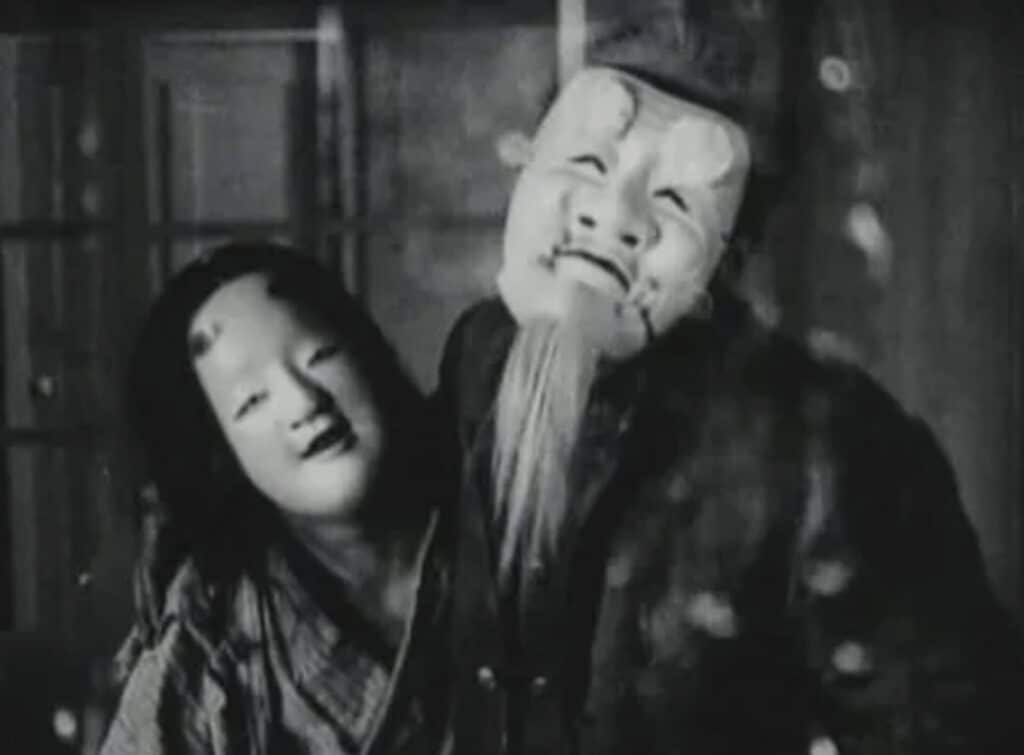
Among the few kaiki films from that period to survive was 1926’s Kurutta Ippeiji (A Page of Madness), an avant-garde silent film by director Teinosuke Kinugasa of the artistic collective Shinkankakuha (School of New Perceptions). The film, tangentially about an old man looking after his mentally ill wife, was a hit in Tokyo but thought lost until 1971 when the director found a copy in a rice barrel. Heavily influenced by Western film techniques, including close-ups and experimental visual effects, it has received critical praise in recent years and been screened worldwide.
Another survivor was1938’s Kaibyo Nazo No Shamisen (The Ghost Cat and the Mysterious Shamisen). Perhaps the pinnacle of Sumiko Suzuki’s post-vamp career, this bakeneko film cast her in a rare villain role as a well-known stage actress whose jealousy of her shamisen-playing lover leads her to kill his cat and a samurai’s daughter with whom he has been flirting. It is best remembered for Suzuki’s engaging performance and its surreal special effects.
World War II led to major changes within the Japanese film industry, with many studios shuttering or consolidating, in part due to a lack of available film stock and new censorship rules. Horror films, along with any others that were not explicitly patriotic, were suppressed after the Japanese government passed the 1939 Film Act. Hollywood films were formally banned in 1941.
It wasn’t until 1949, well into the American occupation and Japanese reconstruction, that studios started producing genre films again. But rather than kaiki eiga, the first productions were science fiction films that reflected growing concerns over malevolent technology – perhaps not surprising after the atomic bombings of Hiroshima and Nagasaki. These included 1949’s The Transparent Man Appears and the same year’s The Sea Monster Reaches Land. The latter, about a giant octopus, predated Gojira by five years.
The end of Allied occupation in 1952 saw minor studios like Shinko, which relied heavily on genre programmers, closing down. To fill that vacuum, larger studios like Daiei started making low-budget genre films in between their higher-budget prestige pictures. The surviving studios made up for lost time by flooding theatres with genre films. This included many ghost cat films from Daiei starring Takako Irie, who had replaced Suzuki Sumiko as Japan’s leading horror actress.
Among Daiei’s A-list productions from this period was 1953’s Ugetsu. Directed by Kenji Mizoguchi (Sansho the Bailiff), the highly-acclaimed ghost story is widely considered his masterpiece and combines elements of the jidaigeki (period drama) and kaidan eiga (ghost film). It was a favourite of both film critic Roger Ebert and director Martin Scorsese, and was screened in Cannes in 2016 in the festival’s Classics section.
But perhaps the most prominent post-war Japanese horror filmmaker was Nobuo Nakagawa, whose work would go on to inspire the likes of Kiyoshi Kurosawa (Pulse) and Hideo Nakata (Ringu). His string of hits in the 1950s and ‘60s included Vampire Moth (1956), The Depths (1957), Black Cat Mansion (1958), Ghost Story of Yotsuya (1959), and Jigoku (1960). Nakagawa worked for Shintōhō, a B-movie studio whose kaiki pictures were vital to its existence. In fact, by the mid-1950s, they had instituted a policy to release at least two kaiki pictures in time for Obon, although their 1959 Yotsuya picture would mark the unofficial end of kaiki cinema.
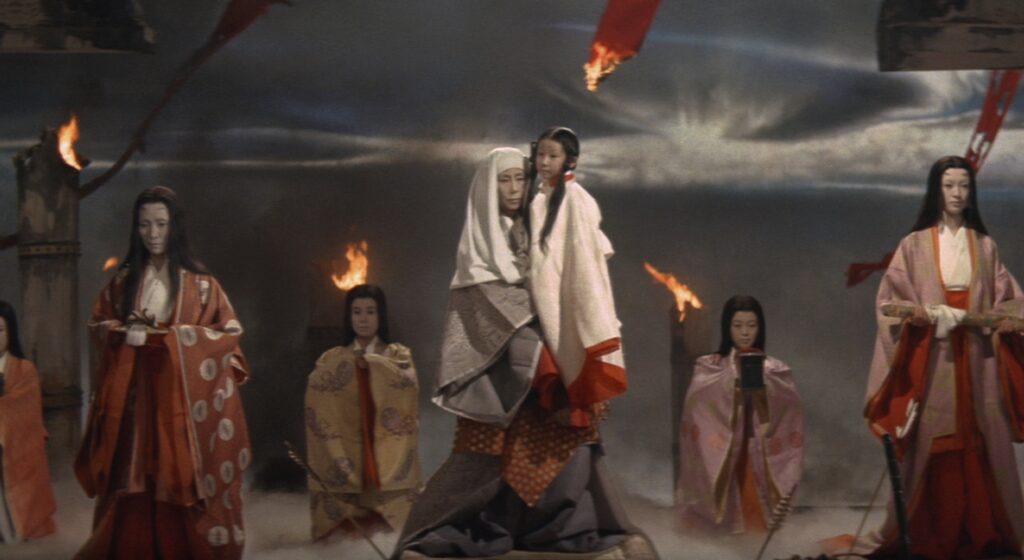
Shintōhō’s last release before going bankrupt in 1961 was Jigoku, which translates to ‘Hell’. Perhaps Nakagawa’s best-known film in the West, it depicts a group of sordid characters dying and enduring gruesome Buddhist hells. Its depiction of karmic retribution – a concept in Japan called osore – would later inspire many of the long-haired ghosts depicted in J-horror, albeit with more of an inescapable ‘cosmic horror’ vibe akin to that depicted by H.P. Lovecraft. This makes Jigoku perhaps Japan’s first modern horror film, despite being inspired by ancient Japanese spiritual beliefs.
The West’s larger interest in Japanese cinema peaked in the ‘60s, with established filmmakers like Akira Kurosawa and Kenji Mizoguchi being joined in the spotlight by newer directors like Hiroshi Teshigahara (Woman in the Dunes). Japanese horror cinema similarly started to appear in the West thanks to the likes of Gojira being dubbed and recut as Godzilla. That film’s director, Ishirô Honda, made perhaps his darkest picture with 1963’s Matango, an early body horror film about a yacht full of party-goers stranded on an island who become infected by the local fungi. Redubbed Attack of the Mushroom People for North American television, the surreally coloured film became a staple of Creature Feature-type cable shows but was rejected by Japanese filmgoers, in part perhaps due to makeup effects that made the infected look like WWII radiation victims.
Greater acclaim awaited Shindō Kaneto’s 14th century-set Onibaba (1964), about a mother and daughter-in-law who make a living leading samurai to their deaths, and director Masaki Kobayashi’s supernatural fantasy anthology Kwaidan. The latter screened at Cannes in 1965 where it won the Special Jury Prize. Its four stories were adapted from writer Lafcadio Hearn’s Kwaidan: Stories and Studies of Strange Things, his 1904 collection of Japanese folklore.
Kaneto’s Kuroneko, about two women raped and killed by samurai who seek vengeance from beyond the grave, could have won similar acclaim at Cannes in 1968, as it was in competition for the Palme d’Or. However, the festival was shut down halfway through by a group of French filmmakers, including Jean-Luc Godard, Louis Malle, and François Truffaut, in support of the student protests convulsing France at the time. This crippled its efforts to find distribution, with only a brief opening in New York six years later. A more sophisticated example of the bakeneko film, it was partly inspired by the Japanese folktale “The Cat’s Revenge” and would eventually be released as part of the Criterion Collection.
Interest in domestic horror cinema would wane in the 1970s thanks in part to the collapse of Daiei in 1971 and the rise of television, where shows like Japanese Kaidan Theatre (1970) and 13 Nights of “Kaiki” (1971) would frighten audiences in their own homes. Highlights of the period include Blind Woman’s Curse (1970), which would mostly marginalize its kaiki elements in favour of yakuza drama; Lake of Dracula (1971), part of Michio Yamamoto’s vampire trilogy for Tōhō; and Curse of the Dog God (1977), an occult film by Female Prisoner Scorpion director Shun’ya Itô that is obviously inspired by The Exorcist and The Omen.
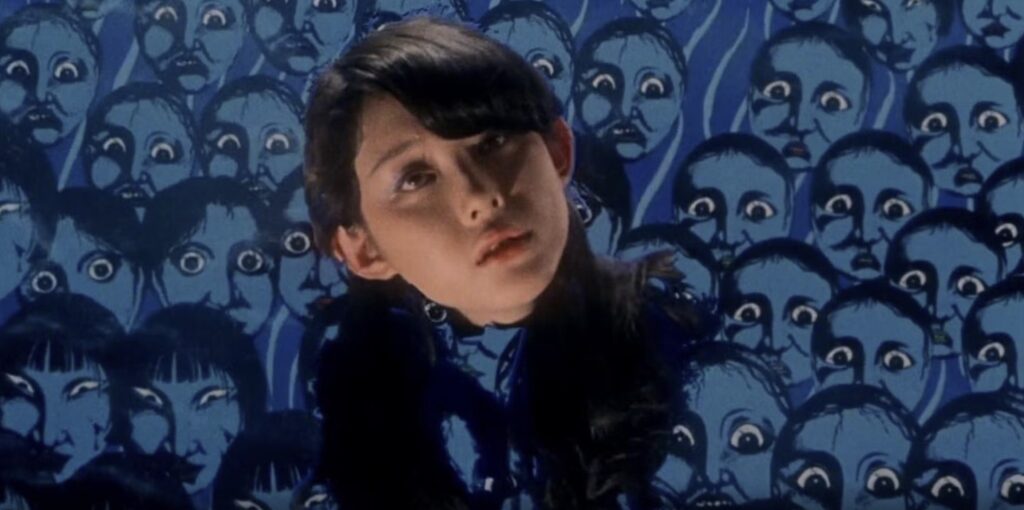
Perhaps the oddest but most imaginative attempt to replicate the blockbuster success of 1975’s Jaws came when Tōhō hired experimental commercial filmmaker Nobuhiko Obayashi to make a film based on his daughter’s imaginings. The result was 1977’s infamous Hausu (House), about a group of teenage girls who visit one of their aunts on summer break, only to learn that she is a ghost. That description barely captures the film’s delirium, which includes carnivorous pianos and a murderous ghost cat. The film was panned by Japanese critics but became a box office hit, a success that would extend worldwide when it screened internationally in 2009/2010 and was subsequently released on DVD and Blu-ray by Criterion.
The 1980s were something of a lost decade for Japanese filmmaking, with the bigger studios feeling continued pressure from television and entertainment dollars being channelled into home video rentals. In terms of horā films, the result was a lot of low-budget, straight-to-video experimentation and controversial gore films, partly in response to explicit international horror hits like The Evil Dead and The Beyond. This included the notorious Guinea Pig series, whose 1985 installment Flower of Flesh and Blood led American actor Charlie Sheen to call the FBI because he thought it depicted a real murder. Relative standout films in this period include 1988’s Evil Dead Trap, an Argento-esque giallo about a film crew being stalked by a mutated killer, and the same year’s Mermaid in a Manhole, a more artistic but still grotesque addition to the Guinea Pig series.
The best-known film in the West from this period is Tetsuo: The Iron Man (1989). Originally produced for Japan’s new video market (dubbed V-cinema), Shinya Tsukamoto’s debut, about a salaryman who metamorphoses into a metal creature, became a definitional text for the cyber punk movement and body horror more generally. Tsukamoto’s work was a big influence on Darren Aronofsky’s first film Pi (1998), just as Tsukamoto was himself influenced by David Cronenberg. Nine Inch Nails frontman Trent Reznor was similarly inspired by Tetsuo to write the song “The Becoming,” about a man metaphorically turning into a machine, off his hit 1994 album The Downward Spiral.
Exactly when ‘J-horror’ began is open to debate, but 1996’s Ghost Actress (a.k.a. Don’t Look Up) is one of the first. Director Hideo Nakata made the decision to show the titular ghost actress’s face in this somewhat conventional kaidan film, against the advice of screenwriter Hiroshi Takahashi. Nakata would later heed Takahashi’s advice when making the much higher-budgeted Ringu (1998) and keep the face of that film’s onryō, Sadako, covered by her long black hair, against the wishes of his producers.
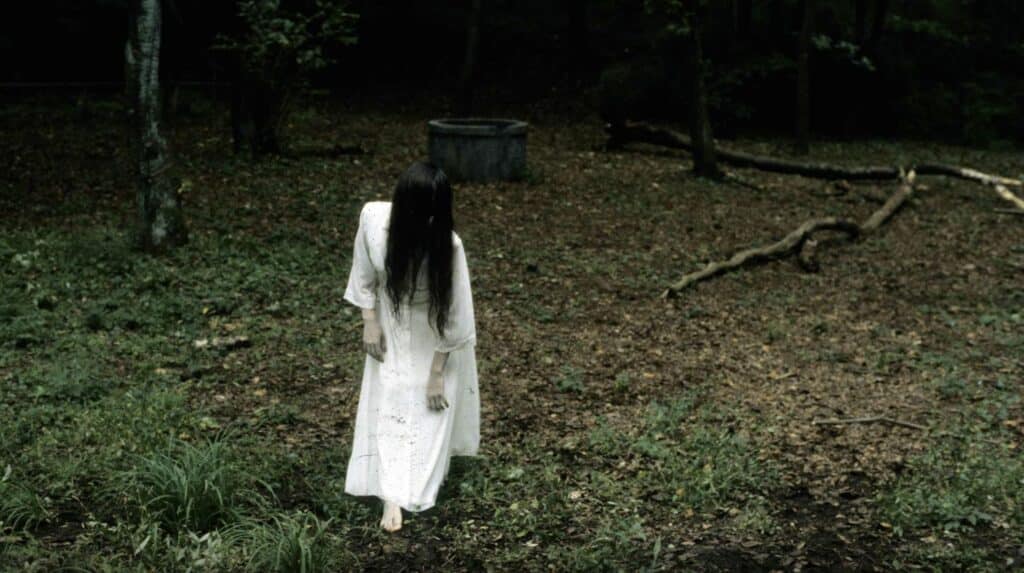
Ringu’s reinvention of the long-haired ghost girl, a convention in kaidan cinema, became a staple of many films dubbed J-horror. Nakata and his contemporaries similarly updated the Japanese ghost story by dispensing with the karmic justice (osore) normally meted out in these types of films. So, in Ringu, the psychic Ryuji dies at the hands of Sadako despite he and his ex, Reiko, apparently bringing peace to the dead girl by finding and burying her corpse. This type of modern horror was more unknowable and, hence, terrifying. Ringu also infamously updated the ‘malevolent technology’ trope established by Gojira by having Sadako infect and kill her victims through a cursed videotape. Nakata would go on to adapt Ring novelist Koji Suzuki’s short story “Floating Water” as Dark Water (2002) and direct The Ring Two (2005), an American sequel to Hollywood’s remake of his own film.
Writer-director Kiyoshi Kurosawa’s primary contributions to J-horror, 1997’s Cure and 2001’s Kairo (Pulse), were similarly disturbing in modern ways. Cure sees a police detective investigate a series of seemingly random murders committed by people with no apparent motives. It rewrote the serial killer film, and its success on the international festival circuit arguably turned the West’s gaze back towards Japanese cinema. Kairo first screened in Cannes’ Un Certain Regard section in 2001 and evolved the kaidan story for the digital age, with its ghosts invading the world via the Internet.
Another key J-horror figure is horror manga artist Junji Ito. His popular manga series Tomie, about a beautiful young femme fatale who repeatedly resurrects after being murdered by the men who fall in love with her, was first adapted to film in 1998. There have been nine Tomie films so far, along with TV and anime adaptations. Ito’s other major J-horror era film adaptation was 2000’s Uzumaki (Spiral), a horror comedy about a town whose residents become obsessed by – and turn into – spirals.
Uzumaki was produced by Toyoyuki Yokohama who found success shepherding Takashi Miike’s international breakthrough Audition to the screen a year earlier. Adapted from Ryu Murakami’s 1997 novel, Audition starred model-turned-actress Eihi Shiina as a young woman who falls in love with a widowed businessman, only to exact a brutal revenge on him. Audition became a breakout hit on the international festival circuit, including screenings at the Marché du Film. Miike was infamously prolific during this period, with his other key horror-centric films including 2001’s The Happiness of the Katakuris and 2003’s Gozu and One Missed Call, the latter being adapted disappointingly by Hollywood a few years later.
While Miike has never worked in Hollywood, Takashi Shimizu, who studied under Kiyoshi Kurosawa at the Film School of Tokyo, leveraged the success of his Ju-On: The Grudge V-cinema and cinematic franchise to direct two American Grudge films. A modern iteration of the onryō trope, the Ju-On films primarily centred on the white-skinned ghosts Kayako and her son Toshio, who infamously meows like a cat. The story, about the mother and son being murdered by Kayako’s husband and subsequently haunting the house where it happened, was partly inspired by a rise in domestic abuse in Japan in the late ‘90s. The series’ success in the West saw Toshio included in the 2006 horror parody Scary Movie 4. Several sequels followed, including the ill-advised crossover Sadako vs. Kayoko (2016) and the 2020 Netflix series Ju-On: Origins.
The last gasp of J-horror that would receive significant attention beyond the shores of Japan came in the mid-aughts with a series of visually insane special-effects films that married the low-budget inventiveness of early ‘90s V-cinema with the gore of the New French Extremity. With special effects by “the Tom Savini of Japan,” Yoshihiro Nishimura, Meatball Machine (2005), The Machine Girl (2008), Tokyo Gore Police (2008), and Vampire Girl vs. Frankenstein Girl (2009) all combined action and body horror in outrageous but entertaining ways. Think full-colour Tetsuos with geysers of blood and tongue-in-cheek nods to the audience.
With the Marché du Film choosing Japan as its Country of Honour this year, there is a lot to celebrate, including horā. Just last year, director Genki Kawamura’s adaptation of the popular liminal space videogame Exit 8 premiered at Cannes’ Midnight Screenings. It subsequently became a huge hit in Japan upon its release last August shortly after – that’s right – Obon, with Neon giving it a North American release this past April. Thankfully, whether or not you still call them J-horror, Japanese horror films are still hot and continue to chill audiences around the world.