By RON MCKENZIE
As one of TV’s most distinguished and visually unique auteurs, Bryan Fuller has created some of television’s most beautiful and macabre shows, including Dead Like Me, Pushing Daisies and Hannibal. With DUST BUNNY, his feature film directorial debut, Fuller crafts an equally lush and humorous modern fairy tale about loneliness, belonging — and a monster.
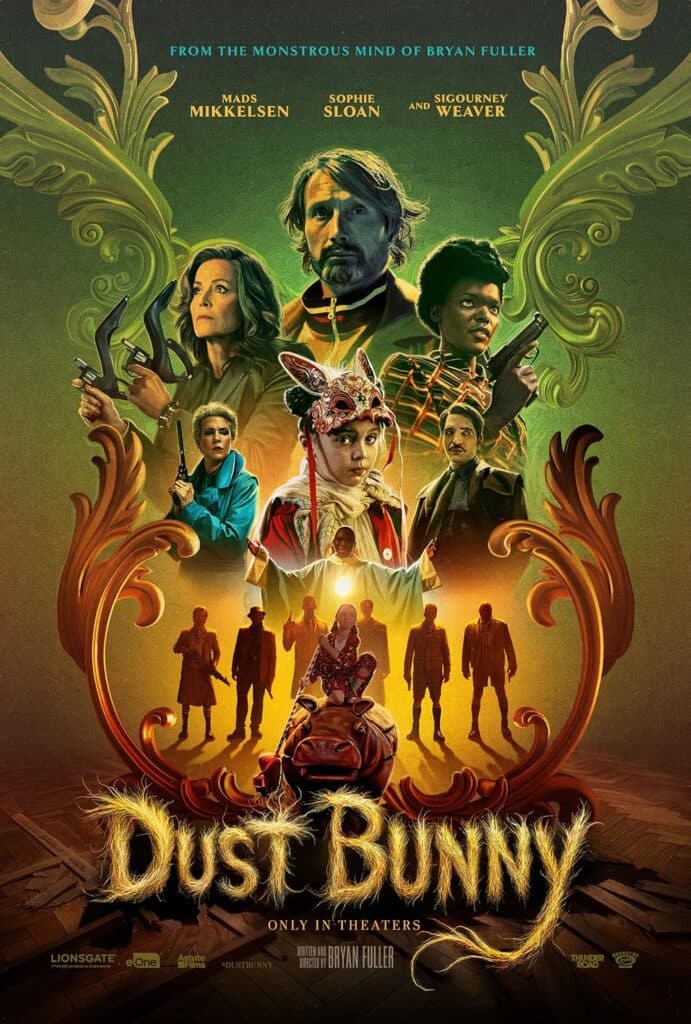
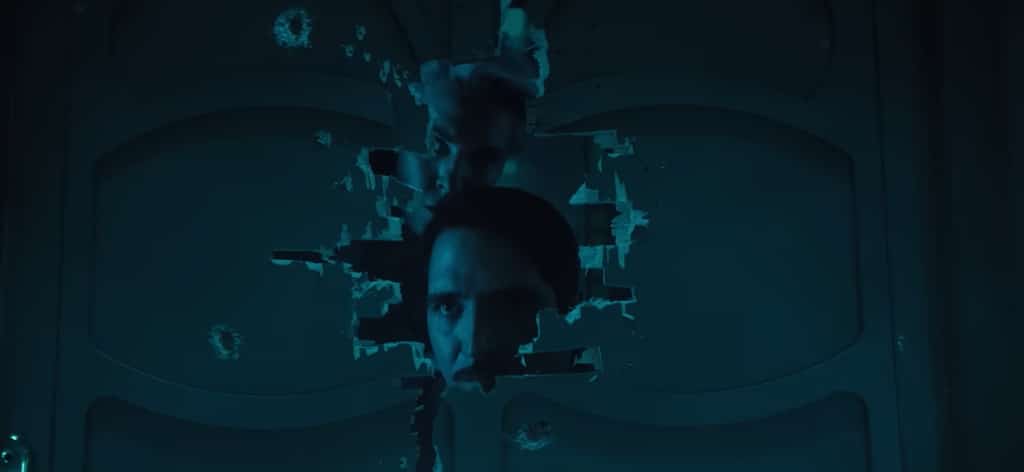
The film follows Aurora (Sophie Sloan), an 8-year-old girl who hires her hitman neighbor (Mads Mikkelsen) to kill the monster under her bed that ate her parents. With shades of John Cassavetes’ Gloria and Jean-Luc Besson’s Léon: The Professional in its foundations, DUST BUNNY revolves around Aurora and “Resident 5B” learning to trust and lean on each other against a squad of assassins and the man-eating beast waiting in the shadows. David Dastmalchian, Rebecca Henderson, Sheila Atim and the iconic Sigourney Weaver round out the cast.
It’s been a challenging road for the project, originally conceived for 2020’s reboot of Steven Spielberg’s Amazing Stories. “It was one of the stories that Spielberg loved, but we were having trouble pushing it past the studio and the network. After about the third or fourth time, I was like, ‘I’m just going to take this one back, and I think this will be a movie.’ All of those episodes were designed to feel like Amblin stories from the ’80s.” Fuller pitched the project to several studios after developing the story for a feature film. “It would go to a studio, kick around there for a little bit, and then they would let it go, and then go to another studio.” Eventually, Astute Films came on board to finance the film. They agreed to meet Fuller’s primary casting request: “We landed somewhere that wanted to do it with Mads [Mikkelson]. That was one of the things that I kept pushing for: ‘I would like to cast Mads as the lead.’ Five years later, here we are.”
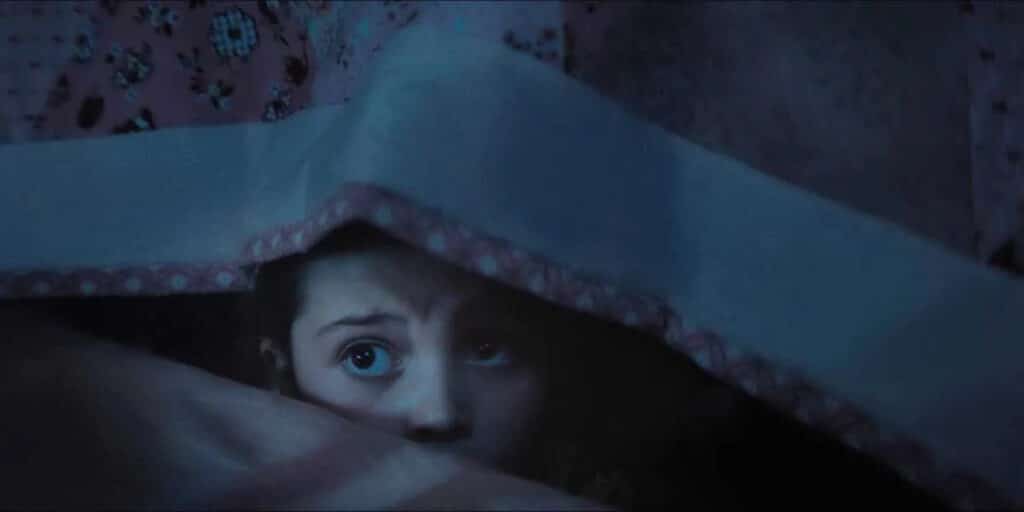
The casting process then turned to the role of Aurora, with an extensive international casting call and audition process – and thousands of submissions to sort through. “We narrowed that down to a thousand auditions and kept whittling away until they showed me twelve people.” In the end, it was young Sophie Sloan who made the final cut. “ It was very clear, immediately, that Sophie had this wonderful lived-in quality as an Amblin star. Like those qualities of Drew Barrymore or Henry Thomas, that kind of kid quality that has a certain level of charm and accessibility without being annoying.” However, there was still one matter of concern that had to be addressed. “[Sophie] has a very thick Scottish brogue. Her first audition was great, but I was like, okay, your accent is so thick, and Mads’ accent is so thick. If we’re trying to sell this as set in the U.S and everybody is speaking with accents that the core of our audience may not be able to navigate or understand, it’s not good for us.” Taking the initiative, Sloan set about teaching herself an American accent by watching TikTok videos for two weeks. The discipline paid off, as did her instant chemistry with her co-star. Sloan nailed her final audition and walked away with the role.
The final slot to be filled for the lead cast? 5B’s handler, a cynical and acerbic woman who’s concerned about her employee’s sudden turn to more benevolent practices. Fuller knew the role required a balance of comedic timing and gravitas and was fortunate to get the perfect performer locked in.
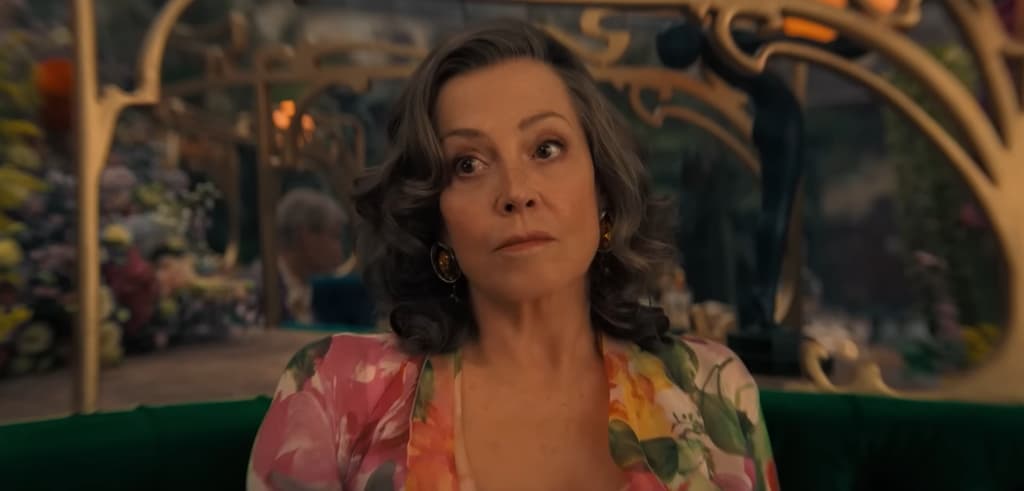
“One of the things that I love about Sigourney Weaver is her history with comedy, particularly on the stage. Christopher Durang was a frequent collaborator and friend of hers, and there’s something about the way that Christopher Durang writes that I’ve always loved in terms of the wit and the absurdity and almost that grounded approach to absurd circumstances that are part of the comedy, threading that needle. It felt very much in alignment with the tone, so I didn’t really have to give much thought to working with Sigourney. She’s got great timing. She did it so deadpan, so that was amazing. The clue to her comedy is that she is not clued into the absurdity. I think that’s part of just the presence that Sigourney brings to her roles. Her role in Working Girl is one of my favorites. So many aspects of that performance are really fine-tuned into the nuance of the comedy in such a way that seems effortless. That’s kind of what this role required – an effortless alignment with the absurdity of the situation that is also relatable to the audience. And it’s not like she needs a lot of direction in terms of what she’s got going on. Her instincts are great, particularly with comedy and how to play. And there were a few times where we kind of pushed, went bigger. That was really fun for me to see because she is so funny, so regal, always taking the piss out of her perceived screen personas in a really savvy way.”
Next up? The titular monster itself, and Fuller already knew who to bring in for its creation: Jon Wayshak, an illustrator and comic artist with whom Fuller already had a history. “Jon is somebody that I worked with before on a Pushing Daisies comic that was going to be part of Wildstorm Comics. We were working on the first issue and had just completed it when Wildstorm went belly up. The wonderful artwork that I had collected has been on my desktop forever.” Beyond being collaborators, Fuller is also a genuine fan of Wayshak’s work. “There’s something mad about his depictions of characterizations that seem on the verge of insanity. And since this was a figment of imagination and arguably on the verge of a child’s insanity, it had to reflect those qualities. I just reached out to John and said, ‘I’m doing a monster movie. I would love for you to design the monster.”
“It’s a great design, and it does feel like a monster that a child would have fabricated. We wanted it to be as cute as it is deadly. It had to be both Gizmo and Stripe, and it really does strike that balance. There are a bunch of shots that are the puppet, and most of the shots, when you see the full body, are CG. And if you’re seeing less than the full body, chances are very good that it is the puppet.”
One of the film’s thematic threads is how outcasts and misfits create their own communities when families fail them by action or absence. For Fuller, this was organic, not conscious. “As a queer person, found family is just inherent in our worldview. There’s something about when you feel like you don’t belong someplace or you are unwanted in some capacity; we still want those human connections. There’s a part in the script where Sigourney says to Mads, ‘Helping her is not going to fix little you.’ There’s something about writing this that was not necessarily fixing ‘little me’ but acknowledging ‘little me’ in a way that’s reflective of a tricky childhood and relationships that were real-life versions of finding support and supporters when I felt very alone. I think all of those things are about what you bring to Aurora, and what I would love for people who see the film to converse about is how much of themselves they see in Aurora. The strongest friendship that came out of this experience was with Olivier Benois, who was our costume designer. Olivier came to me when he hit Budapest. [Olivier said], ‘I really want to talk to you about the script, and I’m curious, like, are you Aurora, or are you the neighbour?’ And I was, like, ‘I’m always a little girl.’ We sat down, and we had a really amazing conversation about how each of us was Aurora in our own ways, people who felt disenfranchised from their childhoods and their childhood experiences based on who they were or how they didn’t fit in, and being able to articulate that with each other and not make the movie ‘medicine’, but to be able to say, ‘This is about a little girl who said that her parents weren’t very nice to her, and she made a wish.’ How you see and define your parents not being very nice to you could go any number of ways. That’s for the audience to have their own barometers checked in terms of how much they relate to the character and why. If you get a little bit more out of it, with the resolution of the story or if you’re just experiencing it as a gateway horror fairy tale for young kids and old kids, that’s up to the audience to have their own bespoke experience. But I hope that some people, if you came from a tricky childhood, you’re going to have a different experience with the movie than if you had a relatively normal childhood. And I think things will be leeched out of your viewing experience based on what life you led as a child.”
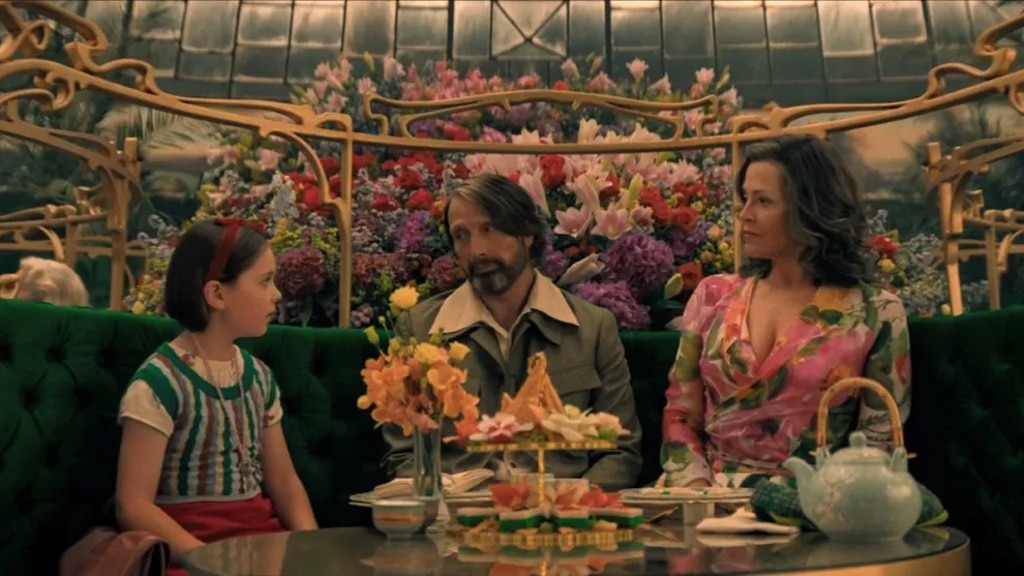
Despite its “R” rating, DUST BUNNY has received enthusiastic approval from younger audiences who’ve seen it on this year’s film festival circuit. “David’s (Dastmalchian) 8-year-old daughter loved the movie … She’s kind of a monster kid who has lizards and spiders for pets. Teenagers have seen it and seem to have a good response. I set out to make a children’s movie that was accessible for kids. As a kid, I was exposed to all of those scary movies, even scarier ones, too, Jaws, The Exorcist, Rosemary’s Baby, Black Christmas, all when I was around 6 years old. These were not movies that phased me or haunted my nightmares. They were always really fun experiences, and that’s what I’m hoping this movie is for kids.
What I hope is that parents will go see the movie and say, ‘Why is this rated R? It’s cartoon violence, there’s no blood, nudity or foul language, so they can give their kids their first horror movie experience that is relatively safe and is about their lives as children and the things we do as children to survive our predicament. Aurora, especially how Sophie plays her, is a little hero. She’s bringing her circumstances under her control. It’s inspiring and heroic and hopefully a positive message for children who see Sophie as this young hero who can take care of herself, but also a child who needs adult guardianship.”
DUST BUNNY is now playing only in theaters.