By PAYTON McCARTY-SIMAS
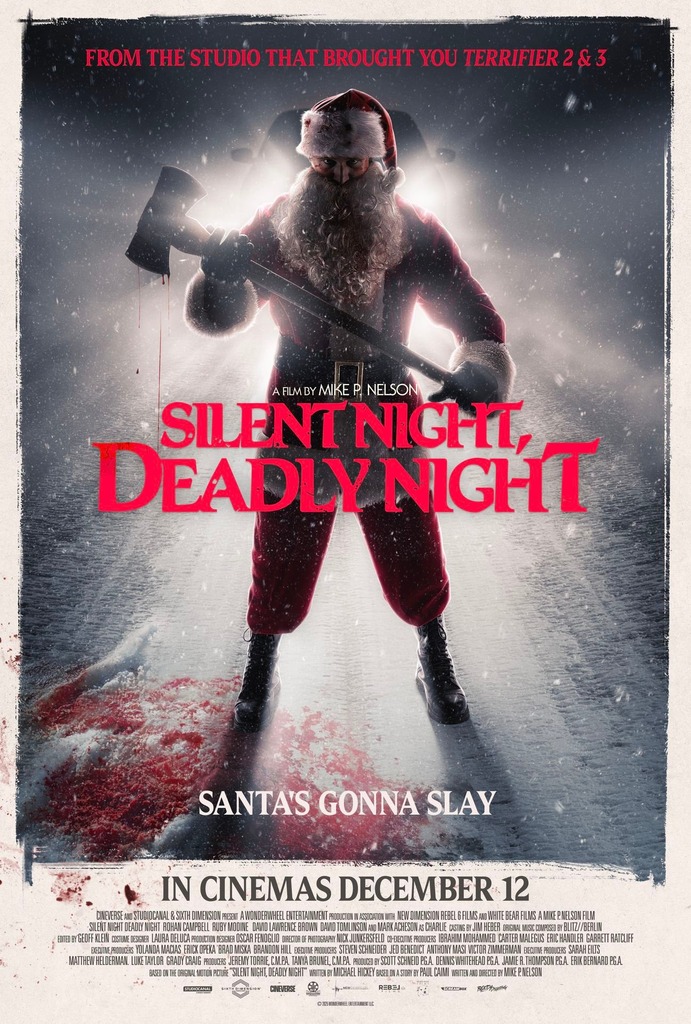
Mike P. Nelson has a gift for fans of Christmas slashers this holiday season: He’s remade a classic, SILENT NIGHT, DEADLY NIGHT (1984), with genre twists far nicer than naughty. The film, which stars Rohan Campbell, Ruby Modine and Mark Acheson, adds unexpected romance and magic to this killer Santa story. (Even horror buffs like a little holiday cheer, after all!) In this version, Billy (Campbell) becomes something of an avenging angel, guided by a mysterious, murderous voice in his head named Charlie (Acheson). To mark its opening weekend, the Wrong Turn (2021) director joined RUE MORGUE to discuss his approach to adaptation, his love of Pixar and killing Nazis onscreen.
First of all, holy shit, I’m talking to RUE MORGUE. This is quite cool for me. I’m kind of star-struck right now. I’m very excited.
Hell yeah! Thanks for taking the time. We’re excited to have you. Let’s just jump right in with your relationship with the franchise. Can you tell me about the first time you saw the original SILENT NIGHT, DEADLY NIGHT?
To be completely honest with you, the first time I saw the movie, I was a lot older, actually. God, I think I was in my 30s. My first real connection with it, though, was the poster when I was about 5 years old. I wasn’t allowed to watch horror movies growing up, then once I left the house, it was just, like, boom. I’m still making up for the lost time that I didn’t watch horror movies growing up. But in any case, I was born in ’82; the movie came out in ’84. My dad started taking me to the video rental store in this strip mall by our house early on. I can still remember this place: The smell, the stained carpet… not a very big space, you know, maybe 500 square feet, walking in, perusing the movies. I remember seeing the Evil Dead II poster. You know, “Dead by Dawn,” with the skull with the eyes looking at you, and right next to it, SILENT NIGHT, DEADLY NIGHT! Santa coming out of the chimney with the axe. I remember creating stories in my mind in those video stores about what those movies would be about, knowing full well I wasn’t able to watch them. SILENT NIGHT was one of the first ones that I did that with. To me, that was where the impression was left as a 5 or 6-year-old kid, being like, “Oh my gosh, a killer Santa!”
What was the story about, do you remember?
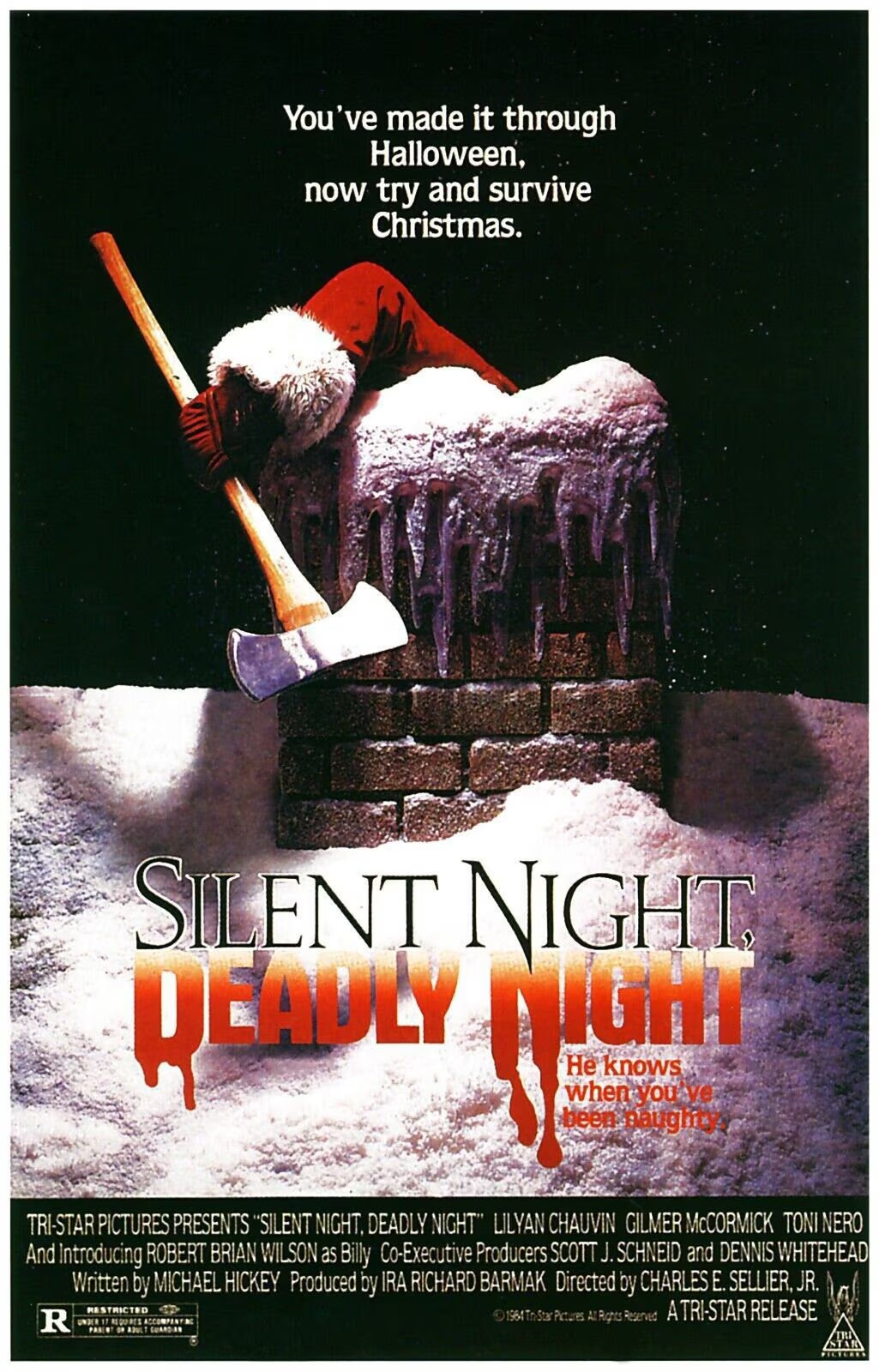 Oh, man, let’s go way back… You know, I think that when I saw that original poster, first of all, it had nothing to do with a character dressing up like Santa and going through trauma. I was too young to understand even what that was. But I did think that it was a movie about Santa – like the real Santa. And I think I imagined it more as Santa having to fight bad guys. It wasn’t like, “Santa’s evil, and he’s going to murder a family.” It was more like, “Santa’s got to defend himself.” I had a hard time imagining Santa doing really awful things, so it was more like, “Santa’s got an axe, and he’s going into this house full of bad guys.”
But I’ve always been a horror guy, even when I couldn’t watch the movies. One of the first stories I ever wrote in my entire life was about the Wolfman killing somebody – and I wrote that in kindergarten. You could not let me watch horror films, and that’s fine, but you couldn’t take the horror out of me. I was still gonna find a way to somehow tell the stories with my action figures.
Some people are just born spooky. I remember I had a similar thing where we had a creative writing assignment in the third grade, and I turned mine in, and my teacher was like, “We didn’t need this car crash ghost story, dude.” But that imaginative dynamic you’re describing feels very reflected in your new film. Your approach to remakes is kind of unique in that there isn’t this sense of being beholden to the material. So, with that in mind, how would you describe your approach to remakes?
I have to make something original. I can’t go back and just do the same thing again, even if I’m pulling you in to begin with, using some similarities. First and foremost, I just need to make a movie that I care about and that I feel is original. That’s key, and that doesn’t always work for everybody. Since Wrong Turn, I’ve been coming to terms with that more and more because, for some reason, I keep getting asked to jump onto these IPs. I’m not gonna say no, especially if it’s an IP that’s meant something to me as a young person or as a filmmaker. But I gotta go in and tell a unique story, and it’s gotta come from me. And then, of course, I gotta bring warmth. I gotta bring heart. There’s got to be something at the core that brings a little bit of hope. And I know that might sound a little strange in the horror space, but to me, to show the darkness, you need that little bit of light in there. It’s almost kind of like a take-it-or-leave-it thing, you know? That’s what you’re going to get from me.
Do you think that your continually getting approached to do IP is a reflection of the industry more broadly right now, where everything’s IP, or do you think there’s something about the horror space that’s particularly prone to this particular kind of recycling?
Maybe it’s a little bit of both. We’re seeing a recycling of all sorts of different movies, and I think that’s a little bit of – not to offend any executives out there – but I do feel it’s a little bit of a fear-based thing that happens because they know that if there’s any connective tissue to moviegoers out there, people are going to recognize it and be like, “Oh, well, I know that, and I’m going to go see it.” Maybe it’s easier. I’m not going to be the filmmaker that gives you the easy movie necessarily, though. I’ve been told no plenty of times because I wanted to take on something, and they wanted to go in a more traditional direction. I’m not interested in that. A few of the people that I’ve worked with actually really prefer that I give it its own spin, so that’s also fun, that people recognize that. But yes, I also think that the downside of it, even if it helps give me a project every so often, is that it can, at times, come across as security. But I’ll go right back to it. You won’t be getting anything super safe with me because I will take it off the rails a little bit.
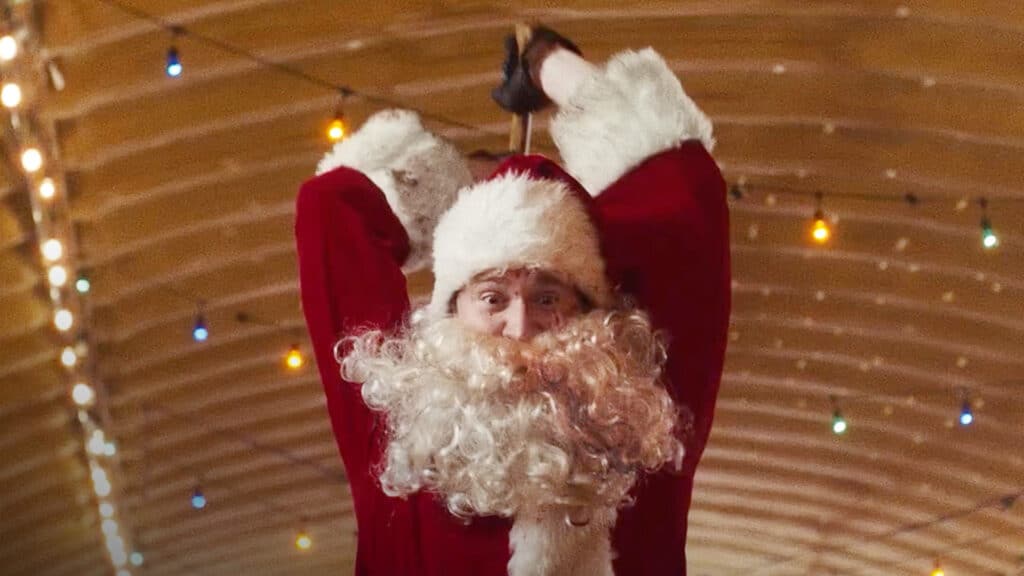
The way you subvert the franchise in this movie is so interesting and counterintuitive on that score, because in the horror space, the idea of not being safe is different. Being sweet can read as not being safe. You recreate that car scene with the parents from the original, but there’s no sexual assault. The fact that that’s surprising speaks to the dynamics of this genre. When you were building out this story, when did you decide that these elements – the sexual angles, the religious angles – didn’t interest you?
I was going for a different set of themes right off the bat. That’s the stuff that I was always less interested in watching the original. To be honest with you, I’m just not the filmmaker who’s going to dive in and give you a sleazy rape scene. I’m not going to rip open a woman’s shirt in my movie. I’m just not going to do that. The religion thing, I’d play with religion. The difference here, though, is that there are really no orphanages anymore. My nod to that was taking on the foster home instead, doing something kind of brutal and messed up, because that is very pertinent right now. It’s in the zeitgeist. So it was about taking some of those elements out that are maybe a little bit ickier, but replacing them with things that I feel surrounded by 24/7 today. fucking hate groups, pedophilia, fucking trafficking… You know, true crime. This stuff is everywhere now. So, I was like, I’m gonna put my spin on it. I gotta feel passionate about my bad guys. I also have to try to find something that would make me like them, even if they’re the most despicable human beings and deserve to die. I need something that makes me feel like, “Let’s go take them out.” That was how I found our villains in this movie
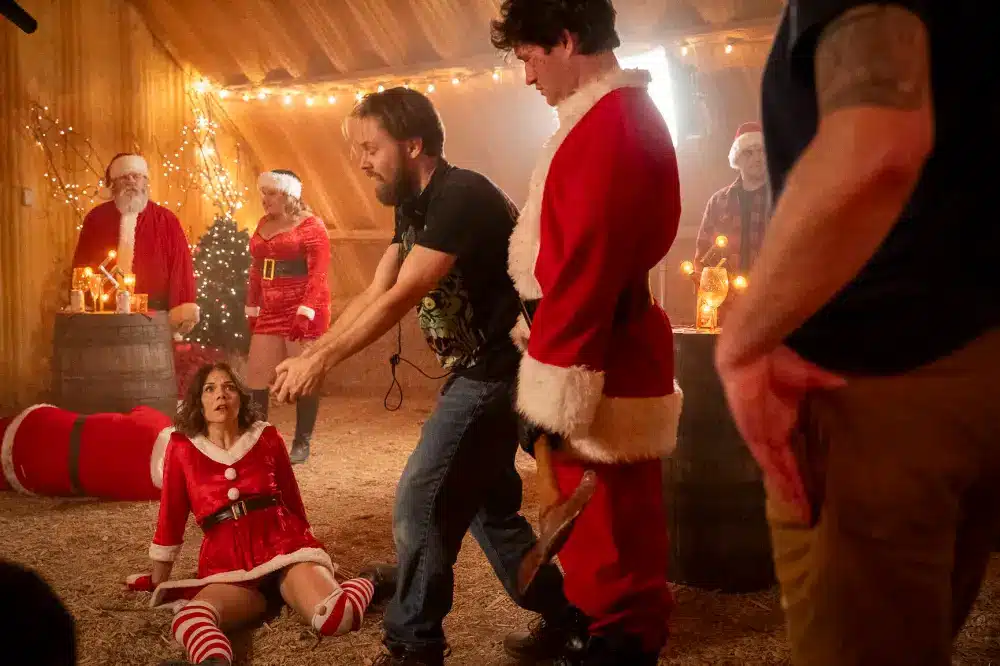
Mike P. Nelson on the set of the new “SILENT NIGHT, DEADLY NIGHT.”
It does feel like each separate vignette comes from a different realm of the headlines. And we obviously have to talk about the Nazi Christmas party, because that rocks. I had just rewatched Inglourious Basterds, too, so it was a perfect double feature. There have been a lot of movies responding, in particular, to the question of child abuse lately, and that comes a little bit out of the rise and fall of QAnon. We can think of movies as varied as Weapons and The Sound of Freedom. When you picked subjects so political, how did you approach that?
I’ll tell you one thing right now: If offing Nazis and pedophiles and sex traffickers and murderous husbands is political, then fuck, I am political. I don’t see myself as political, really at all. To me, this stuff is just fucking wrong. As a child of Indiana Jones, Nazis have been the absolute number one bad guy ever. Granted, there are movies that have humanized people who have been involved in Nazism before, and I actually think that’s really interesting at times because it gives you a snapshot of how somebody can actually be ordinary but also have so much hate. For this, I’m just turning Billy into Indiana Jones. He gets to take out a room full of Nazis. This was me taking vengeance on those people out there who are doing something wrong. And to me, that’s not political. That is just a human being being an evil person.
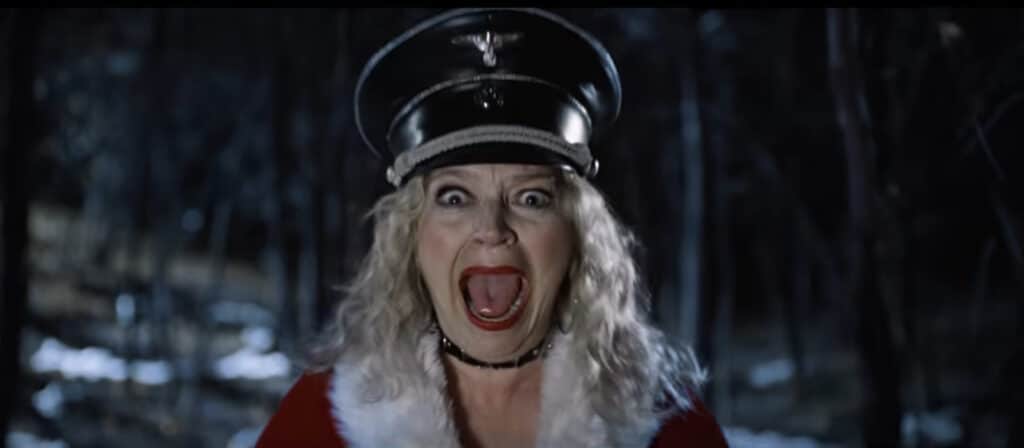
So, the Nazi party scene was directly inspired by Indiana Jones?
One hundred percent!. There’s actually a line in there that’s a direct reference. When he enters the party, and Charlie says, “Oh, let’s just find her and get this over with,” Charlie says, “Agreed, we are pilgrims in an unholy land.” That’s Sean Connery’s line in The Last Crusade, when they’re at the book burning ceremony with all the big swastika panels, and Hitler’s up on stage. This is my inspiration. There’s probably a little bit of Inglourious Basterds in there as well. Any movie in which you can take out a room full of Nazis, sign me up, please.
What were the other inspirations that you drew from? Christmas movies, horror movies, anything else?
Oh, yeah. So strangely enough, movies like The Santa Clause and Elf are two of my all-time favorites, and I do feel like they had some inspiration. Let’s call it the body-swap element and fish-out-of-water love story. Also, surprisingly, I watched a lot of Pixar while I was writing this. Inside Out, Turning Red, Up – these really emotional stories. There’s such juicy stuff in there that I can relate to. Then, you have movies like Frailty and Adam Wingard’s The Guest. Sandwich everything in between those two movies, and you get my SILENT NIGHT, DEADLY NIGHT. A weird slurry of films all put together, but ultimately, that was my inspiration.
That’s so fun. So, perhaps the change that people will be most surprised by is this more supernatural element in your film. The question of the voice Billy hears. But where did that supernatural element come from?
A lot of that inspiration was like a film, like Frailty, where you’re supposed to be like, “What is going on here? Is this for real?” And then, of course, playing on serial killers like Son of Sam’s line, “my dog told me to do it.” I wanted to give Billy an angle where we can make an excuse for him in the beginning, like “Oh man, he’s got schizophrenia, he’s the serial killer with the voice in his head that’s telling him what to do.” So you think maybe he’s not a bad person deep down. Then that voice, Charlie, turned into a complete character in itself. The goal was to surprise people that this voice in his head isn’t just the devil, he’s actually a guiding light, an angel on his shoulder, a father figure. That, to me, was the thing that really interested me.
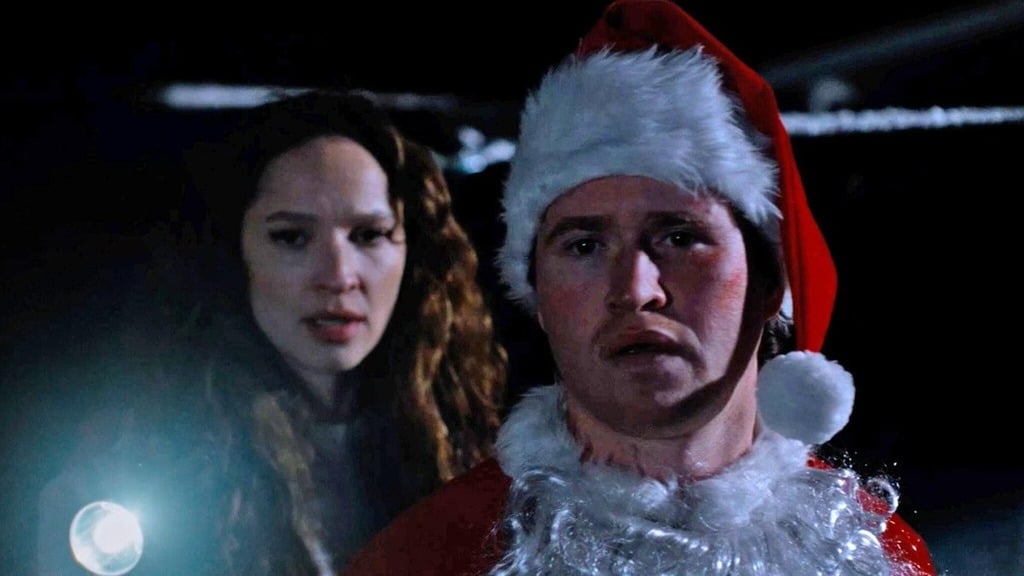
The dynamic between Billy and Charlie is so sweet. The chemistry between your two romantic leads is also incredibly sweet. I love Pamela. She’s a brassy character. Tell me about her.
Ruby [Modine] was actually the only person I sent the script to for Pam. I knew her work. I had met her, I’d worked with her on the soundtrack for Wrong Turn, and I obviously worked with her dad in Wrong Turn as well, so that’s how I was able to connect with her. I was like, “Hey, I think you’d be great for this. Give it a read, let me know what you think.” And immediately she was like, “Yep, I’m in, and you can’t say no to me now. You gave me the script, I’m in.” It was kind of kismet in a way, too, because with a movie that we had to do this fast, there wasn’t a ton of time for Rohan [Campbell] and Ruby to connect or hang out. But shooting in Winnipeg, they did their homework. They spent time together. They were reading lines together. They were going out to eat, constantly looking for what they could learn about each other to get under each other’s skin, make each other laugh. I was so blessed, because some actors will tell you they’ll do that, then don’t. It’s something that I love when my actors are willing to do something like that. And that’s really the heart of the movie. They found something. God, that was so much fun.
Watching the movie, it feels like a production that would have been fun on set.
There was so much laughter. Every single day, we were laughing about some stupid thing, and I mean, crying laughing.
Do you have any favorite memories from the set?
Obviously, shooting the Nazi party killfest was so much fun. My son is actually also in the movie for a very brief moment. He’s the little boy who finds his dead grandfather in the house – and that was a lot of fun. That was a huge moment for me. Also, that Ruby hockey stick scene was a blast to shoot because that was actually a moment that people were scared was going to make Pamela very unlikable. But my push was always, “Watch. They will like her more because of this.” And that’s what ended up happening.