By PAYTON McCARTY-SIMAS
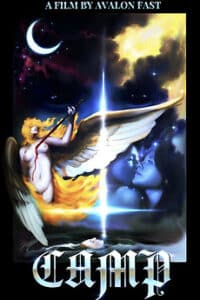
You may not have heard the phrase “girl horror” before, but once you have, it tends to stick in your mind. This evocative but ephemeral coinage first came to my attention at last summer’s Fantasia Film Festival after a screening of Avalon Fast’s latest mordant adolescent dreamscape, Camp, about witches at a Christian sleepaway camp. The filmmaker (who uses she/they pronouns) emblazons the words in elegant capital letters on the home page of their website, cleanly and without context; it sits there like a juicy, glittery clue. For me, it became a gateway to exploring a loose category of films I’ve always loved but could never quite put my finger on.

Avalon Fast’s first film, “HONEYCOMB” (2022)
Over the course of the Brooklyn Horror Film Festival this October, I spoke to Fast and other directors, as well as programmers and writers whose work falts in line with this phrase. Together, we started building out a working definition of girl horror that, like girlhood itself, ultimately, remains loose, almost elusive, yet deeply resonant.
So, what is girl horror exactly?
“I actually thought about cutting [girl horror] entirely from how I would classify my films because, obviously, it’s gendered,” Fast told me over chips and guac between festival screenings, “but there’s something deeper to it, you know? There’s a bit of an exclusivity that I don’t want to exist, but it’s about the feminine experience, feminine power, feminine fear and horror that I think is in so much of the stuff that I love.”
The notion of “girldom” has taken on an increasing cultural prominence over the past several years, from hot girl summer to girly pop meme pages to the more problematic, ironized-yet-vaguely-anorexic girl dinner. Trad-Catholicism and the right, meanwhile, promote their own particular kind of womanhood, using the frilly, girly trappings of hyper-traditional femininity as a powerful vector for antifeminism. The experience of “girlness” is multi-edged, both expansive and, at times, entrapping; there’s power and play in being a girl but darkness and morbidity as well. “There’s something about the word ‘girl,’” Fast continued, “It’s that experience if you have been a girl, or if you’re a girl now, that experience of transformation within what that word can mean, coming out of it, coming into it. It’s either something you’re letting go of and moving on from, or something you’re striving to get to – ‘girlhood.’ And there are horrifying aspects to both of those experiences.”
Tori Potenza, a programmer at Brooklyn Horror, agrees: “When I think of girl horror, I think of puberty and rage and just being fucking out of control and crazy,” she laughed, citing Jennifer’s Body, the works of Emerald Fennell and “House of Psychotic Women-style” giallo films like The Corruption of Chris Miller. At the same time, though, “[T]here’s something about growing up, if you’re socialized as a woman… There’s so much shit that’s embedded in you that you only start unlearning over the years. I’m 30, and I’m still doing it.”
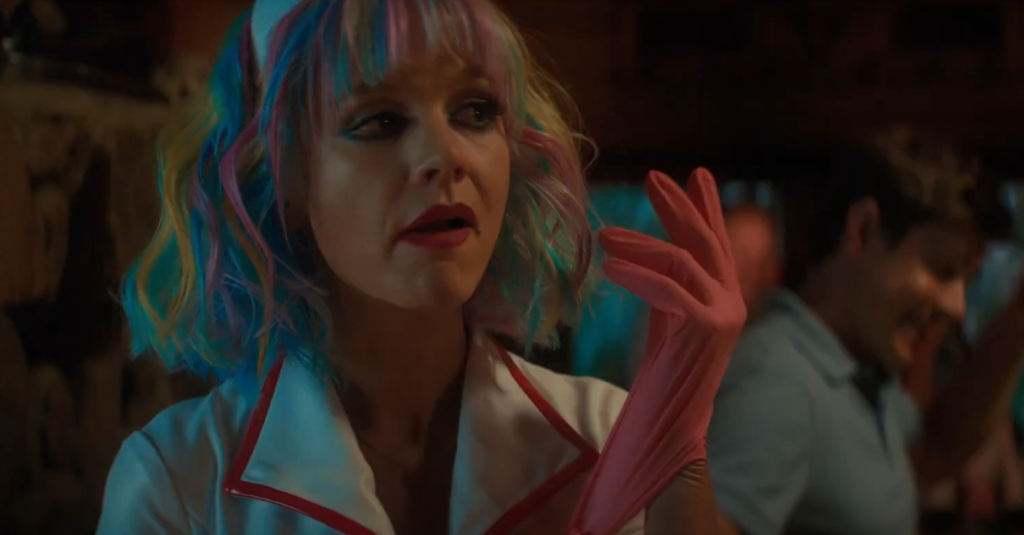
Emerald Fennell’s “PROMISING YOUNG WOMAN” (2020)
This last idea, that girlhood transformations follow people – importantly, people of any gender whose lives have been shaped by femininity and its vicissitudes – throughout their lives may explain why lists of girl horror films online tend to include stories about the struggles and fears of women of all ages, from The Blackcoat’s Daughter to The Babadook, or why temporally wide-ranging queer stories like I Saw the TV Glow were mentioned across several of the interviews that I conducted. “The very idea of what a ‘girl’ is is fluid for the first time,” suggested Heidi Honeycutt, author of I Spit on Your Celluloid: The History of Women Directing Horror Movies. “I can be into girl stuff and girl horror and totally not be a girl. I’m way too old to be a girl – or you can be queer or trans and still totally identify with and be included in ‘girl horror.’ That’s amazing. I think that’s why girl horror, maybe, wasn’t such a thing before the 1990s, with the Riot Grrrl movement. Maybe gender roles were too strict, and the world wasn’t open to exploring what being a girl actually means.” Perhaps the current wave of antifeminist backlash, with its renewed emphasis on rigid femininity, brings this fact into even sharper relief.
Some of the most recognizable examples of girl horror, as defined most broadly by these artists and programmers as emphasizing feminine coming-of-age narratives, do originate in the 1990s teen horror cycle. Films like Buffy the Vampire Slayer, The Craft and Ginger Snaps center on the stories of young women whose problems with everything from school to puberty to mental illness to domestic abuse are depicted with empathy and identification. For Caryn Coleman, founder of The Future of Film Is Female, these films represent the “hyper-feminine middle finger antithesis to what men have created, a little bit tongue in cheek and unexpected.” Before this era, there are, of course, examples of woman-and-girl-centric, thematically driven narratives in horror: depictions of the anguish of teenage girlhood can be found in the violent beauty standards of Eyes without a Face or the repressed adolescent sexuality of Spider Baby. The wrenchingly feminist, deeply subjectively depicted gaslighting story at the heart of Rosemary’s Baby, for example, paired with its examination of Rosemary’s coming to terms with her childhood relationship with religion, makes the film a strong contender as a precursor to this category. Even though Rosemary is an adult woman, themes of outsider arrested development often appear in conversations around proto-girl horror– What Ever Happened to Baby Jane? and Cat People (1942) were also cited by multiple interview subjects. Later, teenage girls were front and center in films like Black Christmas (1974), which includes frank discussions of abortion between college students. Halloween (1978), too, puts its audience firmly in Laurie Strode’s shoes as her babysitting gig goes nightmarishly awry.
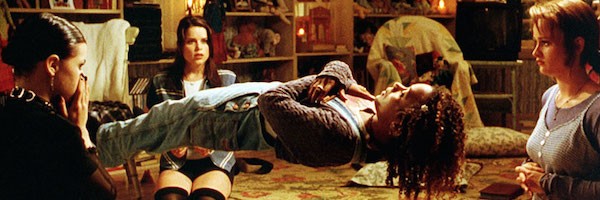
Andrew Fleming’s “THE CRAFT” (1996)
Likely the most obvious example of this kind of story before the ‘90s girl horror upswing is Brian De Palma’s Carrie, the tale of a teenage girl whose delayed menstrual “entry into womanhood” brings about a more radical, witchy transformation. For many girls, this story is the catalyst for a lifelong love of the genre. “My mom showed me Carrie at a really young age, and at first, I was horrified!” said Zelda Adams, co-director and star of domestic punk (girl) horrors like Hellbender and, most recently, Fantasia Fest’s Cheval Noir winner Mother of Flies. “Then, I kind of loved the fear that that movie gave me. Ever since then, I had this attraction to horror. I was addicted to that idea of being able to scare those around me, but to be scared too. I think that’s a product of growing up for me, wanting to push the limits of what was deemed normal, being a young girl.”
Brian De Palma’s CARRIE (1976)
De Palma’s film also became a flashpoint for challenging questions of identity, ownership and gendered perspective in this category – a sticky, potentially essentializing auteurist question with which artists continue to struggle. “I think aspects of Carrie are girl horror, but the way that that movie handles women is so icky to me,” Aimee Kuge, director of this year’s neon girl horror morsel Cannibal Mukbang, mused during a conversation about whether directors who don’t personally identify with femininity can make girl horror. As she reflected on Carrie, she objected to De Palma’s famously voyeuristic shooting style and sensibility rather than any particular identity, ultimately suggesting that questions of authorship come down to a vibe more than anything else: “Girl horror is open to all kinds of people because that’s how femininity is. That’s part of what separates girl horror from movies like Transformers that are so masculine and objectifying. I think that while a lot of different people can make it, there’s this genuine vibe that has to be there at the core. You can’t fake that.” While everyone I spoke with agreed that girl horror in no way had to be made by “girls,” the loose idea of a “vibe” kept returning. Alice Maio MacKay, the prolific 21-year old Australian horror auteur whose deliciously handmade, punk-passionate oeuvre invariably topped other interviewees’ lists of girl horror films, agrees with Kuge on this score. “As a child, I felt more inherently drawn to the Chloë Grace Moretz version of Carrie [2013], which I know is a very unpopular opinion. But I think it was the perspective. Obviously, it’s not as critically or widely acclaimed as the original, but for me, there’s something about having a queer director [Kimberley Peirce] making that film, and then having the Paramore needledrops. To me, that feels very inherently girl horror, even if it’s still coming from Stephen King’s work. It’s about getting the vibe right. Authenticity.”
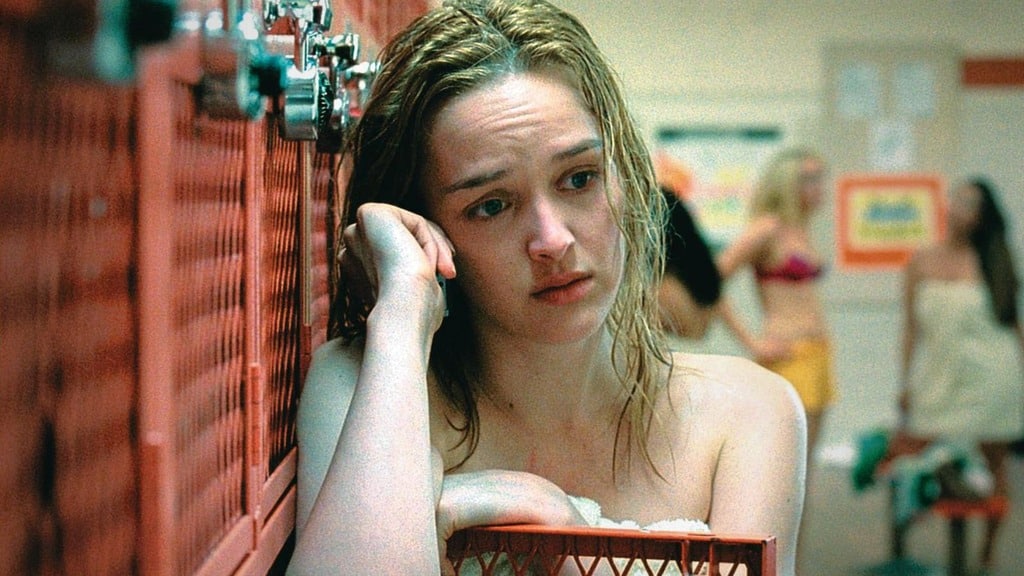
Mitchell Lichtenstein’s TEETH (2007)
While many examples of girl horror raised for this piece were written and directed by men, from May to Teeth to Helter Skelter (2004), the directors I spoke to seemed steered by a personal sense of feminine experience as specifically rooted in a kind of quotidian horror; according to them, the recent upsurge in movies of this type is likely a reflection of more women directing within the genre. “There are very few horror movies with genuine female protagonists before the ‘70s,” Honeycutt explains, “You can sort of count them on your hand.” Director Grace Glowicki notes something similar when describing her trips to the video store to research her latest rollicking girl horror black comedy film, Dead Lover: “I was like, ‘Do you have any horror movies directed by women from the ‘70s?’ And The Slumber Party Massacre [1982, dir. Amy Holden Jones] was the only thing that he could think of. It’s just this desert before a certain time period, where it’s all dudes making this stuff. It was amazing to me that this genre was so male-dominated right up until the 2000s or even 2010s.” Heidi Honeycutt and Caryn Coleman both put an even finer point on it. “The only difference I’ve really been able to find consistently between men and women directors,” the I Spit On Your Celluloid author says, “is that women tend to make more movies with female leads, in general, than men. So by default, you’re going to have more stories about girlhood and girl horror.” Coleman agrees: “We’re in a new horror era of independent women-directed horror films. Jennifer’s Body came out in 2009, but I personally feel like it’s not until 2014 that you see a real shift with things like A Girl Walks Home Alone at Night, The Babadook and Good Night Mommy. Women have been the basis of horror films forever, but now, they’re finally being written and directed by women and told in a scarier, more realistic way.”
“The horror genre is actually so appropriate to my experience as a woman,” Glowicki says, a Whatever Happened to Baby Jane? poster hanging prominently behind her. “There’s so much gruesome and horrific stuff that you go through as a girl, so horror is perfectly positioned for a girl to come in and make a movie about the stuff that she’s gone through.” While describing the process of writing chauvinistic characters, Kuge said something similar, ruefully explaining that most of the men’s dialogue in Cannibal Mukbang was drawn from real-life catcalls and overheard conversations. “It seems like we’re exaggerating things when we talk about what men do and say, but we’re actually not exaggerating enough. It gets really gross and weird just existing as a feminine person in the world.” Annapurna Sriram, whose feature debut, Fucktoys, a raunchy queer fantasia that follows a sex worker (Sriram herself) as she tries to lift a curse, find love and not get killed in the process, made a splash on the festival circuit this year, put it even more bluntly: “Fucktoys is actually about the horror of being a woman.”
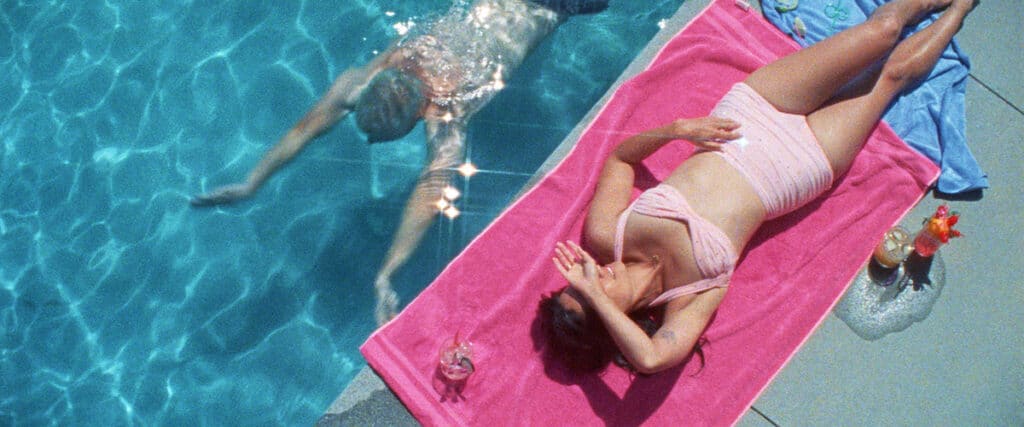
Annapurna Sriram’s “FUCKTOYS” (2025)
It was Sriram who ultimately posited a framework for understanding girl horror that seems to tie the others togethe, fittingly coming at the question not through a taxonomic lens but a personal one about her own filmmaking:
“We really wanted to start [Fucktoys] really campy, and then as the movie progresses, it becomes more and more grounded. That evolution, to me, is the journey of being a woman. We have to put on this no-fucks-given, this cool girl, this fun, mysterious, sexy, silly – whatever that facade is. That’s part of the expectation of our gendered performance. And when you actually start to strip that away to the actual interior life, it’s not that we’re not fun and we’re not sexy, it’s just that we’re also real people. That evolution of the tone of the film is very much by design because the movie itself is like living through what women live through. When I have a lot of these cis-het male audience members, their criticism is, ‘It starts really fun, and then it takes a turn, and it’s not.’ To me, that seems kind of like how they feel about women: ‘She’s really fun, but then she got serious.’ You don’t like it when we actually drop the facade. Seems like when we’re real as fuck with you, your dick doesn’t fucking work! It’s interesting to see how it plays out with male cinephiles watching this movie because I think it exposes misogyny.”
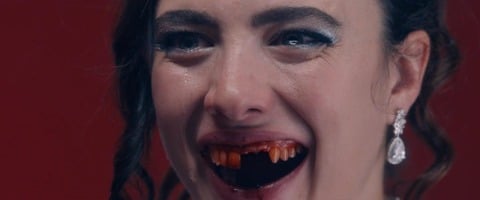
Margaret Qualley in “THE SUBSTANCE” (2024)
It’s this subversive streak that seems to tie movies as experientially disparate as Raw (a favorite of Zelda Adams’), The Ugly Stepsister, Grafted, Prevenge and Revenge together. In these kinds of films, girls are presented as beauties and beasts in equal measure, built up only to be stripped down layer by layer with style, flair, humor and rage. Perhaps the perfect encapsulation of this defiant, deconstructed girl-subjectivity is lonely prom queen demon Jennifer Check. slathering on foundation alone in her heart-shaped mirror, or goth witch Nancy Downs flying across a bedroom to scream at her rapist during a frat party, both broken and wrathful, or Sue desperately yanking out her own rapidly decomposing teeth in a final attempt to get on stage for the New Year’s broadcast in The Substance. Girl horror, from Piggy to The Love Witch, “empowers women as entities, even if they are only in high school.” Honeycutt wrote me following our interview, “It means you have power simply by existing as who you are, and that is worth something. I think that’s more important than ever before in the climate in the U.S. Sisterhood, friendship and alliance with queer communities and feminist communities are the keys to maintaining personal agency and power when it is challenged. It’s a movement. The girl horror we see is only one small part of the overall movement of empowerment that was started in the ‘90s. It translates into a specific type of horror film, but it is prevalent in music and art as well and shows up in different ways.”
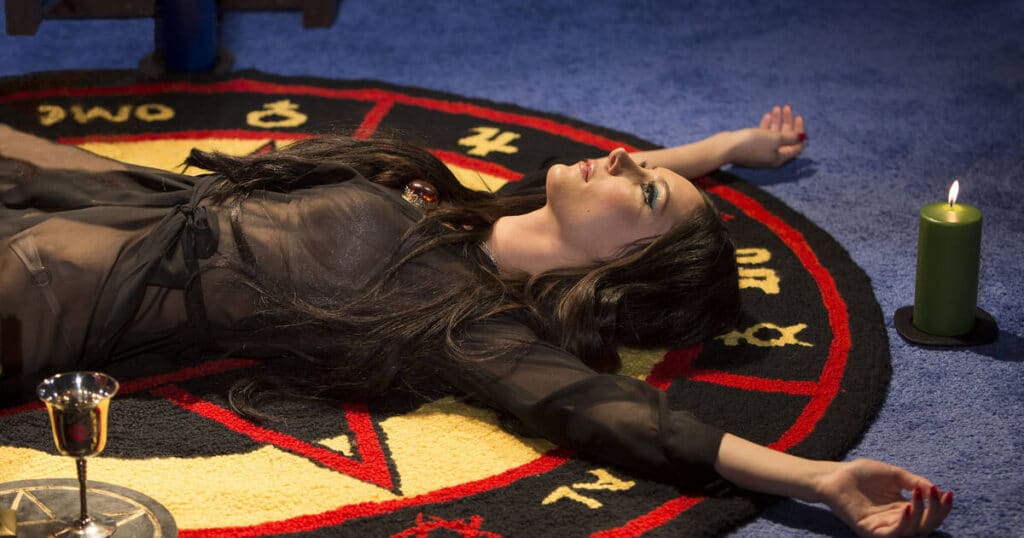
Anna Biller’s “THE LOVE WITCH” (2016)
True to that Riot Grrrl spirit, community seems to be the name of the game for this small band of girl horror filmmakers. “As I’ve worked with more horror people,” Glowicki explains, “it’s an actual community of weirdos that feel Other. It’s actually quite built for queerness, for women or for people that feel outside of something. I feel really excited because all my friends are making films. There’s this bounty of filmmakers who are making cool stuff – and I think there’s an appetite for weird horror right now.” Building on a similar idea, Adams states, “That’s what’s so wonderful about the horror genre. It’s one little family. There are millions of us, yet we all feel so close through our love of telling important stories, being scared and a little bit of blood. It’s wonderful, and festivals have been a huge driving force. They cultivate such an important community. ” The sense of girl horror as a family affair was palpable among all of these filmmakers. Adams recently worked with Fast, providing the ethereal soundtrack for Camp (an experience she described as a “divine honor”), and shared her interest in working with MacKay (who returned the favor) as well. Fast, meanwhile, starred in MacKay’s most recent film, The Serpent’s Skin, another Fantasia favorite that originally piqued my interest in this subject. Sriram is herself in the process of collaborating with MacKay on her next film. When each interview concluded, the enthusiasm with which these creators offered to involve their other friends – directors, programmers, authors – in the girl horror project was electric, a surprising welcome.
 “I’m at such a high with [independent] filmmaking right now,” Fast told me near the end of our conversation. “Castration Movie and what Louise [Weard] is doing is a film revolution. I’m just so stoked to be alive for this generation, which is a weird thing to say, because a lot of other things right now fucking suck, but where cinema is at on the scale of Castration Movie on the one hand, and with Jane Schoenbrun’s movies being very high budget on the other? Having a trans person have that kind of budget in the landscape of today, that’s a revolution. I’m so happy to exist in this world with these people. I’ve admired people’s work from afar, and now to have the actual throughline of knowing and working with them? It makes my life worth living.”
When asked what girl horror gives an audience, the same sense of community was a common refrain. “When queer people, trans people, sex workers, women, can all be in an audience together,” Sriram told me after describing her decision to focus her energies on smaller, more diverse festivals this fall, “I look out, and I think, ‘Wow, look at this little community we just formed! You can all go share contacts! Here’s your friend group!’ Cinema really does have this power of creating community.”
Ultimately, the passion, avid feminist politics and handmade sense of punk rock solidarity these conversations conveyed did more to define what girl horror is to me than any particular cinematic example we discussed. Girl horror is a vibe. Girl horror is what girl horror makes us feel. “In this political climate, feminine rage is really palpable,” Potenza said, tapping the tabletop for emphasis. “Girl horror is a subset of that. We need to do something with all these fucking feelings that we’re having right now. In really tumultuous, bad times like this, though, we get really amazing art. I have faith in indie cinema to do its job and be the space for weirdos to express themselves, and I hope we keep seeing more fucking weird, horny, bloody shit from girls.” As we concluded our interview reflecting on the future of girl horror, even Kuge’s typically sunny demeanor took on this edge of playful deviousness: “I think the more girl horror that gets made, the more girl horror will spawn from that. It’s like a fun little infectious disease that if you see it, you want to make it, and then more people are gonna feel inspired, and more people are gonna make it. I can’t wait to see more girl horror.”