
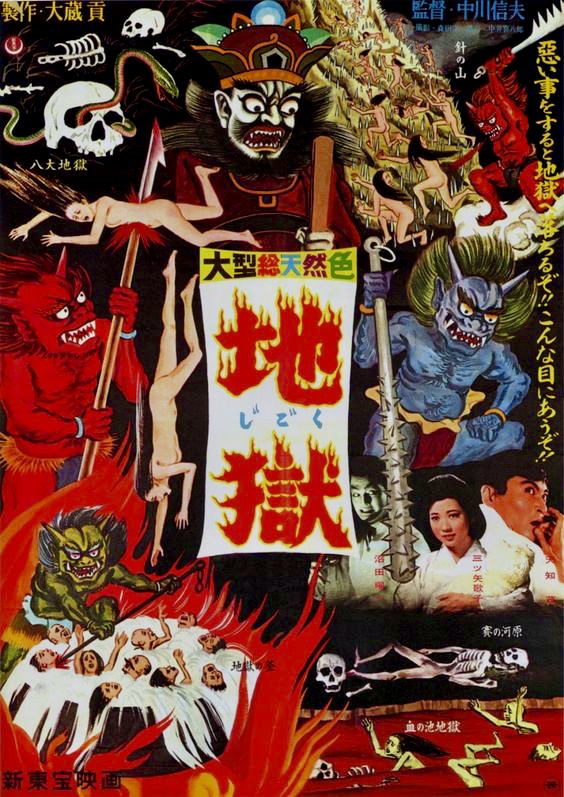
Here at Far East Extreme, we like to go for the new and shiny: there are constantly new films pushing the envelope of horror cinema, with an ever-growing audience spanning the entire globe. However, it is also warranted on occasion to look to the past to see the way things were, and what was shocking to moviegoers back then. In terms of Japanese horror, one may be familiar with old-school spookfests like Kwaidan or Kuroneko, but these are ghost stories first and foremost, and many of them –most famously Western horror like the original House on Haunted Hill -don’t quite compel the screams they used to. That’s why I was thrilled to find a true extreme Japanese classic, 1960’s Jigoku.
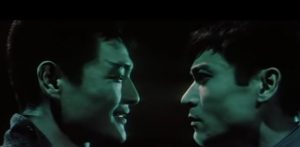
Also known as The Sinners of Hell, this film is, quite simply, about hell. Thankfully, there isn’t so much fire and brimstone here. Instead, we are treated to the director’s interpretation of Buddhist Hell. What does that entail? Well, for starters: lots of darkness, impossible spaces and time lapses, and possibly flashbacks – with a hellish twist, naturally. It was honestly quite educational in addition to the entertainment value. Hell is also the setting from which the film begins: the first scene is that of a casket, and then when we meet our protagonist, university student Shiro Shimizu, he is seemingly already dead and in the underworld. The cast and crew worked under limited budget and technology constraints, but what they were able to accomplish as to the look and feel of the completed piece is rather admirable. For the scenes taking place in the underworld, the entire film has a green tint added to it as well as practical smoke effects, looking very much like a surrealist painting come to life. The green screen effects are also well done for 1960, although they overuse a shot of people “falling” into hellfire which ends up being quite humorous by the end.
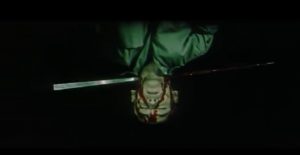
Jigoku primarily concerns itself with the question of Shiro’s mortality and fate. He “wakes up” in class –as if his trip down-under was just a dream – and is teased by his schoolmate Tamura. Astute viewers will guess Tamura’s role immediately: for a regular everyday kind of person, he has an uncanny way of getting into people’s minds, knowing things they want to keep hidden, and magically appearing in places he shouldn’t be. He’s also something of a sociopath, such that when he and Shiro hit a drunk yakuza with their car, Tamura refuses to turn around, and taunts Shiro for his anxiety of having committed murder. Aside from car scenes or the like, much of the film uses a static camera with actors coming in from off screen, as if Shiro’s life is no more than a play we are viewing. The acting itself is first-rate, especially the ever-tormented Shiro (played by Shigeru Amachi). Despite his crime, the film makes it clear that he is more-or-less a normal, decent person in a horrible situation; especially given his family circumstances, including his dying mother and adulterous brutal father. He doesn’t necessarily deserve what is happening, but he is experiencing suffering because suffering is part of life – more Buddhist philosophy for you! He’s also not alone: the ever-knowledgeable Tamura (after following Shiro to the commune his parents are staying in) informs a room full of seemingly normal people that they are all in fact criminals. However, Shiro’s actual life, eerie as it is, is more drama than outright horror, and for a while I was wondering if Jigoku’s reputation as a subversive gorefest was actually warranted.
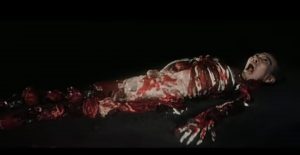
“He doesn’t necessarily deserve what is happening, but he is experiencing suffering because suffering is part of life – more Buddhist philosophy for you!”
Luckily, the second half of the film kicks things up dramatically. This is when Shiro has to actually journey through and experience hell proper, and we get to experience his agony by proxy. So what is there to do in hell? For one, you might pile stones unendingly, or chase after your unborn child, with them always out of reach. Or perhaps you committed crimes in wartime? Get ready for that to come back to haunt you in some horrifyingly metaphoric fashion as well. Then of course are the more straightforward punishments: people being hung upside-down, eviscerated, forced to walk on knives, getting their teeth smashed, etc. The guts and gore is very impressive…most of the time. The immersion is broken slightly when, for example, we can clearly see the “corpses” lying around are covered in red paint. This part of the film is quite entertaining, however, it also has its low-points: expect plenty of shots with people running around screaming and shouting each other’s names ad-nauseum. Some may also find the ending somewhat anti-climactic, but it’s understandable that this isn’t the sort of film where the good guys “win.” All in all, Jigoku as a whole is still strangely moving in a way that most budget horror can’t quite manage even fifty years later. It has all the hellish imagery of something like Haxan (or my personal favorite version, the Burroughs-narrated Witchcraft Through the Ages), but also a strong emotional core.
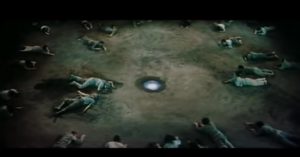
This film, in contrast to its cult following nowadays, was not a hit when it came out, and actually forced the closure of its production company. In the years since, however, it has been remade twice (one in the 70’s, and then in the 90’s, both in Japanese) and each with a unique take on the theme. For an early Asian horror flick, it’s among the best for sure.