By HARLEIGH KERIAZES
“Listen to them, the children of the night, what music they make.” Dracula may have been referring to wolves when he said this, but there’s no denying that throughout the history of horror, vampires do infest music. Whether they make their own albums or loom in our viral sound bites, they’re here and will be forevermore.
We’re fascinated with vampires. They glide through our folktales, our books, films, and lyrics. At this point, they’re easy to visualize: impeccably dressed yet monstrous aristocrats, mouths full of blood because they can’t stop themselves from biting your neck. The pointy-eared, rat-fanged embodiment of decay. The slinky stranger who floats into your room.
Not quite human, but not completely inhuman, they’re disturbingly like us at times. That’s how they get you to follow them into the shadows; despite their parasitic nature, Buffy the Vampire Slayer’s Angel and Spike warrant sympathy as romantic leads. Even if sympathy isn’t there, allure is. Bram Stoker’s Dracula and John William Polidori’s Lord Ruthven‘s appeal lies in their charisma, the way they hold the world in the palms of their hands.
Vampire lore is also vast, varying across times and cultures, ranging from the ancient Manananggal of the Philippines to the Slavic Strigoi. Some of their hearts beat, or they burst into flames in the sun. Others sleep in coffins and have magical powers. They all take life force and feed upon living things to sustain their immortal existence. It’s as if by drinking blood, they’re attempting to hang on to the tiniest measure of mortality. Remember, vampires were once like us.
A bloodsucking monster that yearns to drink up humanity wherever it can is a romantic notion; to be inhuman yet crave humanity. That’s the position in which author Anne Rice firmly placed her vampires. They are monsters that experience love, loss and longing. Compared with early cinematic and literary vampires, Rice’s take seems like a very mortal concept rooted in high emotion. From fear of disease to sexual desire, vampires have become such an effective shorthand for our collective cultural anxieties that they’ve invaded our music.
Olivia Rodrigo’s 2023 song, “Vampire,” uses the trope as a metaphor to illustrate how soul-sucked and used she feels after the end of a fraught relationship with someone older. She sings, “’cause girls your age know better,” a subtle but pointed use of the trend in YA horror fiction of the vampire being much older than their human partner/victim – someone older who makes the narrator feel small. The vampire is manipulative yet enthralling, the kind of person who takes what they want and leaves her feeling empty in the aftermath. The lyrics “Bloodsucker / fame fucker / bleeding me dry like a goddamn vampire” hit the image of the vampire in popular culture right on the head.
Concrete Blonde’s “Bloodletting (The Vampire Song)” from 1990 similarly portrays a terrible relationship refracted through a vampiric lens. This song is partially inspired by Interview with the Vampire, with allusions to New Orleans and a tumultuous romance with an emotionally draining partner. Johnette Napolitano sings, “You were a vampire / and I may never see the light.” Again, the ex-lover is a draining instigator of emotional decay.
Even the Smashing Pumpkins‘ opening line of their 1995 hit “Bullet With Butterfly Wings” asserts “the world is a vampire,” therefore, dangerous, and could take your will to live. Ghost’s “Life Eternal” and Christina Perri’s “A Thousand Years” construct steadfast pictures of a love that lasts forever without overt mention of undead bloodsuckers.
Tame Impala’s “Dracula” uses Stoker’s legendary character as a stand-in for someone who relishes the night and fears the sun. The lyrics romanticize the darkness:
“The shadows, yeah, they keep me pretty like a movie star / daylight makes me feel like Dracula.”
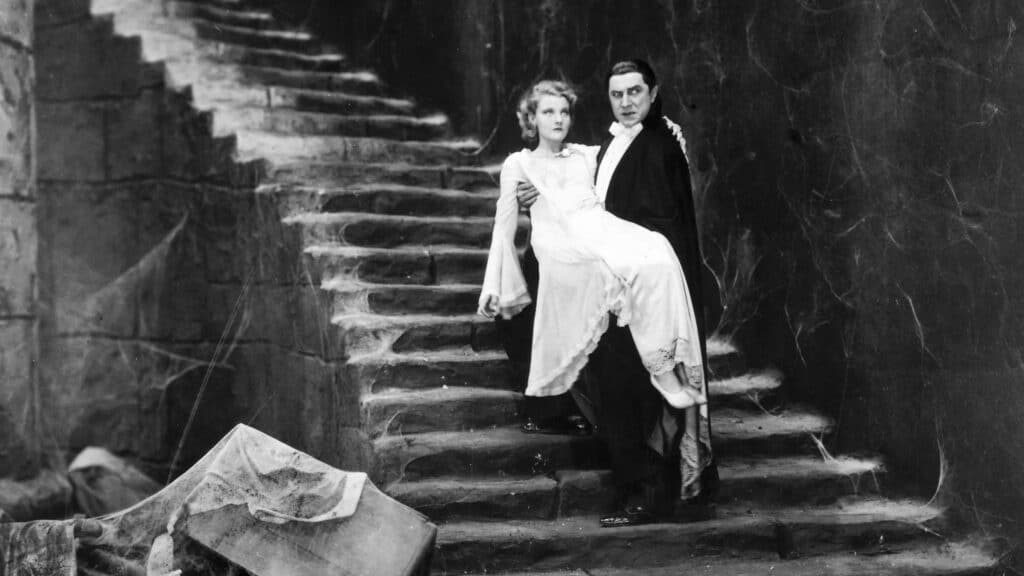
The song wants you to envision Bela Lugosi at the top of the stairs in his castle, illuminated by a single candle and cloaked in cobwebs. And you do. He’s aspirational. He’s sinuous. He wants you to stay out all night. Laura Branigan’s moody 1984 single “Self Control” also coopts a fatalistic, vampiric devotion and obsession with the night: “I live among the creatures of the night / I haven’t got the will to try and fight / against a new tomorrow.”
Then there are songs that do evoke actual vampires, their emotional experience, or one vampire in-depth. For example, Blue Öyster Cult’s “Nosferatu” more or less guides the listener through a slow, melodic tale of the film. The Nosferatu is a terrifying figure that can only be defeated by a woman who’s pure of heart. The song ends with her offering herself to him. Additionally, there’s the goth anthem “Bela Lugosi’s Dead” by Bauhaus, “Bats” by Scary Bitches and “No Vampires Remain in Romania” by King Luan and Roky Erickson‘s “Night of the Vampire” among many, many others. I could list vampire songs for hours.
Notably, Sting’s “Moon Over Bourbon Street” is also inspired by Interview with the Vampire. The song references the vampire Louis as the narrator of the song and spotlights the torment he feels after becoming a vampire, killing to survive and his struggle to reckon with a life he didn’t want or didn’t expect:
“In the pale moon light / how could I be this way / when I pray to God above / I must love what I destroy / and destroy the thing I love.”
Plagued with their own guilt, vampires can be a well of deeper feelings as well. Anne Rice’s Louis began a larger trend of vampires who struggle with self-loathing and guilt, adding yet another layer of depth to the metaphorically malleable monster.
Because vampires have evolved into such an immaculate catalyst to explore repression, danger, and desire, they’re near-perfect metaphors for a slew of narratives. Whether it’s a toxic relationship, a love that lasts forever, or being a creature of the night yourself, vampires are embedded in the content of our popular music. Their impact goes deeper, though; what about fictional vampires who make music? Or musicians who become vampires?
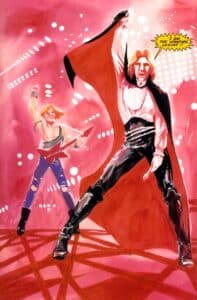
Anne Rice created one of the most popular vampire rock stars in Lestat, the central character of her Vampire Chronicles, in The Vampire Lestat. The idea of vampires making music is so easily recognizable that the token vampire character in many franchises is a musician (Harry Potter, Adventure Time) or is a musician who adopts a vampire persona (Scooby Doo’s Hex Girls). In the Pacesetter RPG Chill, the campaign “Death on Tour” focuses on the band Van Helsing and their brazen bloodsucking lead guitarist. In a broodier tone, Adam (Tom Hiddleston) from Only Lovers Left Alive clings to his compositions and vintage instrument collection as his reason to live despite the desolate world.
Real-life musicians frequently embrace the imagery as well. Take, for example, Hollywood Vampires, formed by Alice Cooper, or Type O Negative’s album “Bloody Kisses,” which leans into vampiric themes. Members of Death SS have performed as vampires, Savage Garden is another Anne Rice homage, and the band Nosferatu constantly maintains ties to creatures of the night. As with vampires, the tone of the music is indulgent, whether that’s for hedonism or melancholia is up to them.
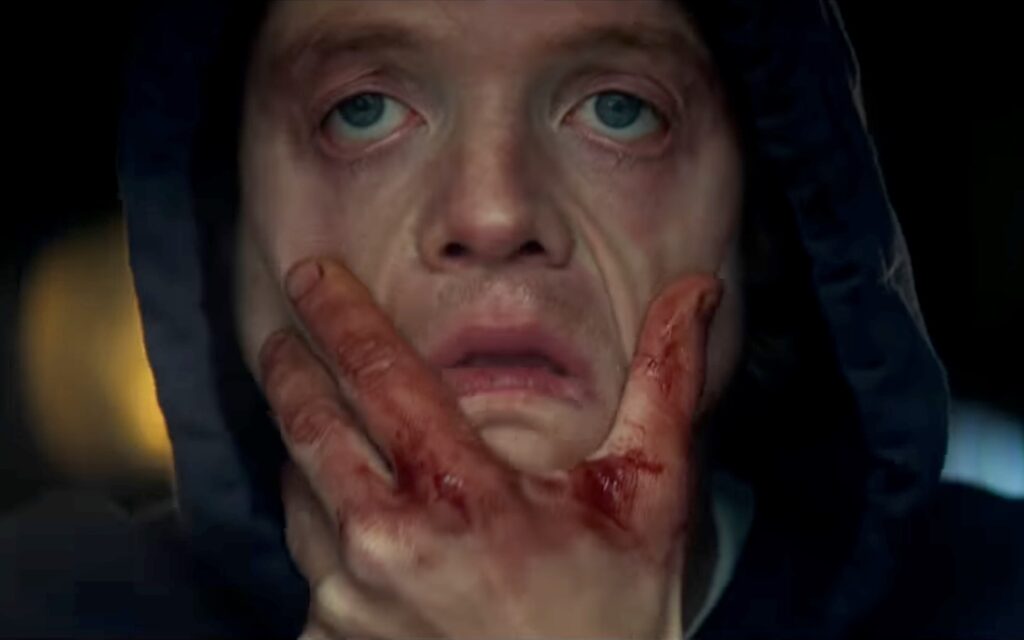
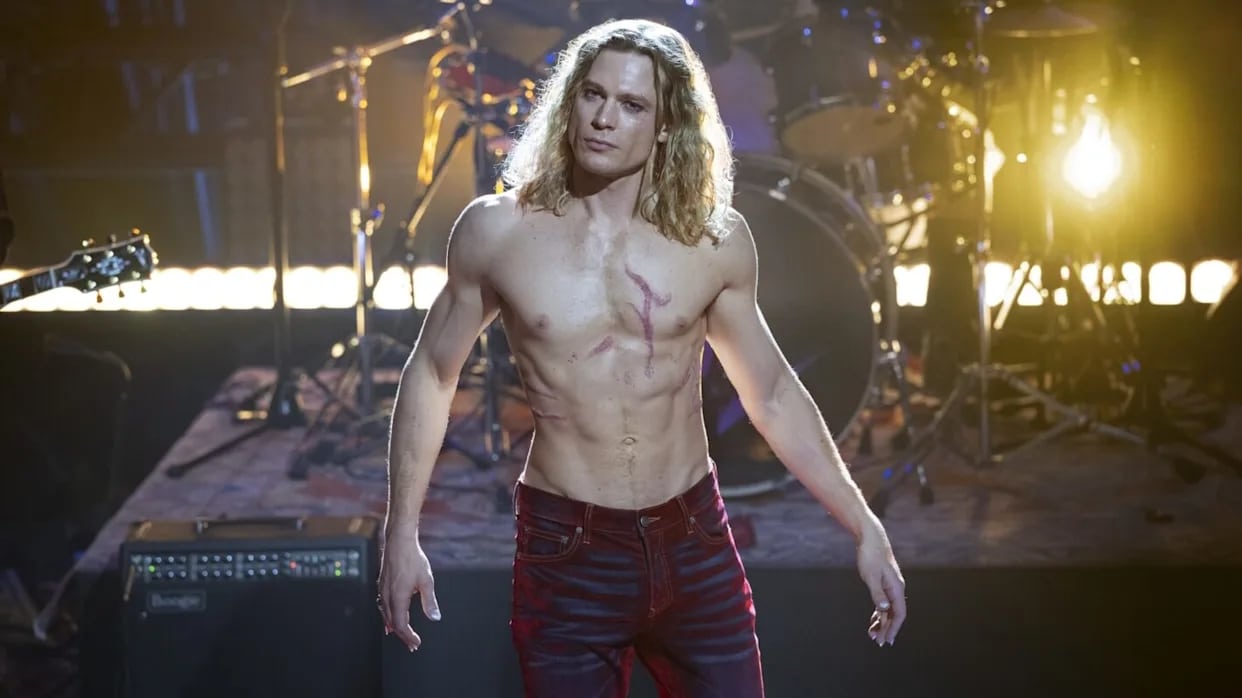
Lestat is the nexus of both concepts; he’s a vampire showman who writes about his experiences as a vampire, using vampiric references and allusions. Following two excellent seasons of Interview with the Vampire, AMC’s Immortal Universe is, at long last, bringing The Vampire Lestat to the small screen. In this season, Lestat (Sam Reid) fully slithers into a vampire rock star rebrand after the release of the in-universe book Interview with the Vampire. We’ll have to wait until June for the premiere. From the glimpses we’ve gotten so far, he uses music to cling to meaning, assert his presence in the world and explore muses from his past.
“It’s my era. I’m a rockstar now,” Lestat affirms from behind his chic (but wholly unnecessary) sunglasses in the latest trailer. And he really is. He’s got more than enough material to work with.
In the novel The Vampire Lestat, he warns of getting mixed up with vampires. He sings:
“Yet in love, we will take you / and in rapture we’ll break you / and in death we’ll release you / no one can say you were not warned.”
To Lestat, a vampire’s undeniable magnetism is a point of pride. It’s their nature to suck you dry. You shouldn’t blame them. He sings of delight in being a bloodsucker, despite the evil he does and the lives he takes. He is a free, uncaring figure of hedonistic butchery. Maybe terrifying, but undeniably fun to watch!
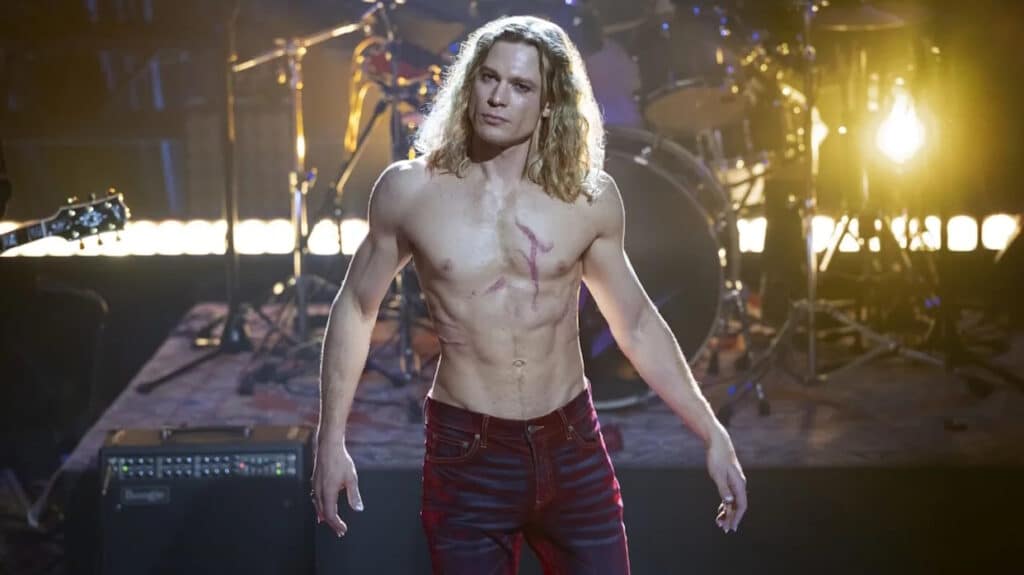
For AMC’s The Vampire Lestat, he mixes in drips of the scorned lover, too. In the first original song released for the season, “Long Face,” he sings,
“I’ve got long fangs / come appraise me / bring your long stakes / that doesn’t phase me.”
Marked by vampiric pride, paired with an edge of bitterness, Lestat uses this imagery to defend himself. In another original song, “All Fall Down,” he describes himself as “the lonely one” and “the little killer.” Again, he steps into both camps. He’s treacherous but also lonely; he’d eat you but then wish he had someone to talk to. Music’s where his emotions go, and the tool he uses to elicit reactions from those around him. While every song likely won’t be lyrically vampiric, they will be an expression of a vampire’s emotional state – and that’s just as compelling.
AMC’s adaptations of Interview with the Vampire and The Vampire Lestat have had a tremendous focus on narrative. Who is telling the story? And whose story is it to tell? Anne Rice’s series builds upon vampire narratives that came before. There’s a bar called Dracula’s Daughter in Queen of the Damned. Yet, there’s a complete rejection of key elements of the traditional vampire mythos, like crosses or stakes being lethal to them. As Lestat performs these songs in a band called The Vampire Lestat, his fangs out and a flowy Dracula-like cape trailing behind him, he’s using an arsenal of vampire allusions. What I find the most exciting about adapting Lestat as a vampire rock star this time is that there’s even more to add than there was when The Vampire Lestat was published in 1985. And that makes me so giddy. Vampires will always communicate something, tell me something, mean something.
“There was something vampiric about rock music. It must have sounded supernatural even to those who don’t believe in the supernatural…so eloquent of dread it was, this music,” Lestat intones in the novel. There’s a fascination with vampires across genres; they’re an impetus for dramatic, foreboding, and passionate art. We want to be them; we crave to hate them. Who knows how we’ll portray vampires in the future – but I’ll bet there’ll be a song or two.