

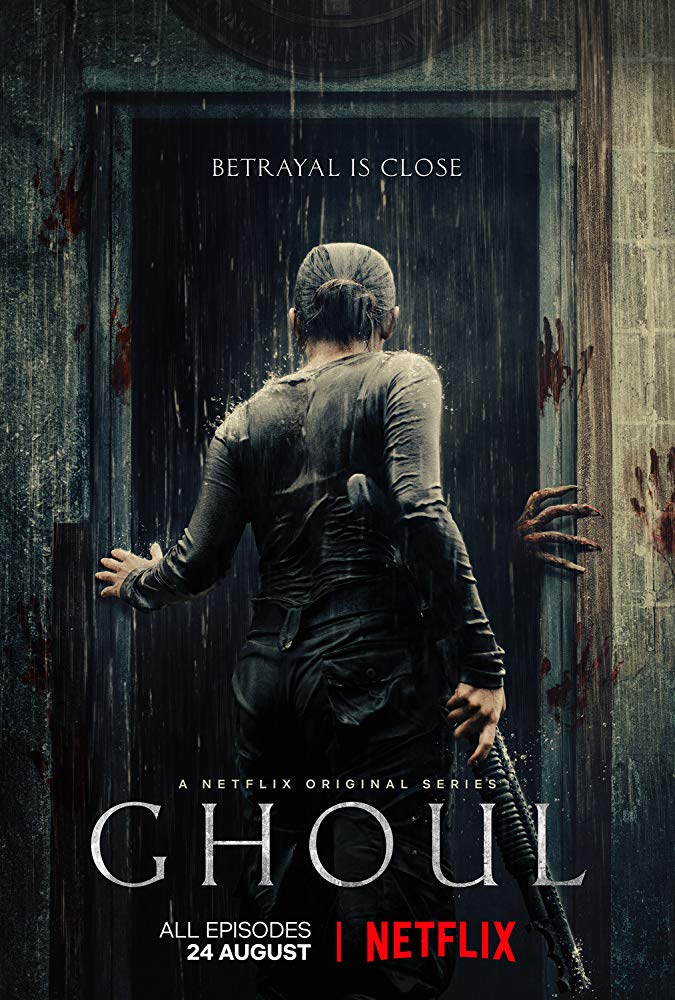
Available on Netflix since Aug. 24, the three-part miniseries Ghoul is the brainchild of Patrick Graham who also worked with his brother Matt on punching up the scripts. The British duo discussed why they made this chilling story starring Bollywood star Radhika Apte.
By: David Silverberg
Something wicked this way comes to an Indian prison, where a military interrogator confronts a high-risk prisoner who displays a demonic side and wrecks havoc on the facility. Little else is known online or via trailers about Ghoul, a three-part miniseries coming to Netflix in late August.
I spoke to Patrick Graham and his brother Matt to learn more about Netflix’s first foray into releasing an original Indian horror series.
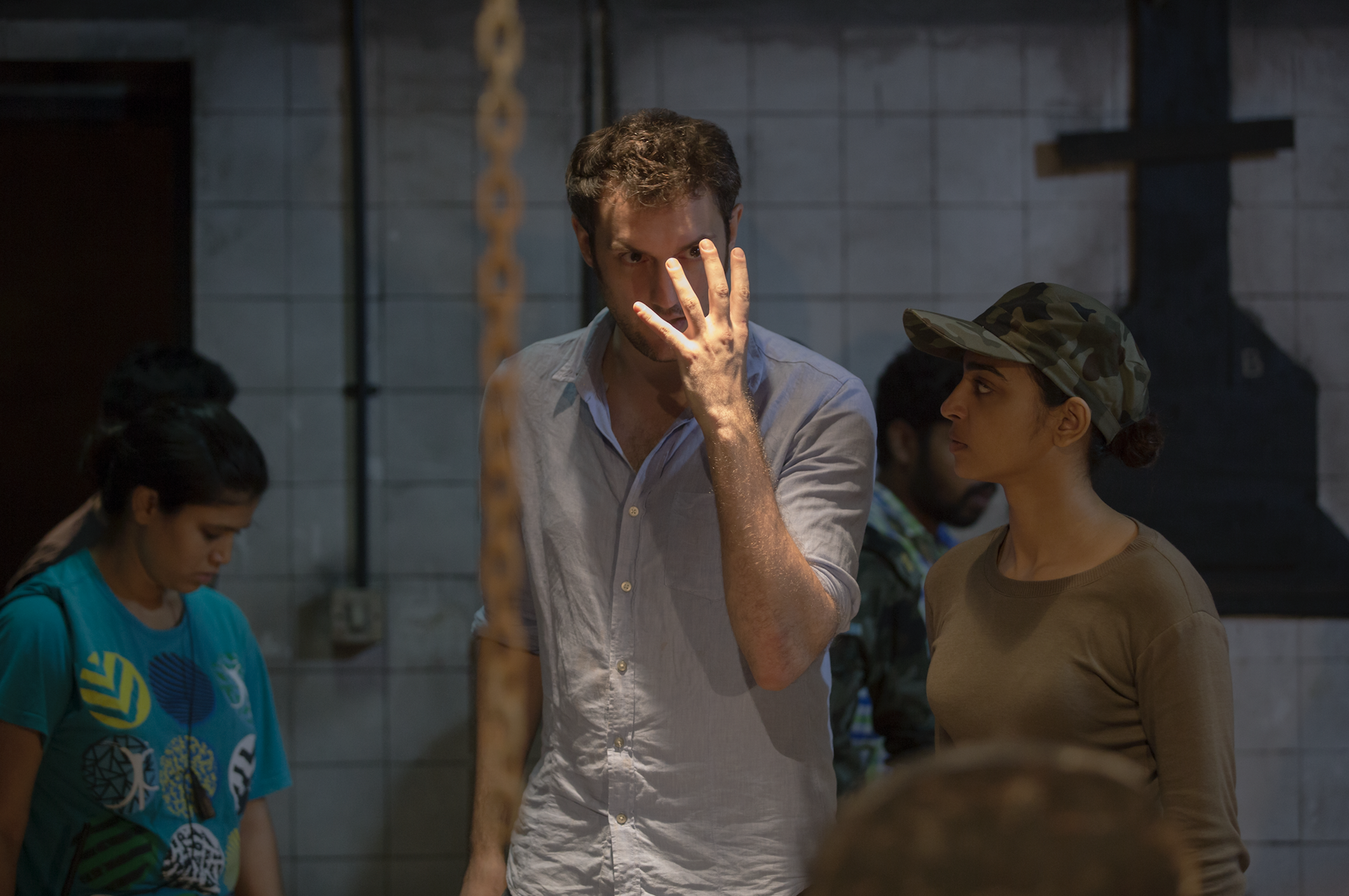
“It all began when I came across articles about the CIA’s enhanced interrogation techniques,” says director/writer Patrick, 35, in an interview from his Mumbai home. “What interested me is how these are people out of their depths who made decisions to do terrible things and didn’t question their orders. They’re regular people, not jingoistic soldiers, in extraordinary positions.”
Ghoul’s trailer hints at an alien presence infiltrating the prison, but Patrick won’t say much more about the storyline. Instead, he references how John Carpenter’s The Thing has long been an inspirational horror film. “He did something wonderful where put characters in a confined location and let it play out. It had that claustrophobic atmosphere, something I wanted to recreate with Ghoul.”
His brother Matt, who lives in L.A., helped him fine-tune the writing, which is right up Matt’s wheelhouse: he wrote all the episodes for Oliver Stone’s The Untold History of the United States and co-wrote several episodes of the upcoming Neil Armstrong series One Giant Leap.
“It was great working with my brother because we’ve always had similar tastes in films and artistic instincts,” says Matt, 39. “We love giving audiences an exciting experience.”
Patrick adds they “obsessed over horror films from directors like Kubrick and got into films like Evil Dead and Evil Dead 2.”
What Patrick valued most about his brother’s suggestions as script consultant was “grounding the story deeper into character and how characters anchor your story.”
Both brothers grew up in London and then later moved to Somerset before embarking on their film careers.
Patrick’s road to living and working with Mumbai came from a sudden curiosity to branch out from his work in the UK to seek an about-face in another country. “I wanted to see what Mumbai was like, since the industry was so prolific and relatively unknown in the West, and also I had a film-school friend who was from Mumbai. I thought maybe my different perspective could be something of a novelty in India.”
India cinema is more than just the Bollywood stereotype, Patrick stresses. “There is a misconception Westerners have about Indian cinema being all about three-hour romances full of singing and dancing,” he says. “While those films certainly exist, there is actually a huge variety of different types of films coming out of India. Regional films are often forgotten about in the face of Bollywood but Westerners don’t realize that Bollywood only really refers to Mumbai. Every different region has their own language cinema, each with their own idiosyncrasies.”
Netflix has capitalized on India’s filmmaking talent, with not only Ghoul coming to the streaming service in 2018, but also adding to its slate two other Indian originals, Leila and Crocodile. “You can’t see it yet but what Netflix is doing with its recent move into India is going to change the face of Indian film viewership,” says Patrick.
What both Grahams found interesting about India is how city planners are not building cinemas when they develop new urban centres. “The way Indians, and everyone, watches films is changing rapidly, with the ‘small screen’ now taking over from the ‘big screen,’” Patrick says. Matt adds: “When drama unfolds over several hours, like with Ghoul, the big-screen experience doesn’t work so well.”
Helping boost the horror muscle in Ghoul is the addition of production partner Blumhouse Productions. Blumhouse is best known for helping launch Insidious, Get Out and It. “Blumhouse is a massive force to be reckoned with in dictating the norms of the horror genre,” Patrick says. “They have such a vast database of experience it was overwhelmingly positive to work with them.”
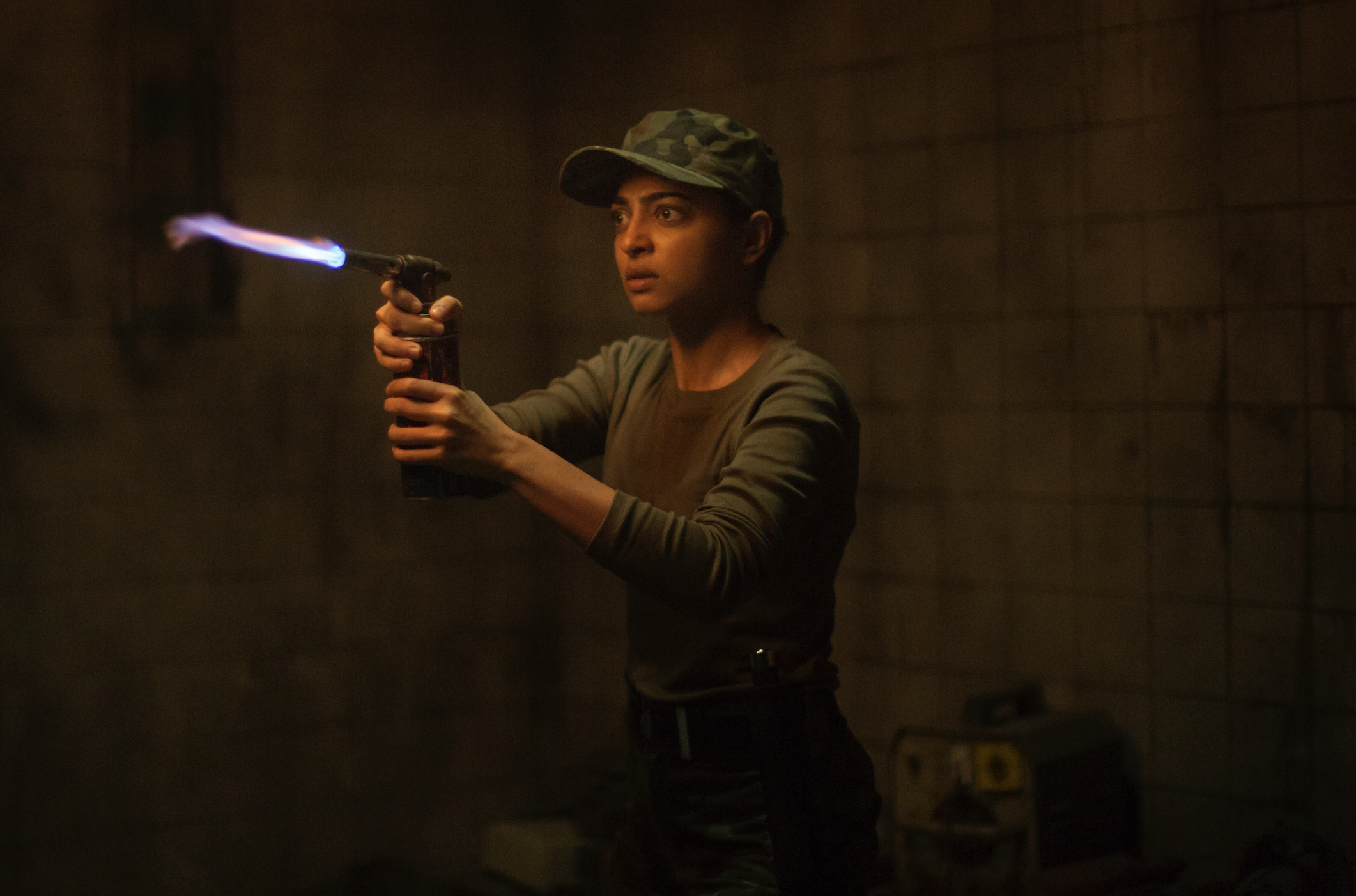
As if Patrick’s first big directorial debut couldn’t get any better, he also landed one of Bollywood’s top stars as the main lead. Radhika Apte turned heads in the thriller Badlapur then won acclaim for her star turn in 2016. She also recently starred in the Netflix series Sacred Games.
“She brought a life to the character that I hadn’t previously foreseen, a vulnerability as well as a toughness,” Patrick remarks.
Apte also echoes the Grahams about the positive relationship she’s had with streaming services such as Netflix. “Working on films and the digital space is more or less the same, but the digital medium definitely has more freedom,” she told reporters. “There is no censorship, so it’s very liberating to do what you want and not worry about anything.”
What Ghoul represents is an evolution in not only Indian cinema but how powerhouse media giants such as Netflix position Indian entertainment for Western audiences. If the horror series becomes both a critical darling and a fan favorite, expect to see more high-quality Indian shows and films fill your Netflix queue this year and beyond.