
By JILLIAN KRISTINA
In mists that hover out of time and place, whispers and secrets pepper the space between the seen and the obscured. Ancient fears, terrors spread from mouth to ear to heart, bringing paranoia and loathing to the fiber woven through generations to come. Blood and hunger feed these tales, relying on isolation and the primal drive to stay alive on the edges of those most hidden, insular populations. Those whose relationship to the land is directly entwined with the trepidation their minds conjure when faced with what lurks in the shadow, because somehow, there’s always an evil, predatory witch dwelling within the liminal realm they dare not enter. How ironic that the depths of the wood hold power and wisdom and medicine that would shatter their narrative, and if humanity loves nothing more, it’s a good, damning narrative of the other that we must hate. That we must hunt.
“So where’s the witch?”
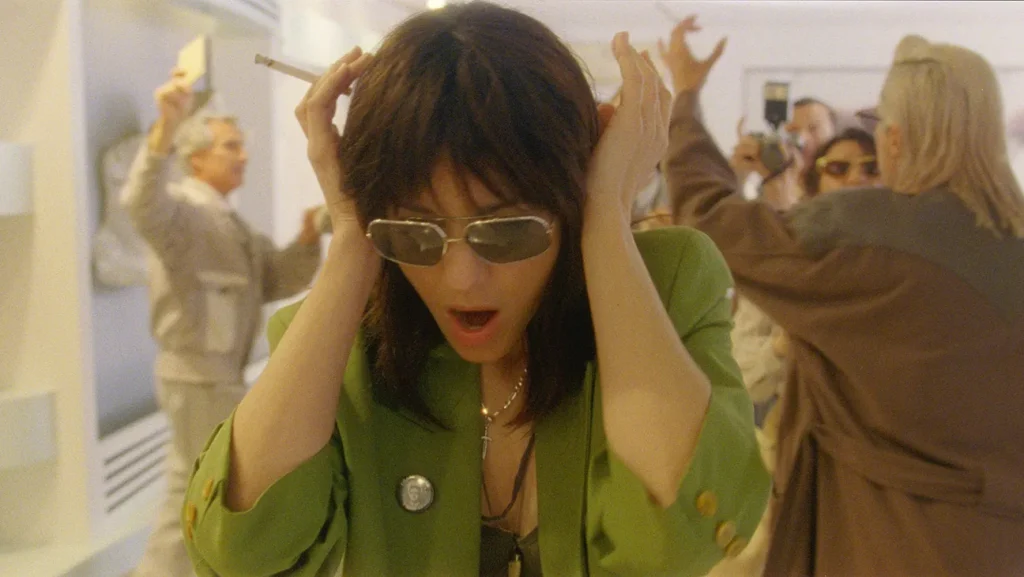
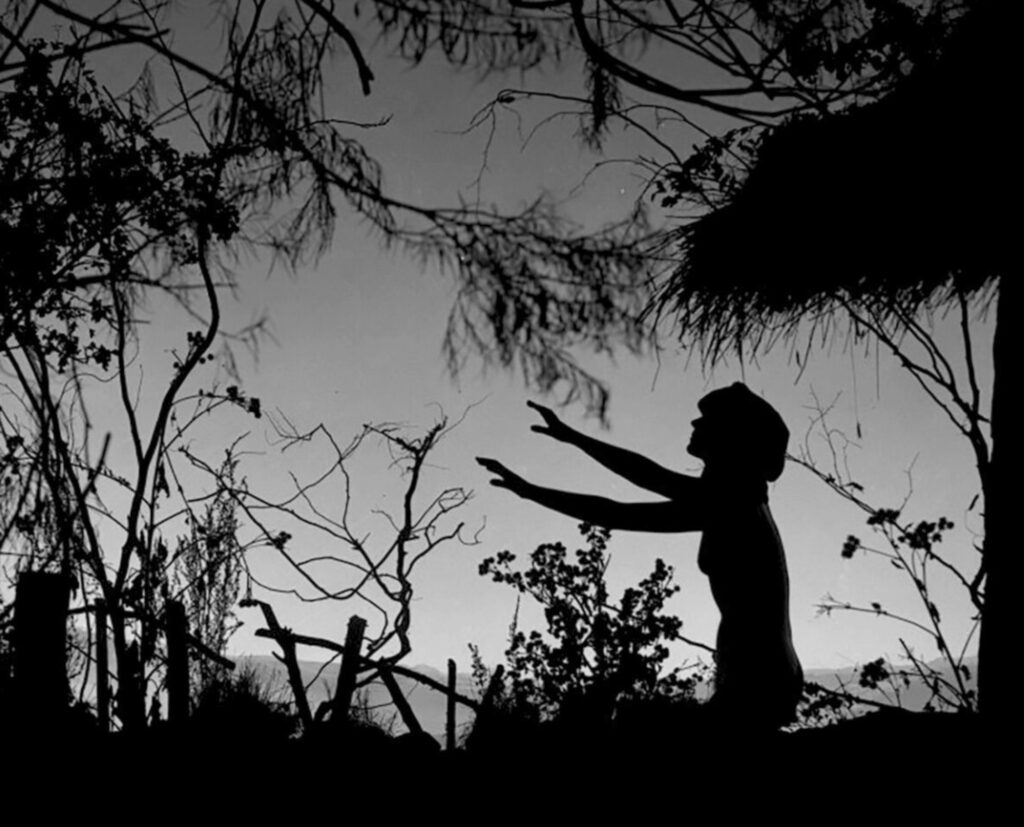
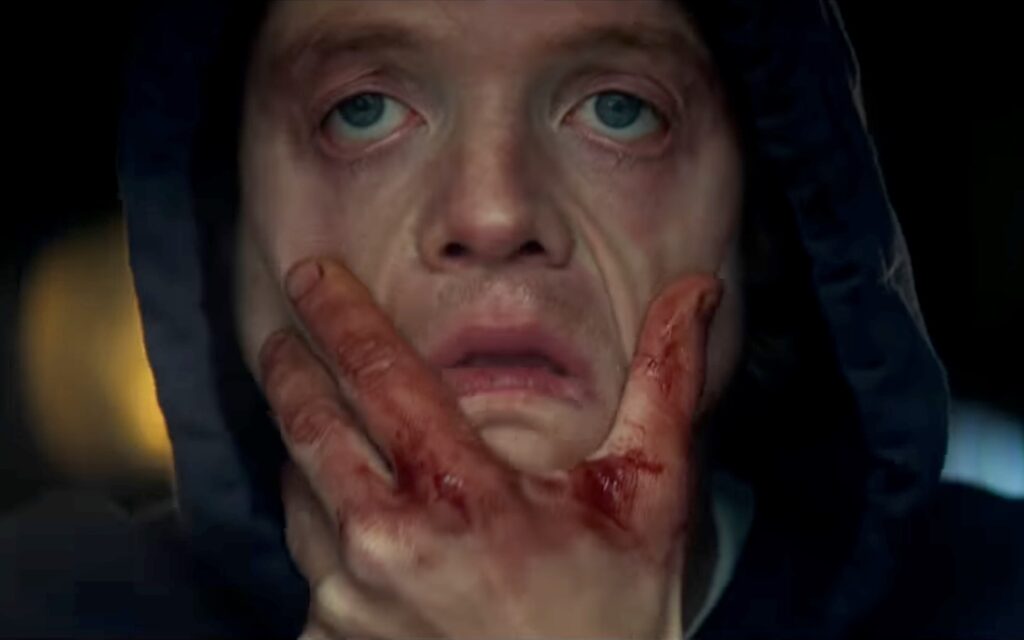
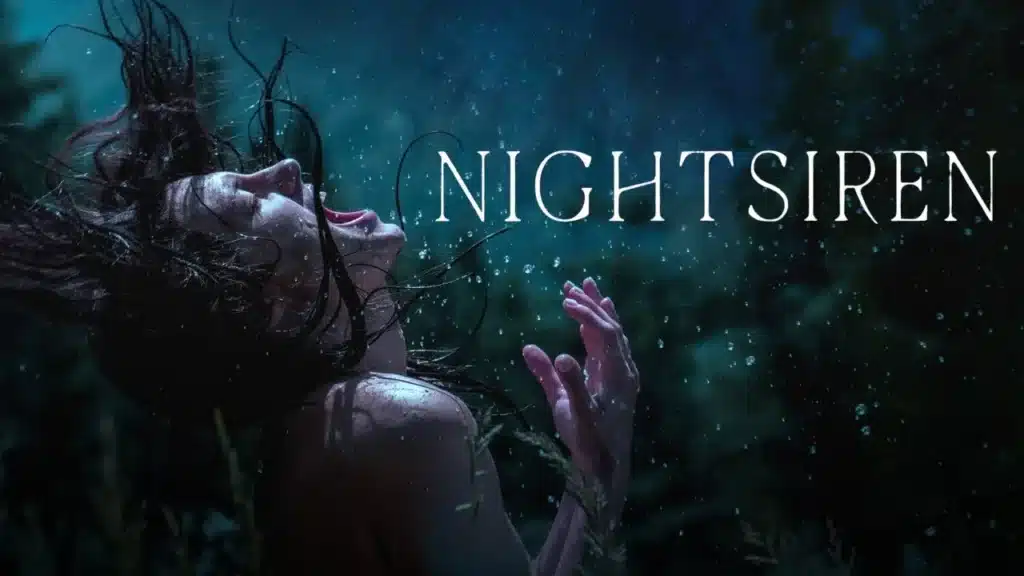
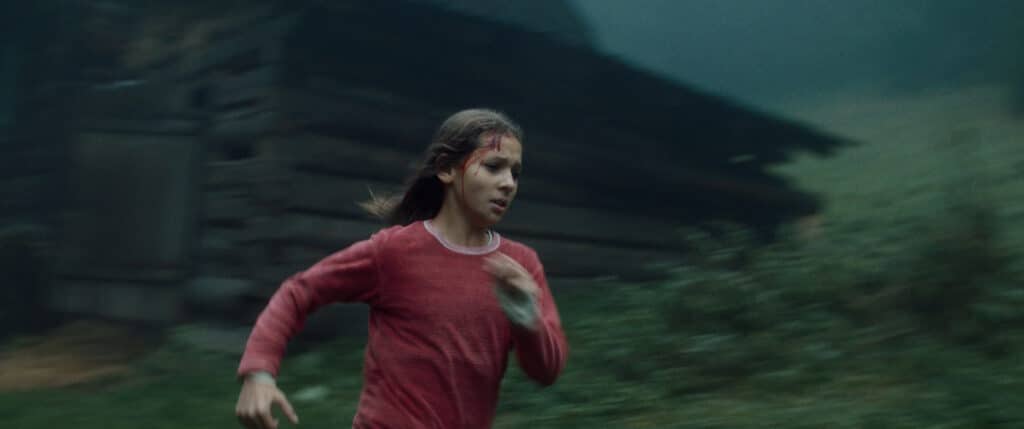
In Tereza Nvotová’s 2022 Slovak-Czech portrait of feminine agony and ferocity, NIGHTSIREN (SVETLONOC), childhood tragedy reverberates across the prison of time for Šarlota (Natalia Germani), a young woman returning to the remote village she fled a lifetime ago after receiving a letter from the mayor asking her to come home to claim her mother’s inheritance. Climbing through the mountainous region, Šarlota struggles to reach a cabin most notorious.
“I thought you were scared of the witch’s cabin.”
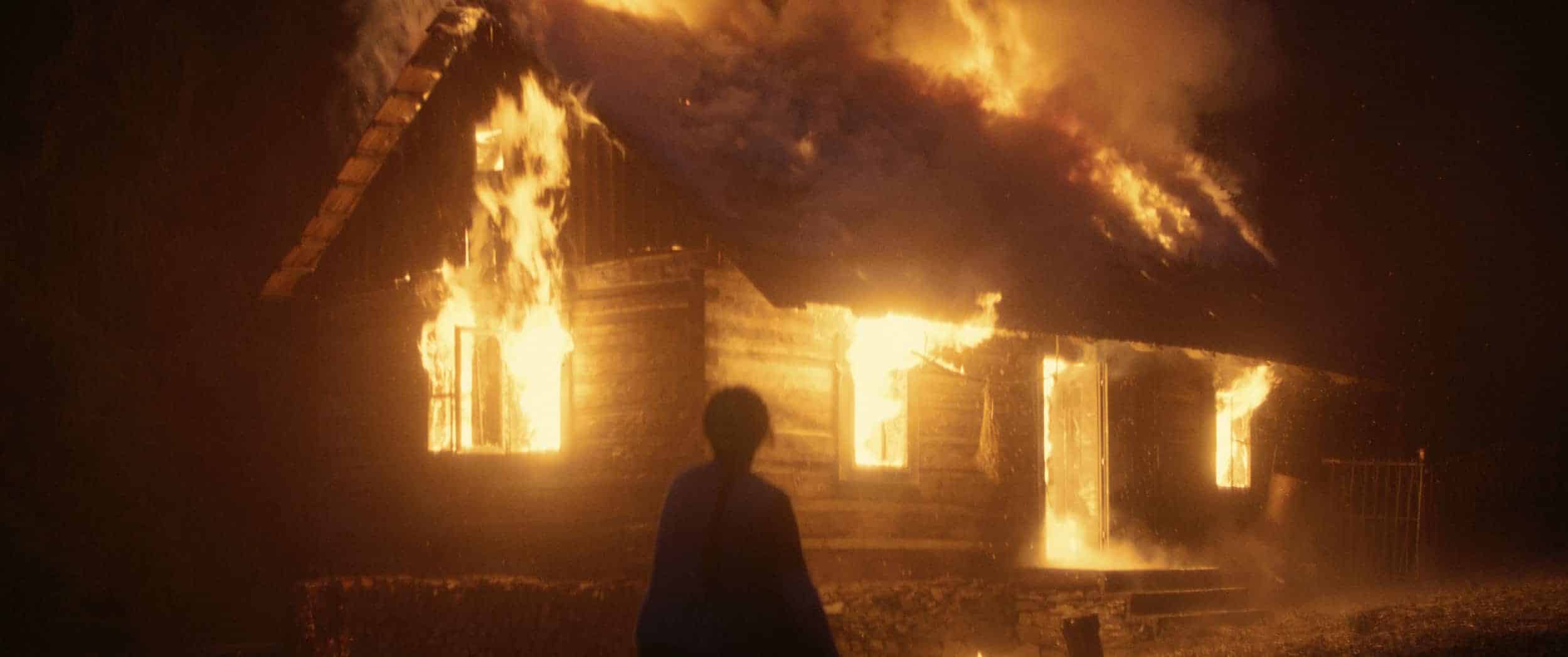
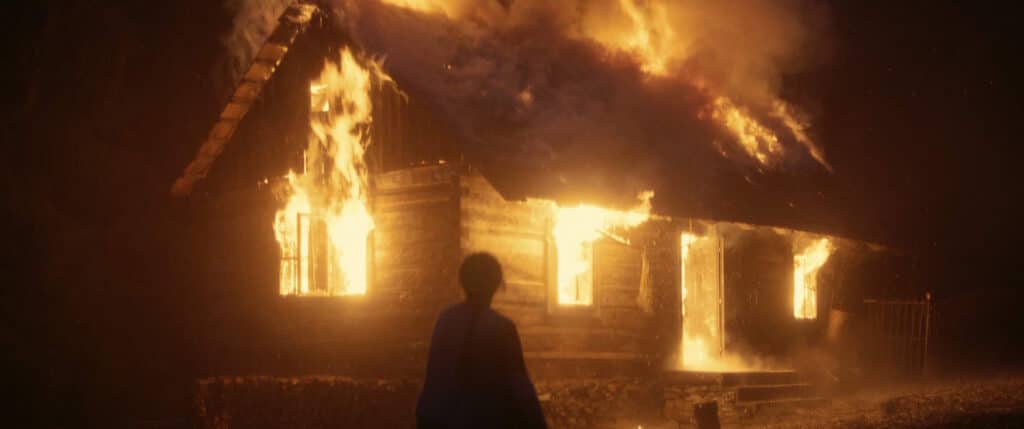
After discovering the burned remains of her mother’s cabin, she travels to a neighboring cottage belonging to legendary witch, Otyla (Iva Bittová), for shelter. Long empty and rumored to be haunted by the locals, she discovers a relic from her childhood in an old chest: a teddy bear that her younger sister, Tamara, used to steal from her all the time. Her sister, a voiceless wound hanging heavy over her heart and her past.
“People don’t talk about things around here.”
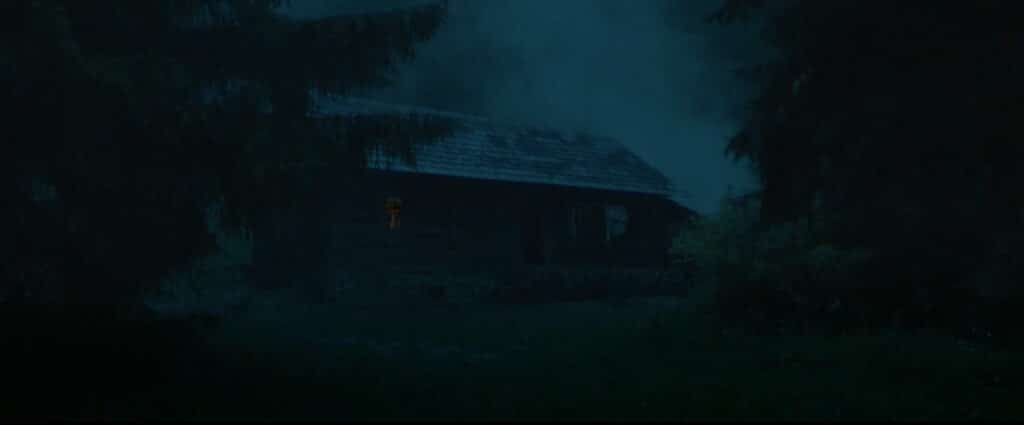
It’s at the witch’s cabin that Šarlota meets Mira (Eva Mores), who arrives to fend off a group of superstitious locals. No one believes that it’s her, except Mira. Mira knows. She knows far more than she lets on, and she’s more than happy to befriend Šarlota and bring her to the village where she lives – a place where the past dances with the present, mired in control and violence. A place frozen in time, where women are taught to fear themselves and each other, defending the men who beat them, who assault them, and keep them small and in their lane – Keeping them weak – too weak to see the power they hold in their own blood, the power to protect and empower themselves.
“Why did my mom’s cabin burn down?”
“Because she saw that gypsy bitch going into the woods.”
“Who did?”
“Your mother saw her…during the full moon, a whole coven dancing naked by the fire, and God knows what else.”
Legends, myths and tales settle in the land itself, perpetuating lineages and cycles of oppression and abuse. Why speak of the woman at the edge of the wood in hushed tones, when she is the one you go to for help, for medicine, for healing? Why cast judgment on the one who keeps to herself and harms none? Who communes with the animals and the trees, who speaks to the plants and hears their secrets and employs them for the greater good? Who saves a little girl who nearly fell to her death while chasing after a sister who was fleeing an abusive matriarch?
“The witch killed Tamara after you escaped from her.”
“I escaped from my mom. She was beating me.”
Because tradition. Because oppression. Because domination. Because of this very specific and sometimes deadly combination of conditions that keep a people locked in place and prove fatal for those who defy rigidity and demand the truth they know is barricaded behind the lies. Šarlota returns to this place with questions, the deepest grief, and rage. She has spent a lifetime running from tragedy, only to return to the point of her deepest traumas, and now, rather than running again, she is steamrolling them, head-on. She’s not taking no for an answer.
“Such a sin…Your mother waited too long, and the Lord made her pay for it.”
“Waited for what?”
“Baptism. Witches only take unbaptized children…sacrifice them and bathe in their blood. So they’ll stay young forever. But if they steal a baptized child, they raise it as their own. That was why the witch came here, settled down, and waited…for an unbaptized child.”
“So you’re saying Tamara was murdered by witches?”
These ingrained beliefs and hatred towards those that are othered – like “gypsies,” the harmful, derogatory word used to describe the Roma – infect bloodlines, especially those nestled away in pockets of darkness and struggle. Especially when a light from the outside illuminates the darkness, shattering the delusions they’ve come to adopt as part of their own story, their own culture, and the very fabric of their lives and belief systems, woven so tightly into centuries of torch-bearing mobs. Perhaps just outside the status quo. Maybe you speak a little too freely. Maybe, during a midsummer celebration, your friend Mira pours a little of her herbal extract into your drink, something she calls her love potion. Maybe you begin to dance with a man you know, Rado (Noël Czuczor), in front of a burning effigy, surrounded by locals who don’t know what to make of your unbridled dancing, your expressive, liberated movements. And maybe, some of these people see this as an invitation to do whatever they want, because they are used to taking what they want without repercussions, because it’s accepted. It’s tradition. But it’s not acceptable for you to fight back.
“What do you expect when you dance like a whore?”
“He grabbed me. I was defending myself. I guess you’re all just used to it.”
“We’re decent people. Unlike you.”
“Sure. Decent, God-fearing wife beaters.”
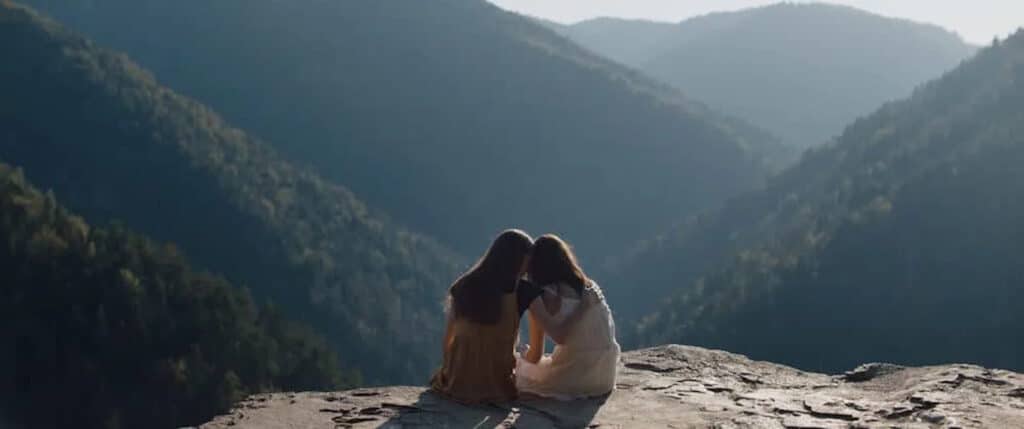
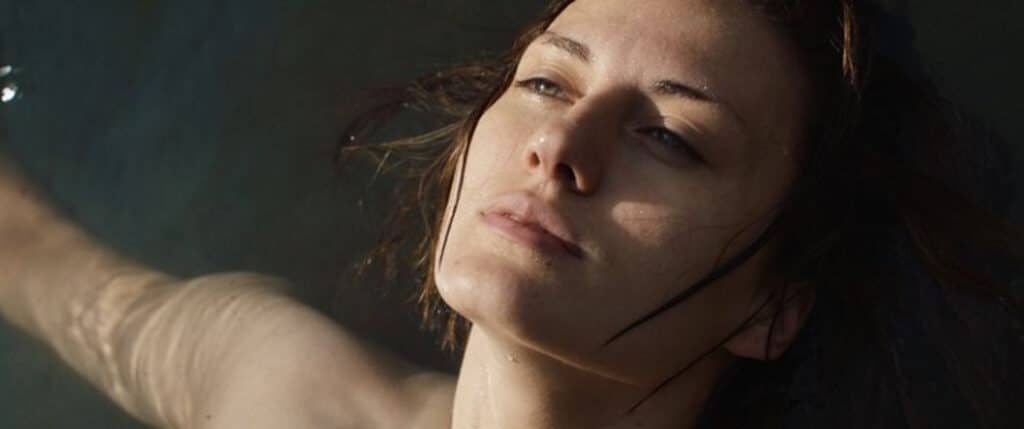
Šarlota, Mira and Rado retreat to the woods, the full effects of the herbal concoction taking hold – the Shot of Truth, as Mira also calls it. Just then, the crowd from the fire comes rushing into the woods, laughing and all under the trance of truth serum. Šarlota is separated from her friends and finds herself at the very cliff where she lost Tamara all those years ago. But rather than seeing Tamara’s body lying at the bottom of the chasm, she sees Mira. She wanders deeper into the forest and realizes that her skin is the sky, caressed with stars and constellations and galaxies, and then, naked bodies, covered in the cosmos, undulating, making love, half animal, half human, an orgy of earth and flesh and dirt and bone. Both lurid and luring, she runs into the arms of Rado, and they fall to the ground together, becoming one in the open air under the cover of night. And when she awakens, she remembers…
Mira. She knows now. She knows who sent her the letter, beckoning her back home to finally learn the truth of herself, her sister, and the rumored witch who saved a child left for dead at the bottom of a cliff. A woman who cared for the child after she discovered her mother hanging in their cabin accidentally set a fire as she fled. A woman who lay down with the snakes to protect this child after the world snatched her into its savage grip, the last act of love and magick she could give.
Otyla is you. She is me. She is all of us doing all we can to remain human and kind in a world poisoned by the venom of those who still seek to suppress, oppress, and silence. We are here to create a different legacy. To raise our voices, as Šarlota does. To fight back against rotted mindsets and decaying dynamics by aligning ourselves with the parts that were shunned, shamed and feared because of the fire they saw behind our eyes and felt within our hearts– the fire that made them cower. The Full Moon in Sagittarius rises this Sunday, May 31st, making it a Blue Moon, the second full moon in May – a bookend to the Scorpio Full Moon that rose on May 1st. We’ve moved through otherworldly power and presence, of being hunted and punished for how bright we shine, for being something other while also being othered. We’ve felt the pangs of grief and reclamation. We’ve faced jagged truths and emerged stronger, more resilient – more sure of who we are and why we are here. As we round the corner of the last days of May, of the sister cross-quarter mirror to Samhain, and no less liminal, we can now reflect on the first half of 2026, like who we were when we entered this new year, and who we’ve become in such a short time. As Šarlota was when she started that perilous journey back to her homeland, and who she emerged as because she knew the only way out was through. And see it through, she did.
Here is a collective reading for this liberatory lunation:
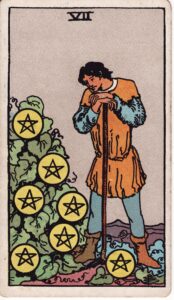
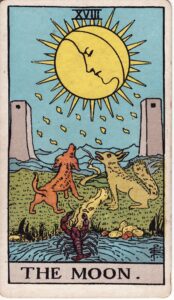
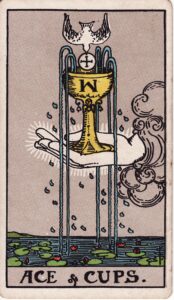
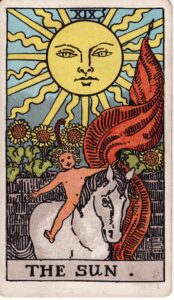
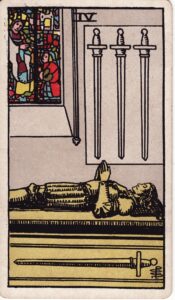
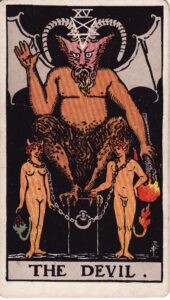
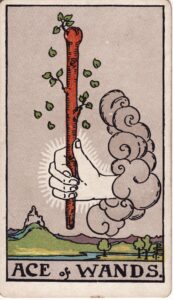
There comes a moment when we need to stop, breathe, and actually take stock of how far we’ve come. We need to be able to look at and see what we’ve cultivated in our physical lives, and what we’ve faced and composted within. The inner cultivation moves circles around our cores, stirring and activating what was once dormant, what remained unknown even to us, until now. So much happens behind the scenes, in the dark, and if we don’t take the time to shine a light on it, it could be lost to us. All our energy, dedication and discipline, lost. Take the time to sink into your internal wells. Take the time to reignite your inner torches. Tend to what allows you to shine in the world, because the world is not kind. The world has teeth ready and waiting for you to walk blindly into its slavering mouth, into its deadlights. So drink from those wells and grab those refreshed torches and light your way through the dark. Through the void. And maybe along the way, you’ll become a torch for someone who’s been floating, trapped in those deadlights for longer than they can remember, if they even can. Load those torches into your bows and send them careening into the wartorn skies. You never know who they’ll find, and maybe at the exact moment that matters most. Let this moon work through you, for you, and for all you touch.
“The sun can burn you, but the moon is different. It’s like a caress.”