
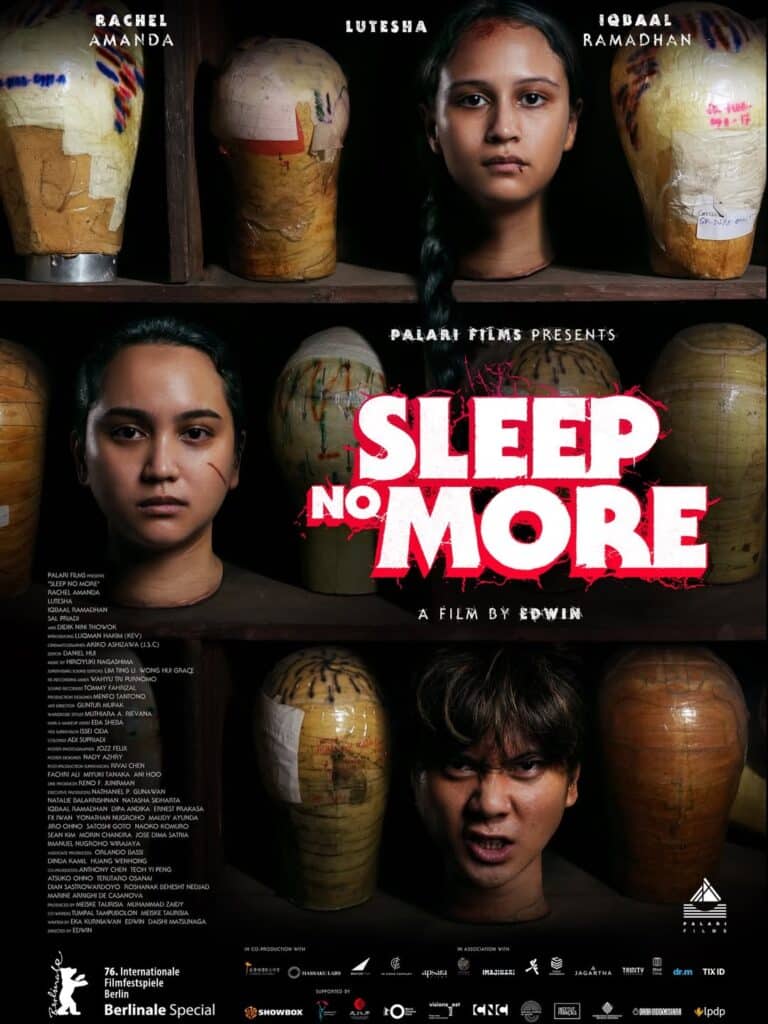
Starring Rachel Amanda, Lutesha and Iqbaal Ramadhan
Directed by Edwin
Written by Eka Kurniawan, Edwin and Daishi Matsunaga
Palari Films
SLEEP NO MORE begins as a sober-minded study of workplace exploitation through a genre lens, ends with the protagonists confronting one of the craziest demons in modern genre cinema, and manages to make it all work.
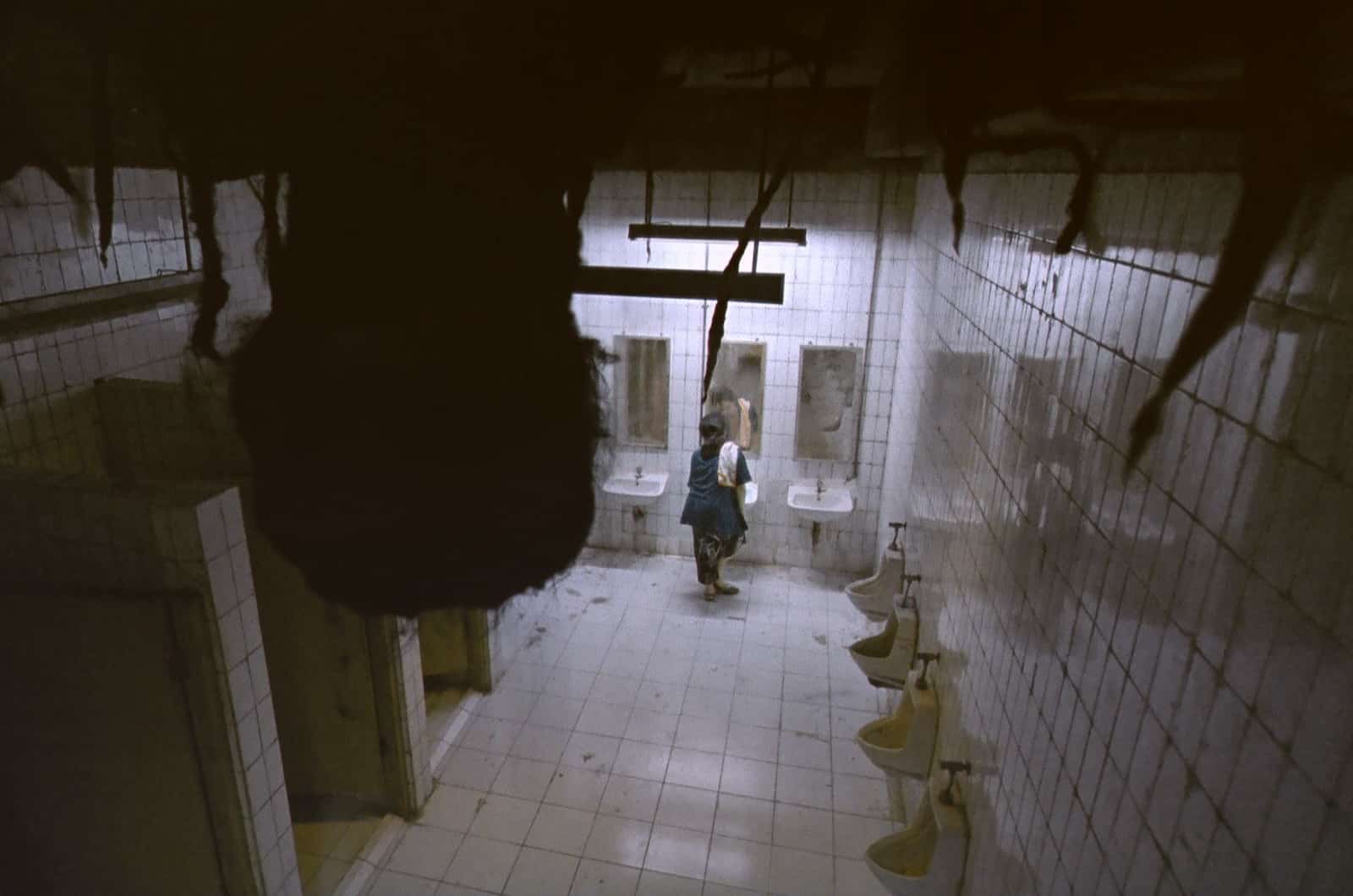
The original Indonesian title MONSTER PABRIK RAMBUT (HAIR FACTORY MONSTER) gives you a better idea than the more suggestive English export moniker of what to ultimately expect from the movie, a North American premiere at the current Fantasia International Film Festival. SLEEP NO MORE does sum up the plight of the employees at The Evergreen Company, a wig-making factory in a dilapidated building that’s as regimented as a prison camp. It is run by the domineering Ms. Maryati (Didik Nini Thowok, bearing the perfect face and demeanor for the role), who addresses her underlings every day on the PA with “All cherished employees of The Evergreen, how’s your day so far?” while assuring that any answer would be in the negative. There’s an immediate sense of a soul-crushing environment created by director Edwin and production designer Menfo Tantono, with Ms. Maryati’s Orwellian addresses adding to the sense of oppression.
Into this severe milieu arrives Putri (Rachel Amanda), a young woman whose mother worked at Evergreen before apparently killing herself. Mom departed still owing payments on a loan she took out from the factory, and Putri has no choice but to work them off—not to mention that she has some unfortunate debts of her own. Putri quickly experiences signs that the place might be haunted, but the horrors of Evergreen are, for a good portion of the film’s first half, more mundane. Its inhabitants are tantamount to slaves, gathering for candlelight pledges of servitude and obedience and given very few opportunities to rest.
As the story goes on, and Putri is joined by her better-educated sister Ida (Lutesha), the sisters begin to suspect that something other than her own hand was responsible for their mother’s death. Characters start discussing possession and black-magic spells matter-of-factly, as if they’re everyday occurrences, which helps Edwin and his co-scripters Eka Kurniawan and Daishi Matsunaga ease the story from grounded real-world drama to increasingly heightened occult horror. There’s body horror too, in the person of Bona (Iqbaal Ramadhan), who turns up speaking in half-sentences and proves to have some rather remarkable regenerative abilities.
Those latter properties are employed for moments of both pure grisly shock and occasional anatomical slapstick, and playing some of the grotesqueries for intentional humor allows Edwin to go increasingly over the top without losing hold of the audience. He and his team have stocked Evergreen with a lot of evocative props, too. Flames leap from under cauldrons large enough to easily accommodate a human being or two, and when we’re given a look at a small bed of spikes used to comb the wigs, we just know it’s going to be put to some kind of unpleasant use. (Even so, there are a couple of serious jolts when that does eventually happen.) Edwin employs them for bits of black humor, too; when someone tells Putri, “Your eyeballs are pretty,” he’s referring to a box of glass orbs she’s carrying, not her own features.
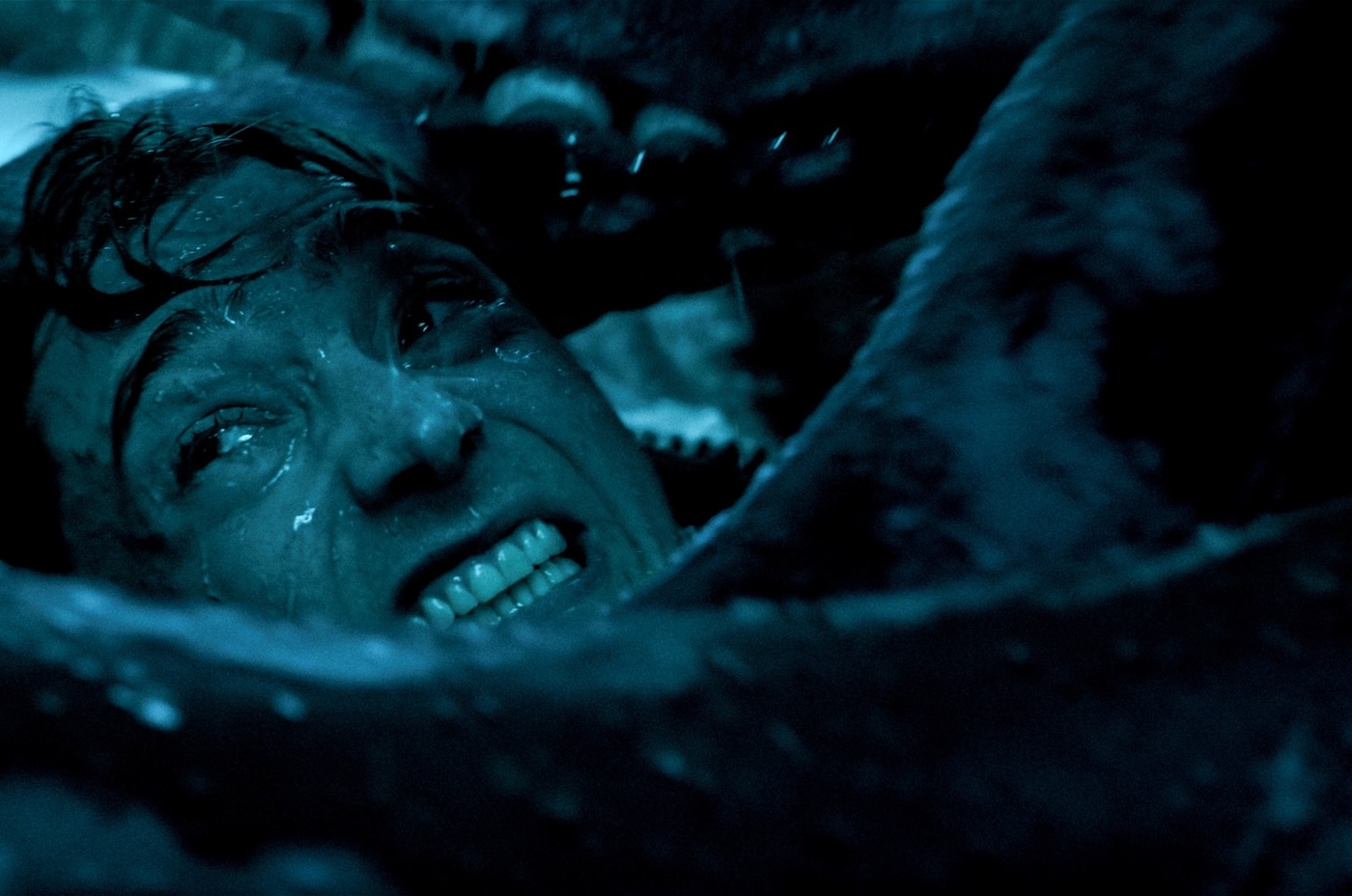
Eventually, the occult influences on the movie’s people give way to the appearance of the malefactor itself, which figures into a truly wild last act. The specifics of this demon, which won’t be explicated here, not only tie into the setting in which it was spawned but take a time-honored trope of Asian horror cinema to its natural yet most extreme extension. While practical effects are emphasized throughout the film, including plenty of potent prosthetics overseen by Jabrik Hellworker, there are also a number of impressive visual effects supervised by Issei Oda. Through it all, Edwin never loses sight of his initial and central theme. Sleep deprivation, we’re told, leaves one especially susceptible to infestation by evil spirits, and SLEEP NO MORE successfully portrays and commingles what happens when both are taken to extremes.