
Starring Steve Johnson, John Landis and Linnea Quigley
Directed by Nick Taylor
Written by Joseph Krings and Nick Taylor
American Nightmare Studios/Paper Street Pictures
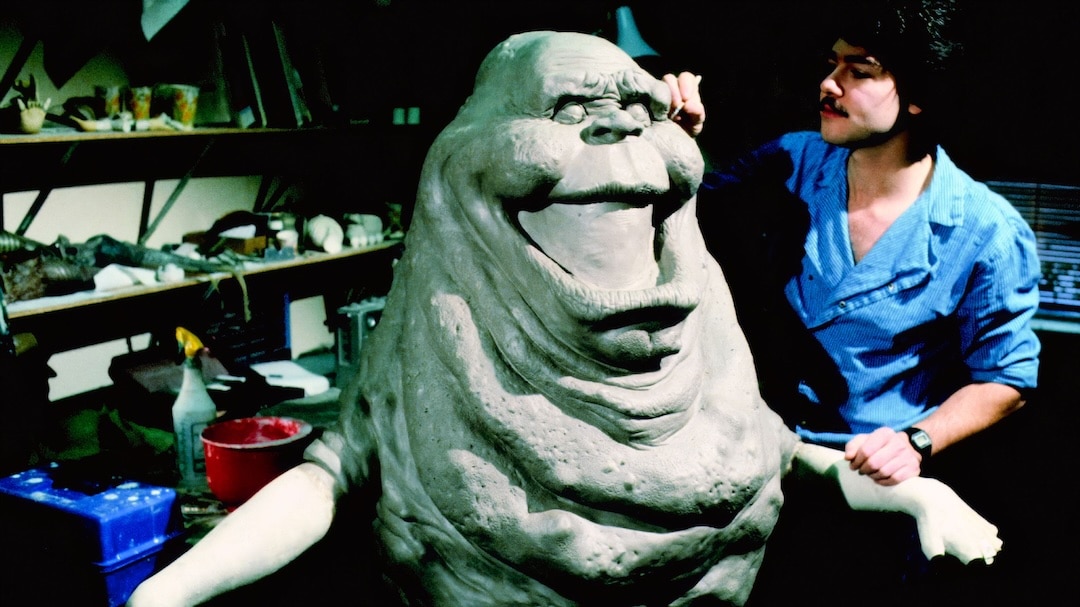
If you’re a fan of the makeup effects gods of the ’80s like Rick Baker, Tom Savini, Dick Smith and Rob Bottin, you likely know Steve Johnson as the creator of the Tex Avery-inspired Slimer for GHOSTBUSTERS and Sil, the faithfully realized H.R. Giger-designed alien in SPECIES. You might well be familiar with him as a contributor to the best werewolves ever committed to celluloid from THE HOWLING, AN AMERICAN WEREWOLF IN LONDON and FRIGHT NIGHT. You may also be asking, “What ever happened to that guy?”
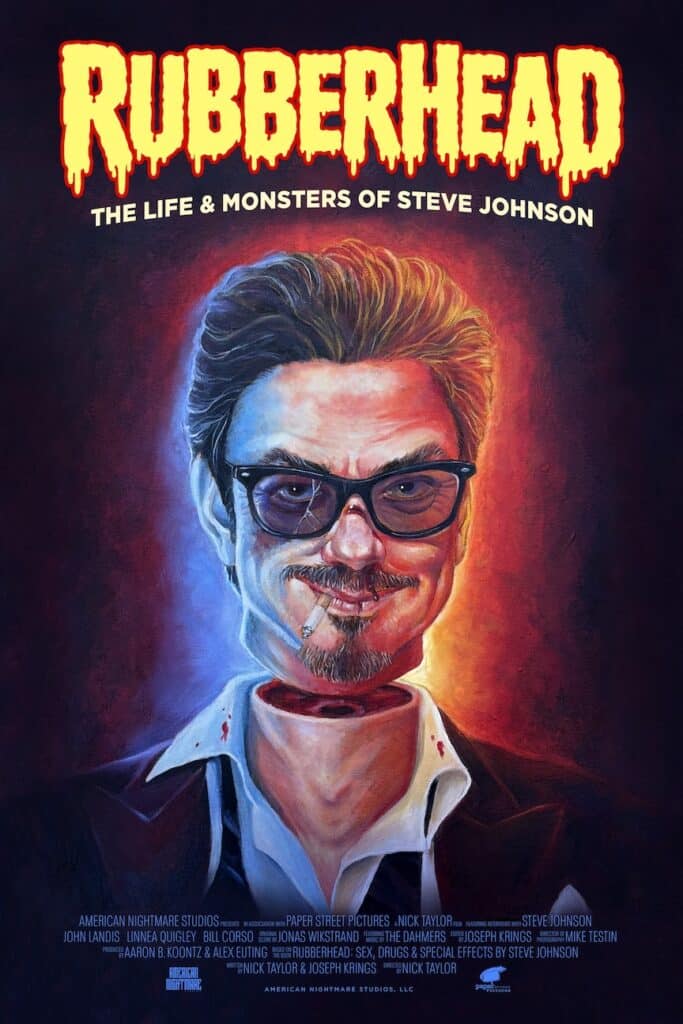
First-time director Nick Taylor’s seven-years-in-the-making documentary RUBBERHEAD: THE LIFE & MONSTERS OF STEVE JOHNSON (loosely based on Johnson’s multi-book set of the same name, which was subtitled SEX, DRUGS, AND SPECIAL FX) not only answers this question, but is also the single greatest film about the art of special makeup ever made. It not only tells a story about the technical breakthroughs of a bygone age, but also delves into the life of a true artist who not only fabricated demons (literally, for NIGHT OF THE DEMONS!), but was plagued by them as well.
Told through a series of interviews with Johnson and his many collaborators, such as directors John Landis and Tom Holland, Oscar-winning effects creators Bill Corso and Richard Edlund and former wife and scream queen Linnea Quigley, RUBBERHEAD (which world-premiered at this month’s Fantasia International Film Festival) also includes unearthed, never-before-seen archival footage from Johnson’s 40-year collection. The result is a true time capsule of the goopy prosthetic heyday of foam latex, methylcellulose and urethane. A section about Johnson getting fired from PREDATOR, and watching Jean-Claude Van Damme prancing around in an unused version of the creature suit, is worth the price of admission alone (and let’s pray we get an extended Blu-ray release with Van Damme’s footage as a special feature!)
But the more interesting story is the one about Johnson himself, who is presented as equal parts charismatic innovator, gifted raconteur and frenzied drug addict. Whether he’s in the shop waving his cigarette like a conductor to inspire his team to achieve the impossible on BIG TROUBLE IN LITTLE CHINA, captivating the viewer with stories about the time James Cameron made him cry on the set of THE ABYSS or reminiscing about the cocaine-fueled bender that birthed Slimer, RUBBERHEAD is a compelling character study of the self-destructive artist, and what happens when personal struggle coincides with rapid technological shifts in the film industry.
Stop-motion specialist Phil Tippett famously exclaimed upon seeing the CGI beasts in JURASSIC PARK, “We’re the dinosaurs now.” During that time, many artists shifted into digital effects or scaled back their operations. Johnson’s contrarian reaction was to build a massive new shop in downtown LA, generously pay his team between gigs to experiment, and hold drug- and sex-fueled parties so extreme that, we’re told, Clive Barker was so offended that he left. While there’s no doubt that Johnson’s profligate spending and drug use was a massive part of his downfall, there is also something endearing about his reckless creativity and rock-star confidence in the face of the incoming CG tidal wave that had many of his contemporaries running for the hills or jumping aboard the digital-effects ship to survive.
To that end, RUBBERHEAD also has a lot to say about the current moment, in which traditional visual and creature effects are under threat from the inevitable onslaught of AI. Much in the way computer graphics overtook prosthetics and live-action mockups, artificial intelligence may now supersede CGI. However, the doc remains optimistic in its message that the artistry and creative ethos of practical-effects-driven horror cinema, much like Steve Fucking Johnson himself, can be very, very hard to kill.