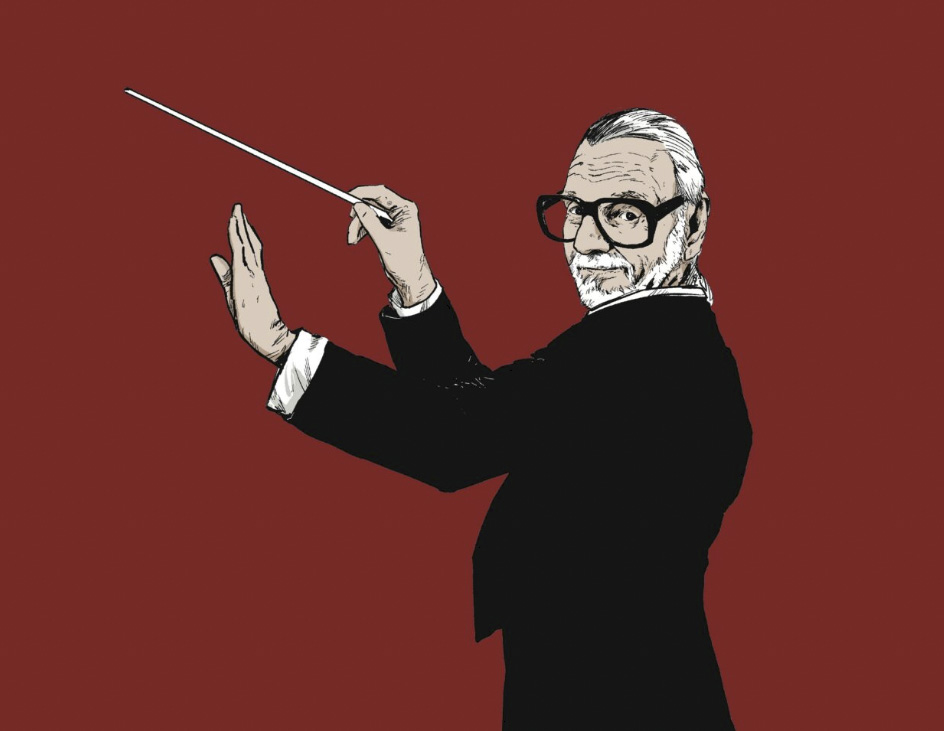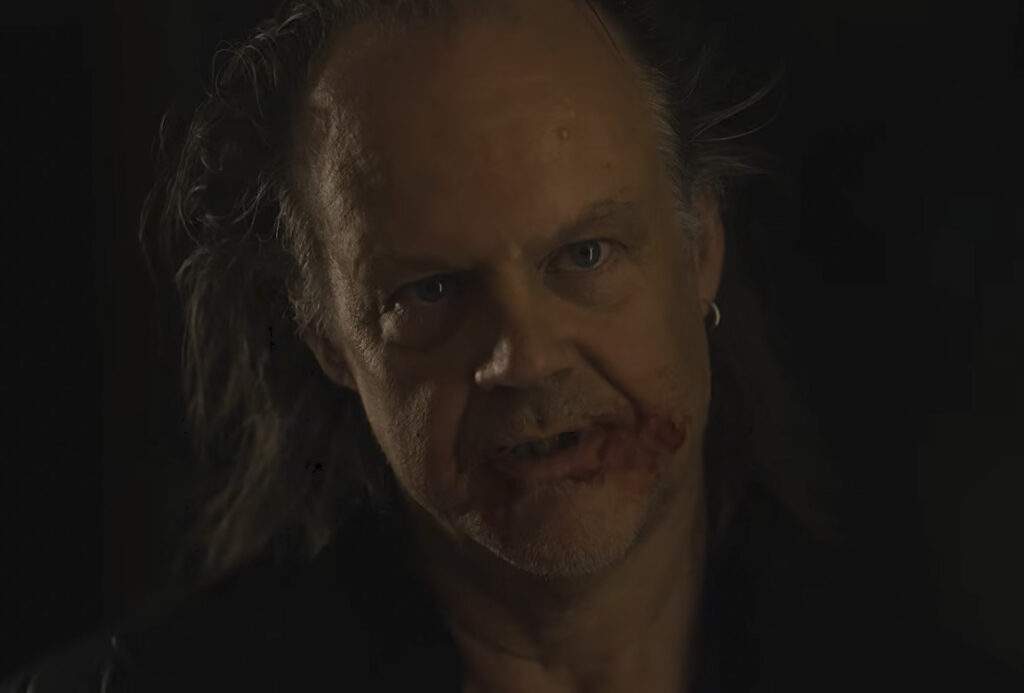
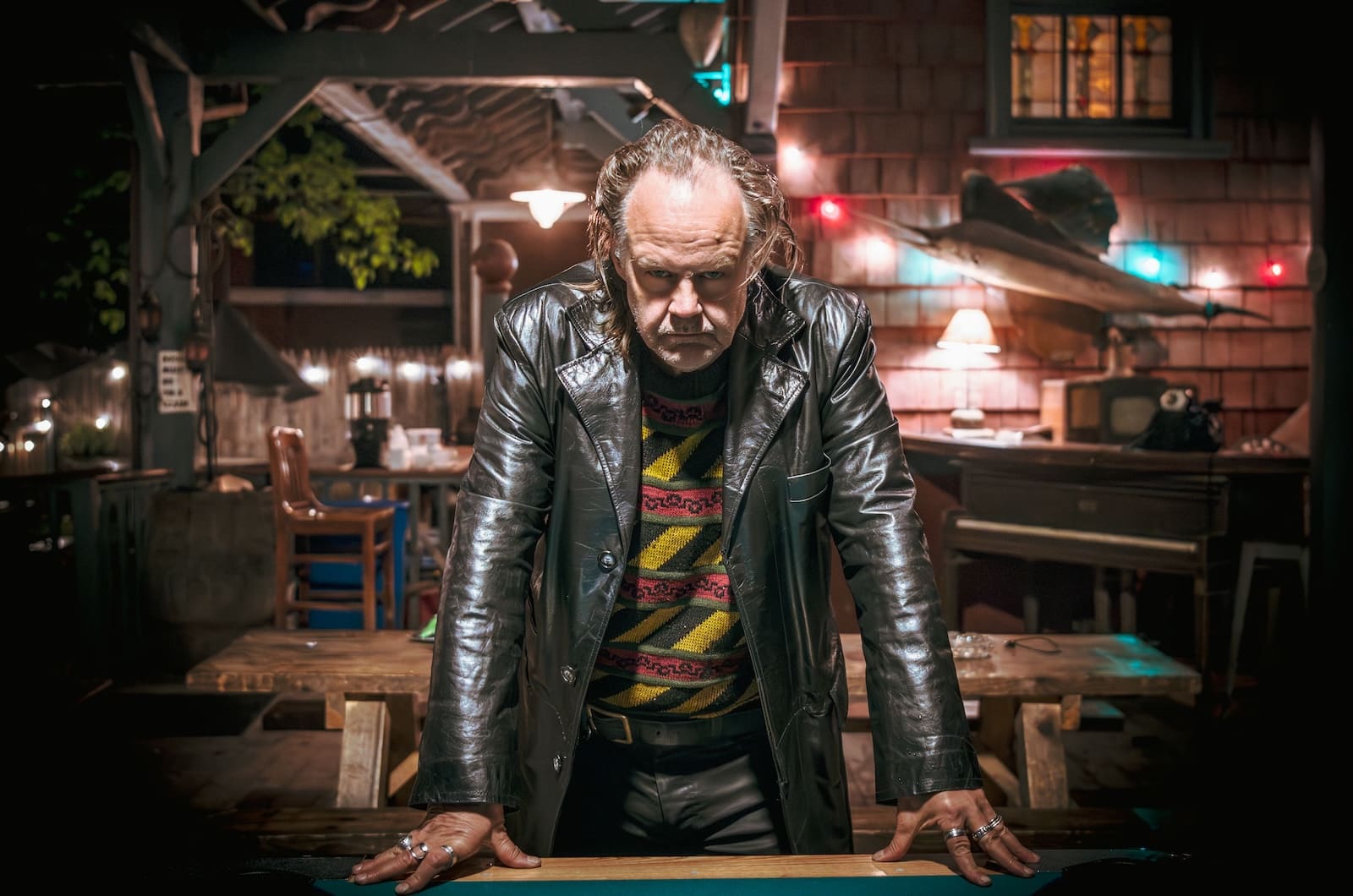
Director/writer/actor/multihyphenate Larry Fessenden has earned his status on the Mount Rushmore of indie horror powerhouses over the past 40 years. Founding the studio Glass Eye Pix would be enough to earn him that spot, but his own film projects over the decades, and being everyone’s favorite cameo actor, help this case as well.
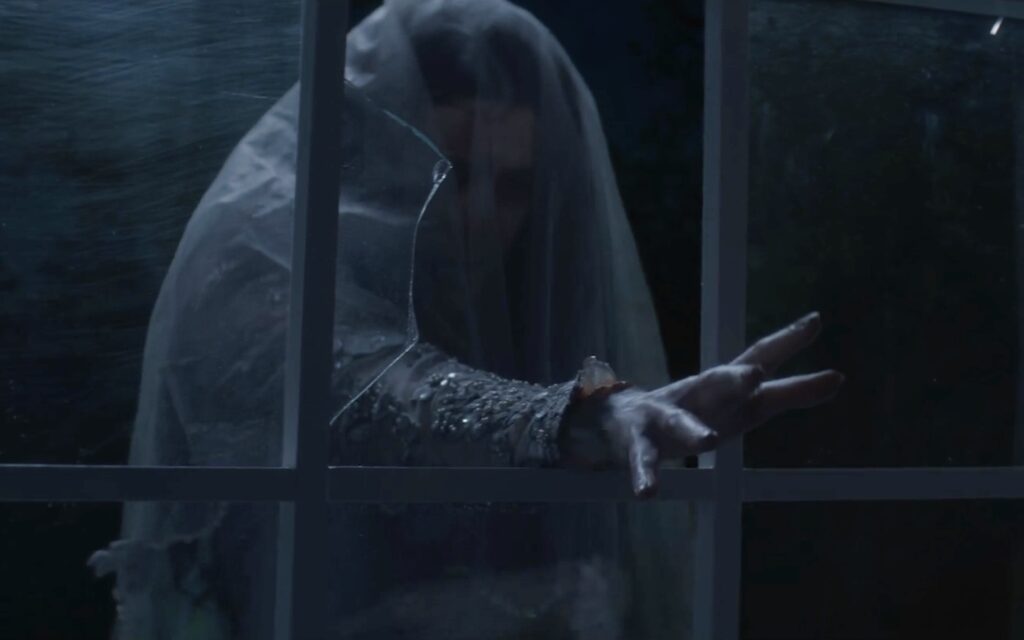
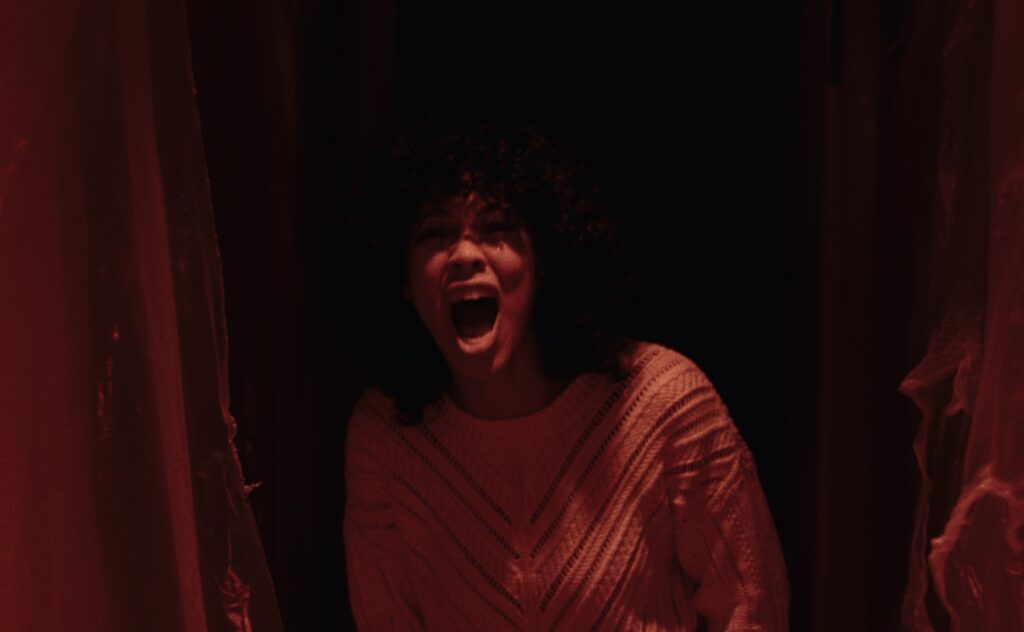
After many Fantasia International Film Festival screenings over the years, Fessenden once again returned to Montreal this month with TRAUMA OR, MONSTERS ALL. Joining storylines and characters from his previous HABIT, DEPRAVED and BLACKOUT, Fessenden assembles his own cinematic universe of classic monsters with classic problems. RUE MORGUE sat down with Fessenden the morning after TRAUMA’s first Fantasia showing to talk about the role of monsters in these dark times, mythology and a healthy fear of everything.
How was the Fantasia screening of TRAUMA last night?
I don’t know. My movies have this weird quality; they’re fairly contemplative, so I don’t get that fun jolt of everybody cheering when someone’s head is cut off. No one is sad when their characters die. The movie runs long, it’s quite chatty, but there’s this sort of folding in on itself. I like the film. It’s a little different.
Was it the plan all along to bring your three monster movies together, or was that an idea that came to you later?
You can always say that in retrospect. Like STAR WARS: “Of course they were brother and sister,” but you thought they were romantic. But that’s fine. That’s all the artistic process. I made HABIT years ago, and made many other types of films since. In fact, for the longest time I was associated with the Wendigo, which you guys know about up here. I love the Wendigo creature and the whole mythology there. I loved that movie, and then I made subsequent this and that. But anyway, I was always obsessed with FRANKENSTEIN, and I always wanted to update it.
That’s sort of my trope: to take these wonderful, iconic stories and reimagine them in the present day, and make sure that people understand that these stories are timeless, and that they connect now to our current agendas, or woes. I think maybe I was becoming slightly self-conscious at that point. I had to make a werewolf movie, because even though I always say I love FRANKENSTEIN the most, I always wanted to be a werewolf. So I made the three movies, and by the time I was making BLACKOUT, my werewolf film, I was joking that if you die, you’re released. If you survive this movie, you’re going to have to be in the sequel.
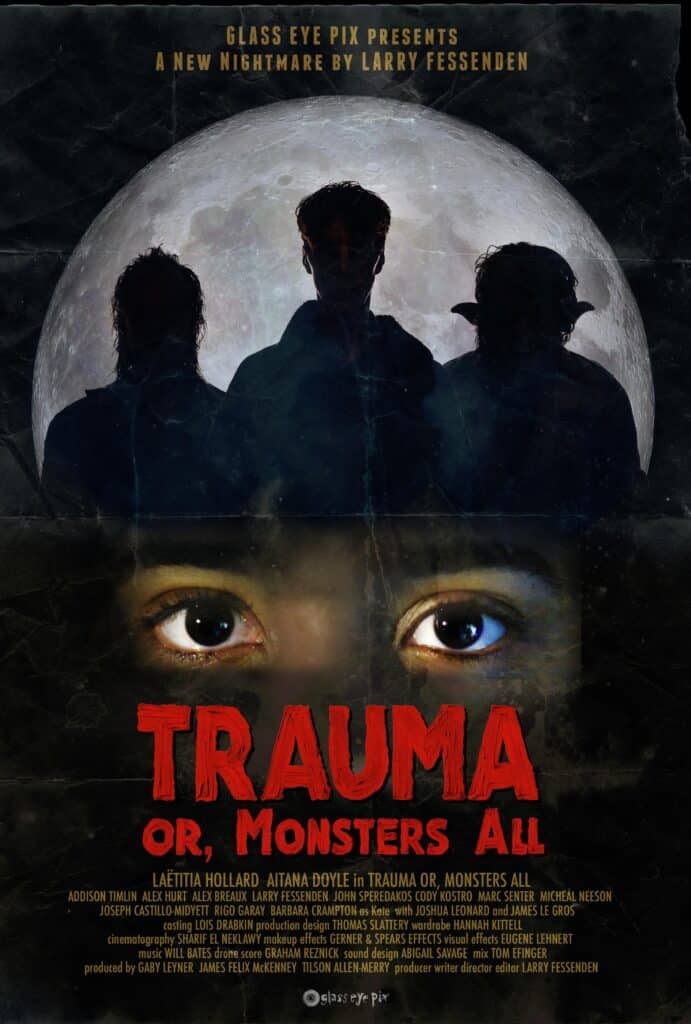
I was starting to think [about a combined film], because when I was little, I would watch the Universal movies, and they always had the mashups. Nowadays people don’t talk about them as much, or act like they’re footnotes. But if you were growing up then, it was all about Frankenstein films. In the ’70s, that’s what you saw. And it’s well-known at this point by the few who care that that’s my main influence. I love the design of those monsters [by] Jack Pierce, the actors behind them and the storytelling. So I always wanted to update them.
My films are also overtly or subversively political. We’re having a crisis in our country. We’re having real problems, and I’ve always been engaged with social issues; fantasy stories are essential ways to talk about them.
I was a kid growing up with these funny mashups, and since I knew that my storytelling is so somber, if you will, that itself would be a fun tension. How would you ever get the three monsters of this fantasy world over 30 years into one movie?
Into one town.
Into one town. But I like the way it worked, because it’s about social media, which is of course something to also comment on. The tragedy of so many of those monsters is that survival isn’t necessarily what they want. TRAUMA speaks to that. It’s the level of despair when you’re an outsider for so long, and you have your guilt, because you’re killing people at night. And then you have your yearning because you want your girlfriend, you want to be normal. And the whole thing with Charley [Alex Hurt] as the werewolf was that he was an artist, so he was already sort of outside the system. He’s already a tortured soul. These are the things that interest me.
There’s a lot of autobiography in these movies, as it should be with an artist. I’m thinking about my place in the world and the place of an outsider, a marginal character. So then it becomes queer-coded—and I’m proud to be an early adapter of understanding that that’s what these stories can also be. I don’t think it’s the only thing they are, but that’s what I loved about horror also: that you can take the metaphor as you wish.
That always spoke to me through stories like THE HUNCHBACK OF NOTRE DAME. How a beautiful soul is deformed, basically ostracized. There’s so much of that in the world. And you see, obviously now through politics, the construction of otherness in order to win power. We’re having this right now in America, and it’s just an ongoing cycle. It’s fun to make fantasy films addressing that, rather than write an article about the fucking Trump administration.
Art, very specifically horror, is a really good way to help us digest and think through things that are horrifying in our real world that are happening right now.
Yeah, and it’s funny because in the press—especially in the entertainment press—they’re always shocked, shocked that there’s a horror movie that’s busted out and made some money. Guys, do your homework. Last year, we had WEAPONS and SINNERS. The year before, we had Demi Moore [in THE SUBSTANCE]. The year before… It just goes on. IT FOLLOWS and THE BABADOOK, and then you can go to THE EXORCIST, and then you go to the Godzilla movies, and then you go back to the [Universal] horror. It’s the most perennial genre because it speaks to our arc of life, and people want an outlet.
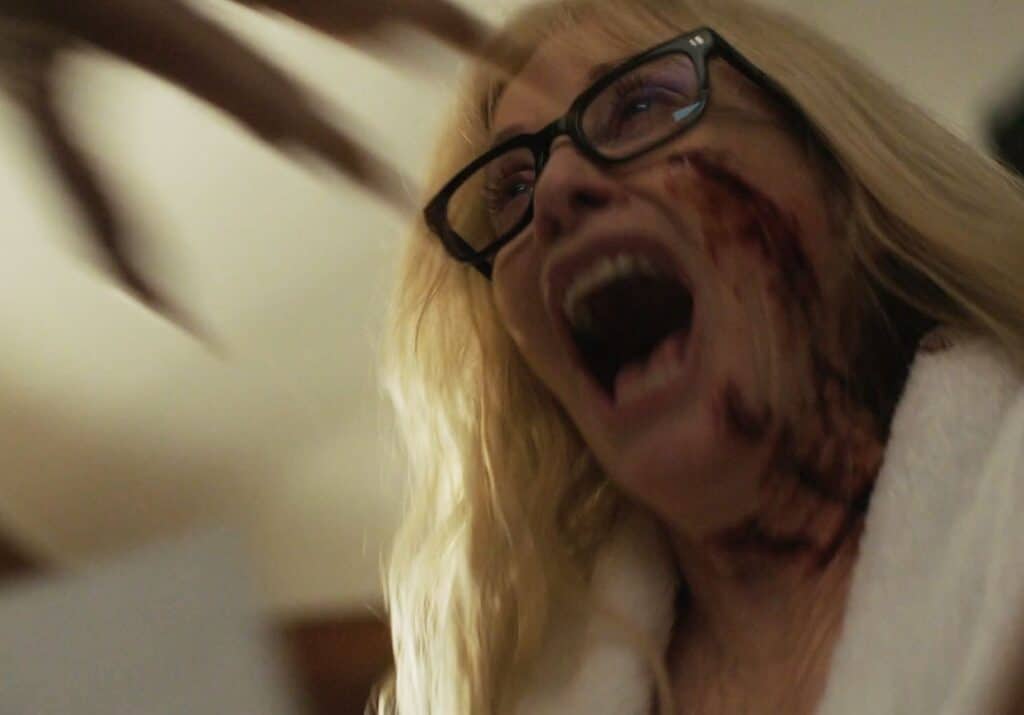
Even go to mythology. THE ODYSSEY’s out now, and it’s about getting chased by monsters, and there are men getting eaten by a cyclops. I’m only there for the monsters, to be honest. There are pretty good monsters in there. I like Mr. Nolan. He did that with BATMAN: this idea of updating something that’s quite silly, and then making it relevant. Of course, I consider the Joker one of the great characterizations ever. Sometimes people say, “Oh, let’s not remake it. What are you doing?” But you get some really good things when it comes to revisiting things again.
Can you imagine if we only ever got one FRANKENSTEIN?
I hope that would not be the case. Guillermo [del Toro] has done it, and let’s keep going. Maybe it’s controversial, but I think POOR THINGS is the last great Frankenstein. So let’s keep doing it.
It’s like porn; you can tell when something’s a remake by the suits. Like the chainsaw movies from the ’90s that were just like, “Let’s use an MTV filter, get some pretty boys and cut them up with a saw,” just not bringing anything to the table. Except maybe now they’re fun to watch: Look at this music video version of this thing. But the truth is, that story is always waiting to be told, because we have left-right politics and everyone wants to cut up the hippies. In fact, I’m going to go and pitch the new version.
Cutting up the hippies?
Cutting up Antifa. This battle goes on in America, as you know.
What was it like to revisit your HABIT character Sam after 30 years? So many of the monsters have been forced into their situation, but Sam is reveling in that life.
Well, that’s what I wanted. Once again, I always look to the mythology of these creatures. Frankenstein’s monster is enduringly sympathetic. He’s really trying to get along. He’s always reading books. He’s trying to educate himself. And he has so much sadness and loneliness, so he’s sort of my iconic character, even if I like werewolves.
Then the werewolf is very angsty, and he has given up in this final chapter. My point is that the white man in America seems to have sort of succumbed to nihilism. And, you know, this is what you see in our politics. They’re like, fuck all this idea of trying to aspire to goodness. We’re just going for power. You hear it in these speeches. It’s bananas.
Now, the idea with Sam is that since he’s immortal, he’s going to do whatever he wants. He has sort of thrown morality aside. He’s like, what’s the point? Why be good? Why be bad? I’m forced into this. So I consider him a sort of prankster. And he’s given up, but he says it: He says, “When there’s no more hope, you’re not the undead. You’re the unalive.” It’s a little turn of phrase, but I like this idea. The truth is they’re all kind of hell-bent on self-destruction at this point, which is kind of my opinion of what we’ve done with our society. We’ve given up. The public dialogue isn’t even outraged at the lack of a moral compass.
And it’s all in TRAUMA, all my thoughts. Sam says, “God is dead.” Nietzsche said that. I’m not a religious person, but it seems like people need some guide, a moral compass. In the end, can’t we just get along? Yeah, why not? Well, I don’t know. Because we’re a very fucked-up species.
When Sam said, “God is dead,” I also thought about Dr. Frankenstein saying, “I am God.”
These are stories that are dealing with existence, our obligation to each other, the way we turn on each other. Michael Gingold wrote [in the Fantasia program notes], “Fessenden is, as usual, interested in dysfunction.” Which is very succinct.
I’m just interested in human dysfunction. And I’m so grateful to have monsters to tell those stories, rather than, God forbid, just a drama about a relationship falling apart. We all have that in our lives. Why put it on screen?
Sometimes it’s harder to digest if you see too much of yourself in it.
And you feel the lecture. Maybe people would say that in my films, but at least I put a monster into it. So give me a break. At least you have some special effects.
I always like to ask the same question at the end of an interview: What scares you?
Oh, well, we need more than two minutes for that. I’m a hypochondriac. I hate flying. My imagination goes to what could go wrong. I think it makes me extremely hyper-aware and sensitive. I anthropomorphize everything. This is just how I’m wired. And it’s torturous. But it’s just the way I am. And it’s fun to think about how the brain works. It’s like reminding everyone that a lot of our physicality and everything we do is based on just how we’re wired. Everything frightens me. Intimacy and loneliness. So I can’t be helped, clearly. It’s beyond repair.