
By PAYTON-McCARTY-SIMAS
It’s been quite the journey for Maika Monroe since her breakout in David Robert Mitchell’s genre-defining, modern horror classic It Follows in 2014. She’s appeared in nearly two dozen films since, becoming known for a kind of hauntingly icy performance that draws audiences in by keeping them out.
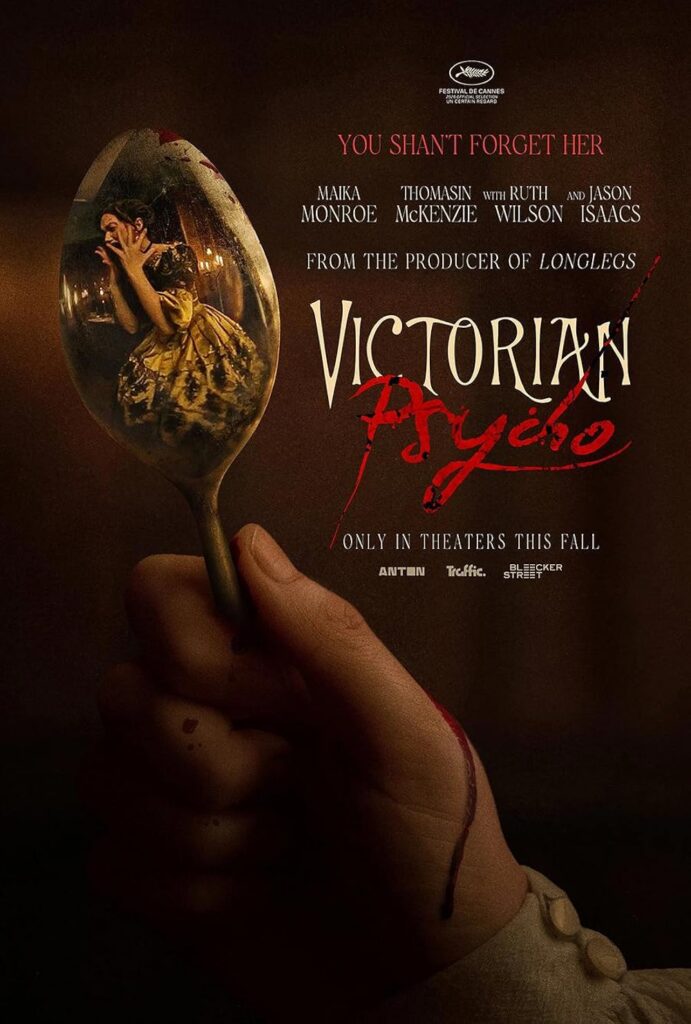
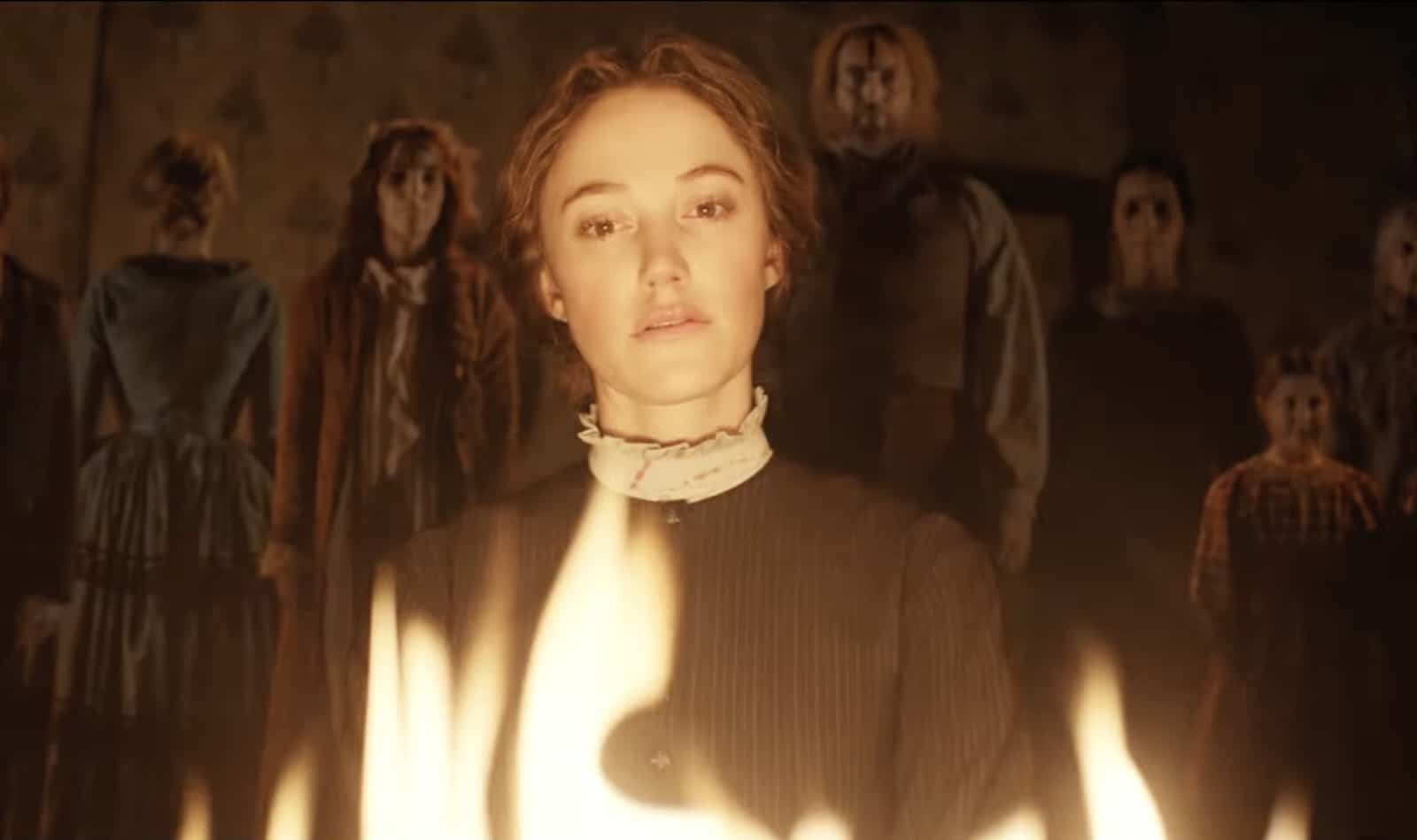
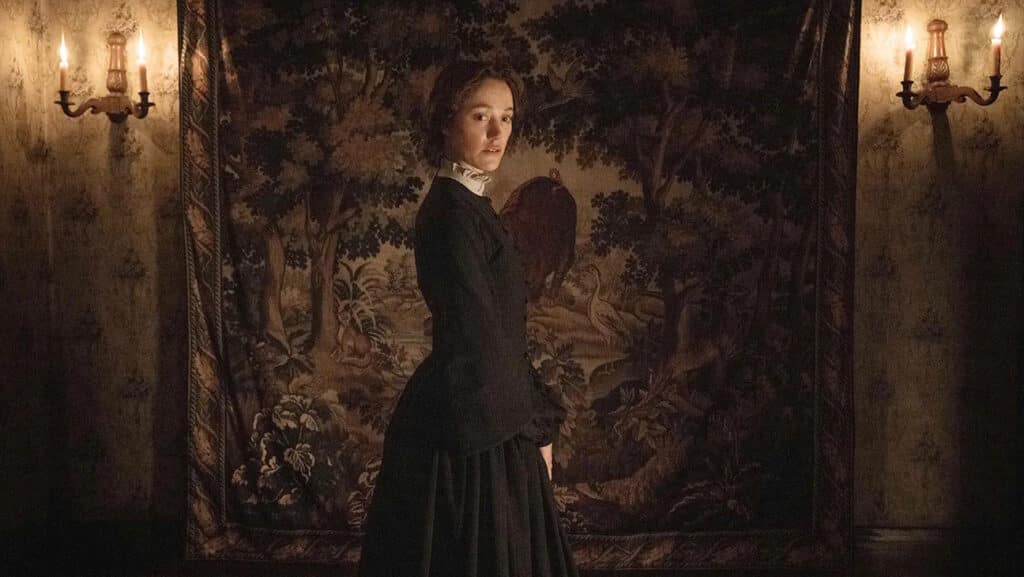
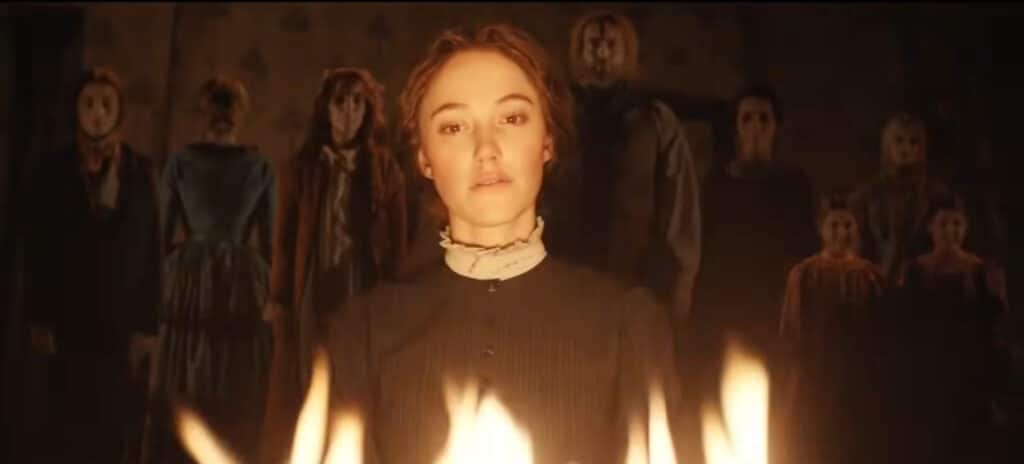
This fall, she’s burning that persona down in Zach Wigon’s balls-to-the-wall adaptation of Virginia Feito’s best-selling novel VICTORIAN PSYCHO, in which her cool exterior quickly gives way to a performance explicitly inspired by Jack Nicholson’s in The Shining. She may have played it straight alongside Nic Cage in Longlegs, but in this film, she’s giving him a run for his money. As the summer blockbuster season kicks into full gear, RUE MORGUE caught up with Monroe from her Los Angeles home just before she went into production on the It Follows sequel, They Follow, to talk about the challenges and particular pleasures of going feral.
Before we get into VICTORIAN PSYCHO, how does it feel to be coming full circle with They Follow?
It’s pretty bizarre and incredible all at the same time. I’ve never returned to a character before, so that’ll be a first. I feel like so much has changed in my life. It’s been over ten years! But it’s still one of the most incredible experiences I’ve ever had on a set, with David and all the crew. Everyone’s coming back, so it feels very special.
You’ve had such a variety of roles since then, but VICTORIAN PSYCHO is a real departure from your previous work. What was that like, preparing for your roles as Winifred Notty?
It was very nerve-wracking. Like you said, it was a very, very different role than anything I’ve ever done. I think most roles – I’d say almost every role – there’s a small piece of me in the character, something that I can hold on to. For Winifred, that was really not the case. I also think a lot of my characters are much more inward, and this is a loud, loud, loud, and big character. It was an absolute blast, though, I will say that.
Do you think you gravitate towards roles that are more inward, or is it something that people are identifying in you? Where do you think that comes from?
It’s a great question. I don’t really know. I think I find more comfort in roles like that, just because it’s more like me. It’s much simpler for me because it’s closer to home, but this was a very different experience from prep to filming. I felt very lucky to be a part of it.
How did you prepare for that change?
A whole lot of rehearsals, not only working with a dialect coach, but with Zach. He had a very specific vision, a very specific tone, and so we would Zoom a couple of times a week and just start reading through scenes. We would send each other a lot of clips of either psychopaths like Ted Bundy or clips from movies. Jack Nicholson in The Shining was a big anchor. There’s a lot of prep that went into it. Months.
Can you tell me how you first encountered this story? Had you read the book? How did you get into this project?
I was sent the script, and I read it very quickly. Then I did a Zoom with Zach, and we had a really incredible conversation. I had seen his previous film and loved it, so I was a fan, but then we spoke on this project in particular, and I could tell that he really had a vision for it. I want to say it was a no-brainer, because I wanted to do it so bad, but I think there was a part of me that was terrified as well, because it’s very much out of my comfort zone. I definitely wondered for a moment, you know, Can I do this? Can I pull this off? Then we just continued talking, and here we are.
Was there a moment that made it click for you and helped you overcome that trepidation?
The truth is, I had a very incredible mother who always told me, “You can do anything that you set your mind to,” as a kid. I just… I heard her voice in my head saying, “You’re going to regret not doing this!” and that I could do it. So, I don’t know, I guess I went with my gut.
That’s so sweet! Particularly for a story that’s very anti-maternal in many ways…
[Laughing] Yes!
In terms of your body of work, there’s a specific kind of outsider, these feminine villains, that you embody in this film and in Hand That Rocks the Cradle, say…
Villain era!
Oh, hell yeah, we love a villain era.
Yes, yes, we do.
But in terms of those roles, even though they’re different, do you think with those two, VICTORIAN PSYCHO and Hand That Rocks the Cradle, or in general, that there are specific kinds of characters that you gravitate towards?
That these characters are very, very complex is a huge part of what draws me: The way that, at first glance, they are quote-unquote “the villain.” For me, I fall in love with these characters and understand them in a way – where they’re coming from, why they are the way they are. That’s very fulfilling.
What parts of Winifred did you find most fulfilling to build?
With this particular project, I could just fully let loose. I don’t know if I’ve ever really done a project like that. There was space to just be big and loud and crazy and kind of let out this feral side.
Do you think that you’d want to do more roles like this as a result? Do you think that freed you up in a way?
I would love to! I would love that. There’s real pleasure in it.
Can you talk to me about the first time on set when you really had to do one of those go-for-broke scenes? What does that take?
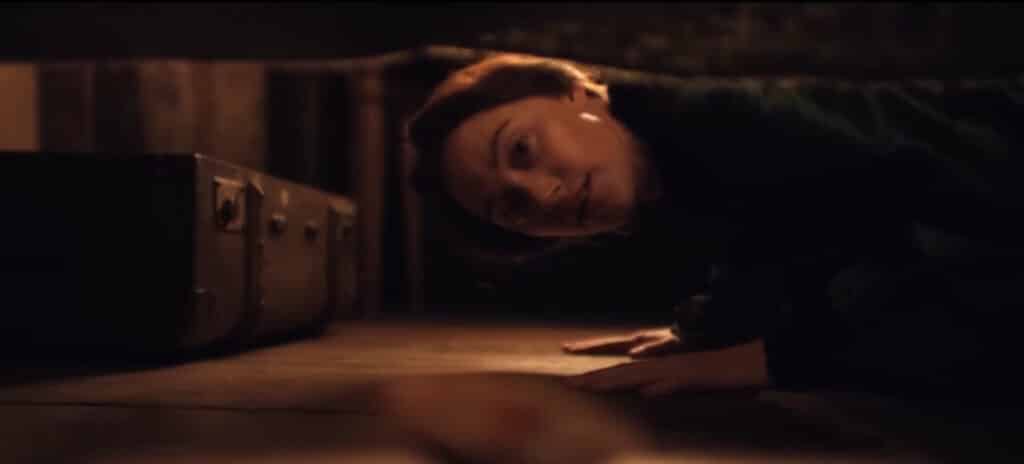
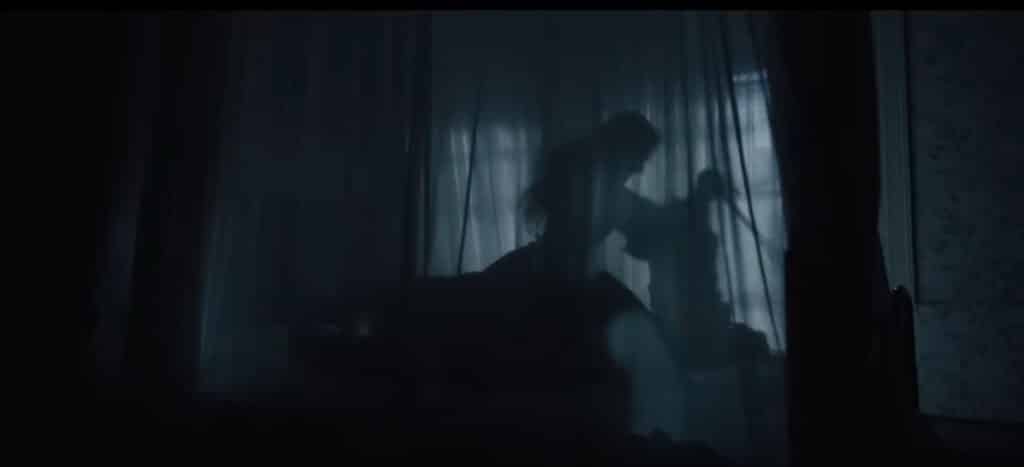
One of the first, which was a pretty crazy one, is the scene with Jacobi Jupe, when he’s in bed, and I wake up in a trance above him. We did it a bunch of different ways, but that was a pretty fun scene.
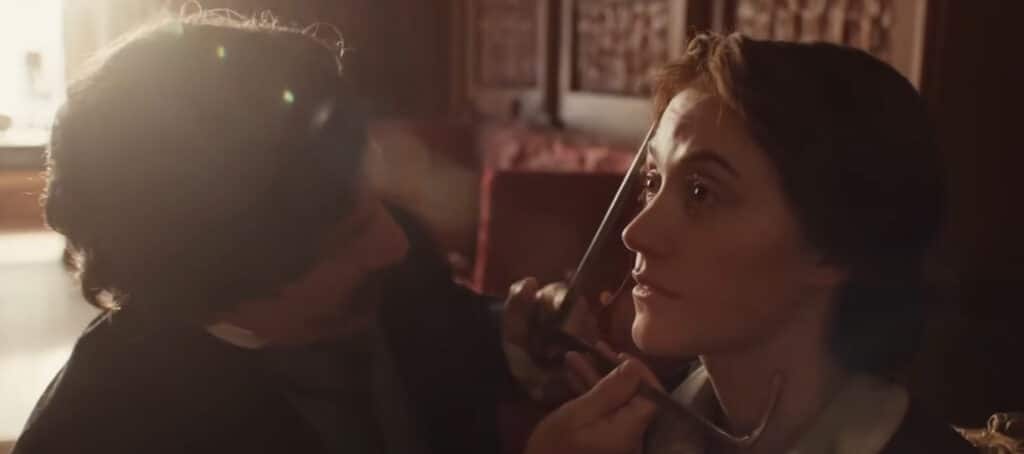
Without giving away too much, the scene that I personally cannot stop thinking about is a low-angle shot of you gesticulating at a baby.
Yes!
That’s such an amazing bit of performance! It’s very Nicholsonian, but it’s also so unlike anything I’ve seen recently. There’s so much transgression going on in moments like that. How did doing that scene feel?
That particular beat wasn’t in the script! We sort of found it on the day, and it naturally came out. I think because there was so much prep for this character, it was very easy for me to tap into it. It was an absolute blast that day, as you can probably imagine. Just a pretty wild scene as a whole. It was a real joy.
What about working with this cast? It’s so stacked.
Oh my God, I mean everyone was amazing. I’ve been the biggest fan of Thomasin McKenzie, and that was an absolute dream. Jacobi is just born with a gift, and it’s pretty incredible to see someone that young be able to handle such intense material. Really incredible. Ruth Wilson was probably my favorite person to work with because her character is also incredibly unhinged. She would just go for it, and we… [laughs] Well, there are some great bloopers from our scenes, I’ll tell you that much. We had a really good time.
Can you share some of your favorite memories from the shoot?
Oh man, I think one of the most surreal moments was the first day on set. We had done fittings, but then being in the full costume – I had prosthetic teeth, I had the wig on – and then I went into this castle and just felt very at peace. It was a really surreal and special moment.
I mean, being in a castle at all–– that’s one of those moments where you must be like, “Wow, my job is really fun.”
It’s a pretty incredible job, I will say.
VICTORIAN PSYCHO premieres in theaters on September 25.