
When Pamela Buchanan, the nearly forgotten daughter of Daisy and Tom Buchanan, returns to the ruin of Jay Gatsby’s West Egg mansion after her mother’s sudden death, she discovers that some parties never truly end. With IN THESE GILDED, GHOSTLY HEARTS, Gwendolyn Kiste continues F. Scott Fitzgerald’s American classic in a haunting Gothic meditation on memory, queer longing and the women history left in the margins, reclaiming one of literature’s most iconic worlds to prove that the greatest ghosts are often those history chooses to forget.
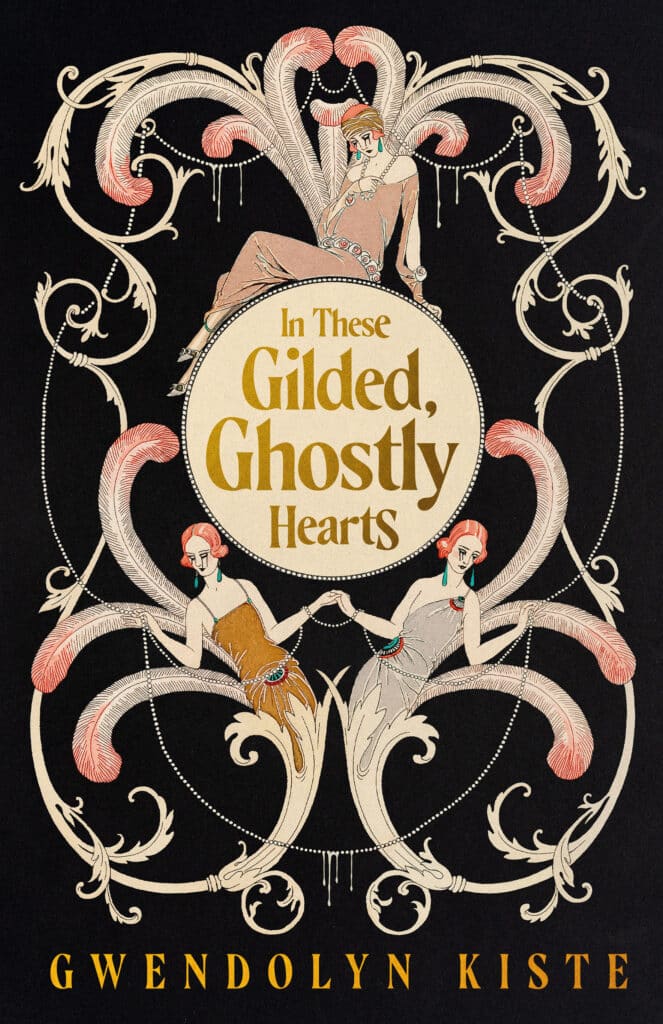
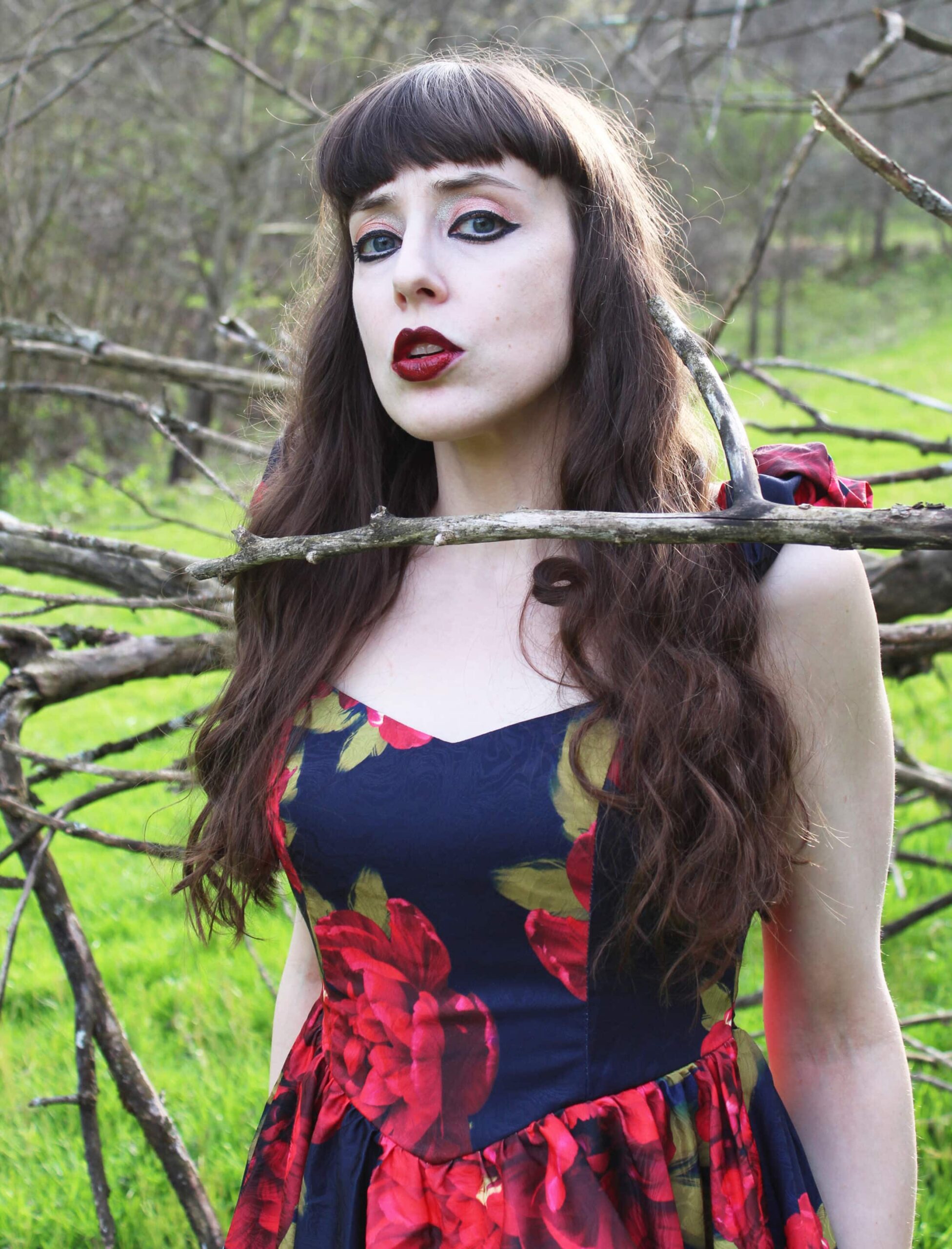
RUE MORGUE recently had the opportunity to sit down with Gwendolyn Kiste to chat about IN THESE GILDED, GHOSTLY HEARTS, coming September 2026 from Creature Publishing.
IN THESE GILDED, GHOSTLY HEARTS feels both reverent toward The Great Gatsby and deeply interested in interrogating it. What drew you to Daisy Buchanan’s overlooked daughter as the emotional center of this story?
I’ve always been fascinated with stories told from the perspectives of lesser-known or background characters. When I was growing up, I remember hearing about Rosencrantz and Guildenstern Are Dead, which tells Hamlet from the perspective of two minor characters. I also remember hearing about a play called Renfield, which of course reimagines Dracula from the point of view of Renfield. That was such a revelation to me, and ever since, I’ve always looked at my favorite stories and wondered whose tale wasn’t being told.
With The Great Gatsby, it always haunted me that Daisy and Tom’s daughter, Pamela, is only mentioned a handful of times in the book, and she only appears in one scene. Many readers might forget about her existence altogether; it’s clear that Gatsby himself doesn’t want to believe that she’s real. Once the novel came into the public domain, I knew I had to explore the character of Pamela Buchanan and see how she would feel about everything that happened to her family.
You’ve described the novella as “Carol meets The Haunting of Hill House.” That seems like such a lush tonal intersection! What elements from those stories most influenced the atmosphere of this book?
So, it’s no secret that I’m a huge Shirley Jackson fan. Her shadow always looms large over my body of work. When I was thinking about The Great Gatsby and different ways to reimagine it, the first thing that started swirling in my mind was how that West Egg mansion would absolutely be haunted. From there, I couldn’t help but envision Gatsby’s mansion as a kind of Long Island Hill House. Initially, I was just going to write a short story from the perspective of the house. I thought it would be fun to get its perspective on what happened. However, as I started drafting the story, it became clear to me that this wasn’t the house’s story; it was Pamela’s story with the house as a major character in the background. In many ways, that seems so perfect since Jackson’s novel is ultimately Eleanor’s story with Hill House as a major character. Both Pamela, who goes by Mel in my story, and Eleanor are queer women struggling with their identity in the oppressive landscape of the 1950s, so the parallels ended up working out so well in the end.
In terms of Carol, that film definitely influenced the way I depicted Mel’s longing for Jordan Baker and everything she represents to Mel. The Great Gatsby, of course, is set in New York City and its surrounding areas, and Carol (as well as The Price of Salt, the Patricia Highsmith book it’s based on) is also partly set in Manhattan. Carol takes place in the 1950s, which is the same time period depicted during IN THESE GILDED, GHOSTLY HEARTS. That seemed like such an organic connection, and since Carol is such a cultural touchstone for so many queer people, it felt like the perfect inspiration for this particular story.
Fitzgerald’s original novel famously sidelines women emotionally while centering male longing and obsession. What did reclaiming that narrative through a queer feminist horror lens allow you to explore that the original text could not?
You’re so right. We never really get to view anything in The Great Gatsby through the eyes of the women. Daisy, Jordan and even the ill-fated Myrtle all have stories of their own to tell, but in many ways, they’re kept at a distance – even though they’re all integral to the narrative. Being able to reclaim their stories along with establishing Pamela’s voice was so cathartic for me as a fan of the original novel.
In particular, I always loved Jordan Baker so much. Out of every literary character, she’s probably my biggest crush. Sure, she’s aloof and difficult and almost certainly a liar and a cheat, but she also knows how to survive. The book makes it clear that she doesn’t come from nearly the same money as Daisy or Tom, and most of her family is dead, so she’s had to figure out how to make her own way in the world. And she’s done that, especially considering the time frame. I love the fact that you had this woman who was a professional golfer, who was clearly coded as bisexual, and she was just out living her life by her own rules. I wanted to make her more of a centerpiece in my novella since she’s inspired me so much over the years.
You’ve spoken, and written, before about classic cinema and old Hollywood glamour. You also make very specific references to Gatsby’s iconic pink suit. How did the film versions of Gatsby or even broader cinematic influences shape the visual texture of IN THESE GILDED, GHOSTLY HEARTS?
The 1974 Robert Redford/Mia Farrow film version of The Great Gatsby is absolutely the adaptation that has been the biggest influence for me. When I was in middle school, I remember seeing a few scenes from the film at a relative’s house, and it shifted my perspective on fashion forever. Clothing can be such a way of claiming or reclaiming your identity, and Gatsby’s pink suit was such a vivid statement about the person he wanted to be. That’s always stuck with me, so naturally, I had to incorporate that suit into the haunted fabric of my story.
Otherwise, I was very much thinking about cinema from the 1940s and 1950s, especially film noir. As I was writing, I saw this book not just as a ghost story, but also something of a mystery. Mel is doing her best to solve what happened to her mother and Gatsby, as if she’s an amateur detective. I also love the melodramas of that time, so I definitely drew from The Maltese Falcon, Leave Her to Heaven and even Douglas Sirk’s films like Written on the Wind and All That Heaven Allows. Both black-and-white cinematography and Technicolor are so beautiful and absolutely inform my writing.
There’s something especially haunting about writing a sequel to such a culturally “fixed” American text. Did you ever feel pressure engaging with a literary icon like Gatsby, or did horror permit you to break the rules a little?
 For me, retellings are all about playing with the source material. I really love when someone creates a very different retelling or sequel to a work that’s incredibly familiar to people. So, I tried not to think about how the purists would feel about the reworking of Gatsby, and I just went with what felt right for this particular story. Also, as you said, since this book is in the horror genre, that shift indicates right away that this novella is not going to be entirely the same as the original. That certainly gives me even more room to play within the world of The Great Gatsby.
Your work frequently centers on women and queer characters who are denied agency, visibility or identity. How important is reclamation as a thematic engine in your fiction?
Honestly, this is one of the most important things for me as a writer. I want to see queer female characters who find their way in the world, even when they’ve been denied their identity or agency or safety in the past. That’s a theme in fiction that resonates with me, because it’s something we see every day out in the world: women and queer people just fighting to be able to live their lives.
And unfortunately, there are still gaps in the publishing world where there isn’t enough support for female authors and queer authors. So, for me, it feels at once pressing and vital to spend my time as a writer showing queer characters and female characters who reflect my own lived experiences. The only way things are going to improve is if we keep striving for the world to get better. And I truly believe that we can get there, and that horror can be a tremendous avenue for that change.