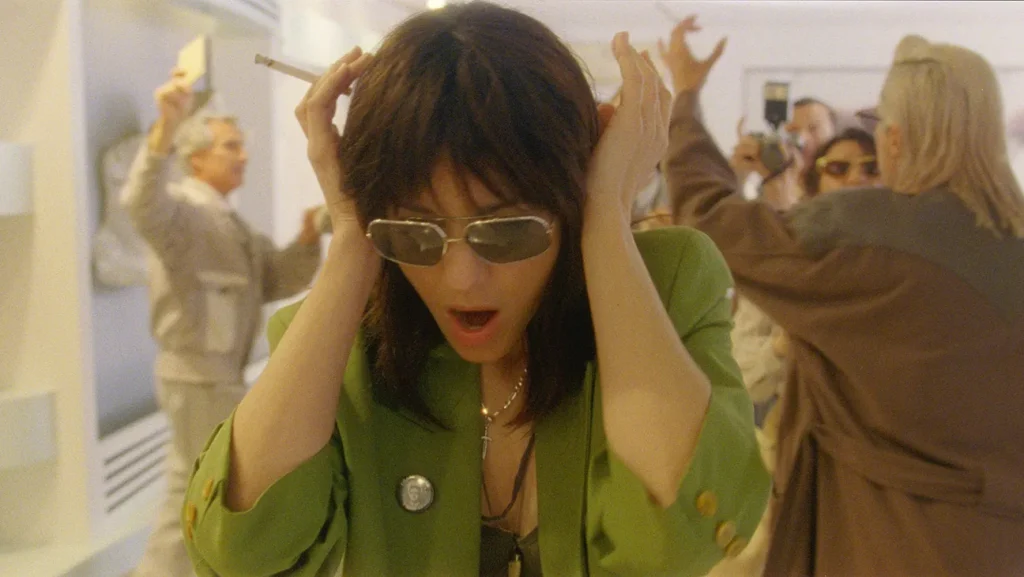

Hollywood doesn’t make erotic thrillers like it used to. This sexy subgenre, once the stuff of mainstream big box office fare in the 1980s and ’90s, has declined in popularity, as sex on screen has become more of a perceived liability to major studios than a draw. Georgia Bernstein wants to change that. In her work as a producer, she’s delivered eye-catching exploitation and pulp riffs like All Jacked Up and Full of Worms and last year’s much-loved old-school sexploitation homage, Anything That Moves. With her directorial debut, NIGHT NURSE, she’s taking on the Nurseploitation subgenre with hopes of making her audiences hot and, potentially, bothered.
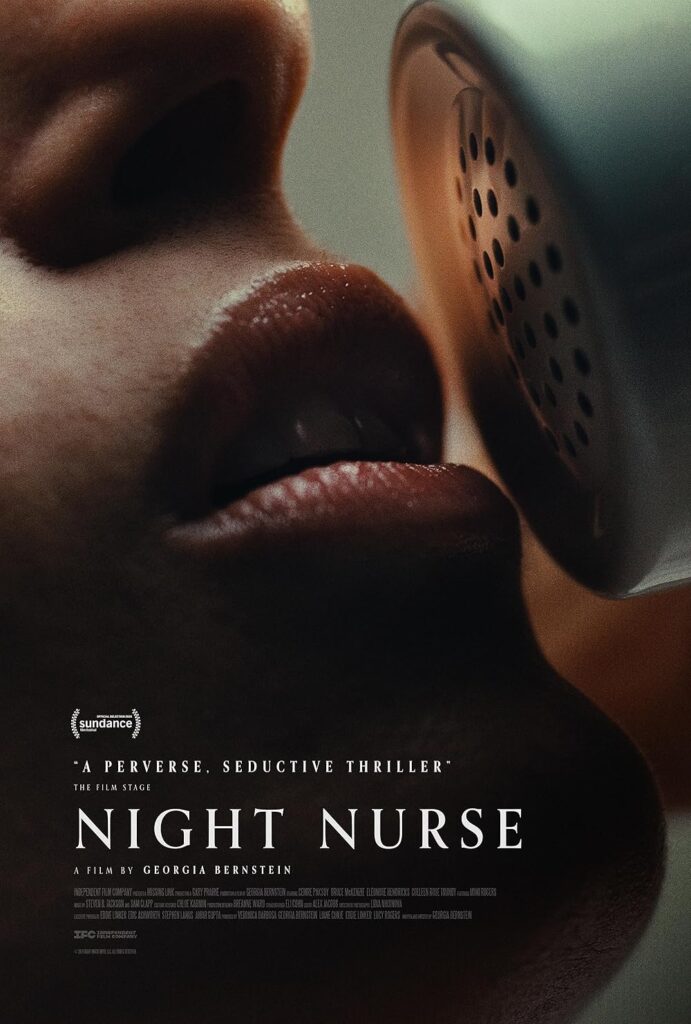
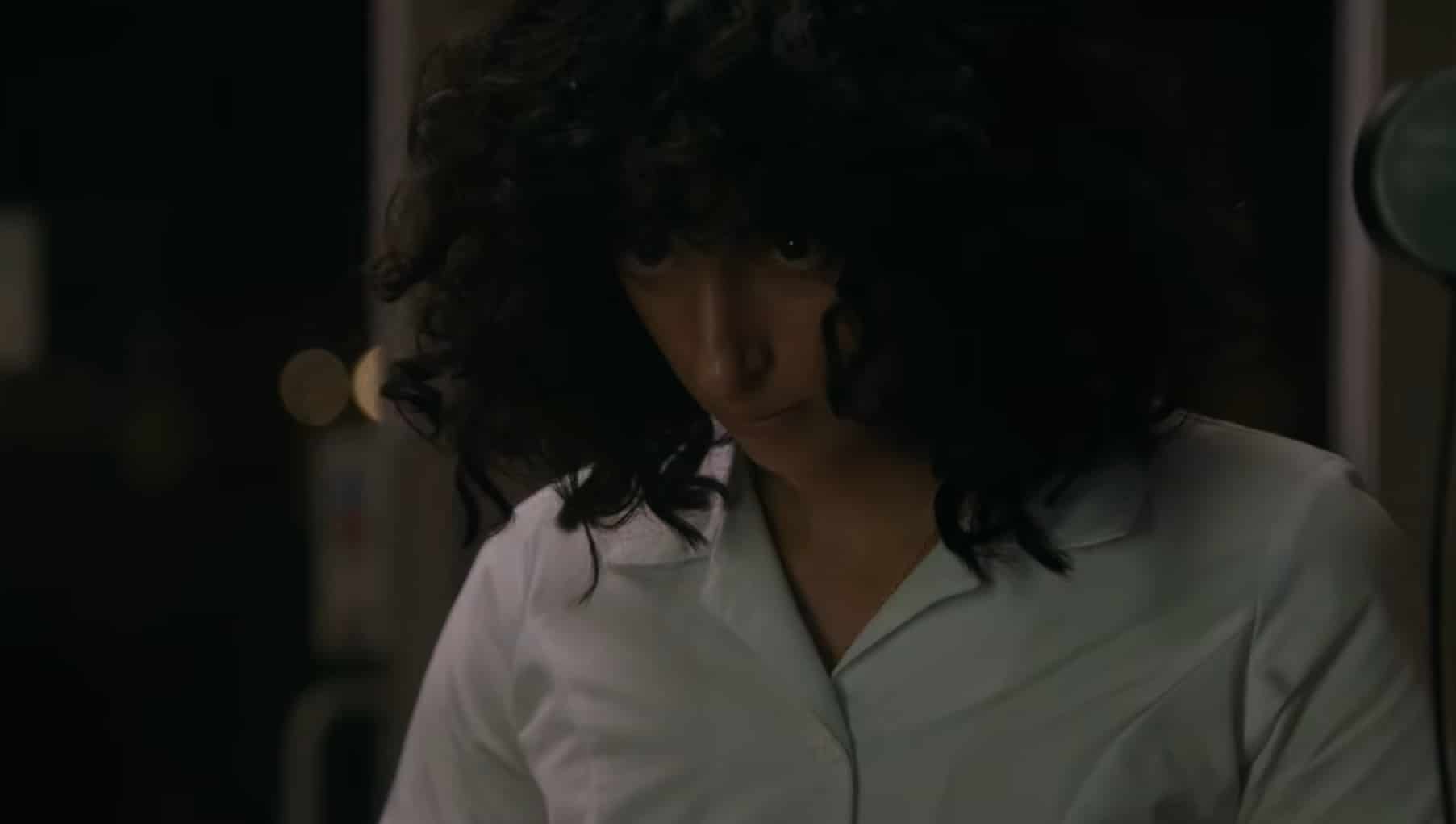
NIGHT NURSE follows Eleni (Cemre Paksoy), who’s starting a new job at a geriatric care community specializing in dementia patients. Lonely, reserved and desperate for connection, she strikes up friendships with other nurses before falling in with – and eventually hard for – her patient, Douglas, a smooth operator who may or may not have dementia himself. His powers? Charm and the understanding that the people who need care most are often the ones who give it for a living. Together, he and his coterie of enraptured nurses make horny phone calls, scamming his fellow residents out of thousands. It’s an intriguing premise told with style and freshness, even as it keeps a knowing eye trained on the history of the subgenre, from its retro score to its high-concept approach to erotica.
RUE MORGUE recently joined Bernstein and Paksoy this week to take a look at the soft, squishy underbelly of desire.
So, have you had a chance to see NIGHT NURSE with an audience yet?
Georgia Bernstein: We both sat through it at Sundance, and that was Cemre ‘s second time.
Cemre Paksoy: Yeah, I saw it once on my laptop and once at Sundance. I was thinking today, though, that the theater where we had our premiere at Sundance was a smaller screen, and so seeing the IFC Center, I thought, “Wow, I bet the sound is so good, and the screen is so big!” I’m tempted to see it again on a bigger screen, with really good sound.
GB: For the most part, I don’t sit through it anymore, because, you know, it’s torture for me at this point. I think in some time I’ll enjoy sitting with the audience or something, but I think right now, I’ve finally resigned to letting it go, so I have just let it play and not think about it.
I’d imagine that it would be a great crowd movie. How are audiences reacting to it?
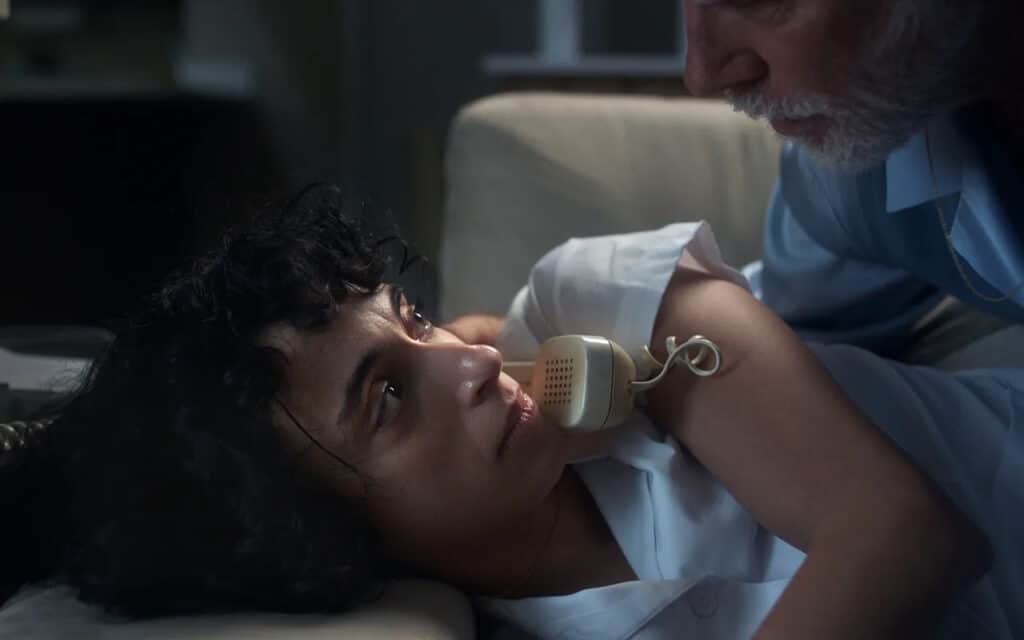
GB: You know, at least from what I’ve seen and depending on the crowd, I think sometimes people are a little bit hesitant about the tone. They’re not sure if they should laugh or how to feel. I do think it’s meant to be a very uncomfortable film, so I think probably the greatest pleasure of seeing it with an audience is sitting in the discomfort together. That’s what I hope happens for people, but naturally, I’m not there with them.
It has the feeling of a Jean Rollin film at times, but I was also, weirdly, thinking a bit about mid-career Woody Allen if those movies were, you know, good and self-aware. What were the inspirations and influences for NIGHT NURSE?
BG: When I was first conceiving of the idea, I was looking at the Roger Corman Nurseploitation trilogy, which is actually four movies, and I was thinking about nurses. I was living in Chicago at the time that I was writing the script, and there were these billboards advertising medical school. And the slogan for the medical school was “It’s amazing to be needed.” I thought that that was such an interesting and effective slogan.
CP: It had a smiling nurse on it, no? Or a doctor?
GB: Yes, a woman in scrubs. It was eerie and odd, and it got me thinking about nurses as a container to talk about the compulsive side of caregiving, which brought me back to the Roger Corman Nurseploitation trilogy. I wrote NIGHT NURSE for Cemre, and I wanted it to be from her perspective. That shifted things heavily. I also love Catherine Breillat, so I drew heavily from her, and also Lucrecia Martel. I guess I could go on and on about the inspirations, but I guess it started with this idea: “How could I remake a Nursesploitation film today?” Then it morphed into its own other thing,
Cemre, how does it feel to have this very specific character and this very particular story written for you?
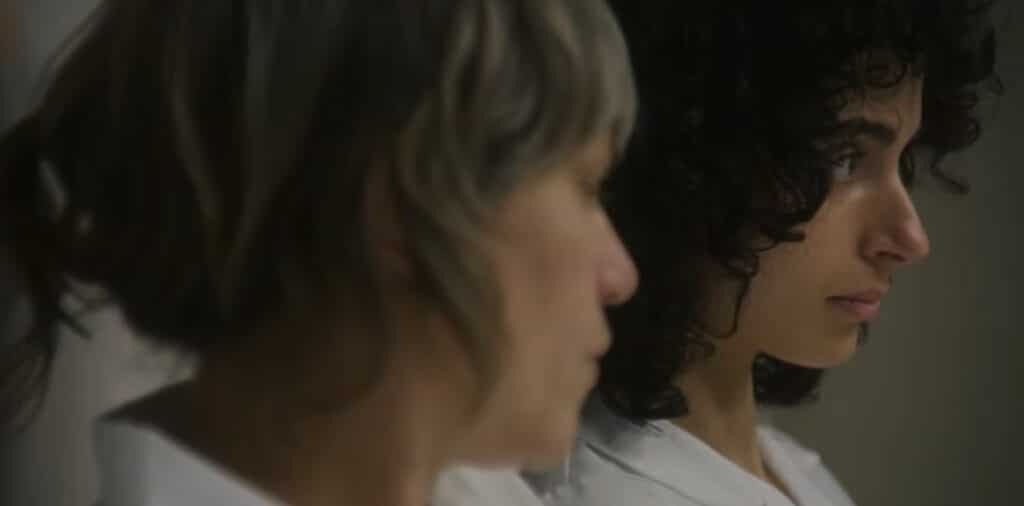
CP: It’s so flattering. The truth is, after last night’s screening, we were talking with Bruce [McKenzie], who plays Douglas, about what kind of roles that he’s usually gone out for and been cast for, because he has a really rich background in theater. He’s been typecast before, and I think that most of the time when you’re an actor, you’re not necessarily being cast for things that you’d be really good at. Sometimes it’s stuff like, “Oh, you’re a young woman; you should play the assistant!” Or, “You’re a young woman; you should play the quirky friend!” Just last night, I was thinking about how most of the time you’re not necessarily going out for what you would be best at, but what box you fit. I guess what I’m trying to say is, I read this script, and I was like, “Oh, this is something I genuinely think I could do a good job with!” It’s also something that, taste-wise, I align with, that I think is good beyond being able to do well. I think it’s actually really rare to get to have both feelings. So rare and special.
GB: Cemre and I met at Northwestern. We went to college together, and we met on the very first day of school, which is our sweetie pie origin story.
This kind of erotic filmmaking is something that perhaps a modern audience doesn’t understand. Georgia, you’ve produced a lot of this kind of neo-exploitation stuff; I’m thinking about Anything That Moves in particular. And you’re clearly so knowledgeable about the history of this kind of filmmaking. What’s the benefit of this kind of story artistically?
GB: We actually love to talk about this, because Cemre and I are also writing another script together right now, an erotic thriller. We like to say that we do a lot of psychoanalyzing of erotic thrillers now, but when we were making it, it was just kind of an intuitive thing. The film was from Eleni’s perspective.
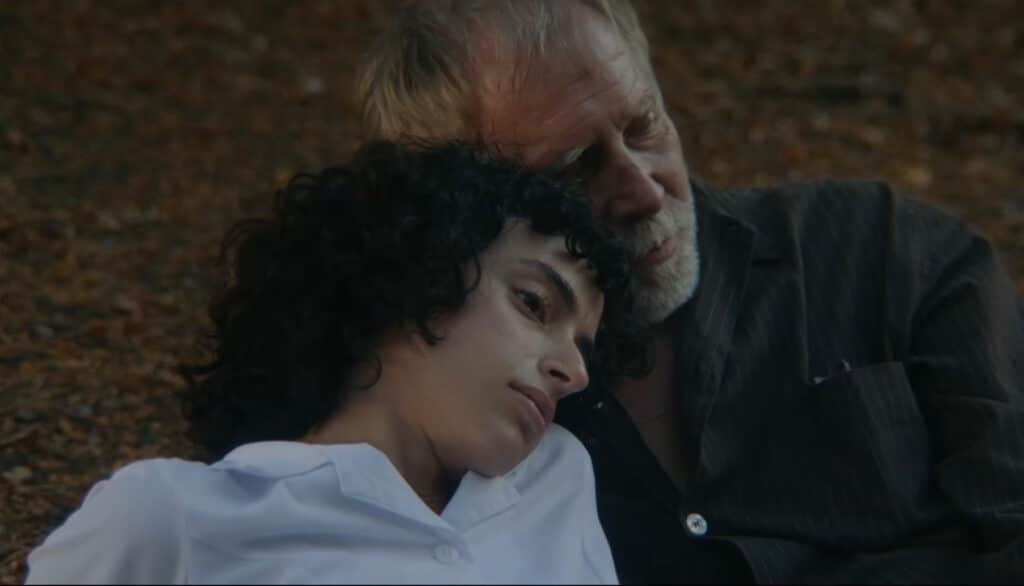
CP: It’s like eroticizing the thing that she desires, which is not ultimately sex. Douglas also, because he’s impotent, doesn’t eroticize sex either. But in retrospect, I think you did it instinctually, but it was coming from a place of wanting to show the yearning, and how that is so much more erotic than just showing them having sex, ultimately.
GB: Totally.
CP: I think a lot of these other movies get a reaction from their more graphic elements, and I think it’s cool and interesting, now, to think about the reactions that this movie gets when there’s not actually any graphic sexual moment or nudity. There aren’t any images or scenes that those more classic reaction-garnering movies use.
GB: The nurse is definitely considered an erotic image in our culture, and I wanted to subvert that – the thing from the Corman Nurseploitation movies – was making her the desiring one instead of the object of desire. That’s the contemporary and feminine take on the Nurseploitation genre here.
Their dynamic is so fun to watch. It is such an uncomfortable film in a lot of ways, but in terms of the erotic elements, do you want it to be hot for audiences, too?
GB: Yes! Yes, definitely!
You’re playing with a lot of different taboos with this film as well. It’s not just the question of nursing; it’s the question of geriatric nursing specifically. Can we talk about aging and why you brought in that particular element?
GB: The reason I brought up Catherine Breillat earlier is that, often, her movies are about a very young woman and an older man and the power dynamics there. Her movies are often about the power that a young woman has, the agency that a young woman has. I wanted to do something similar, but I was trying to do it in a new way. So I was like, “How can we like stretch this?” So, it’s a young woman, but then the older man is so old that he lives in a retirement community, and he may or may not have dementia. I just wanted to push that idea to its furthest extreme.
The idea for the scams, though, came from my grandmother, who was nearly scammed by the exact scam that happens in the film: Somebody had called her, pretending to be my brother, and said he had been in a horrible car accident, that he needed help, that he needed money. She went to the bank to wire him the money, and the bank tellers told her that it was a scam. It got me thinking about these super performative, extremely theatrical crimes that people do; I was like, “Oh, this could be twisted into some kind of thriller.” All the pieces kind of fell into place from there: The setting could be a retirement home, she’s a nurse, she should fall for her patient, etc. I think the experiment, when I first started writing it, was “Could this even like work as a concept?” and it totally did!
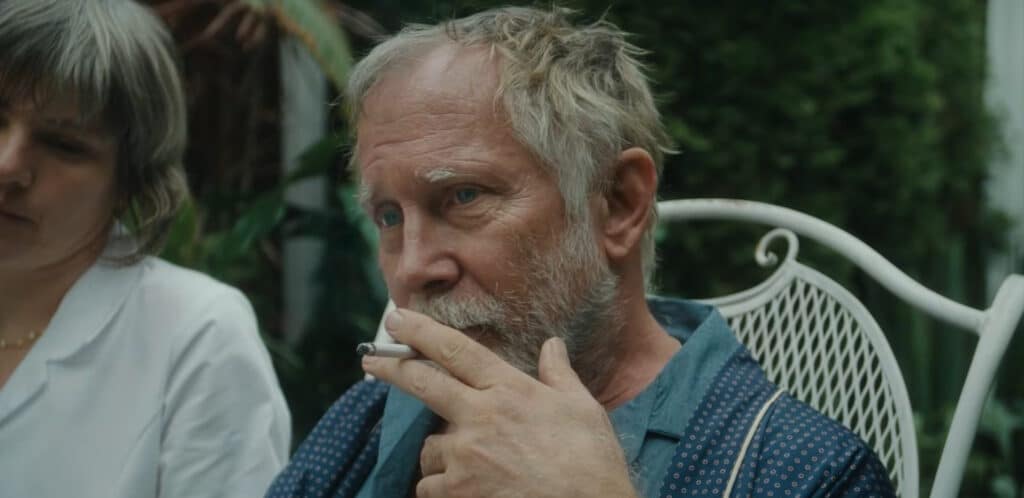
Georgia, can you talk to me about your relationship with your co-star Bruce McKenzie? What was it like performing these scenes, and how did you kind of get into the headspace? This character is so hungry, there’s so much need there that’s being expressed, and repressed too. Was that challenging, or cathartic?
CP: It’s funny, actually, because Georgia cast Bruce over Zoom! So when we first met in person, we were doing rehearsals for all the intimate scenes, but now I’m realizing that’s actually quite rare, and we’re lucky that we got to do that, just block everything on location where we’re supposed to film it. It felt more like solving a puzzle than anything when we were doing that. It didn’t even feel intense, more just like the three of us trying to fit the puzzle pieces into the space and into the scene. So much of it ends up being logistical, like “You should you should touch my shoulder here because then the camera can do this.” That was a great bonding exercise, and that made it really easy when we were doing the scenes themselves, because then we got to act. Then we actually shot all of those intimate duo scenes in our first four days of filming, so by the end of it, we were like, “We’re best friends.”
GB: We haven’t said this, but I just realized that we did all of those [scenes] in order too.
CP: Yes, that’s true! We got to create an arc within three days. I’m glad you said that thing about the hunger and the desperation and yearning, because to me that’s as cinematic as an emotion gets, and was something I found relatable about this character. Frankly, that part came easy to me. It felt fun and perfect.
Is there anything else that either of you is excited for, finally sharing this movie with audiences?
GB: I’m excited for people to experience the feeling of the movie. It’s meant to feel a bit hypnotic. With the score [by Sam Clapp and Steven Jackson], we have this repeating theme that comes back again and again. I wanted it to feel you’re in that pool, just circling, and you can’t get out. I’m excited for people to experience that discomfort and challenge themselves to be open to this particular experience and perspective.
CP: It’s exciting that so many people have different opinions and feelings about the characters – my character, Bruce’s character, Mimi Rogers’s character. People end up having very different interpretations. That’s the best, and so welcome.