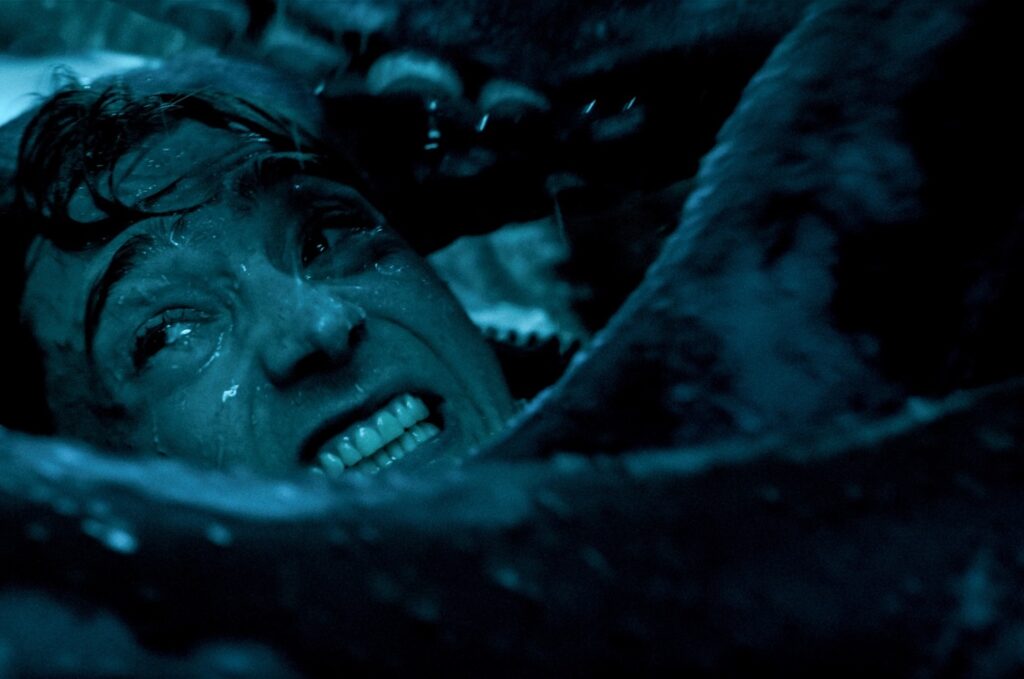

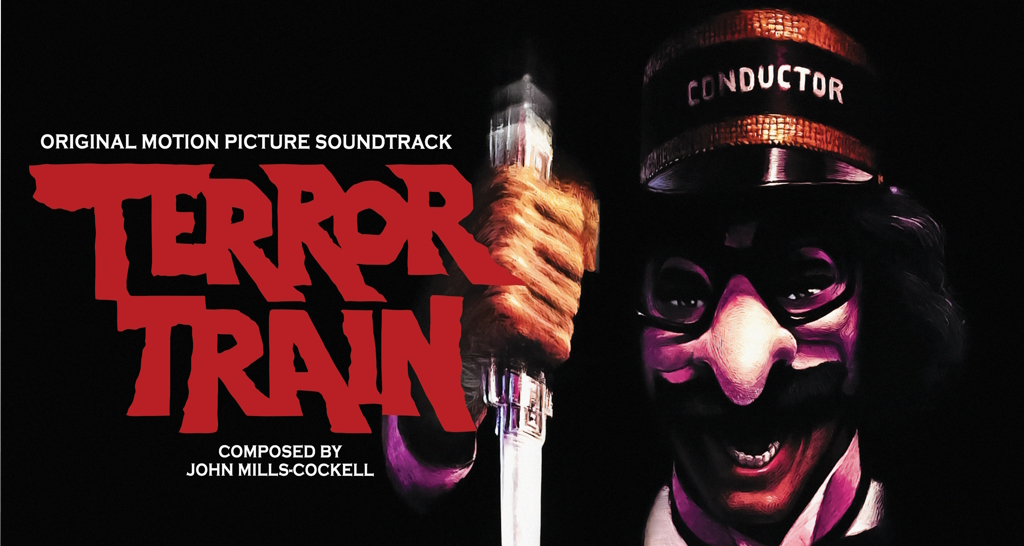
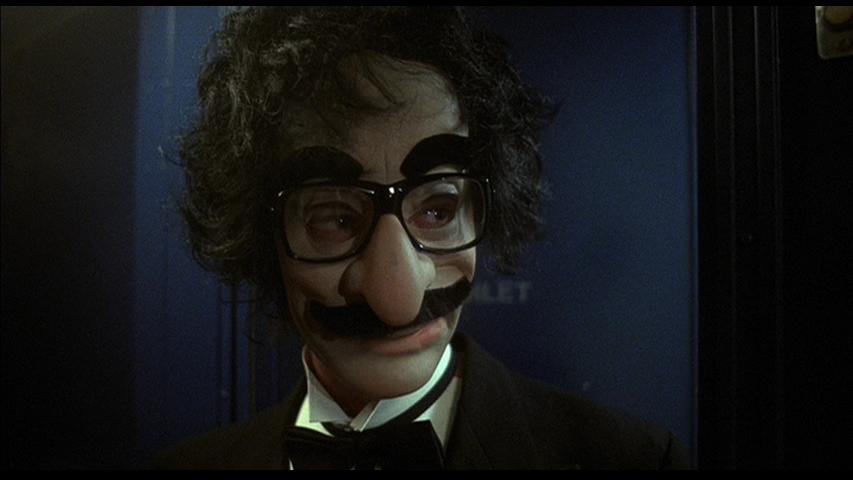
Released to cinemas in the fall of 1980, TERROR TRAIN is a classic entry from the original slasher boom of the late ’70s and early ’80s. Directed by Roger Spottiswoode (Tomorrow Never Dies) and starring horror icon Jamie Lee Curtis, respected character actor Ben Johnson, illusionist David Copperfield and a cast of young Canadian talent, including Hart Bochner, Derek MacKinnon, Anthony Sherwood, singer/model D.D. Winters (later known as Vanity) and Sandee Currie, the film follows a group of pre-med students menaced by a masked killer during a costumed party aboard a train. Featuring innovative cinematography by esteemed Oscar-winning cameraman John Alcott (A Clockwork Orange, The Shining), striking Art Deco-inspired production design, Copperfield’s entertaining magic sequences and a Genie Award-nominated score by Toronto-born composer and instrumentalist John Mills-Cockell, TERROR TRAIN distinguished itself from the era’s bumper crop of slashers with style and a killer with a unique modus operandi.
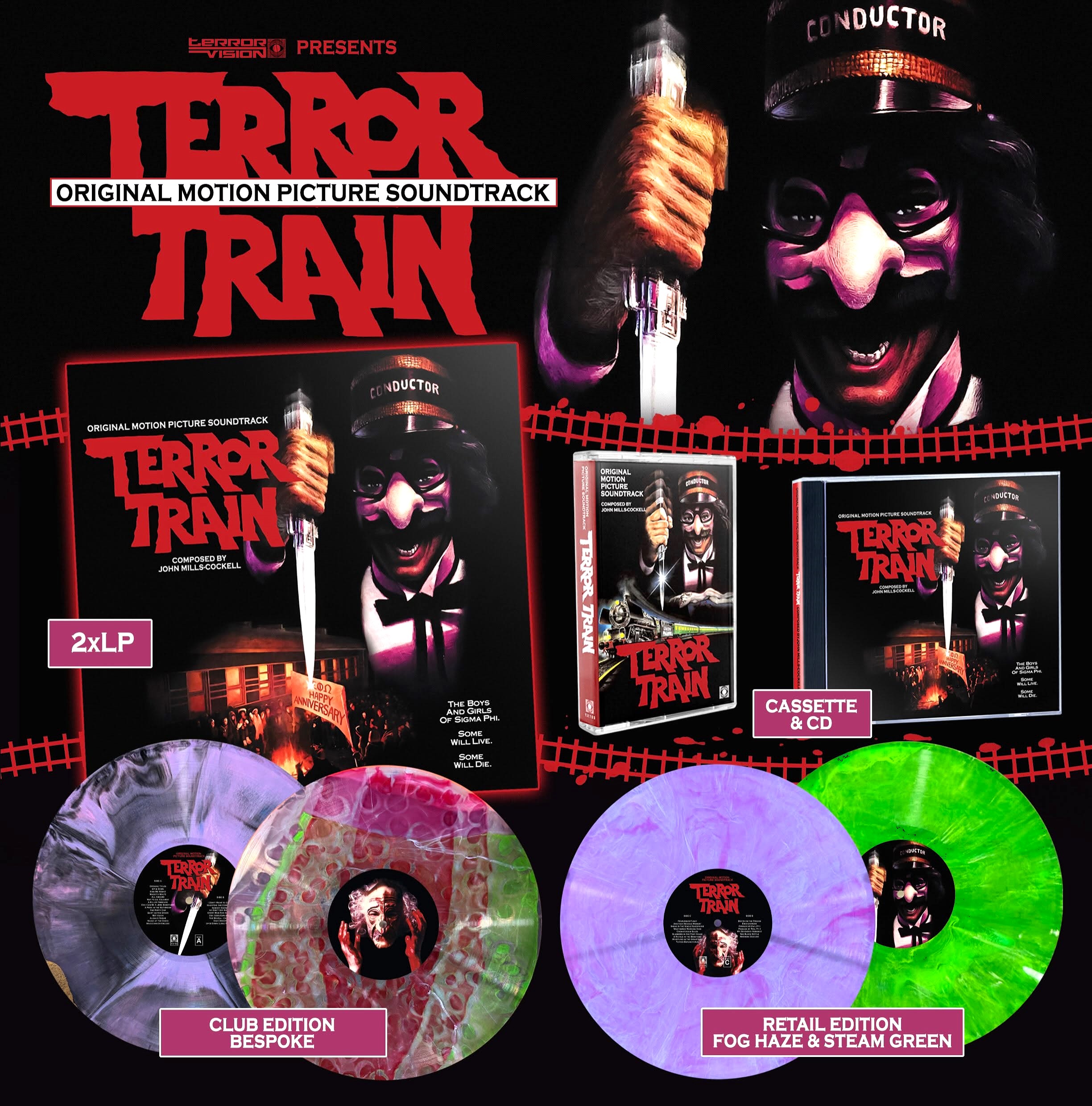
Forty-six years after the film’s release, TERROR TRAIN is finally receiving an official soundtrack courtesy of horror specialty record and video label Terror Vision. Available in three formats – a two LP set, CD and cassette – the release includes liner notes from RUE MORGUE music editor and writer Aaron Von Lupton. Like other Terror Vision soundtrack offerings, the vinyl release is available in different coloured variants (“Fog Haze” and “Steam Green” for the Retail Edition and a limited “Bespoke” Club Edition).
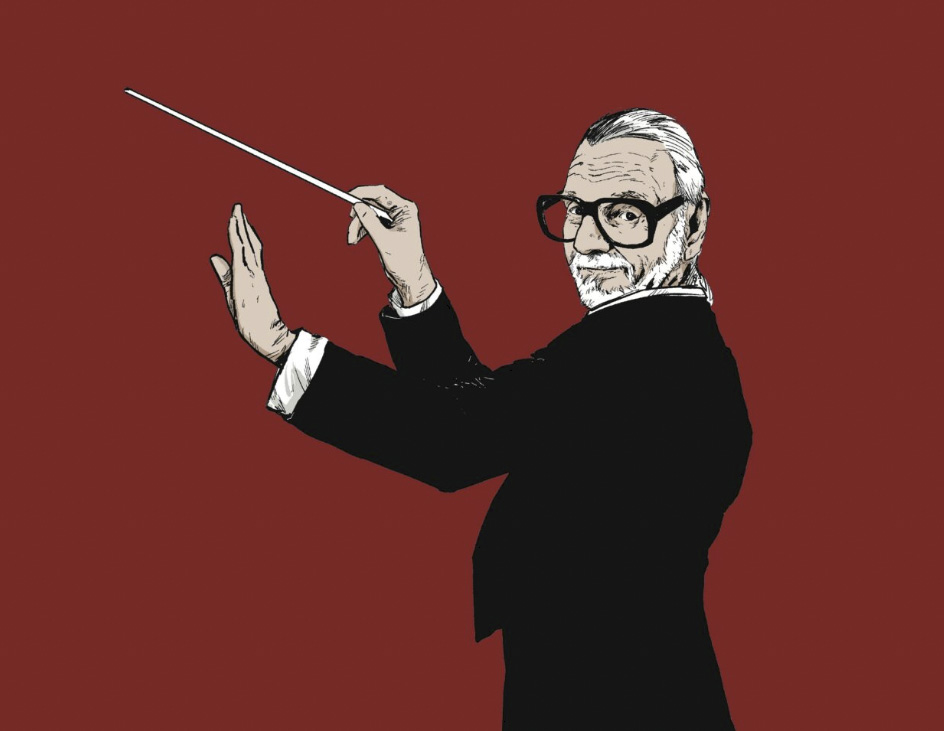
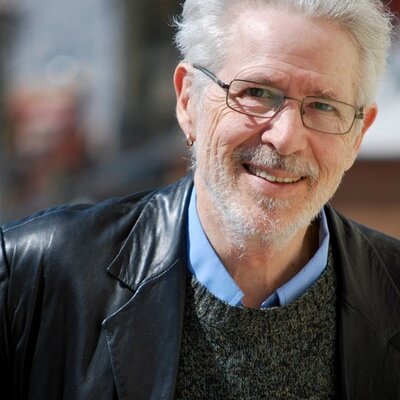
Mills-Cockell, a pioneer in electronic music whose nearly 60-year career has included working with names like Anne Murray (he played synthesizer on her early album, Honey, Wheat and Laughter), creating music for numerous films (including such Canadian cult flicks as 1976’s The Clown Murders and 1982’s Humongous), television shows and stage productions recently spoke with us about his work on TERROR TRAIN’s score and the new soundtrack release.
How did you come aboard TERROR TRAIN? No pun intended. Did Roger Spottiswood or somebody else from the production know of you?
It was Roger. Roger was my contact with the film, but not because I happened to know him. But they had done research; he and [the film’s dialogue director] Caryl Wickman. She was Roger’s right-hand person. But the two of them more-or-less held a search for composers in Canada, because it had to be a Canadian.
Yes, for the tax shelter requirements. (Note: the “tax shelter” years were a period when the Canadian government offered tax incentives to those who invested money in local filmmaking. This was the impetus behind the great wave of Canadian slasher films of the late 1970s and early ’80s.)
And so, I was really one on a list that they came up with. I had just finished writing a kind of musical, an opera about political bad guys, terrorists. But I think that I had a list of films that I’d worked on by the time I met Roger and Caryl. And, you know, right from the beginning of my career, I had always been working on films as part of what I did.
Yes, before TERROR TRAIN, there was The Clown Murders with John Candy and Lawrence Dane. You also did the Clint Walker film, Deadly Harvest, which was an environmental, post-apocalyptic kind of thriller; and, later, you worked on Humongous, which was directed by Prom Night’s director, Paul Lynch.
It was just kind of in my blood to do movies. And so, Roger and Caryl Wickman interviewed me and some other people, including Carl Zittrer. And he was centered in feature films, horror films in particular.
Yes. He did the music for Black Christmas and is very well known for that.
I had worked in Carl’s recording studio a number of times. And so, that’s sort of how I got to know him. But anyway, there was a short list of five or six composers. And I think it was the fact that I had done this thing about the terrorists that really grabbed their attention or their interest.
TERROR TRAIN has a very unique score for a slasher film. You have more traditional horror elements and music that kind of sounds like a moving train. I’m also a fan of the music that accompanies David Copperfield’s scenes – the disco music and the more old-style music that he uses in his magic act. And you also have the rock music that the band plays on board as well. You usually don’t find that variety of music in a horror film; many horror films at the time employed minimalistic, synth-type scores.
We really worked quite closely on how the score would integrate with the story and with the scenes and so forth. Roger had a concept that I really loved in terms of how to integrate different styles of music. And he has a real knowledge of, for example, the history of film music in the 1940s and the ’30s.
He listened to all the music that was in my demo, and he picked things that [he thought] were interesting choices; you know, “I really like that song, because it’s romantic.” Or “I like that one because it imitates the sound of the wheels going over the tracks.” And so, it was really collaborative in that respect.
Did Roger give you a blueprint of what he was looking for, or did he just give you free rein to trust your instincts?
I think “blueprint” is too constrained, in a way. He wouldn’t do that. He didn’t want to tie me down. The one thing that he really felt was an important component in the score, if you like, was the sound of the railway tracks. The wheels going over the tracks. It was a repetitive kind of sound effect, except that it was [part of] the music score. I would say that was really his contribution to my score.
And, you know, you don’t always want to do what’s obvious. I mean, you can tell when you see a film, and where the score is obvious. It doesn’t work. It just becomes cliché. So that was my job, [making sure] that the music that I composed for it avoided that pitfall…
The sound of “wheels going over the tracks” accentuates the action, but it’s not over-the-top or heavy-handed.
You can’t have the sound of the train going on all the time. You’d just get tired of hearing it. And so that’s where there’s a kind of blending of the train tracks and music … They fit together in a kind of harmonious way. When I was working on the LP, I studied the film again. I was really quite amazed, first of all, at the variety of music [in it], but also the way that the rhythms of the score take you to the moments of the murders. You can’t do that the same way every time going through. You have to find different ways to surprise the audience.
One track from the score that I really like is “Alana’s Theme.” It’s a beautiful piece of music. And I like how it’s reused in the quieter moments of the film.
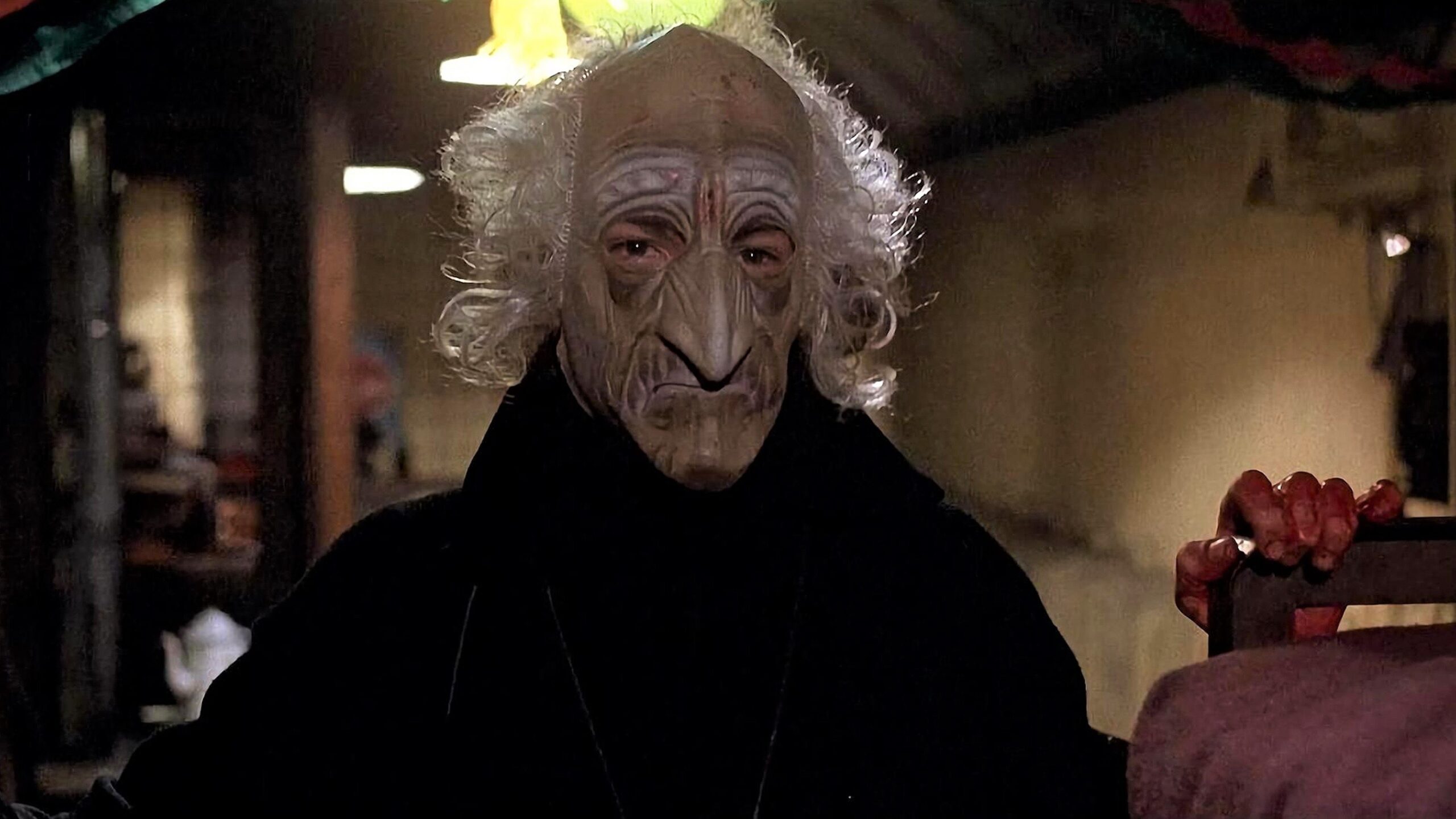
I think it was our intention that you can’t just “do scary” all the time, you know? You want to create a sense of the reality of the characters. So, Alana’s theme sort of played as a romantic theme for her and the Magician. We relate to Alana because she’s a wonderful character. I mean, she’s not just… What’s the word I want…?
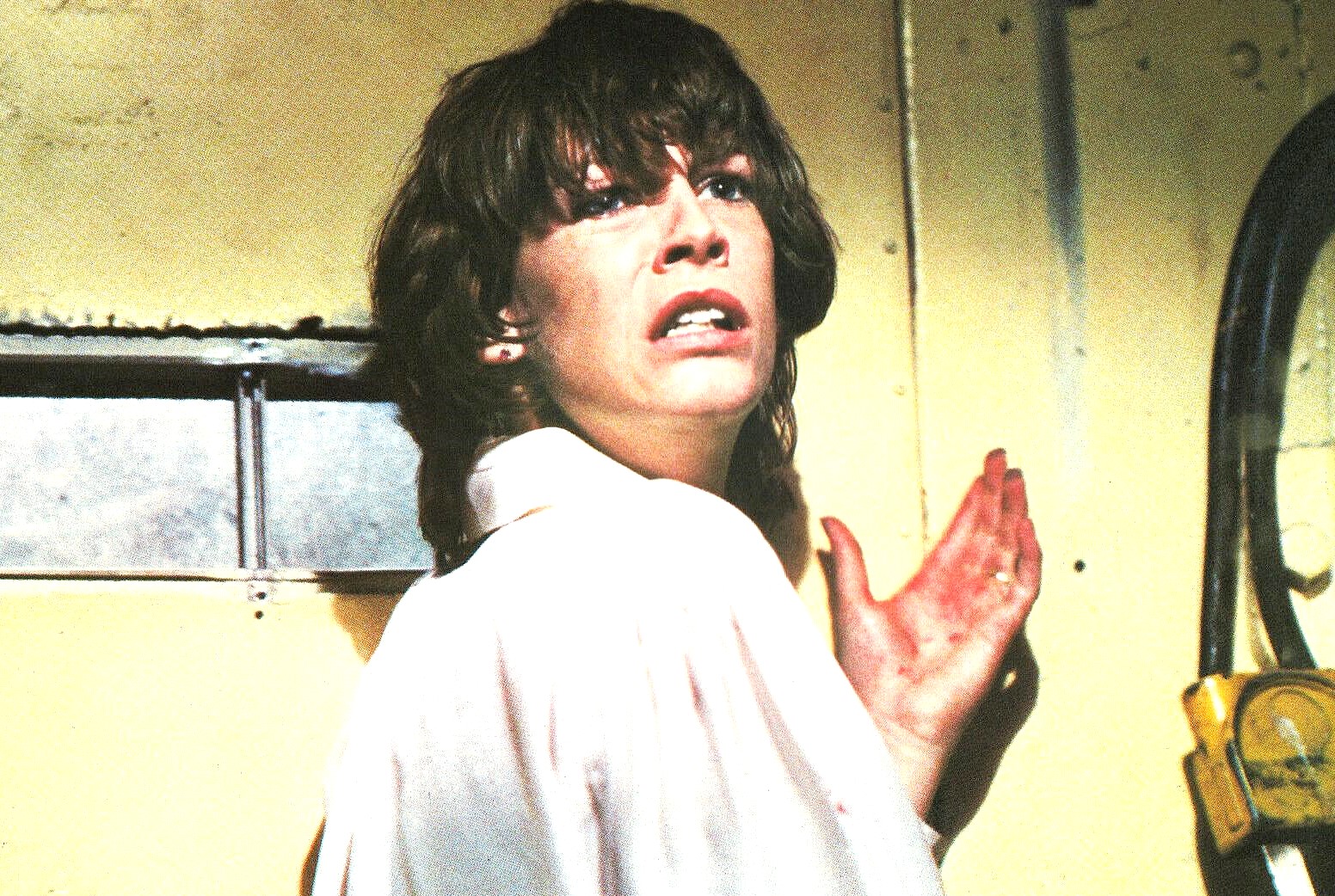
She’s not a damsel in distress.
No. She’s very plucky. She’s a very well-written character. And I mean, it’s Jamie Lee Curtis, so she acts the hell out of it.
Did you work from a rough cut of the film?
The first time I saw the film, it was a not-so-rough cut – really a work-in-progress. But beyond that, I have to say that Roger had very little to do with what I was actually doing.
Do you recall how long you spent working on the music?
I think three or four months. We recorded two scores. Did you know this?
No, I didn’t know about the second one.
Yeah. The second score is the one [that appears in the film]. The way it happened is that we recorded and edited score number one [into the film] – and it was with an orchestra of 40, 45 musicians. We cut that into the film … and [20th Century-Fox music director] Lionel Newman said, “You know, I love this, but I think you need more musicians.” To give it a grander scale. A bigger sound. So, I now have 65 musicians. Lionel put his arm around my shoulder, and I thought he [was going to say] “You’re fired.” But he didn’t. He said, “That’s an amazing score you’ve written, John. And the only thing that I’d like to see is it needs more instruments in it. Instead of being a 40-piece orchestra, we want a 60, 65-piece orchestra.”
And so, I thought, Wow. I was really surprised because that meant it was [going to be] a lot more expensive, the whole undertaking, than what Roger Spottiswood had been told at the beginning. But they liked the music that we did so much that they thought we could record the music again, and do it sounding bigger – a bigger-sounding orchestra. So, we did that.
Did Lionel Newman conduct the orchestra as well?
No. [It was] the same conductor [David Spear] for both versions of the score. Score number one was recorded in a studio in Wembley. A lot of music scores are done there. [For the second version], we needed a bigger sound, and much more music. Instead of there being 30 minutes of music, there would be twice as much, like 60 minutes. And that was very challenging. How do you keep it fresh for twice as long? It was really fun to do that. And that was recorded at Abbey Road.
Oh, wow.
And what a treat, I’ll tell you! It sounded amazing there. So, we recorded the score again and instead of … doing it in four days, we did it in six days. However, as it turned out, there were times in the picture where the original music that I did worked better. So, we did that. And we had more music to choose from in editing the score. I worked with a guy, Kirk Hawkes, who was an incredible film music editor. I was very lucky to have him assigned to work with me. We worked inch by inch of the film to cut it in the right places so that beginnings and the endings of each [cue] are precisely desirable for the particular scene. And you get maximum drama from the way the music is cut into the picture. Since then, I’ve worked with him on two or three other films and have asked for him because he’s a great editor.
I wanted to ask about your Genie Award nomination for the film. It was nominated for Best Original Score at the 1981 Genie Awards.
That is correct.
It’s rather unusual for a horror film to be nominated for a Genie Award (Canada’s then-equivalent of an Academy Award). How did you feel about being nominated? Were you happy or surprised?
Of course, I was delighted about it. I mean, I could be unhappy that I didn’t actually win the award rather than being the runner-up for the award. (Note: The award went to Art Phillips for his music for the Rod Steiger WWII-era drama, The Lucky Star). But I was happy just to be one of the characters in this [Genie Awards] story.
I’m just wondering how you feel that the soundtrack for the film is finally coming out after 46 years? Were you surprised to learn about this?
I was astonished, yeah. I did a lot of work on it.
Did you enjoy working on this project for Terror Vision?
It was a good experience. We used all the music, like an hour and 30 minutes worth of music. And hats off to [Terror Vision’s Project Manager for vinyl releases] Shon Wheeler. I think that he used his artistic sense really well with it.
Are you surprised that people are still watching this film after all these years, and that it’s got the cult following that it has?
It’s a horror movie. But if it was just a horror movie, it wouldn’t have the following that it has. It’s shown on TV; it’s shown in special screenings of horror movies and terror movies. It rose beyond its classification for viewers. That’s why it’s still around.