
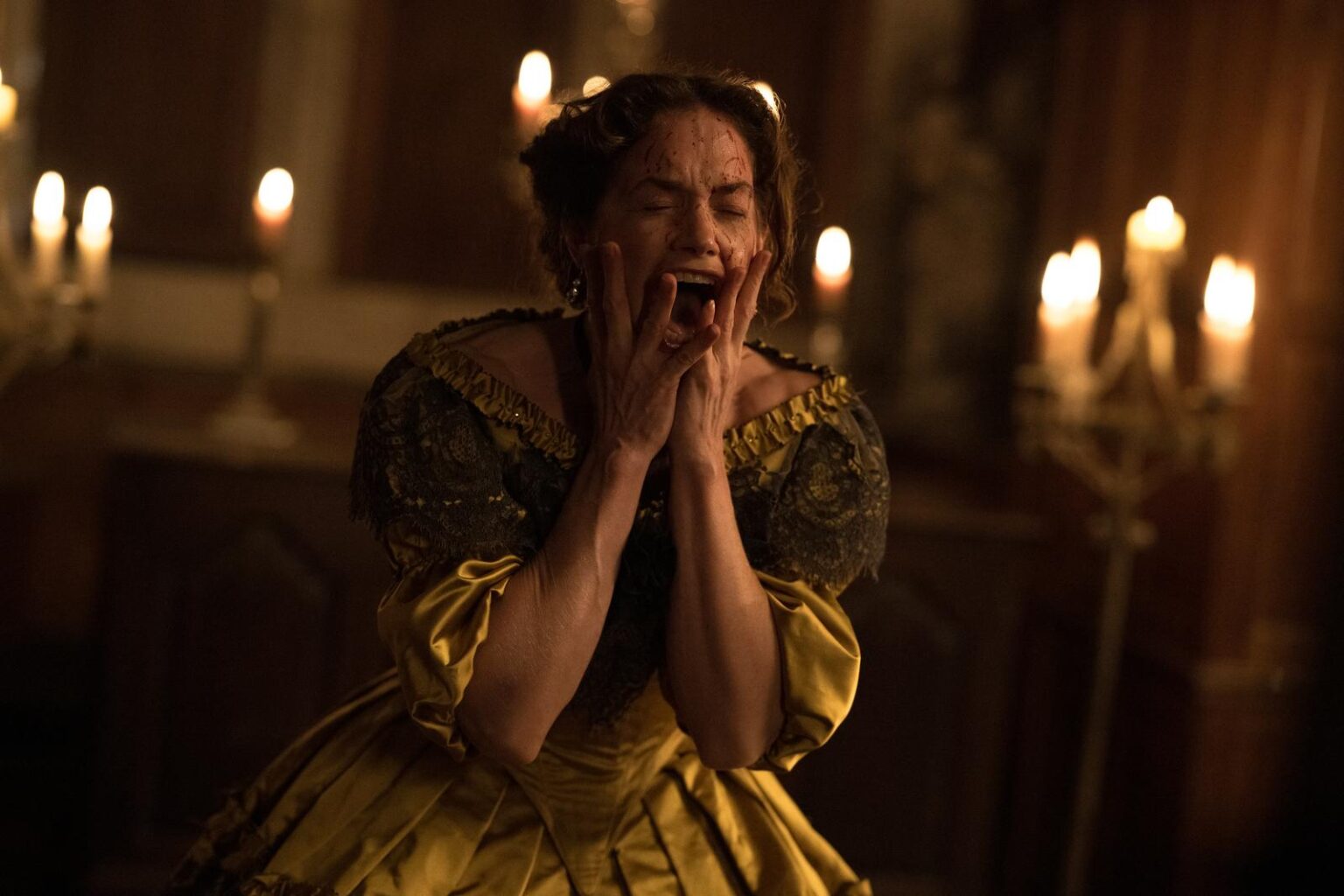
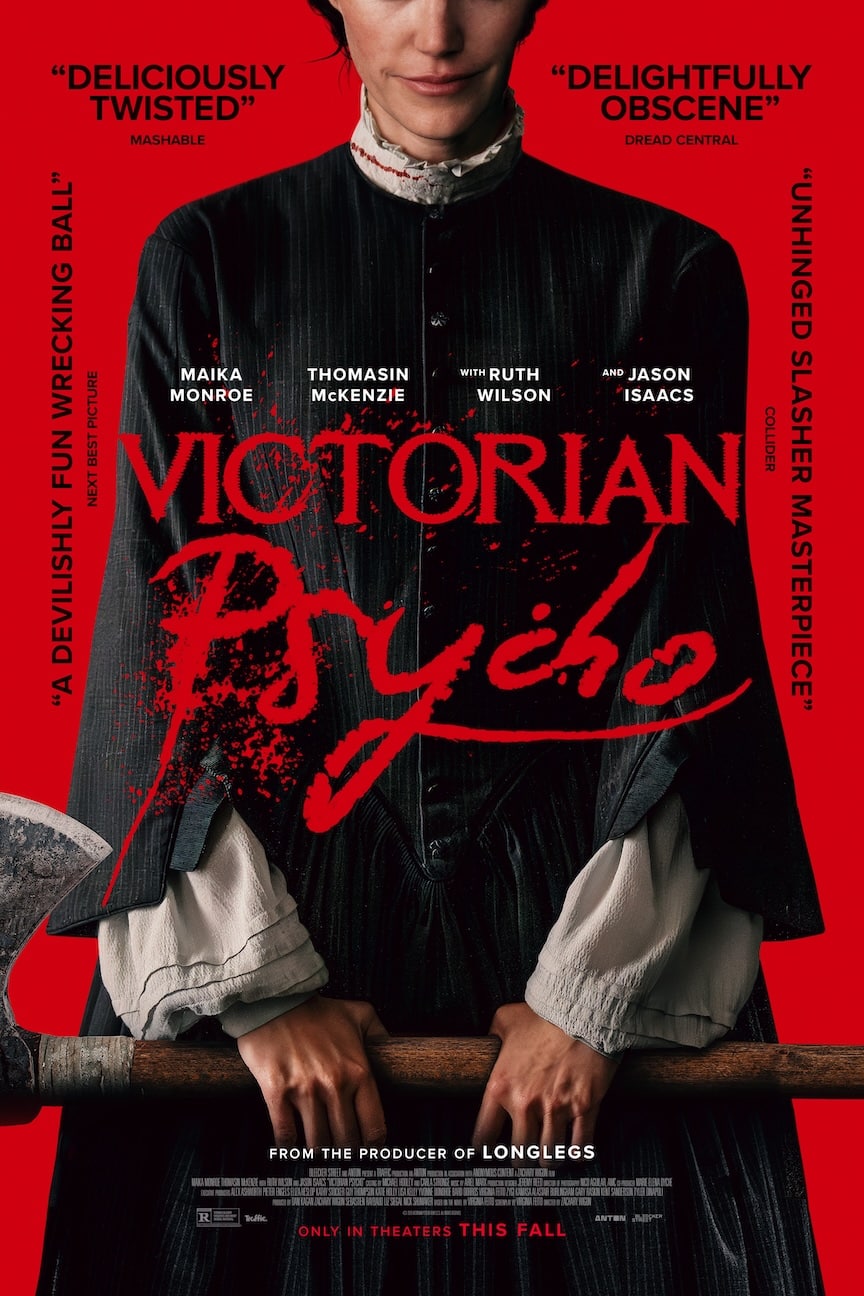
A lot goes into adapting a book to the screen. There’s always going to be things that need changing, much to the chagrin of diehard fans. Ultimately, film is a very different medium from literature, requiring different perspectives and a, for lack of a better term, wider lens. Director Zachary Wigon was up for the challenge with his upcoming film VICTORIAN PSYCHO, adapted from the 2025 novel by Virginia Feito.
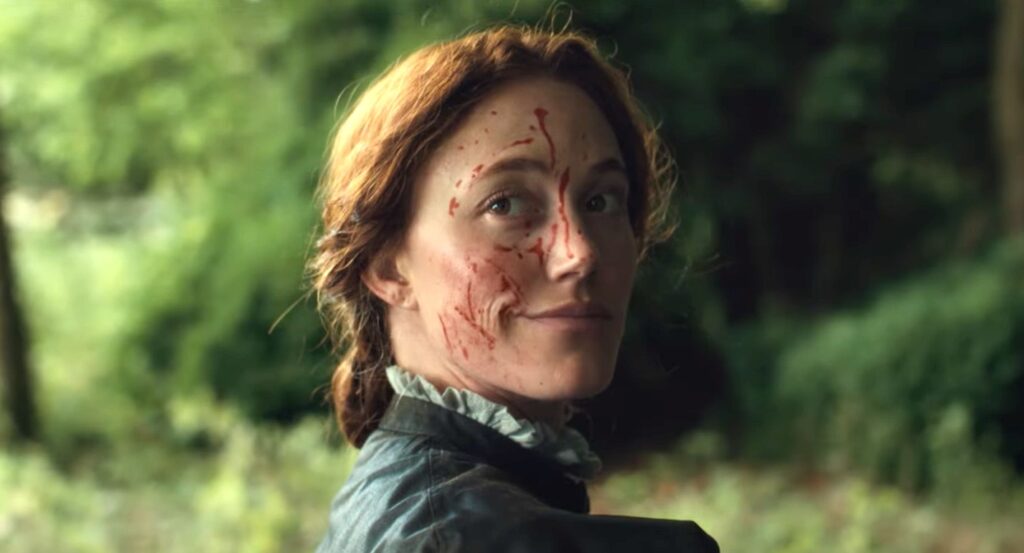
RUE MORGUE chatted with Wigon, asking burning questions about the making of this highly anticipated adaptation. For all of the bookworms and Feito fans, you will not be disappointed with Wigon’s take on the story of Winifred Notty, a governess desperately trying to hide her psychotic side to win over the family she wants to be a part of. The movie truly dives into Winifred’s headspace, thanks to Wigon’s cinematography and direction, and it is a bloody, gory treat you won’t want to miss.
What drew you to this project, and what was your goal in telling this story?
I remember reading the manuscript of the novel when Virginia first sent it to me, and I never read anything like it ever before. I never read something that’s so progressively, confidently, and, at the time, shockingly, weaved together horror, satire and straightforward period drama. It was funny, it was angry, it was propulsive–the tonal register was completely unique, and a lot of the action set pieces were so outrageous, but so weirdly logical in an insane way.
It was about halfway through the manuscript that I was like, “I’m making this movie.” And the second part of your question, about my goal- I don’t really operate from a goal position with filmmaking, it’s more of a curiosity. I was curious about the story of this character, I wanted to meet this character, I wanted to feel what it felt like to inhabit her psyche in a visual way. I think that was the genesis for me.
The author, Virginia Feito, was the screenwriter for the film. How closely did you work with her?
Very closely. So basically, how things progressed was that she sent me the manuscript- we were working on something else at the time, an original script- so I said “Virginia, let’s put the other thing on hold, I want to do VICTORIAN PSYCHO.” So she said okay. And at that point, a series of phone calls starts [laughs]. Very long phone calls, and that goes on for months. You’re just talking about the material every which way that you can, you’re trying to understand what are the themes that run throughout the whole story, what are the best ways to represent these themes, what are the problems, how do we avoid the problems–just a lot of top-down, 30,000 feet kind of conversations.
Eventually you start getting into sequences, you get into scenes, eventually you get a scene outline and then at that point, it’s time for the writer, in this case Virginia, to go off and write the draft. Then the draft gets sent back, I read it, I make notes, I send it back to her, we talk about it and we sort of refine it from there.
What are the challenges of adapting a novel to film?
I think every novel is different. With this, it’s a subjective work. The novel is obviously fantastic at getting into Winifred’s psyche, Winifred’s mode of seeing the world, her affect. So the challenge is trying to retain that in a medium that is less inherently subjective than literature. Because obviously with literature, you have the benefit of literally being able to put someone inside a character’s head. With movies, the world has to kind of be the inside of their head.
I always think about [Last Year at] Marienbad and The Shining, two of the great examples, where you’re watching it and you’re like, “I’m not in a mansion in Europe. I’m not in a hotel. I’m in somebody’s head.” The Overlook Hotel is the inside of Jack Torrance’s head. So that’s what you’re trying to do as a filmmaker–you’re trying to make the visuals the inside of someone’s head, the way how in literature you can just be there.
We know that Winifred is a psycho from the beginning of the movie. How do you build that tension in a film while knowing that something is up from the start?
You have to do two things- you have to engender sympathy for her in some way, not overly so, but there has to be a natural point of identification between the audience so that they’re invested in the character not getting found out for the threat that she is. And then you need to allow the course of events to play out as they plausibly would, where her madness gets her into situations where she’s on the verge of potentially getting found out. That’s where the drama and suspense of the movie comes from.
There are some wild cinematography choices in this movie. How do they take us into Winifred’s mind?
Exactly as you said, you are trying to get the audience into Winifred’s head. You’re trying to trouble or disassemble the relationship between the characters’ perspective and what would otherwise be an objective view of reality.
In other words, most of the time, we’re going around looking at the world, and we see and hear a representation of the world that basically seems accurate with our prior representations of the world. But sometimes you can be in such a state that you know that what you’re getting is not accurate. You’re trying to do a dilated, heightened version of that, in terms of stylistics, in a movie like this.
VICTORIAN PSYCHO opens in theaters on November 13th.