By WILLIAM J. WRIGHT
Damian Mc Carthy is quietly becoming one of the most compelling and consistently interesting voices in horror. Although he doesn’t yet have the accolades and visibility of Zach Cregger, Robert Eggers or Ari Aster, directors who have redefined the genre for the 21st century, the 45-year-old Irish filmmaker is easily their creative equal. Mc Carthy’s three features to date are the work of a traditionalist in the mold of Guillermo del Toro, unafraid to wear his influences on his sleeve or mine time-honored horror conventions and tropes that, in the hands of the less skilled, have become hackneyed clichés. Damian Mc Carthy unapologetically makes horror movies, not message-laden “psychological thrillers” or post-modern rehashes that knowingly and condescendingly wink at the audience. Mc Carthy’s films are art without pretense – and terrifying.
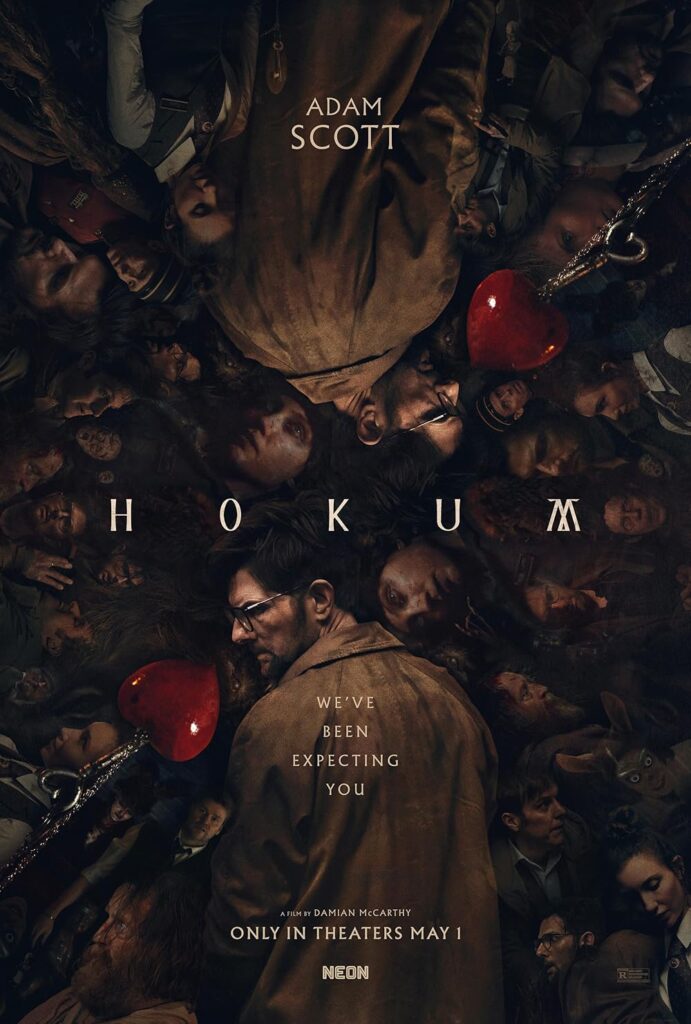
Mc Carthy’s latest film, HOKUM, opening in U.S. theaters on May 1, stars Adam Scott (Parks and Recreation, Severance) as Ohm Bauman, an American writer haunted by a devastating childhood tragedy, who travels to a remote Irish hotel to spread his parents’ ashes. There, his traumatic past collides with murder, mystery and the supernatural. Infused with Irish folklore, gothicism, and, at times, the manic energy of Sam Raimi’s The Evil Dead, HOKUM deftly moves from the subtlety of a classic ghost story to unhinged horror abandon, without ever feeling disjointed. Beautifully shot with solid performances and expertly rendered practical effects, HOKUM is that rarest of all genre beasts, a horror film with emotional and thematic weight that’s also an unabashed thrill ride.
RUE MORGUE spoke with Mc Carthy following the film’s premiere at the 2026 South by Southwest Film & TV Festival.
What was the inspiration for HOKUM? How did the story come to you? Is there a real-life haunted hotel out there that you’ve spent some time at?
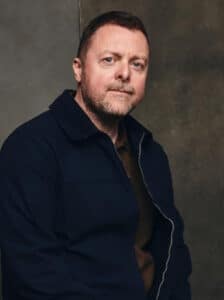
Filmmaker Damian Mc Carthy
Well, I guess, to start with, the story just came from the idea of wanting to throw my hat into the ring of haunted hotel sub-genres. So you have things like The Shining, 1408 and The Innkeepers. I like those movies. And it felt like the haunted hotel just really wasn’t something that had been explored in a few years. So, that was pretty much the start of it. I just thought that setting would lend itself nicely, and all of the characters could come a little bit ready-made. You’d have the groundskeeper, the bell boy, the owner, the manager – so just trying to fill out those characters. Oddity felt very much like an ensemble film. It was a nonlinear ensemble film, so I felt like I always kind of had somewhere to go in the screenwriting process that I could cut to the past. I could cut to a different character.
Mixed with the idea of doing a haunted hotel, I also wanted to do the idea of trying to make it through the night like Evil Dead II or one of these things where it’s like the sun sets, and now, we’ve got to follow this one character around. Never really leave his side and just twist those screws tighter and tighter until the sun finally rises, and even at that, is he still safe? HOKUM is very much a mix of those two starting points,
I also detect a bit of an M.R. James influence. Is that a fair assessment?
There’s a little bit in there. There’s that detective kind of angle and maybe a little bit of Angel Heart, kind of a missing person plot, and getting deeper and deeper into something until it starts to become less about just a missing person and more about a supernatural deep dive as things get worse and worse for him.
I think, with all my films, [I try] maybe not to write about what I know, but about what interests me. And these are all things that I would find very interesting – detective stories and haunted hotels and all that kind of thing.
I’ve never actually stayed in a haunted hotel. I’ve certainly stayed in rooms where something feels off. During Oddity and post-production, I’d spent a lot of time in a hotel, and it was the same room all the time, or at least it was the same layout of a room. And I remember going to this one room in particular one day, and it looked the same. It looked the same as the 20 other rooms I would have stayed in in that same hotel. And immediately there was just something off about it. And a few things were moving around in the room, kind of strangely. A glass actually moved across the table before my eyes. Nobody believes me when I say it, but that’s probably the closest I’ve come to any kind of odd thing happening.
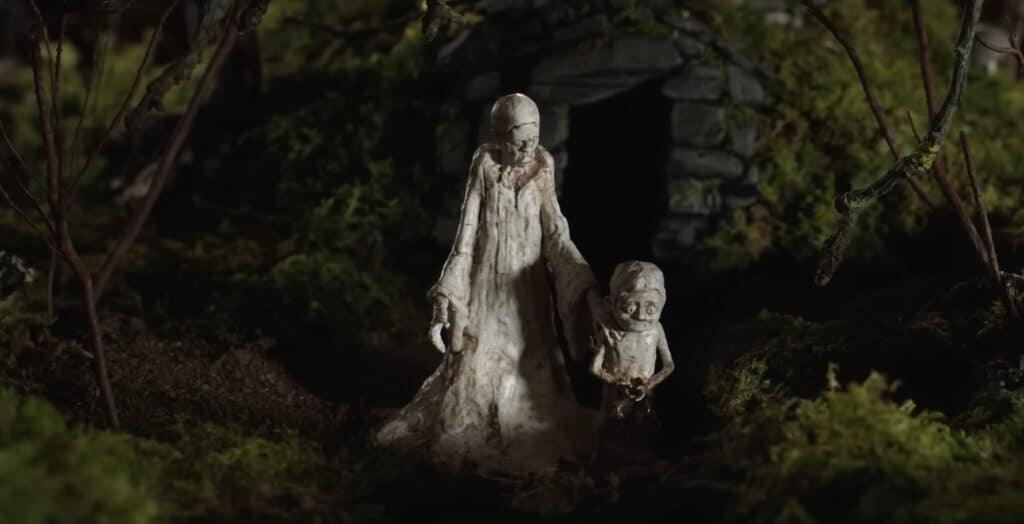
Something that you know very well that figures into all your films is your home country of Ireland. Ireland is nearly a character in your films, and they are very much rooted in the culture. Why did you choose to have an American protagonist in HOKUM?
Obviously, I love Ireland. It’s very much inspired me. I’ve been here my whole life, and the area and the location, the characters, all kind of inspired by people I ignore and, have interacted with. The location for HOKUM is where I live. All those opening driving shots, that’s right alongside my home. It’s quite beautiful.
I think the idea of having an American protagonist this time is just starting to mix in American cinema, which is very much what I grew up watching and really loving – mixing American films into an Irish setting. So, I guess for an American audience, or for people outside of Ireland, this would feel like a foreign film. But I did want to have that idea of like, you’re following this American showing up and trying to see Ireland through his eyes. Would people seem strange or unwelcoming or whatever? It’s kind of that first step towards maybe trying to make films that are a little bit more international.
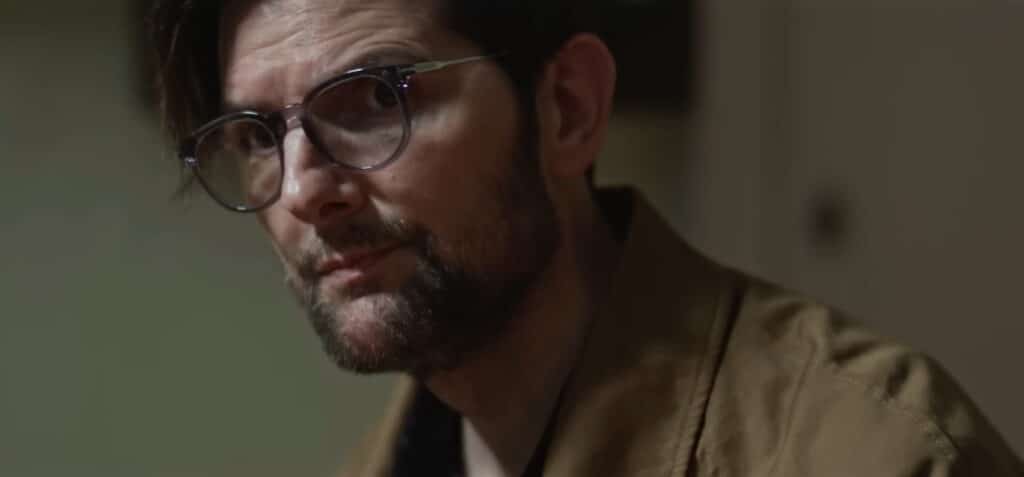
Adam Scott as Ohm Bauman is exactly endearing, at least at first. How do you go about writing a main character who’s so abrasive without alienating the audience? Did you find that you needed to rein that in, in the writing process, or even in the directing process?
In the script, he was so much worse. He was a very cruel character, and in a lot of the stuff we shot, he’s even more so. There was definitely always that fine line between, well, we do want him to feel unlikable – and we do – but to see if the audience will still root for him. I read somewhere that likability is no guarantee of audience engagement, and that really clicked with me. That really makes sense, because you could have a character who’s very sweet and very nice to everybody, but how interesting is that? If a guy’s a little bit standoffish or prickly, and you kind of know that something’s bothering him, it makes him a little bit more mysterious, and you want to see where all of this is going to land, if he’s going to find his way out of these issues he’s having, or if he’s doomed.
I spoke to Adam about this from the start. I said, Ohm is a little bit of a prick, you know. He’s not the most likable character. And I think that’s kind of what Adam liked. He liked the fact that the character is challenging, and you get a little bit more of a glimpse into all the layers of the character, with everybody he interacts with. Like, how does this guy interact with somebody who’s a super fan of his? Or, how does he interact with somebody who gives it back to him, who doesn’t take any of his nonsense, you know? Even though it’s very much his story, you learn a little bit more about him through all of these characters. There was never really any kind of impulse to defang him.
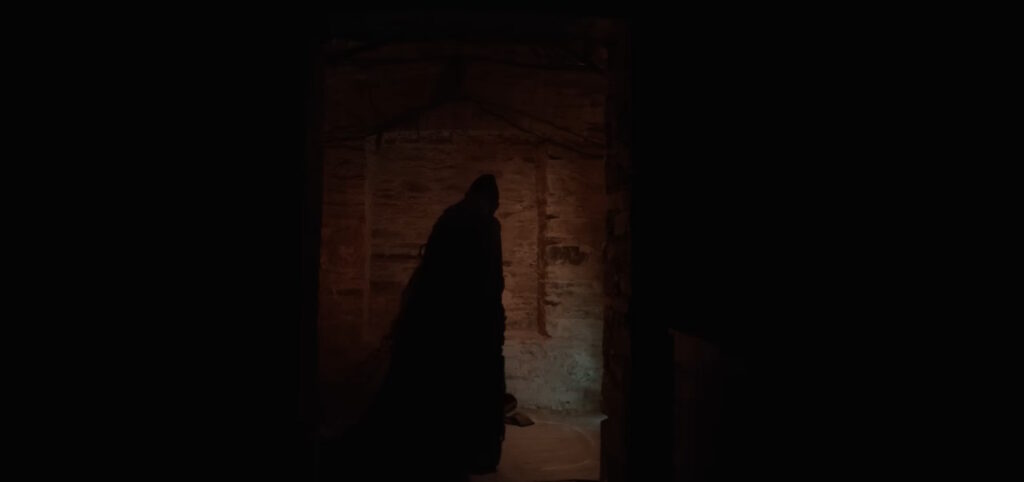
HOKUM really relies on some archetypal horror elements: witches, ghosts, and a haunted hotel. I find lately that many genre filmmakers seem to shy away from those tropes or maybe even try to subvert them in some way. Do you consider yourself a traditionalist when it comes to horror?
It’s funny, you know, I try not to read too much about them. I mean, it’s hard when the film first comes out because you want to see if people like it and how they are reacting to it. I am seeing that a little bit. People feel that it’s just a throwback to classic scary movies, really embracing tropes and all of these things that we know, where we have a sense of where the scare is coming. I actually really like that. I’ve always tried to do that. I’m such a fan, and I watch so many horror films, I’m always trying to be a step ahead of the filmmaker, going, Okay, I see what he’s doing. I see where he’s trying to lure me into, and sometimes I go, Okay, and now it’s going to scare me. And sometimes I’m right. I love it when I’m wrong. I love it when a filmmaker takes my knowledge of horror films and weaponizes it against me. I’ve tried to do that with HOKUM, embracing even that classic horror script structure and the setting of the haunted hotel and all of these scares. People might have an idea what’s going to happen, but then I completely try to pull the rug out from under them. I know what you’re expecting, but I’m going to scare you in a very different way, because I love horror films. I have a head full of them, and I’ve seen thousands. Now, I’m going to see if I can catch people out with what I know. Hopefully, the audience will appreciate that. But it’s not just the same old thing.
Your horror films have a very recognizable style, especially when it comes to certain textures and images. Tell me a little bit about how you use color and sound to establish dread in HOKUM.
I think it begins with the fact that I like to make films that you’ve no idea when they’re set. When, exactly, does this take place? More so with HOKUM, in that it is contemporary. There’s no scene where a guy is checking his cell service. There are no cell phones. I just don’t bother with it, you know, the cars, the clothing, everything is just a little bit off.
I think it all comes back to the idea that I like to think of my films all as ghost stories. So, if somebody were just telling you this story, you could almost picture the colors and the textures in your head. It would be warm with these crushed blacks; it would feel like an old-time ghost story. And I think one of the reasons for that, too, is that those images look nice and strangely comfortable and cozy to look at. They’ll kind of lull you into that false insecurity. “Oh, this all feels fine.” I think you’ll come back and revisit the film, because there’s something very nice in the way it’s shot.
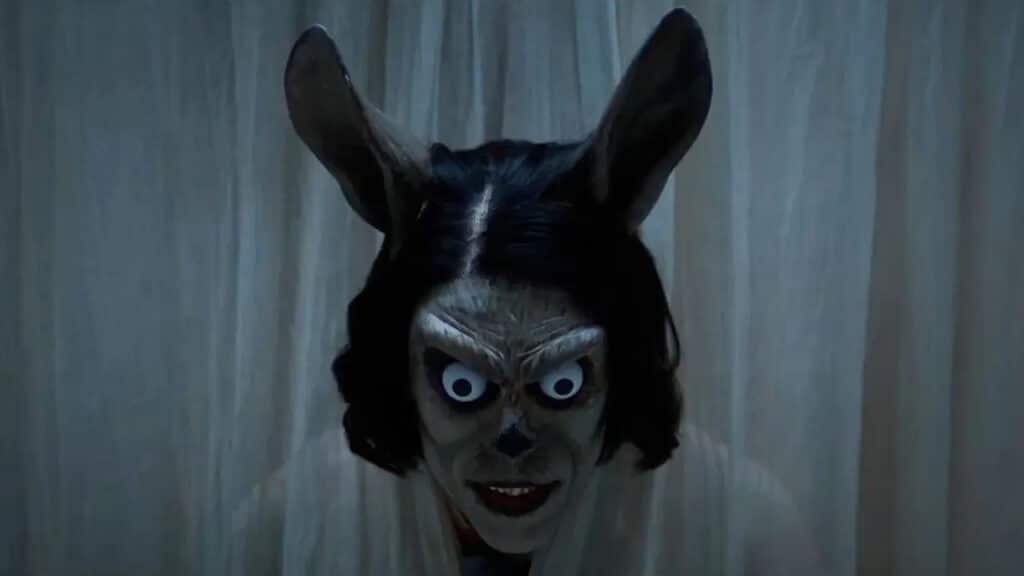
What’s with you and rabbits, man? Is there a deeper story there? These hideous rabbit images repeatedly show up in your work. You’ve permanently ruined Easter for me.
I don’t know. It probably comes back to something, like everything, in childhood. I grew up in the country running around. I’ve tried to find a horror influence. I’ve never been really scared by a rabbit in a movie. Maybe Watership Down might have had some kind of traumatic impact.
I’m half joking, but who knows? You see something as a child, and it gets in there for good or bad. Maybe I found that image very frightening, and maybe it’s always stayed with me. Or it could just be a simple thing, like an Alice in Wonderland thing of following the rabbit down a hole into something strange and otherworldly. Who knows? I’m trying to figure it out!.
Without giving too much away, psychedelics play a role in the film. Do you believe, like the character of Jerry (David Wilmot), that they have some sort of supernatural or revelatory power? Have they ever directly informed your work?
I’ve never done it myself. I did an awful lot of reading about it, about people with anxiety and maybe traumatic experiences. There is research on all of that, how psychedelics have helped people. Never tried it myself. Maybe I should, maybe we get to the bottom of that rabbit thing. It’s a little bit like, when you’re writing, it just gives you a bit of that, um, what would you say? It’s another layer to the horror. Whereas, if you introduce that idea, then it’s like you can’t even trust your own mind. What’s real and what’s not? There’s something about that that’s very frightening, because you can’t get away from your own mind and your own imagination … Losing one’s mind is quite a frightening thought.
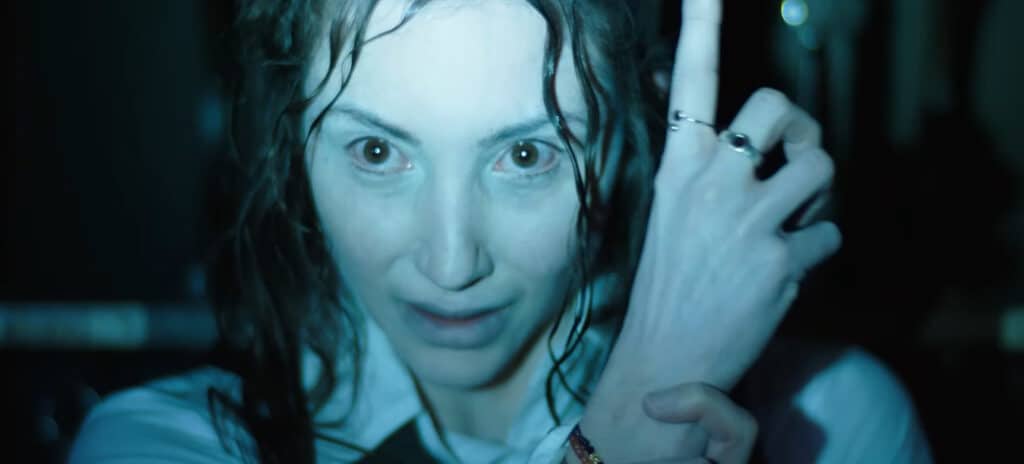
And the eternal question – what’s next?
I’m gonna enjoy HOKUM coming out, because I’m very, very proud of the film. I really feel like I have achieved what I set out to do with the film. I find it scary and funny. It’s not a long movie, you know, it’s like an hour and 40 minutes, but there’s a lot in it. I do think it’s a good roller coaster. So, I’m definitely going to enjoy talking to people about it.
I write all the time. I mean, I just write every day. I have two other scripts, and one, I’m starting to look at a little bit now, but I’ll be staying in the horror genre for a while. It’s just something I enjoy, and hopefully getting a little bit better at every time. You make a movie, and you learn, and you go, “I think I got another scare. I think I know how to do something else now.” So, that’s kind of the plan, the vague plan.