By JILLIAN KRISTINA
The earth is shifting. The soil, awakening. The roots are being exposed, and with them, the secrets hidden by winter. The whispers and chatter grow louder with each longer day, the ancient language of memories that never truly fade. Nay, they’re imprinted in our very DNA. Our very blood. Because blood, well, the blood never lies.
“There is evil in this place.”
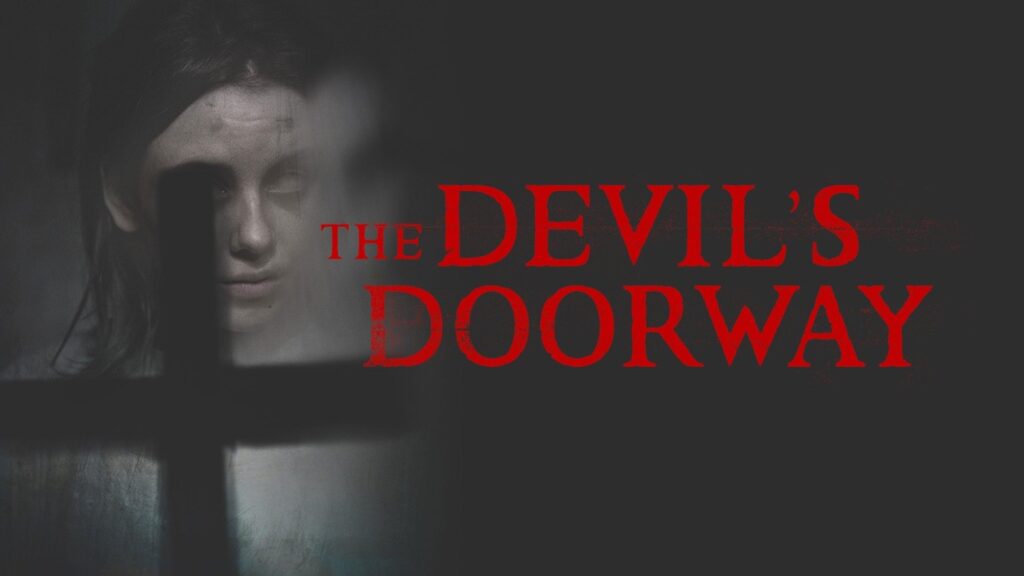
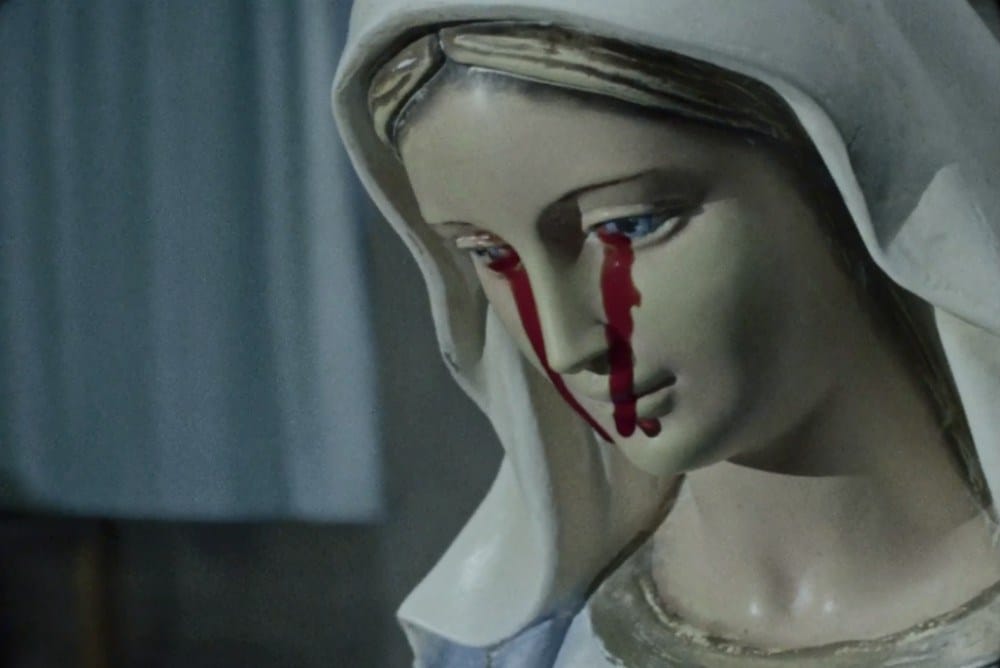
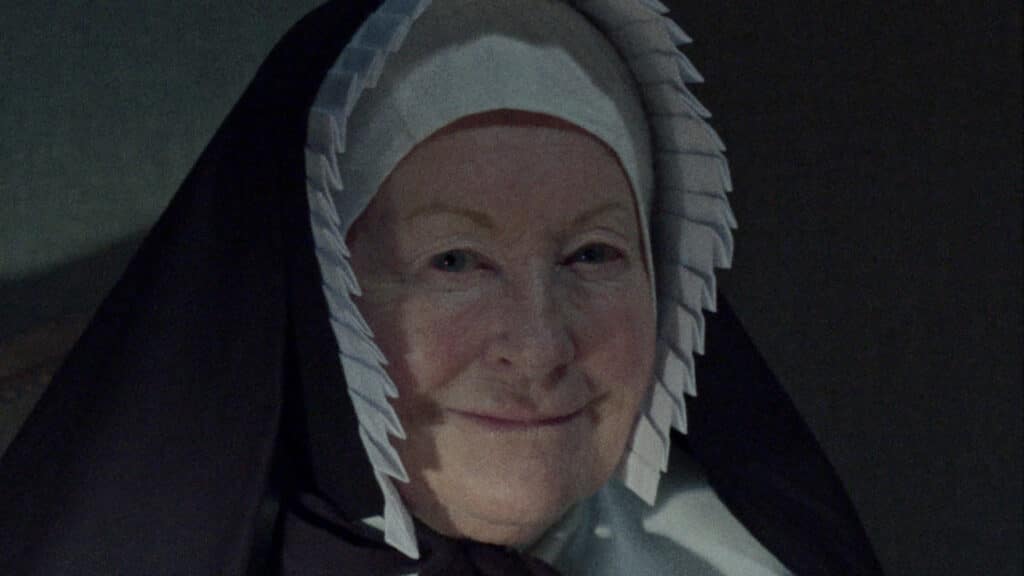
Aislinn Clarke’s 2018 liturgy of lies and possession, THE DEVIL’S DOORWAY, takes us to a Magdalene Laundry in Northern Ireland in October of 1960, where Father Thomas Riley (Lalor Roddy) and Father John Thorton (Ciaran Flynn) are sent to by the Bishop to investigate an anonymous claim that the statue of the Virgin Mary in the laundry’s chapel is weeping blood. They are met, of course, with harsh, calculated resistance from Mother Superior (Helena Bereen), a hardened, stoic nun who has been as much abused by systemic violence as she has been a part of it. She resents the priests’ presence, shooting down the alleged miracle, attributing it to nothing more than a trick. Father Thomas shares her sentiments, but in secret. He’s exhausted by a lifetime of traveling the world, investigating “miracles,” while a younger and more excitable Father Thorton is determined to get to the bottom of the mysterious weeping statue.
“I’ve been all around the world, but the evil I’ve seen has always been the human kind. There’s no evil in this world or the next that can surpass that done by human hands. And that goes for the miracles as well.”
 However, what the priests witness is not what they expected. They hear mutterings behind closed doors, and when those doors are briefly open, they see Mother Superior savagely beating the girls. Mother Superior – a twisted, toxic Hierophant, the fifth card in the Tarot’s major arcana, upholding outdated and oppressive traditions because the only power she has is the power within her own vicious methods of control – and abuse. Sometimes, hurt people hurt people, and often, those people are placed on pedestals of authority, lording it over the vulnerable in a virulent attempt at reclaiming their own sovereignty.
“You send all the country’s dirty wee secrets here, here to my home, and sally off without a care in the world. Sweep it all under the carpet and expect us to hide the dirty laundry, isn’t that it, Father? Leave all the dirty work to the women.”
To the women, who then abuse the women in their charge. All cogs in a contorted and blasphemous cycle, perpetuated by all and challenged by none. But one woman, the one who sent the letter, reaches out, unable to keep the secrets of the sisterhood any longer. On the third day, all of the statues begin to bleed, and when Father Thomas retrieves samples of the fresh blood, he is shocked. It’s type O-negative, and whoever’s blood it is… is pregnant. Every woman in the laundry is ordered to give a sample of their blood, nun and inmates alike. Only then does the nun who sent the anonymous letter come forward, confiding an insidious secret. The sisters are keeping a pregnant girl, Kathleen O’Brien (Lauren Coe), chained in the basement. They claim she’s evil. They claim she’s possessed. By the devil.
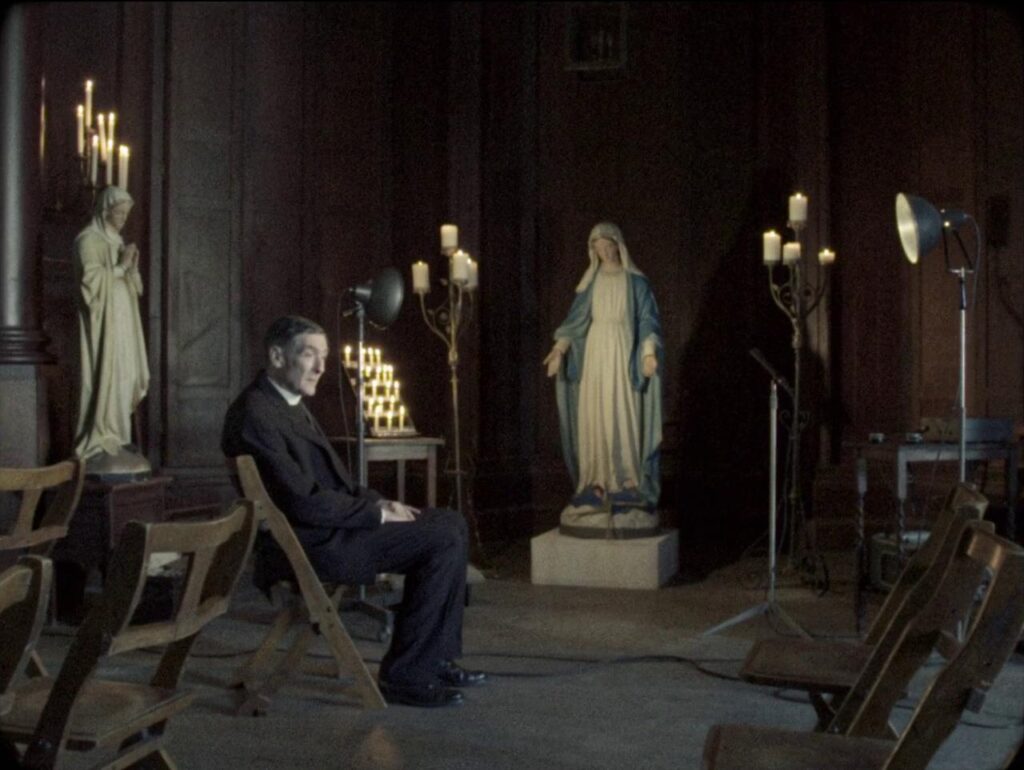
“You’re not prepared for this, Father Riley, but if you want to see, I’ll show you.”
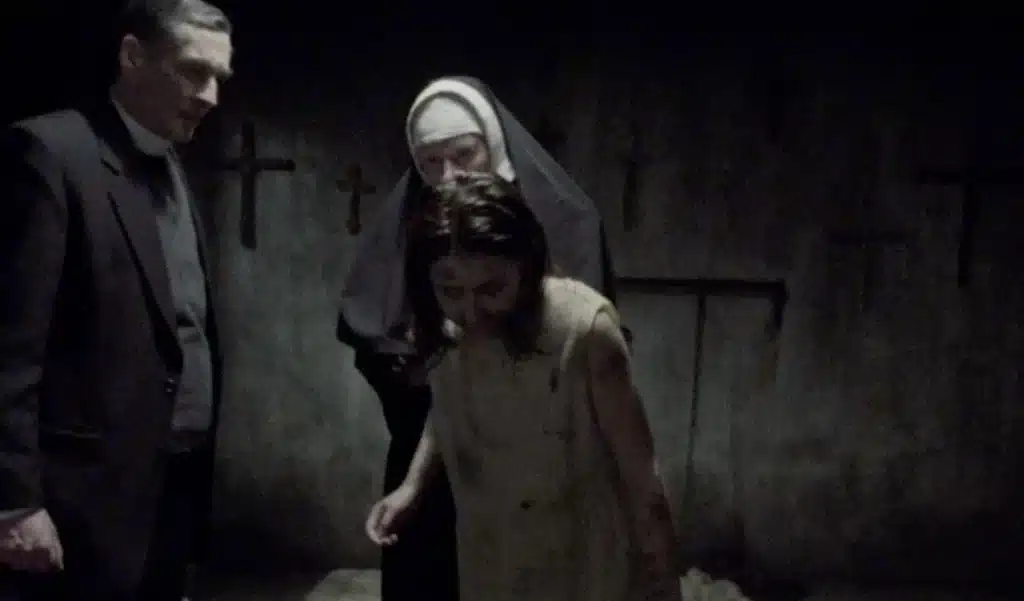
 After demanding to see the girl, the priests find her filthy, emaciated and chained to the wall. When her chains are removed, she acts like a rabid dog, immediately lunging at one of the sisters, tearing flesh from her face. Once she’s again restrained, Father Thomas orders medical attention for the girl. A physical examination by a local doctor reveals something unimaginable. Kathleen is a virgin. She is the Empress, the third card of the major arcana, ensnared. Oppressed. Cut off from the natural world, imprisoned within the walls of man. Of society. Of the patriarchy.
“Mary, conceived without sin, pray for us.”
There is something else happening in the laundry that can’t be explained. Each night since his arrival, Father Thorton hears the voices of children, children he’s told no longer live at the laundry, not since the war. Yet, every night, apparitions of children surround him, revealing themselves… their existence… and the truth that’s embedded in the very walls that now imprison them. One such encounter leads Father John and Father Thomas back into the basement. They follow a small girl who leads them in the direction of women chanting. After breaking open a heavy door, the men find themselves in a small room with all of the trappings of what Father Thomas describes as a “Black Mass.” A satanic sanctuary.
 But just as quickly as the men find it and confront Mother Superior, the blasphemous paraphernalia are gone, vanished without a trace like so many other occupants of the laundry. Like the girl chained in the basement and the baby delivered into the greedy hands of a matriarch seething with petulance and depravity, hungry for the flesh of the innocent. Hungry for her next fiendish offering to the altar of her own corruption – the perversion of the Magician, the first in the major arcana, remade in baleful, putrefying flesh.
“You worry about how we treat the girls. What about how you treat us? Leave us to hide all the messes and cover it all up. Do you know how many of the church’s messes that I personally have had to clean up? Do you know how many of the babies born here had fathers…who were Fathers, Father? Didn’t think so. Didn’t think you’d want to, either.”
This Easter, meditate on the vast divide between the origin myths of the rebirth of the earth, of the significance of the hare and the egg, and the ways that these myths and symbols have been systematically stolen, stripped and repurposed for the good of the many disguised as the chosen, reigning few. Think about the degradation of powerful archetypes like the Hierophant, the Empress and the Magician, and how they can be embodied for introspection, growth and empowerment. Reflect on all that has been taken by those who would devour before they would nourish, and how important it is to notice and actively reclaim what was always meant to nurture and elevate rather than drain and conquer.
“I never go into the chapel anyway. We’re not allowed to go in there. We’re being punished. They need someone to clean all those sheets.”