
By BILL REICK
Although it’s infrequently depicted in horror movies, family drama can be one of the most traumatic, terrifying topics we experience. Love and loss are feelings we’ve all had, and when filmmakers tap into the truth therein, they create some of the most relatable and heartfelt movies in existence. You may not find Kramer vs. Kramer in the horror section, but to many viewers, its frank depiction of the legal contention between ex-partners is scarier than a hockey-mask-wearing, machete-wielding villain. Personally, I’d take on Jason Voorhees over a sticky divorce any day.
We may not all know what it feels like to be chased by Freddy Krueger, but many of us know what it’s like to mourn a relationship. The tumult of rebuilding a life in the aftermath of a breakup is one of the most difficult things a human can go through. The relationship ends, but the world somehow keeps spinning. It seems unnatural. We should be left alone under our own little rain cloud, but oftentimes, the weather betrays us, and the sun shines in sharp contrast to how we feel inside. We usually don’t have enough time to properly grieve because at the end of the month, rent is due, and we’ll still have deadlines at work. We’re left with no choice but to lift ourselves out of the rubble and carry on.
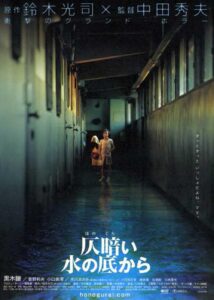 In Hideo Nakata’s 2002 film DARK WATER, the disaster of a crumbled relationship is literalized in every way. Yoshimi Matsubara (Hitomi Kuroki) is left to rebuild her life as she navigates divorce mediation with her ex-husband and his ruthless lawyers. Worse, the traumatic process and her ever-important job search leave her distracted and with little time to devote to her young daughter, Ikuko.
Ikuko is left to struggle through the trauma of her parents’ divorce on her own. Her father is mostly absent from her life, and her mother spends all of her time trying to keep a roof over their head. Right after Ikuko starts school at a new kindergarten, she and her mother move into a new apartment. While the young girl appears even-keeled at first, her internal turmoil slowly manifests in increasingly bizarre and supernatural ways. She’s a regular kid trying to do her best, but the dissolution of her family has again and again affected her in deep and impactful ways.
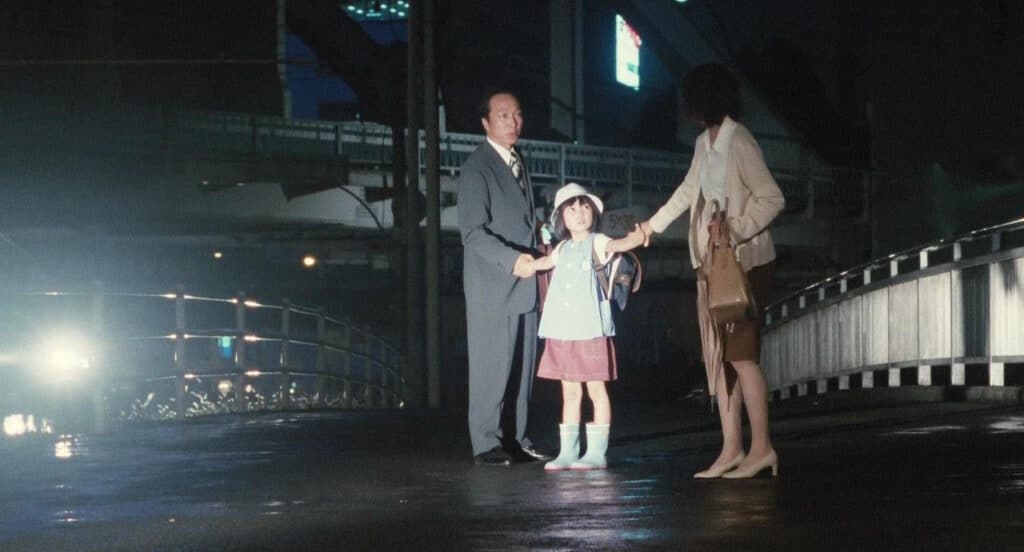
A horror movie rarely strikes the melancholic tone DARK WATER does. The film is reminiscent of other J-Horror films of the era; its 2002 release places it slightly after both the incredibly successful Ringu and the comparably popular Ju-On: The Curse. What keeps it consistent with these other movies is its reliance on a central mystery. Just like in Ringu, the catalyst for DARK WATER’s paranormal events is revealed in the third act, showing how the core characters are connected to a series of occurrences that predate their problems.
Although it shares a lot with its contemporaries, what separates DARK WATER is the strong undercurrent of sadness throughout. Whereas Ringu and Ju-On establish and elevate a strong sense of dread through their runtimes, DARK WATER favors a weepy tone, making its scares all the more discordant and frightening. The constant downpour of rain seems to match what Yoshimi feels while also evidencing the flood of issues keeping her and Ikuko from living the life they deserve. We find ourselves drawn into the relatable circumstances experienced by Yoshimi and Ikuko, only to recoil in fear as the threat to their lives draws nearer. While the dimly lit corridors and poorly maintained conditions of the new apartment complex highlight Yoshimi’s financial instability, they also create an excellent backdrop for some genuinely creepy moments.
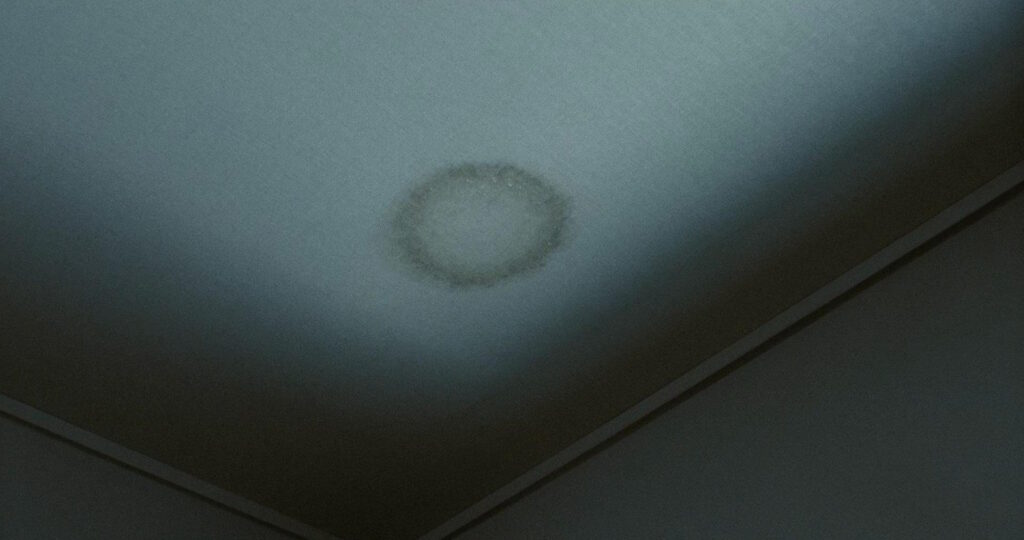
The movie’s central conceit is a leak in the ceiling of Yoshimi and Ikuko’s new apartment through which drips the titular “dark water.” As Yoshimi’s behavior becomes more erratic, so too does this leak increase in volume. Just like she finds no help from her ex-husband, Yoshimi is unable to draw the attention of the building’s superintendent. While the water pours through, it seemingly reflects the chasm growing between mother and daughter. Desperate to secure a new job, Yoshimi is frequently late picking up Ikuko from preschool, worrying her teachers and giving Yoshimi’s husband legal fodder in the custody battle. Throughout all of this, we’re shown flashbacks of Yoshimi’s own troubled childhood, and we discover she, too, was a child of divorce and deeply affected by the events of her parents’ separation.
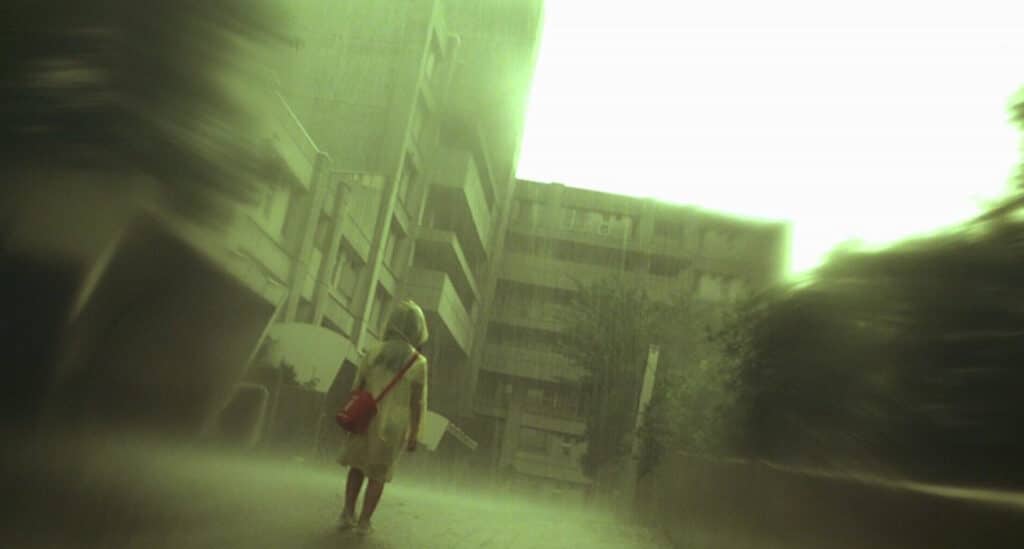
As if these interpersonal troubles weren’t enough to fuel further conflict, Yoshimi and Ikuko find themselves slowly immersed in the years-earlier disappearance of a stranger. Recurring imagery of a yellow raincoat and a red purse increases the frenzy in Yoshimi’s already frantic life. Why does the red bag keep reappearing, even when she throws it out? Who is the girl in the yellow raincoat, and what does she want with Ikuko? Fans of Nicholas Roeg’s equally somber Don’t Look Now will recognize these images and the sense of doom they convey. As in Roeg’s 1973 masterpiece of loss and sadness, DARK WATER brings the present and the violently torn-open past together in a brutal climax.