By JILLIAN KRISTINA
These are liminal times we’re living in. The ground that we once thought solid crumbles beneath our feet. Vaporized foundations reveal what’s really been dwelling in the collective underbelly, and well, it’s so much worse than we’ve been led to believe. But we’re here now, staring the beast in the face. We’re here, reckoning with decrepit and oppressive systems and cultures and networks that are being dismantled and unmasked faster than we can process – but not fast enough. Because that’s just it – processing. Believing the signs when we see them. Noticing patterns. Connecting the dots before it happens again. Before it’s too late.
“The sacrifices. She was rambling something about her family being in danger. They’re still sacrificing people to this god, Moloch.”
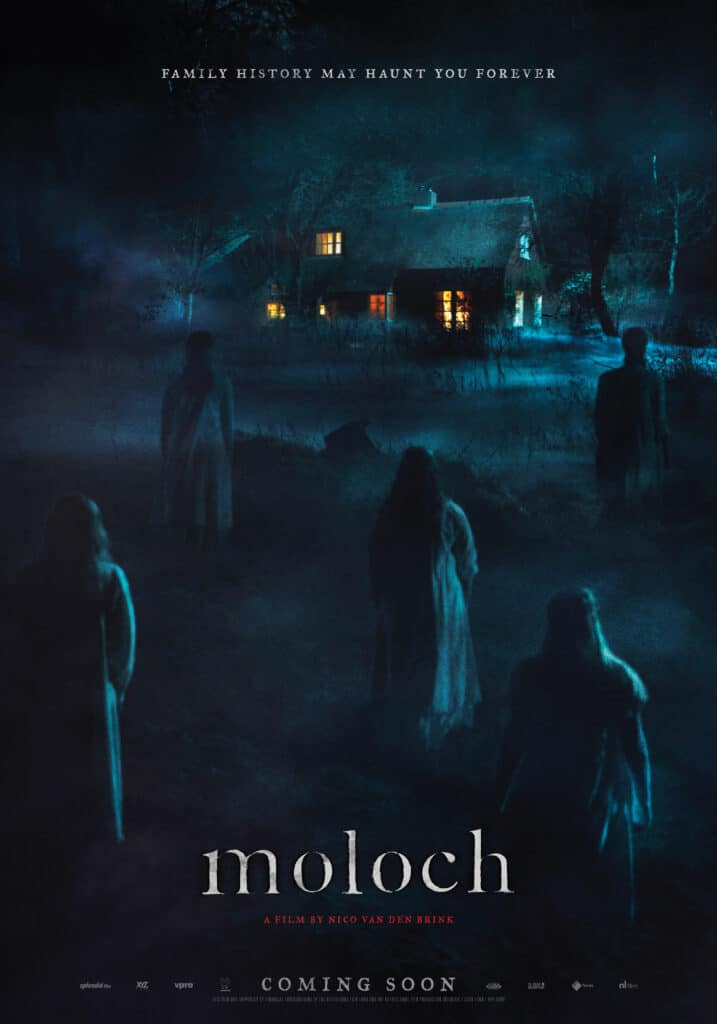
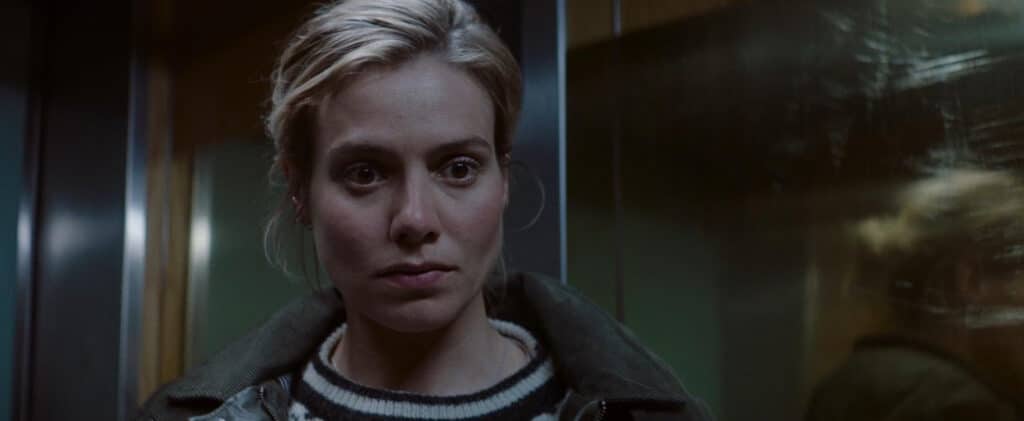
In Nico van den Brink’s 2022 Dutch folk nightmare, MOLOCH, the past breathes in the present… for those who can feel it, for those who can follow the bodies and connect the stories. That is exactly where 38-year-old Betriek (Sallie Harmsen) finds herself. A widowed musician living with her parents and young daughter, Hannah (Noor van der Velden), Betriek’s awareness is informed by grief and loss, transmitted through the music she creates. She composes tapestries of otherworldly meanderings through her violin that carry her through states of altered consciousness, opening her up to something…other. Something obscured, hidden behind blood-streaked walls and haunting family portraits. An apparition. A whisper.
“Some people are more sensitive to those vibrations than others…Your daughter. You.”
There is a local myth that breathes and moves and ensnares every resident of Betriek’s village – the tale of Feike, a young servant girl, taken advantage of by the evil lord, Walter, who ruled over her and dozens of other indentured hearts and hands. As news of her pregnancy broke, Walter’s embittered wife, Helen, denounced her husband’s compliance in the act, claiming he was under a spell. Claiming, in fact, that Feike was a witch. Imprisoned, the young girl petitioned spirit, asking the almighty to save her – but another voice came to her in her hour of need. The god of child sacrifice himself, Moloch, presented her with another option…
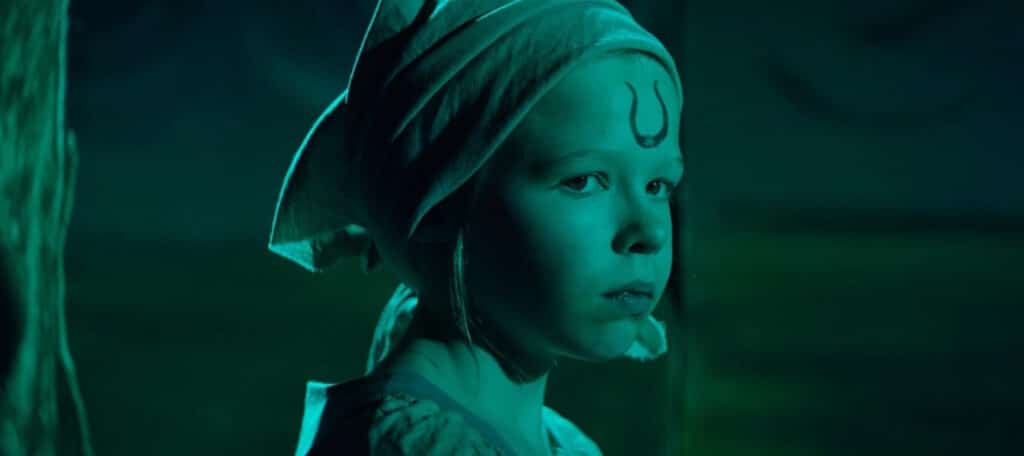
“I will help you escape a fate unworthy of a soul so beautiful, my child… but beware, this vengeance will become a cage all its own, and I will claim what’s mine – your offspring, even those yet unborn.”
A deal was made; the mark of the god was placed upon the girl’s head. The child was claimed as his own. As Feike faced Helen one last time, the girl slit her own throat from top to bottom, shocking the very life from Helen’s body. And it was this emptied vessel that Feike’s soul would leap into, assuming a new, privileged life for herself, and a doomed, ensnared life for those who would come after. Now, Helen is rumored to roam the peat bog, possessing men to dig. To kill.
“She’s sort of a horrible villain in this whole legend of Feike, like there’s something evil out there in the bog, whispering horrible things to anyone who will listen.”
Whispers from a specter enraptured in rage, bending men’s ear to do her bidding, there’s a history of violence in this place. Betriek’s grandmother was viciously murdered when she was just eight years old, in the very house that she and her family still inhabit – right above the cupboard that Betriek’s mother shut her in to protect her from the violence. Pieces of her still live in that moment, flashes of a young girl offering small morsels of food just before the screaming started… and the banging… and the blood that rained from above, streaking her terrified face.
Her mother, Elske (Anneke Blok), suffers flashes of her own – seizures in the night, robbing her of rest. Of sleep. None of the scans show anything abnormal, leading doctors to another theory: Elske’s issues aren’t physical. They are emotional. Unprocessed trauma, they tell her, can have physical effects. But Elske won’t hear it, or face it, because there’s something else at play, something just below the surface.
“Once in a while, that signal is a distress call. A spiritual SOS. And you’d better listen.”
Betriek listens as the distress calls become impossible to ignore. The bodies of several women are unearthed from the peat bog that borders her family’s home, and they are not just any women; They’re old women, very old women, spanning years, centuries. Jonas (Alexandre Willaume), a visiting scientist, is called in to oversee his team’s morbid discoveries. He notices a disturbing pattern of vertical cuts on each woman’s throat – top to bottom, as is tradition.
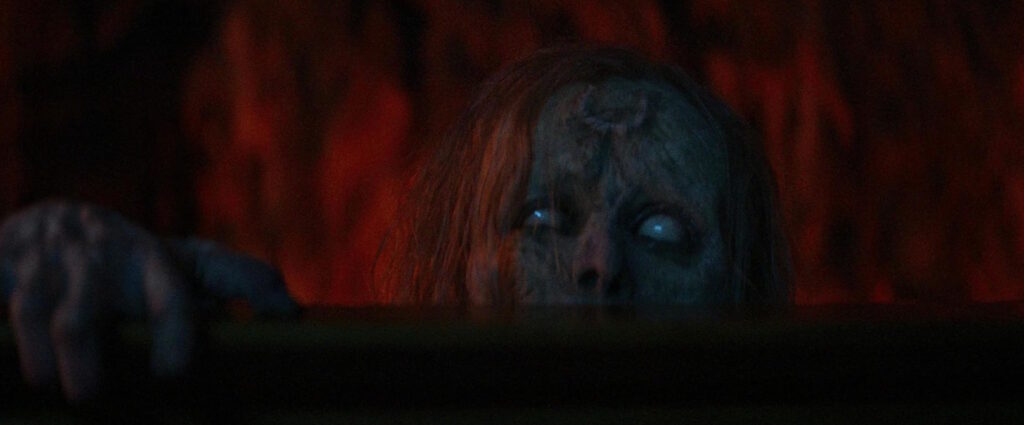
“Are they all women? Are they women from different eras? And all related?”
The wrath of internalized misogyny knows no satiation. It works through lineages. It ravages bloodlines. Born from the very real human instinct to survive, whatever the cost, these patriarchal curses are now being exposed for what they are – control mechanisms. Feike accepted a fate so horrific and gruesome that an entire ancestral line was damned. Silenced. First, Helen cursed Feike. Then, Feike cursed Helen. The rage forged a connection that has remained unbroken, continuing to consume in the name of eternal life. But nothing is eternal. Life rots. Decays. Grows unstable and crazed when the natural cycle is interrupted. The facade cracks, and we can only hope the light shines through in time for Death to do its work so that life can be both extinguished and saved. Because that’s Death’s role, especially through the lens of the tarot – Death composts what cannot come forth into the next phase of life. What is composted will inform what comes next, but it will take a different form and develop a vastly renewed and refreshed perspective. Nature – life – cannot stagnate, and Death knows its essential role and performs it well.
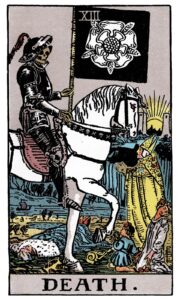 Using Death as a guide through these Tarot prompts, ask yourself: In the wake of the recent eclipses and upcoming Equinox…
What is asking to be composted, once and for all?
Find the cracks forming in the masks that are ready to be released as we awaken with new clarity. Can you see the light shining through? What is the message contained within this fresh illumination?
How can these messages inform not only how we nurture and satiate ourselves, but how we ensnare and entangle ourselves in a past that is ready to be laid to rest? What’s one thing we can lay down on our personal pyres to be burned as we clear and repurpose the soil of our lives for new growth and possibility?