
By GABRIELLA FOOR
“Asylum” is a long-disused word when it comes to mental health treatment, a remnant of a time when our understanding of psychology was only in its infancy. I’m reminded of our past relationship with mental health not only because of my time in the system but because I happen to live not 30 minutes away from a notorious asylum that still looms just one county over. A half hour from my home, against the backdrop of a grassy field, sits Pennhurst State School and Hospital. Originally known as Eastern Pennsylvania State Institution for the Feeble-Minded and Epileptic, it was a state-run facility located in Spring City, Pennsylvania. Like many institutions in its day, Pennhurst became mired in controversy over the years, its reputation stained beginning in the 1960s by a five-part television exposé of the hospital’s horrendous conditions. Rumors of abusive orderlies, filthy conditions and overall neglect spread rampant. In 1987, after years of controversial stories surrounding the brutal treatment of patients within the walls of Pennhurst, it finally closed its doors for good.
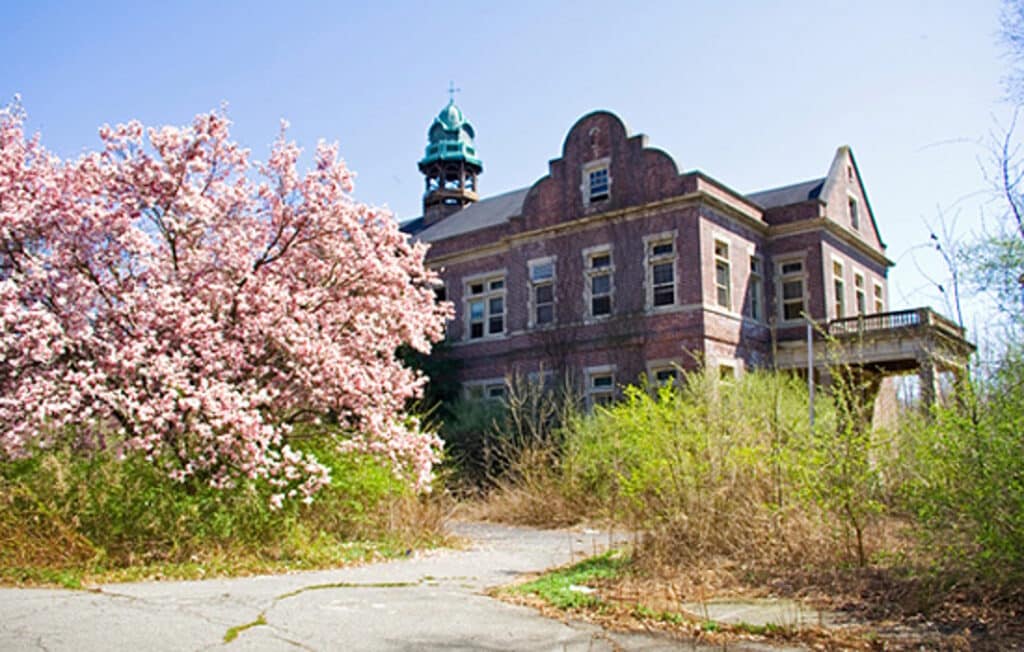
Pennhurst State School and Hospital
Presently, it operates as a historical site and, during autumn, as a lively haunted house attraction that draws in many locals. The ghouls and merriment on the grounds where people were in agony daily only serve to remind me how close I am to a place where a person like myself would have likely ended up living, suffering, and possibly dying. The fact that so many patients walked through those doors and never left seems to warrant less cheerfulness, but that doesn’t stop holiday horror lovers and paranormal investigators from congregating to celebrate and attempt to connect with the dead.
Abuse, neglect, overcrowding and underfunding would become a repeated tale across many hospitals that rose in the wake of the establishment of the famous Quaker-run Friends Asylum in 1813. Once acts were passed to encourage deinstitutionalization in the ’60s, asylums decreased in popularity and methods of treatment shifted. Currently, inpatient psychiatric treatment looks very different, and while psychiatric hospitals still inspire horrific portrayals in media and in our imaginations, the stays are shorter and the therapy more humane. Focusing now on acute symptom management and scientifically proven treatments such as occupational therapy and medication management, these facilities hold patients for weeks at maximum rather than condemning them to constant care.
The horror genre has relied on “haunted asylums” or the terror of being committed for some time now, with little analysis of why we are afraid of these places or how they came to be in the first place. I’ll use the following films set in asylums to examine the themes that connect with our overwhelming discomfort, explore the history of asylums, the conditions and methods of treatment and their inevitable journey to extinction, or perhaps, mere evolution.
SESSION 9 (2001, directed by Brad Anderson)
A surprisingly cultural and historical look at a real-life asylum, Session 9 delivers eerie atmosphere, a compelling storyline and a look at life in captivity. In the film, five asbestos abatement workers enter Danvers State Hospital to clear the building of hazardous materials in record time. Their reward? A massive bonus that far outweighs their meager paychecks. The group is an interesting mix in various states of turmoil, including one young man with a paralyzing fear of the dark and a law school dropout who has a shocking degree of knowledge about the history of the facility. The opening scenes of the film are especially notable as the group tours the asylum and explores the remnants of the facilities. As they walk, they discover devices such as those used in hydrotherapy, in which patients were doused or submerged in freezing water.
The layout of the hospital is explained, and the group is stunned that approximately 2,000 people once called this place home. Conversation inevitably turns dark, and talk of lobotomies and the repeated insult of “Are you a lobotomy patient?” shows what little empathy the group has for the suffering of the patients who were confined there. One goes so far as to chokehold another member of the group, placing a sharp implement to his eye, while explaining how he could pierce the orbital socket and, with just a few quick strokes, scramble the young man’s brain. This fixation on lobotomy only expands, and we see that not all healing comes free of suffering.

The filmmakers behind Session 9 chose wisely in the location of Danvers State Hospital, once called The State Lunatic Hospital at Danvers. Opened in 1878, the facility had a sprawling, acres-wide campus that served the self-contained psychiatric hospital. Danvers was constructed according to the Kirkbride Plan, a method of design for mental asylums advocated for by American psychiatrist Thomas Story Kirkbride, who believed his design to be a compassionate one. Built with healing in mind, the hospital was constructed with factors such as fresh air and natural light taken into account as beneficial for patients. Characterized by its trademark “bat wing” layout, which also helped separate patients by gender, it consisted of a central building, with wings branching off in sections, directing away from the hospital center. Though this was a groundbreaking idea that was adopted by many hospitals, most Kirkbride buildings have been demolished, abandoned or repurposed. Sadly, before these humane ideas could take effect, treatments like hydrotherapy and lobotomy were used.
Though the hospital started as a stunning success, its stellar reputation would ultimately be its undoing. With so much accomplished, the hospital would be flooded by new patients looking for a decent, helpful place to rehabilitate. Consequently, Danvers’ reputation took a turn. Reports of inhumane treatment began to surface as the population rose. Brutal shock therapy, lobotomies, powerful drugs and straitjackets were employed to keep the masses under control. By the 1960s, massive budget cuts were gutting hospitals, and a new focus on alternative therapies, community-based care and the deinstitutionalization process caused the once-booming population to thin out. By the ’80s, a dubious reputation, lack of funding and a dwindling patient count were the final nails in the coffin, and in 1992, all official operations ceased. Danvers, “The Hell House on the Hill,” has been leveled. It remains immortalized as the inspiration for H.P. Lovecraft’s own Arkham Sanitarium.
GONJIAM: HAUNTED ASYLUM (2018, directed by Jung Bum-shik)
Gonjinam: Haunted Asylum begins with the disappearance of two young men investigating an abandoned mental health facility, who supposedly capture a ghost on film. The building’s troubled past includes rumors ranging from stories of mass patient suicide to a theory that the hospital was built over the graves of Japanese and Korean resistance fighters. The ultimate rumor alleges that the patients didn’t kill themselves but were murdered by the asylum’s director, who took her own life. Armed with this knowledge, YouTubers Horror Times is on the case, setting out to livestream an investigation of the notorious asylum. It does not go well…
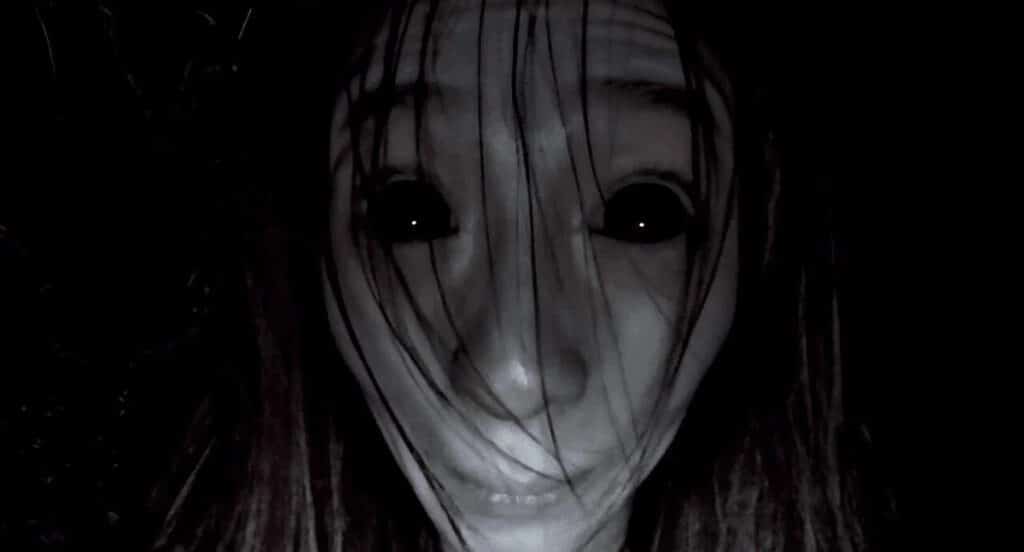
Like Danvers, Gonjnam is a real place. However, the terrifying found footage film concentrates more on legend than the facility’s history. Gonjiam Psychiatric Hospital has long been considered a hotspot for paranormal activity. Considered one of the most terrifying places on Earth, it remained relatively unknown outside of Asia for years. Gonjinam: Haunted Asylum changed that.
Attracting thousands of tourists and ghost hunters each year, the hospital has a long and storied history kept alive by urban legends. Although stories of mad doctors, suicides, patient murders and torture run rampant, the limited information available on Gonjiam tells a much more mundane story about the hospital’s existence and untimely closing. English language sources are sparse, so some dates or details may vary from source to source.
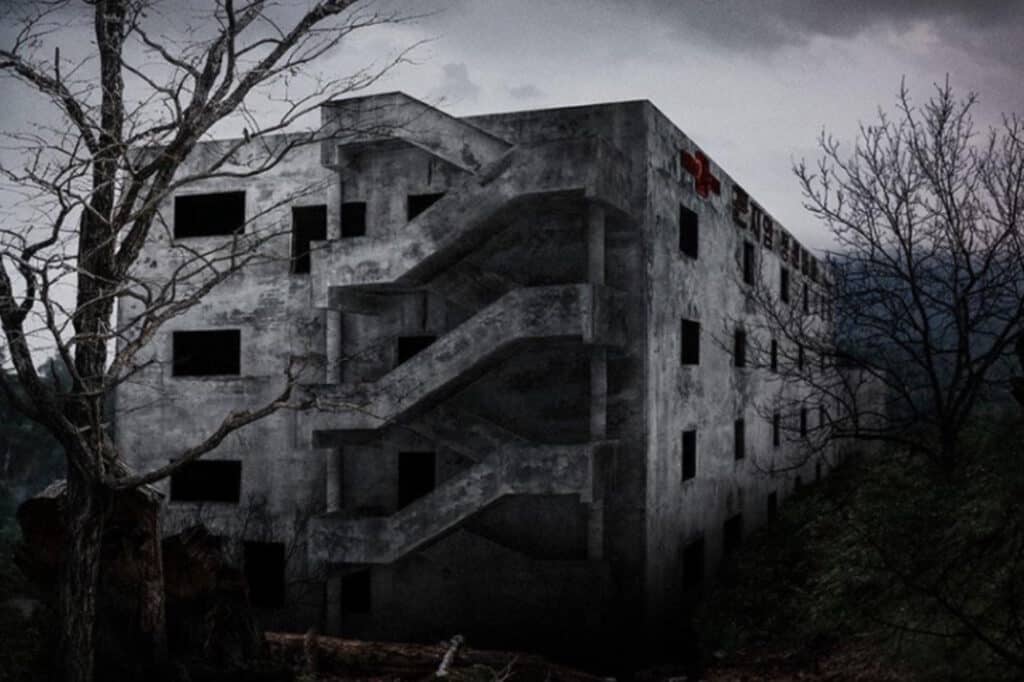
Built in 1982, Gonjiam Psychiatric Hospital sits outside Gyeonggi-do, South Korea. Originally, one building of about 11,000 square meters, spread across three floors, the early 1990s saw the addition of two new structures. Shortly after these expansions, the elderly owner died. The hospital closed and was abandoned for decades. The empty, dilapidated building, along with the curious nature of what happened inside, made it the perfect subject for gossip. Locally, the rumor mill churned about the possible reasons for its sudden closure. This regional fasciation earned Gonjiam the reputation as one of the most haunted places in Korea, leading to a rash of repeat trespassers on the property.
There are few sources discussing the history of the hospital on the English-speaking side of the internet, so a broader look at the hospital’s history, or a look at daily life or the treatment of patients, is difficult to find, and dates are nothing short of doubtful. Urban legends tell of multiple mysterious patient deaths or even patients being held hostage by the hospital’s director. These stories are no doubt entertaining and fit with the building’s rep as a “haunted asylum.”
In reality, Gonjiam Psychiatric Hospital didn’t come to such a dramatic end. Money, not madness, was the real killer here. South Korea’s Water Source Protection Act meant that the hospital would need a new sewage treatment facility, prompting arguments between the owner and director. Failing to comply, it remained shuttered. Coincidentally, 2018, the same year the film was released, was the year Gonjiam Psychiatric Hospital would be demolished, putting whatever remained there to rest for good.