By RICK HIPSON
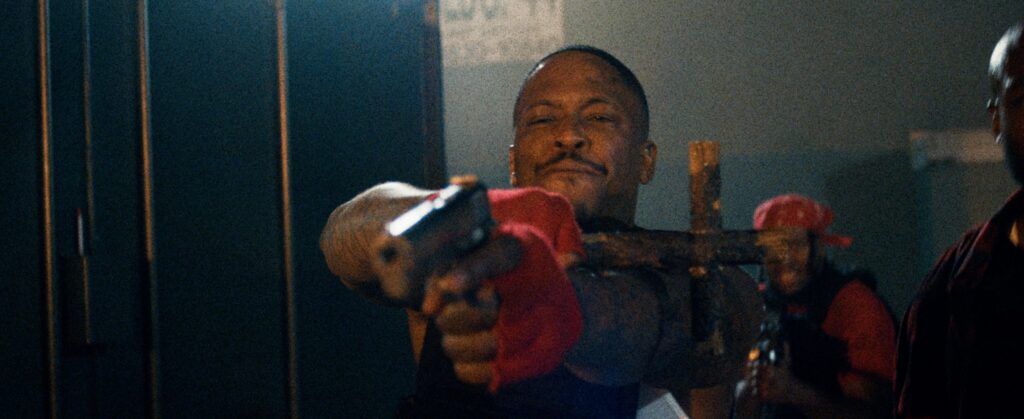
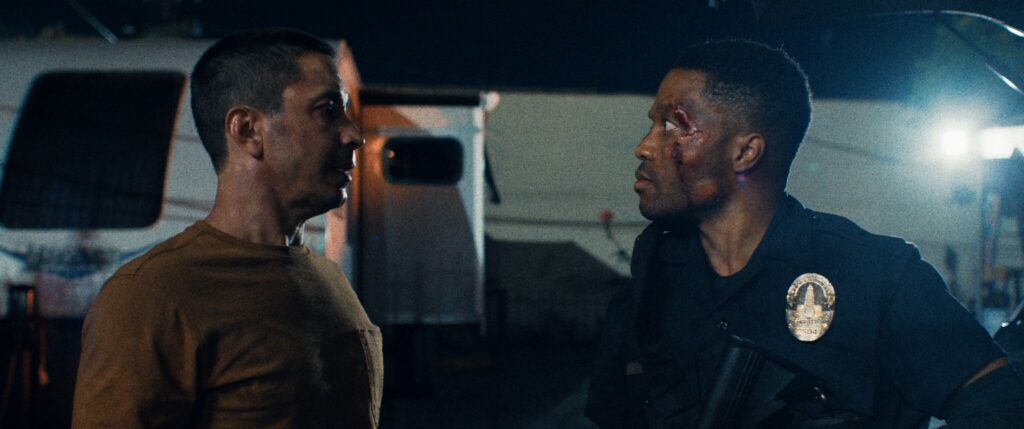
What do rappers YG, Freddie Gibbs, pro heavyweight WWE champion CM Punk, and the LAPD have in common? Why, vampires, of course! At least they do when filmmaker Ryan Prows (Lowlife, V/H/S/94) is at the helm. Filmed on location on the gritty streets of Los Angeles, NIGHT PATROL takes us on a ride-along with an elite squad of specially selected lawmen whose ethics are as nonexistent as their heartbeats. The Night Patrol’s newest recruit, Hayworth (Justin Long), begins to question his moral compass the more entrenched he becomes in his new job. Unable to turn his back on those he swore to protect, Hayworth soon finds himself caught in a bloody battle between the gangs of his childhood neighbourhood and the bloodsucking monsters he once looked up to, with each side hellbent on protecting their interests.
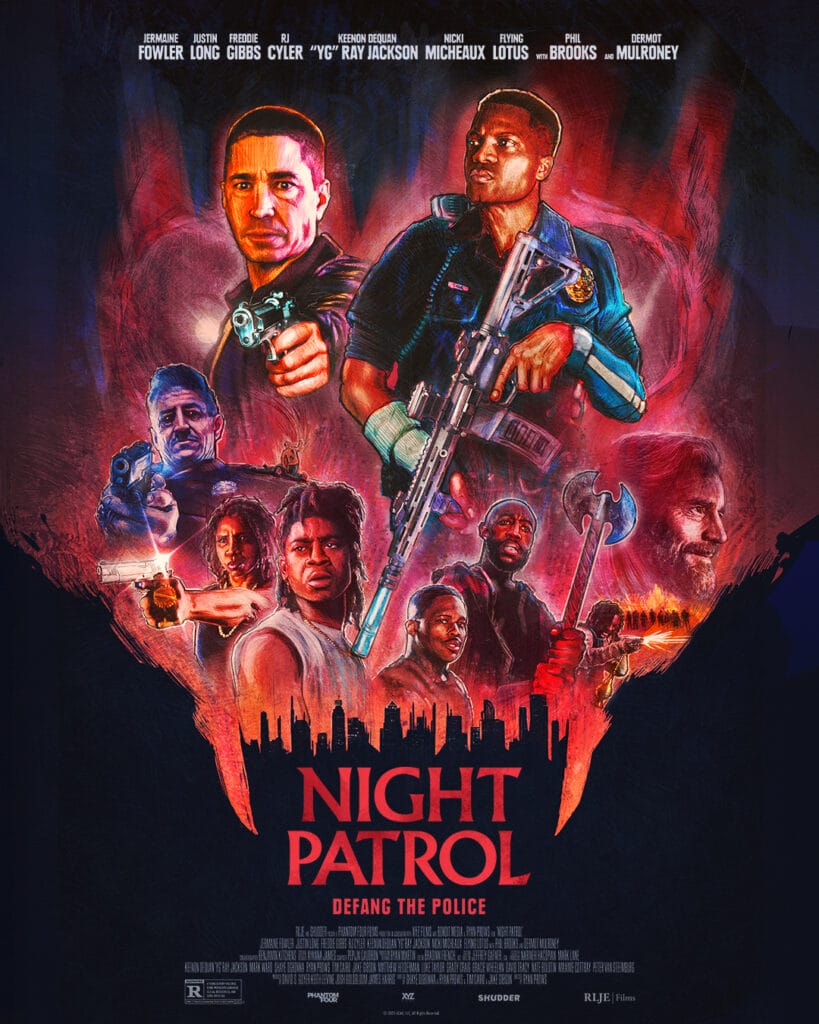
I had the chance to catch up with writer-director Ryan Prows to talk about NIGHT PATROLand how he managed to convince audiences there may be something far more dangerous than men with guns lurking in the shadows of LA.
I’m certainly a sucker for vampire films. It’s been a fantastic last couple of years for the subgenre. And I also love a really good origin story. Can you walk us through the development process of NIGHT PATROL and what you felt you could bring to this undying culture of vampire movies that we all love?
Yeah, that’s a cool question. For one, I love RUE MORGUE, so I’m excited to talk to you about it. Initially, my co-writers and I did a film called Lowlife before this, and while we were on the festival circuit for that, we started kicking around … the next thing that we would all work on together.
We always jokingly refer to ourselves as, like, the Wu-Tang model. We work separately, but then, we’ll formally Voltron it when the Earth needs us the most. We’re fans of horror films in general, and we thought we’d want to try our hand at more of a straight horror, so we started asking, what is the monster that scares us the most? That ended up being the LAPD, specifically, ’cause we all live in LA, or just cops in general, and we were off and running from there. I love vampire films. I love vampire stories. I love how malleable it is – not only of what you can use the metaphor for, but also the fun you can have. Every vampire film sets its own rules … The Bloods in the movie have seen a lot of vampire movies, so they are trying to figure out which vampires they’re dealing with in this one.
There are a lot of familiar faces from Lowlife in NIGHT PATROL. What does working with those folks mean to you, and what does that bring to the table?
We’ve been trying to make this film for a while. A big, important part of it was how we could bring everyone along. We had so much fun on the first one and really have a shorthand now with everybody, and we had fun on this one, too.
Also, the opportunity to bring in new folks that, hopefully, will become part of the band, and we get to work with them down the line again. But having Jermaine Fowler and Justin Long and CM Punk and Freddy Gibbs and all these guys, just being a horror, wrestling, hip hop, punk rock, comedy nerd, I was in heaven being able to bring a lot of these folks in. Some of the folks were people we had met along the way from Lowlife.
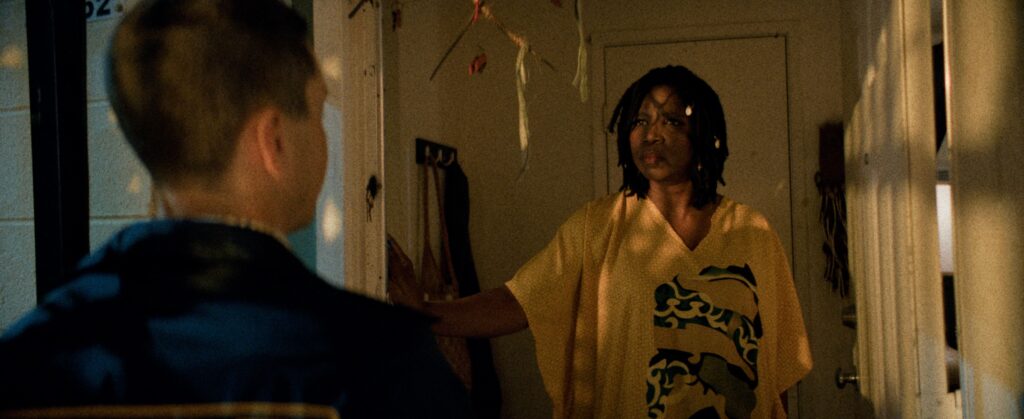
Jermaine introduced himself after he saw Lowlife. We had been working on a couple of different things here and there, but even in those, I could see that he had something like more of a leading man sort of quality, which he hadn’t gotten to do a ton of. He’s done some of it, but I could see that it was an opportunity to have him play something outside of his normal range. Same thing when we approached Justin Long. He was a little hesitant, and I was just like, man, you’re an incredible actor. I know you’re gonna kill this. And you’ve never seen Justin like this before. It was so exciting as we were shooting it. You could just tell he gave 120%, and it felt like you were watching something special unfold in front of you. So, super lucky. I pinched myself every day [with] the cast that we got and, like you said, that we got to bring folks along with us. Nicki Micheaux is my favorite actor ever, and this is our third thing now, and we’ll continue to do stuff. She was a force to be reckoned with. We have our shorthand, but then everybody was like, “Oh, I gotta catch up with Nicki in her scenes.
There’s such a range of various personalities coming from her character that really keeps you on your toes, constantly questioning, what is this woman really all about? What is she really trying to protect? What is her motivation? She crushed it at all levels. What an amazing cast with all these rappers. And you’ve got pro wrestling champion CM Punk, the cult of personality himself. What was your approach with all these massive personalitiesand getting them to work together cohesively?
It may have been some luck and some skill, but everybody could see what we were doing, and they were excited about how far we were pushing this and what we were doing with the film itself, so everyone was just game. The day that we did the table read, that was the first time I thought, “Oh, this is gonna work.” Everyone gets the position that they’re playing, the role they’re playing.
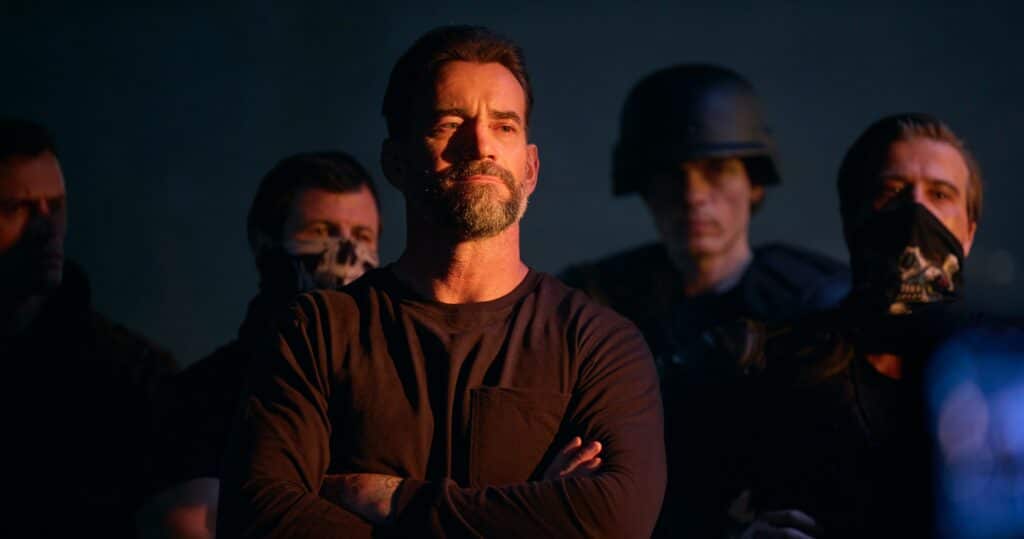
Part of it was a boon that we have four writers on it. It was like making sure that we could also tailor everything to each performer once we cast them. For example, when we got CM Punk in, he’s the best talker in the business. We have to write some monologues for him. We’ve gotta have him just start barking at everybody. All the way down the line, it was how can we take advantage of those personalities of who they are and fold them into the larger tapestry?
Was there much improvisation? Did you give some folks any extra grace, knowing that your writers could back up whatever some of those personalities felt fit their role better?
Yes and no. We had a very truncated schedule, so we were just rocking and rolling. Yeah, people could throw stuff in, but we’re moving [pretty fast], so there wasn’t a ton of that. What was cool and always excites me is everybody bringing so many ideas to it, like with lines or if they were ad-libbing stuff. I’m never concerned with that messing up some grand master plan. That’s why I like to be a writer on the stuff that I do; you can take it off the cuff a little bit, but also, that’s where the life is.
It was really important to us to shoot LA for LA. We were really in those places. That stuff feeds into the movie and makes it feel authentic and grounded. We were never shying away from that, and I feel like that emboldened the cast. Everyone liked where we were going, but if somebody had a better idea, I’m not scared to take credit for it. [laughs]
Los Angeles really is a character in the film. The audience is literally along for the ride, whether we’re inside the police cruiser or swooping down into the projects. It’s such a sprawling movie. And as you said, you’re all over the place within the city. Were there any challenges with that and the fact that a lot of the movie takes place at night in what I can only imagine was a difficult-to-control environment?
We went into it eyes wide open. I say we had a truncated schedule, but we wouldn’t have been able to pull it off without the crew that we had, who were all LA crew, just like top of the top, from the DP down … Our DP, Benjamin Kitchens, made a plan. We talked a lot about it early on, about, like, the sun texture of Los Angeles and what it feels like, almost like a character itself. You then feel the absence when it becomes night, and it’s scary.
And then, just being loose enough to go with the punches. We had so many different things happen. You just had to figure out how to make it work. That’s indie filmmaking in a nutshell.
What would you say was your most joyous moment during the entire process of making NIGHT PATROL, and how do you see that translating to the audience?
I feel like we had a blast. I always try to find the joy in all of the process. The writing process is 90% of my job, just because you’re not shooting a ton. We had a blast, the other three guys and I, writing the script together and working on that for so long. We worked with David Goyer and Keith Levine and their production company for a while. That process was cool.
Shooting it was incredible. Again, just every day, somebody like YG standing over here and giving a bit of cultural world history to us. We were just like, “Holy shit! This is wild!” That and being able to pull in so much awesome music and having the time to fine-tune the postproduction process, the cut itself, and everything. I feel like this was definitely a labor of love, but it was also made with a lot of fun. I feel like that translates in front of the camera and behind it. We all had a blast doing it.