By RICK HIPSON
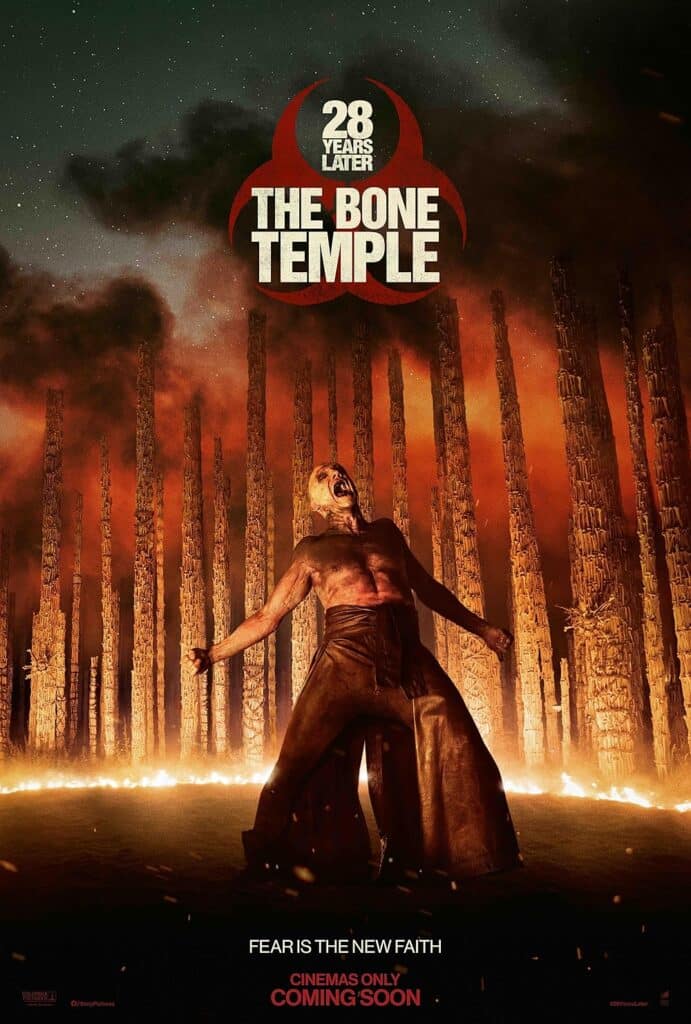
No matter which side of the fence you might be on regarding 2025’s 28 Years Later, its 2026 follow-up, 28 YEARS LATER: THE BONE TEMPLE, will roll over you like a freight train that gains momentum with every lurching mile. Brooklyn native Nia DaCosta (Candyman, The Marvels) pushes the boundaries of horror, with a surprising degree of humor and heart – delicate flashes of hope in a world where hope has all but rotted away. Naturally, I was excited to sit down with DaCosta to talk about carrying the torch from the previous installment of writer Alex Garland‘s post-apocalyptic franchise.
Holy smokes, what an epic movie-going experience! I can’t imagine what it must be like for you to be part of the legacy of such a fan favorite series. I can only imagine that added challenges. Walk us through how you came on board and how you applied your unique style to the film.
It’s like the most boring story ever. Basically, what happened was my agent called me and said I know that you don’t want to read anything right now, but they’re making another 28 Years Later movie. In fact, they’re making three, and the second one’s looking for a director. [My agent] just knows what I like. I really wasn’t trying to read anything because I was trying to take a break, but I can’t say no to that, so I read the scripts. It was the first two scripts, and I just fell in love, especially with the second film script. It was so weird and different. It made me feel pretty emboldened because I was like, “Oh, I can do something really different and specific with it.” I can really have it be my own thing. After that, it was just a process of pitching myself to the filmmakers, to Danny [Boyle], to Alex [Garland] and to the producers, Pete [Rice] and Andrew [Macdonald], and being super clear about what I wanted to do. They bought into what I wanted to do, so we kind of went from there.
I’m glad you’re a great salesperson because everybody in that theatre bought into it, too. With 28 Years Later, the main plotline was quite clear and linear. Spike (Alfie Williams) has this incredible journey with his mom, trying to get her to a doctor, who may or may not be insane. In THE BONE TEMPLE, the plot unfolds organically. The audience is expected to put all the pieces together. Is that a fair assessment?
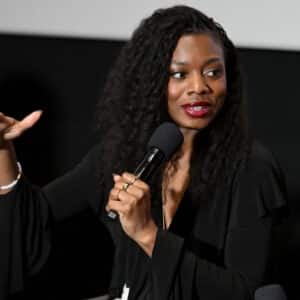
Filmmaker Nia DaCosta
What I love is that we got to follow Dr. Kelson (Ralph Fiennes) more and see the relationship with him and Samson (Chi Lewis-Parry) in that very specific world that they’re in. It’s really peaceful. It’s bucolic. It’s thrilling because what’s happening is so risky. The stakes are super high, but you’re also watching a friendship develop, which is really beautiful. And then, on the other hand, you have Jimmy’s (Jack O’Connell) world, which is very dark and erratic and violent, and I just thought if I could portray these two worlds distinctly, then when they come together, it will be really rewarding for the audience. That was my focus. I think that is the main difference.
In the first film, we have this hero’s journey for Spike, and then you follow Spike in my film as well. The trilogy is about his character, but you watch him in the middle of this sort of good-versus-evil, humanist-versus-violent-nihilist battle that’s happening, which is a part of his coming of age. I think because the movie’s so weird and because you’re sort of like, what’s going on? What’s going to happen? It keeps you on the edge of your seat. It really allowed me to just kind of go crazy.
Everyone involved really embodies this gritty, immersive feel, so the viewers feel like they are on the whole journey. Did you continue Danny Boyle’s practice of filming with iPhones?
No, no. I really love my ARRI cameras. We shot on the ALEXA 35, and we shot anamorphic. With horror films, I really love it when terrible things are happening in beautiful places. Because the Kelson world had to feel so different from the Jimmy world, I needed more control, more data, you know?
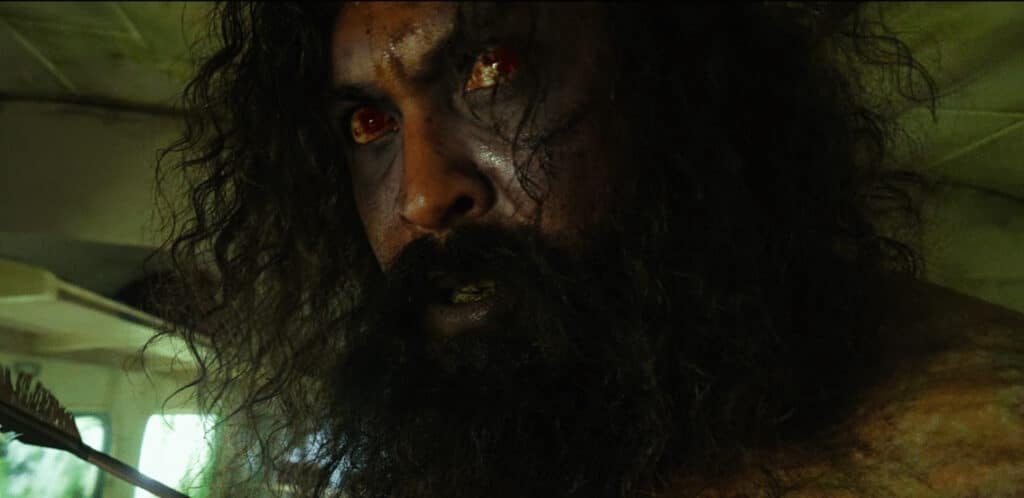
Speaking of the beautiful things that happen in this awful place, in the last film, the spotlight was mostly focused on Spike and his mom. This time around, the focus is on a very unlikely relationship between Dr. Kelson and the Rage-infected Alpha, Samson. Considering half of the people in that relationship communicate only in feral grunts and screams, what can you tell us about the challenges for you, Ralph Fiennes and Chi Lewis-Parry?
We got really lucky with Chai Lewis-Perry. He has a really hard job because, as you say, he goes through this whole journey. He has a relationship with this person, who is multidimensional and shifts and changes, but he is really limited because he does not have language. What Chai and I wanted to build was, like, how do we change physicality for the character to practice changes? For myself, I talked to prosthetics. We have different prosthetic stages. We have different movement stages. We have different lenses throughout the film. We really threw everything at trying to portray the subtle change that’s happening with this character. And then Chai, he’s just such a beautiful person, and he beautifully portrayed this journey. So, I got really lucky, I think.
On the flip side of all the brutality, there’s a surprising amount of humor that caught me off guard in the best possible way. What can you tell us about the shifts in tone and how you feel the humor impacts the film?
Well, that’s one of the things I loved about both scripts, actually, that they’re really funny. I think in my film, because it gets so brutal, the humor is so important to keep everyone in their seats. Because Alex put humor in the script, I felt I could take some liberties and maybe put a bit more in as well. There are some cuts in the movie that are funny, where you just kind of go from one thing to another, and the contrast just makes you laugh, you know? So, leaning into that was really awesome. And I love when movies have those different tones. It’s funny, it’s brutal, it’s sad, it’s alarming, it’s campy. I think it just reflects life and how silly we are as human beings.
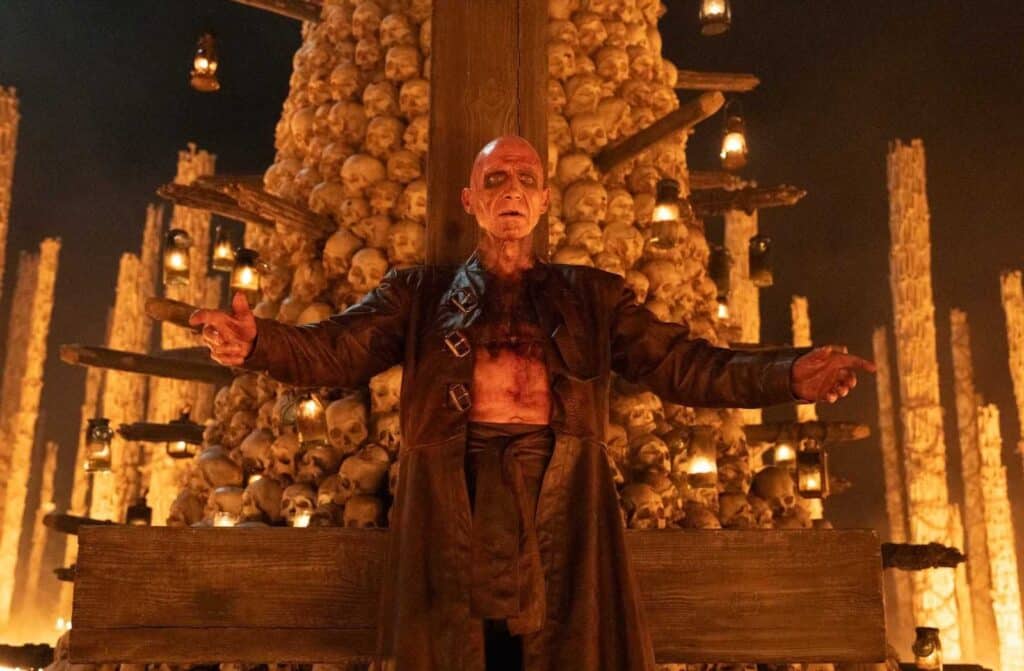
I have never heard a theatre cheer as loud and as much as I did during a certain musical scene. That is such an epic moment. I know this might be a tough question to answer without giving too much away, but I’d love to hear how much fun you had filming that scene and what it was like behind the camera while this incredible performance was going down, with Ralph Fiennes absolutely stealing the show.
It was as fun as it looks, honestly. It was so much fun. It was nerve-racking, initially, because when you read that scene in the script, everyone was like, “Good luck! How are you going to make that work?” That’s such a crazy scene, but it’s also a huge part of why I wanted to take the movie on as well. No risk, no reward, as they say. Knowing that was going be so important to pull off, we were deeply involved in that from the beginning, with every single department handling it. I had my production designers, stunts, VFX, special effects, my choreographer, movement director, talent department; everyone just came together and helped make the sequence what it is, and helped develop the sequence. It was like this kind of rolling train, or like rolling snow down a hill until it was the perfect snowball. And we’re like, “We did it!” It was super fun, and Ralph in that scene is just phenomenal.
Is there anything you’re able to tell us about the next installment?
I’m not involved in the next one, but I’m pretty sure I can say it’s Cillian Murphy‘s movie, the third film. We finished the Spike story, and then we get to star Cillian’s, which is really nice.
Cillian Murphy’s revised role was such a nice surprise. Sometimes, rumors do come true, and I’m so glad that one did.
And dreams, too.
Is there anything else you would like to say about what folks can expect going into 28 YEARS LATER: THE BONE TEMPLE?
You’re in for a real hell of a time. It’s a roller coaster ride, this film. It’s like in the beginning: You’re going up the first hill before the big drop, and then you’re just in it, so enjoy!